
Ingredients that hold onto moisture — how to read betaine, trehalose, and glycerin
Betaine, trehalose, and glycerin are all humectant ingredients that 'draw in and hold onto moisture itself.' However, with these ingredients alone, the moisture held can evaporate again over time, so they need to be paired with oil ingredients to help maintain moisturization. When reading the full ingredient list, it's practical to check not just whether these ingredients are present, but also whether oil ingredients are designed to follow afterward.
When reading a cosmetic ingredient list from the top, there are names that appear particularly often. Glycerin is near the top of almost every product, and betaine and trehalose are also commonly seen in products that emphasize moisturization. These three are different substances, but within cosmetics they serve the same category of role: acting as 'humectants' that draw moisture to the skin surface and into the stratum corneum and keep it there.
The issue is that this role only extends to 'holding onto moisture,' not to 'preventing the held moisture from evaporating.' Let's look through the ingredient list at how humectants and oil ingredients do different jobs, and why they always need to be paired together.
- 1Humectant ingredientsBetaine, trehalose, and glycerin draw in moisture
- 2Oil ingredientsSqualane, shea butter, etc. slow evaporation with a thin film
- 3Barrier lipid ingredientsCeramides and cholesterol support the moisture-retaining structure
- 4Elasticity care ingredientsOn top of maintained moisturization, elasticity care follows
Betaine, trehalose, glycerin: what differs and what is the same
Glycerin is the longest-standing and most widely used humectant. Because of its molecular structure, it can attract multiple water molecules, so it contributes to moisture retention even in small amounts. This is also why it often appears near the top of the full ingredient list on cosmetics.
Betaine is an amino acid-like substance found in plants and microorganisms, known as one of the substances cells accumulate to balance their own water content. When formulated into cosmetics, it is used as a moisturizing ingredient that helps retain moisture on the skin surface.
Trehalose is a type of sugar known for its ability to hold moisture stably even in dry environments, which is why it is used in moisturizing formulations. All three ingredients share the common trait of having structures within their molecules that readily bind with water, and because of this structure, they can be grouped into one category in that they draw moisture to the skin surface and stratum corneum.
However, the direction from which these ingredients draw water splits into two paths. One is drawing from the outside (humidity in the air or moisture remaining right after cleansing), and the other is drawing from deeper layers of the skin. There is also discussion that in environments with low external humidity, humectants may end up working in a direction that draws moisture from within the skin itself, which is why applying humectants alone in a thick layer is not always advantageous.
Why the sensation differs by season and environment
Even when using the same cream, many people feel the sensation left on the skin differs by season. This is because the way humectants work is influenced by the surrounding humidity. In environments with sufficient humidity, there is greater room for them to work in the direction of drawing moisture from the air, but in winter when indoor humidity is low, or in spaces with strong heating or cooling, there may be a lack of moisture to draw from in the first place, making the role of humectants feel limited.
This is where the role of oil-based (emollient/occlusive) ingredients diverges. Oil-based ingredients are known to work by forming a thin film on the skin's surface that slows the rate at which moisture evaporates. If humectants play the role of 'drawing in' moisture, oil-based ingredients are closer to the role of 'holding onto' the moisture that has been gathered so it does not escape. The fact that both roles need to be present together for moisturization to be maintained regardless of season is why, when reading a full ingredient list, one should check not just for humectants alone but also for their combination with oil-based ingredients.
The order to check when reading a full ingredient list
Rather than simply confirming the presence of humectants and stopping there, it is practical to look things over in the following order. First, check whether humectants such as glycerin, betaine, and trehalose appear near the top of the list. Next, look at whether oil-based ingredients such as squalane, shea butter, and plant oils are also formulated in. Finally, if barrier lipid ingredients such as ceramides or cholesterol are included as well, it can be seen that the three stages of drawing in, holding onto, and maintaining moisture have been designed together within a single formulation.
The habit of using a cream with this kind of combination in the last step of evening skincare isn't just about reducing tightness. When skin stays sufficiently moisturized, fine lines that stand out due to expressions or time can also be reduced, which becomes a condition that leads to skin texture that looks resilient. Rather than separating moisturizing and elasticity as separate concerns, reading the full ingredient list from the perspective that moisturizing is the foundation of elasticity care is the way to properly use these three ingredients.
Humectant ingredients and oil ingredients, then elasticity design
Once the habit of checking the combination of humectant ingredients and oil ingredients is established, the next thing to look at is whether ingredients aimed at elasticity care are included together on top of this moisturizing design. Even skin that maintains good moisture goes through a decline in elasticity over time as a separate process, so checking whether both can be addressed within one product can also serve as a standard.
에르쯔틴 리제너레이티브 실트 크림 has a design that draws in and holds onto moisture by combining humectant ingredients like betaine, trehalose, and glycerin with oil ingredients like squalane, shea butter, argan kernel oil, and olive oil, and adds adenosine, which has undergone wrinkle-improvement functional review, making it a rich-type formulation that considers elasticity care in the stage after moisturizing. It's one of the options to reference when you want to check both of these goals at once in the final step of an evening routine.
The last step—which cream to finish with?
Once the habit of checking the combination of humectant ingredients and oil ingredients is established, the next thing to look at is whether ingredients aimed at elasticity care are included together on top of this moisturizing design. Even skin that maintains good moisture goes through a decline in elasticity over time as a separate process, so checking whether both can be addressed within one product can also serve as a standard. 에르쯔틴 리제너레이티브 실트 크림 has a design that draws in and holds onto moisture by combining humectant ingredients like betaine, trehalose, and glycerin with oil ingredients like squalane, shea butter, argan kernel oil, and olive oil, and adds adenosine, which has undergone wrinkle-improvement functional review, making it a rich-type formulation that considers elasticity care in the stage after moisturizing.
Frequently asked questions
- What types of moisturizing ingredients are there?
- Cosmetic moisturizing ingredients can broadly be divided into two categories. One is humectant ingredients like betaine, trehalose, and glycerin, which draw in and hold onto moisture. The other is oil and barrier lipid ingredients like squalane, shea butter, and ceramides, which prevent that gathered moisture from evaporating. Moisturization tends to be maintained more stably when both types are present together.
- Doesn't a high amount of glycerin feel sticky?
- Glycerin itself is a viscous ingredient, so used alone at a high concentration it can feel sticky, but in actual products, the texture varies greatly depending on the ratio blended with other ingredients and the overall formulation design. Rather than judging stickiness solely by the ingredient list order, it is more accurate to judge based on how it actually feels when applied.
- Does the effect of moisturizing ingredients change depending on humidity?
- Yes. Humectant ingredients like betaine, trehalose, and glycerin are affected by ambient humidity. In low-humidity environments, there is less moisture available to draw in, so their action may feel limited. In such seasons or spaces, it can help to also use a richer formulation containing more oil ingredients.
- Why are humectant ingredients always paired with oil ingredients?
- This is because humectant ingredients only draw in and hold moisture, while preventing that moisture from evaporating is the role of oil ingredients. With humectant ingredients alone, the moisture can evaporate again over time, so both types need to be designed together for moisturization to be maintained over the long term.
- What should I do if tightness continues even after applying these ingredients?
- If tightness or irritation repeats even after changing formulations, or if redness or flaking appear together with it, the cause may be more than simple dryness, so it is recommended to consult a dermatologist or similar specialist. Since skin condition and reactions vary greatly between individuals, if you have a sensitive reaction to a particular ingredient, it is safer to stop use and check.
Reviewed by 아비쥬의원 의료진. (September 5, 2026)
Related products
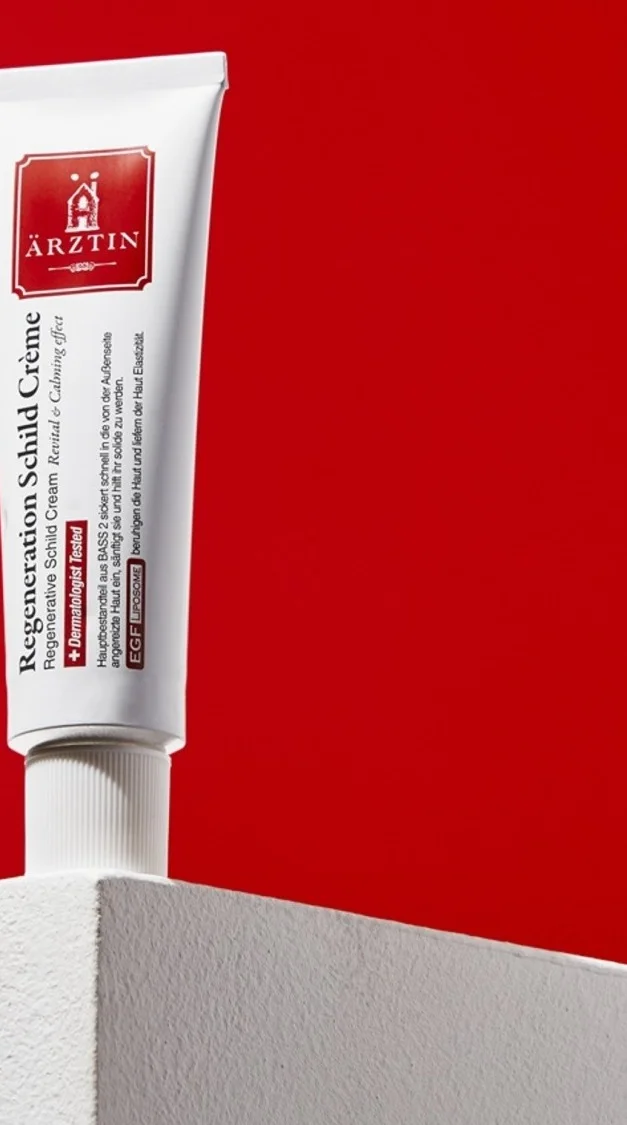 리제너레이티브 실트 크림Buy
주름 개선 기능성 화장품 · 탄력과 장벽을 함께 보는 리치 크림