
Why Centella Asiatica (Cica) has long been used in soothing care
Ingredients derived from Centella Asiatica (Cica) contain asiaticoside, madecassic acid, and asiatic acid together, making them ingredients that have long been used for skin soothing care. However, if you're concerned about elasticity and wrinkle care, soothing care alone is not enough, because having your skin condition stably calmed serves as the foundation for elasticity care ingredients like adenosine and 3 types of peptides to properly do their job. In other words, it's more accurate to understand Centella Asiatica ingredients not as the conclusion of an anti-aging routine in themselves, but as a condition-preparing step for elasticity and wrinkle care.
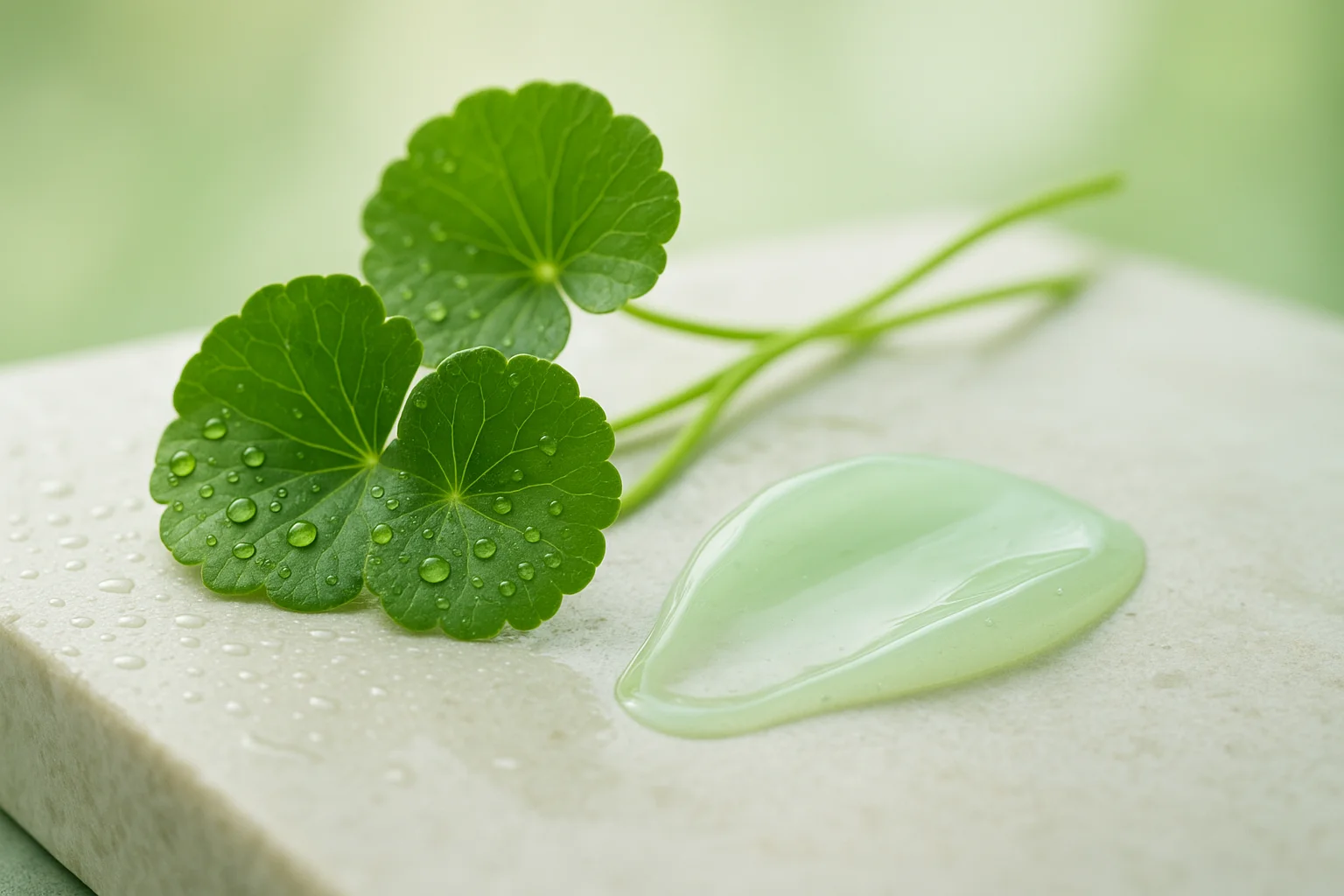
During times when skin becomes red or sensitive, soothing care tends to be the first thing that comes to mind, but from the perspective of also looking after elasticity and wrinkles, keeping the skin in a comfortable state is itself a basic precondition for elasticity care. 'Centella,' or 'Centella asiatica,' which frequently appears on cosmetic ingredient lists, is a component that has continuously drawn attention for exactly this reason.
For those who have wondered why Centella is included in so many soothing care products, we've organized step by step the background and characteristics behind why this ingredient has been loved for so long.
What kind of plant is Centella, and why is it used in soothing care?
Centella asiatica is a perennial herb that grows in humid regions, and it is a plant that has drawn interest across various cultures since ancient times. The reason it draws attention as a cosmetic ingredient is that this plant contains several types of derived components together within it.
Representative components include asiaticoside, madecassic acid, and asiatic acid. Each of these is known to have different characteristics while acting complementarily with one another, and they are often combined in skincare aimed at skin soothing.
However, these components are not a 'cure-all solution.' The perceived effect can differ depending on skin condition and usage environment, and the form and concentration in which they are formulated into cosmetics also vary by product, making it difficult to make a blanket statement about their effects.
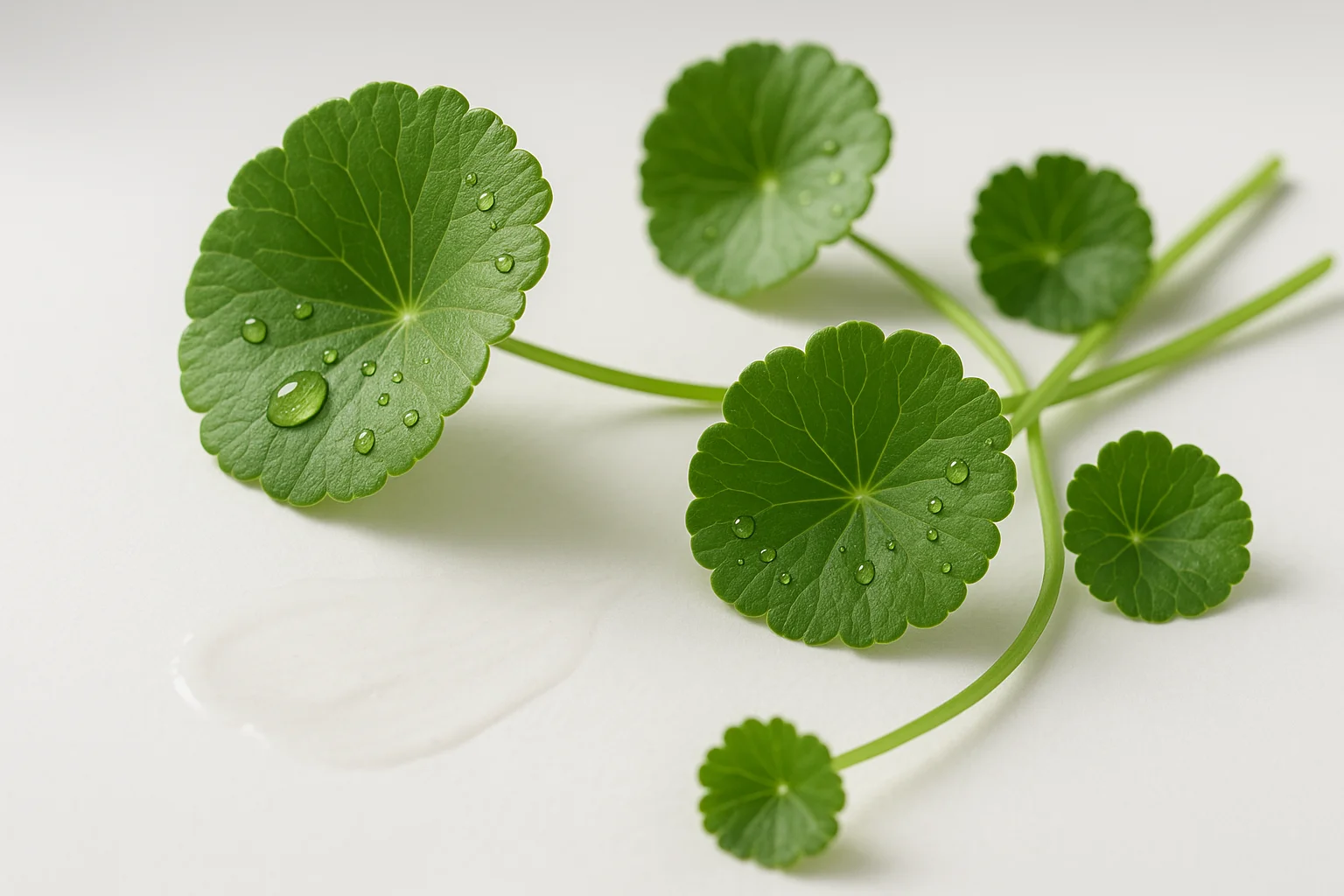
Moments when Centella-derived ingredients may help, depending on skin condition and season
During seasonal transitions or times when there is a big difference between indoor and outdoor temperatures, skin often reacts more sensitively than usual. During these times, it is basic practice to prioritize choosing formulas that are low-irritation and gentle.
Also, after somewhat strong exfoliation or cleansing, or during periods when frequent outdoor activity makes skin easily feel tight and sensitive, it is common to use products aimed at soothing care alongside your routine.
For oily or combination skin, a lightweight formula with less oiliness is preferable, while for dry skin, a formula that also contains moisturizing ingredients is preferable. Even with products containing centella asiatica ingredients, it is good to check the overall formula and other ingredient combinations together.
How to add centella asiatica ingredients to your routine
Step one, it is common to start by using a gentle formula at the toner stage, which is the first step after cleansing to smooth the skin texture, in a way that soothes the skin.
Step two, you can add care that soothes skin condition by using a product containing centella asiatica-derived ingredients at the ampoule or serum stage.
Step three, finally, finishing with an oil-containing formula such as a cream creates a barrier to prevent moisture from evaporating, which is the overall flow of barrier care.
When adding a new ingredient to your routine, it is safer to first apply it to a small area such as the inner arm or jawline rather than the whole face, watch for a reaction for a day or two, and then gradually expand the area of use.
- 1Step 1 · TonerSmoothing and soothing skin texture with a gentle formula
- 2Step 2 · Ampoule/SerumSkin condition care with centella asiatica-derived ingredients
- 3Step 3 · CreamFinishing with an oil-containing formula, preventing moisture evaporation
Things worth checking together when looking at ingredient combinations
Centella asiatica-derived ingredients are also used alone, but they often better suit the purpose of overall skin condition care when combined with barrier lipid ingredients such as ceramides or cholesterol, and moisturizing/soothing ingredients such as panthenol and allantoin.
Once you understand the principle behind these ingredient combinations, you develop the habit of looking at a product's overall ingredient composition rather than simply the phrase 'contains centella asiatica.' This can help you choose a product suited to your own skin type.
| Ingredient family | Representative ingredients | Care point |
|---|---|---|
| Centella asiatica-derived | Asiaticoside · Madecassic Acid · Asiatic Acid | Skin soothing care |
| Barrier lipids | Ceramide NP · Cholesterol | Skin barrier care |
| Moisturizing/soothing | Panthenol · Allantoin | Maintaining hydration and soothing |
The final step, what cream should you finish with
If you've developed the habit of checking soothing and moisturizing ingredients such as ceramides and panthenol along with centella asiatica-derived ingredients, it is also worth referring to how this ingredient combination principle is applied in cream formulas. For example, 에르쯔틴 리제너레이티브 실트 크림 contains centella asiatica-derived ingredients (asiaticoside, madecassic acid, asiatic acid) combined with barrier lipid ingredients such as ceramide NP, which can serve as a reference for those who want to check the principle of soothing care through an actual product's ingredient composition.
Frequently asked questions
- How is Centella extract different from individual components (asiaticoside, madecassic acid, etc.)?
- Centella extract is a form close to the raw material obtained directly from the Centella asiatica plant, containing several derived components together in their natural ratio. In contrast, individual components such as asiaticoside or madecassic acid are forms in which specific components have been isolated or purified from the extract, and they may be listed on their own depending on the formulation purpose of the cosmetic. Depending on which form is listed on a product's ingredient list, the formulation purpose and concentration may differ.
- What exactly is madecassic acid?
- Madecassic acid is one of several components derived from Centella asiatica, and it is a component frequently formulated into cosmetics aimed at skin soothing care. However, it does not signify a medical effect on any specific condition, and it is more accurate to understand it as a formulated ingredient that helps support gentle skin conditioning as a cosmetic raw material.
- When is it good to use Centella cosmetics?
- They are often used for soothing care purposes during seasonal transitions, times when there is a large difference between indoor and outdoor temperatures, or after strong cleansing or outdoor activity, when skin feels more sensitive than usual. It's also common for people to include them consistently in their regular skincare routine, not just at specific times.
- Is it okay to use Centella-derived ingredients on sensitive skin?
- Centella-derived components are often used for gentle formulation purposes, but they don't react the same way on all skin. Since individual differences can exist, if you're trying a product for the first time, it's recommended to test it on a small area first, and if any abnormal reaction such as redness or stinging appears, to stop use and consult a specialist.
Reviewed by 아비쥬의원 의료진. (August 31, 2026)