
Ceramide, Cholesterol, Fatty Acid: How to Read the Three Barrier Lipids
The skin barrier can be understood as a structure in which three lipids—ceramide, cholesterol, and fatty acid—work together, and only when this barrier is stable is the foundation laid for ingredients like adenosine and peptides, used for elasticity and wrinkle care, to properly play their role. That's why checking whether these three lipids appear together in the full ingredient list serves as a practical standard not only for barrier care but also when choosing an anti-aging routine. 에르쯔틴 실트 크림 contains barrier lipids such as ceramide NP, cholesterol, and palmitic acid together with adenosine and three types of peptides in its full ingredient list, allowing you to confirm a design that considers both barrier care and elasticity care together.
When looking at cosmetic ingredient lists, you often come across the words ceramide, cholesterol, and fatty acid. These are often explained separately, but in fact, it is more accurate to understand these three together as one category: lipids that make up the skin barrier. The reason this barrier lipid is worth paying attention to when managing elasticity and wrinkles is that only when the skin barrier is stably maintained can moisture be prevented from escaping, and other ingredients needed for texture and elasticity care can also perform their roles properly. In other words, barrier lipids are not the end of the story in themselves, but should be seen as the foundational stage of the bigger picture of elasticity and wrinkle care.
This article summarizes what role each of the three ingredients plays, and how to identify and read them in a cosmetic's full ingredient list.
What Are Barrier Lipids — The Relationship Between the Three Ingredients
The ingredients that frequently come up when discussing the skin barrier are ceramides, cholesterol, and fatty acids. The stratum corneum is tightly woven with a lipid layer filling the spaces between cells, and the key components that make up this lipid layer are exactly these three. Each plays a different role, but it is known that only when all three are evenly balanced together can the skin surface maintain a well-organized state without gaps.
Ceramide is known to account for the largest proportion in this lipid structure, and cholesterol and fatty acids are described as playing a role in forming the lamellar structure together with ceramide. In other words, the three components are not in a substitutive relationship with one another, but rather in a relationship designed so that they perform their original structural roles when present together.
Ceramide NP, used as a cosmetic ingredient, is a component of a similar type to these skin lipids, and is often formulated for barrier care purposes when combined with fatty acid-type ingredients such as cholesterol and palmitic acid.
Barrier condition that changes depending on skin condition and season
Interest in barrier lipids grows especially when skin condition becomes unstable. During dry winters, indoor environments with strong heating or cooling, and after frequent exfoliation or cleansing, an environment is created in which the stratum corneum's ability to retain moisture tends to decline.
During these periods, a routine that manages the oil-moisture balance with products containing lipid ingredients such as ceramide, cholesterol, and fatty acids may be helpful. However, since skin condition varies greatly among individuals, if irritation or an abnormal reaction is felt during a particular period, it is safer to stop use and consult a specialist.
It is also worth considering that as skin ages, the skin's oil and lipid components tend to naturally decrease. During this period, it can also be a good approach to look at products that combine lipid ingredients forming the barrier together with ingredients that help with elasticity care.
How to check for the three barrier lipids in the full ingredient list — a step-by-step routine
Step one, check the full ingredient list for ceramide-type names (Ceramide NP, Ceramide AP, etc.). The letters after the name indicate a classification of the type within the lipid structure, and the type used may differ by product.
Step two, check whether cholesterol is formulated together with it. Cholesterol can be used alone, but when present together with ceramide and fatty acids, it is more likely to be a formulation designed with the barrier lipid structure in mind.
Step three, look for fatty acid-type ingredients such as palmitic acid and stearic acid. If all three of these are confirmed together, it can be taken as a basis for considering the formulation to be intended for barrier care.
Step four, also check whether oil-based ingredients that help prevent moisture evaporation, such as squalane, shea butter, or plant-derived oils, are included together. When lipid ingredients and oil ingredients are present together, this may further help maintain moisturization.
Step five, as the final step, it is a common routine order to use a rich-textured cream to seal in the moisture and oil from the previously applied skincare so they do not evaporate.
A product where the barrier lipid design can be confirmed — 에르쯔틴 실트 크림
에르쯔틴 리제너레이티브 실트 크림 is a rich-type cream in which Ceramide NP, cholesterol, and palmitic acid are confirmed together in the full ingredient list. It can be referenced as one of the products where the combination of the three barrier lipids described above can actually be confirmed in the full ingredient list.
This is combined with oily ingredients such as squalane, shea butter, argan kernel oil, and olive oil, along with moisturizing and conditioning ingredients such as panthenol, allantoin, betaine, and trehalose, so if you'd like to look at the lipids that make up the barrier together with moisture-retaining ingredients, it's recommended to directly compare the full ingredient list.
This product is a wrinkle-improvement functional cosmetic that has undergone review by Korea's Ministry of Food and Drug Safety, and the notified ingredient is adenosine. It's also worth noting that it was designed as a finishing-step cream that considers both barrier care and elasticity care together.
The final step—which cream should you finish with?
If you'd like to check the combination of the three barrier lipids in an actual full ingredient list, you can look at the ingredient composition of 에르쯔틴 실트 크림 as a comparison reference. However, since how any ingredient combination feels can vary depending on individual skin condition, a patch test on a small area before use is recommended.
Frequently asked questions
- What is Ceramide NP?
- Ceramide NP is a cosmetic ingredient belonging to a lipid family similar to those that make up the skin's stratum corneum. There are several types of ceramides, and NP refers to one specific type among them. It is often formulated into products that take into account the lipid structure forming the barrier.
- Why is cholesterol included in cosmetics?
- Cholesterol is one of the components that make up the lipid structure of the skin's stratum corneum, and when combined with ceramides and fatty acids, it is often designed as a formulation that considers the barrier lipid structure. It is more accurate to understand it in combination with other lipid ingredients rather than on its own.
- Is the ratio of barrier lipids important?
- Ceramides, cholesterol, and fatty acids are known to function as the original lipid structure when present together, rather than being interchangeable with one another. However, since officially confirmed formulation ratios or clinical figures are often not disclosed for each product, it is realistic to refer to whether all three are included together in the full ingredient list as a general guide.
- I'd like to know how to choose barrier care products.
- One criterion can be checking whether the full ingredient list confirms the presence of all three — ceramide-family ingredients, cholesterol, and fatty acids (such as palmitic acid). It also helps to check whether oil components like squalane and shea butter, along with moisturizing and soothing ingredients like panthenol and allantoin, are formulated together. However, since skin reactions vary by individual, it is recommended to do a small patch test before use and consult a specialist if any adverse reaction occurs.
Reviewed by 아비쥬의원 의료진. (August 31, 2026)
Related products
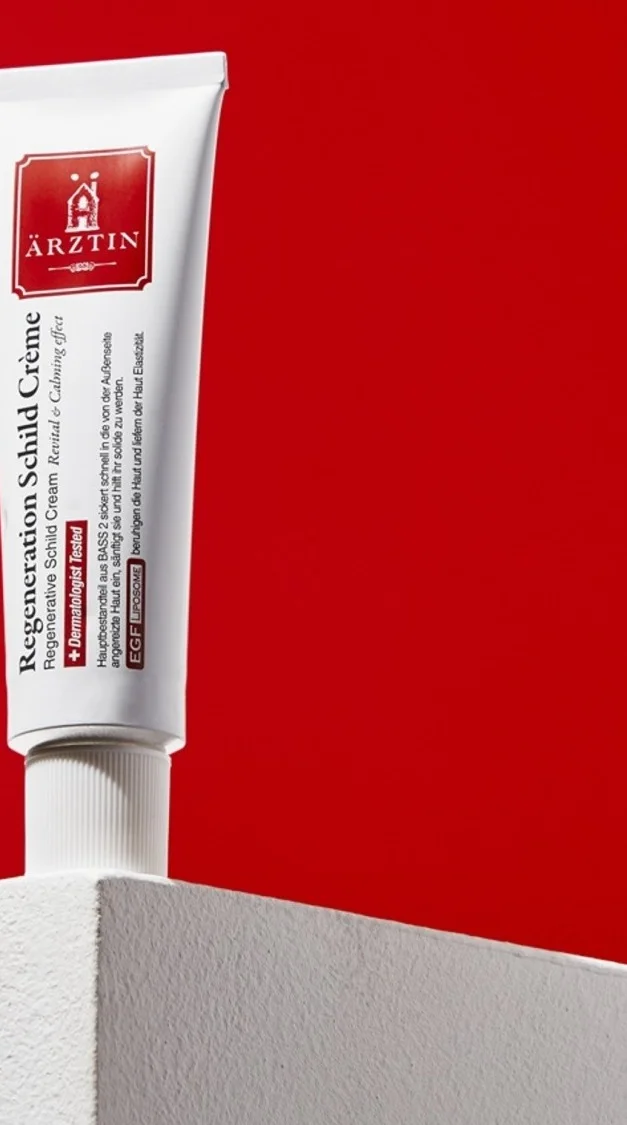 리제너레이티브 실트 크림Buy
주름 개선 기능성 화장품 · 탄력과 장벽을 함께 보는 리치 크림