
How long should the adaptation period be when changing cosmetics
When switching to a new cosmetic product, it is natural for the skin to take a period of time equivalent to one skin cell turnover cycle to adjust to the ingredients. During this period, mild tightness or slight redness can be monitored, but if clear reactions such as itching or breakouts continue, it is safer to suspect an adverse reaction rather than adaptation and stop use.
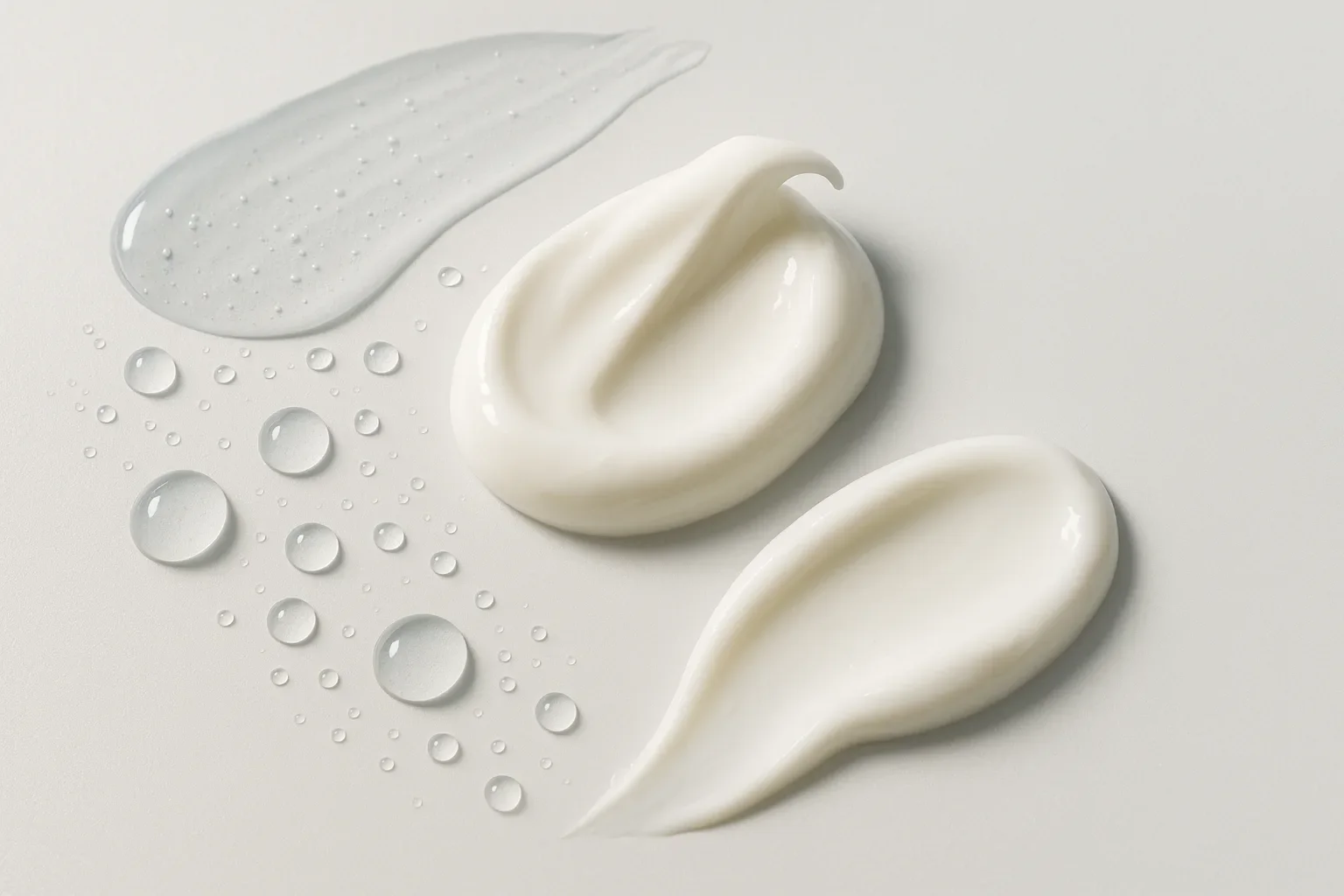
When you start using a new cream or serum, it's natural to want to judge its effect within a few days. But skin isn't a tissue that reacts immediately just because one ingredient has changed. Since the process of the stratum corneum forming and shedding follows its own cycle, checking for change after switching cosmetics requires observing it for at least as long as that cycle.
This article outlines, in order, why the concept of an adaptation period is necessary, how to view it differently depending on the condition, and what should be prioritized when switching several products at once.
- 1Patch TestApply a small amount to the inner arm, etc., and check repeatedly over several days
- 2Partial UseGradually expand application to part of the face in small amounts
- 3Early Adaptation PeriodObserve for mild tightness or redness
- 4Full IntroductionIf there's no issue, incorporate into the regular routine
- 5Observing ChangeCheck for changes in texture and elasticity after consistent use
Why a response doesn't appear right away
Changes that appear when a new ingredient touches the skin fall into two categories. One is the sensory part felt immediately, such as spreadability or the feel of absorption, and the other is the part that takes time to appear as a visible change, such as texture or elasticity.
Changes in skin texture are tied to the flow of keratinocytes being formed, rising to the surface, and shedding away. Since this flow itself is not a process that finishes in a day or two, it is rare for texture to change dramatically the very next day just because you switched one cream. It is more realistic to view the first few days as a period during which the skin gets used to the new formula and ingredients.
During this adjustment period, there may be slightly more tightness than usual, or even skin that was rarely irritated before may show a light degree of redness. However, such changes typically fade naturally over time, and if they instead keep worsening or new symptoms are added, this should be seen not as adjustment but as a different kind of signal.
Timeframes That Differ by Product Category
Not all products need to be judged by the same standard. Lightly absorbed formulas like toners or essences tend to show whether they cause tightness or irritation relatively quickly upon contact with the skin, so a short period of observation is usually enough to make a judgment.
On the other hand, rich formulas like creams that stay on the skin longer, or functional products aimed at visible changes such as wrinkle improvement, require a longer time to judge. For these products, rather than how it feels after a day or two, observing how the skin texture or firmness feels after weeks of consistent use is closer to grasping the actual change.
In other words, the 'adjustment period' and the 'period for judging effectiveness' are different concepts. Distinguishing that the adjustment period is a short window for checking early irritation, while the period for judging effectiveness unfolds over a much longer flow, can help reduce the tendency to switch products too hastily.
| Formula Type | Point at Which Adjustment Can Be Checked | Time Needed to Judge Change |
|---|---|---|
| Toner/Essence (Light Formula) | Tends to show relatively early | Can be gauged to some extent even with a short period of use |
| Rich Cream/Functional Products | Early adjustment can be checked in a similar way | Requires a longer view of results after consistent use |
How to Distinguish Adjustment from Adverse Reactions
The criteria that separate changes occurring during the adjustment period from adverse reactions can largely be seen in three ways. The first is degree. A slight tightness or faint redness can be considered within the range of adjustment, but a sensation close to clear pain, such as burning or stinging, should be viewed differently.
The second is duration. Changes during the adjustment process typically move in the direction of fading over time. Conversely, if there is no improvement even after several days, or if the affected area instead widens, or if new symptoms such as itching or bumpy pimples are added, this is closer to an adverse reaction.
The third is pattern. If the reaction is not confined to a specific area but spreads across the entire face, or if it repeatedly occurs in the same spot every time the product is applied, there is a high chance of a compatibility issue with that particular product. In such cases, it is safer to stop use, watch whether the skin condition settles back to normal, and if symptoms persist or worsen, consult a dermatologist or other specialist.
If You Changed Several Products at Once
When you change your entire skincare routine at once, the biggest problem is that it becomes hard to tell which product caused a reaction if one occurs. In such cases, it's more practical from a management standpoint to introduce products one at a time in a set order.
It's best to first change basic-step products with lower irritation potential (toners, moisturizers, etc.), and if there's no significant change after a certain period, add the next product in sequence. In particular, formulations that stay on the skin longer, such as serums with active ingredients or rich-type creams, are safer to introduce last, at a point when you can check the reaction on its own.
If a reaction has already appeared after changing several products at once, the priority is to stop all newly introduced products and return to the minimal routine you had been using without issues, to stabilize the skin. After that, you need to reintroduce products one by one to narrow down the cause.
How should you do a patch test?
Before applying a new product to the entire face, the basic method is to apply a small amount to a relatively thin, reaction-sensitive area such as the inside of the arm or behind the ear. Rather than applying it just once, repeating the application on the same spot over several days gives a check closer to actual usage patterns.
If there's no redness, itching, or bumpy texture change in that area during this period, it can be taken as a sign that it may be tried on the face. However, since the skin on the inner arm and the face may differ in thickness or sensitivity, it's safer to start with a small amount on a partial area of the face rather than the whole face when using it there for the first time.
Moving to the next step after the adaptation period
Successfully getting through the adaptation period only means that the product was accepted by the skin without an immediate irritation reaction — it doesn't in itself mean that it will bring about the desired change. From this point on, you move into a stage of continued use while observing whether there's an actual change in skin texture or elasticity.
Especially for a cream placed in the last step, it's worth considering at this point whether it's a product designed not just to suit your skin without irritation, but also with the purpose of elasticity care in mind. A product that merely gets through the adaptation period and stops there, versus one that, with continued use after adaptation, leads toward elasticity care, can leave different results in the long run.
What cream should you finish with in the last step?
If something still concerns you even after successfully getting through the adaptation period, it's worth reconsidering whether there's a reason to keep placing that cream in the last step. 에르쯔틴 리제너레이티브 실트 크림 is a cream that contains adenosine as a Korean Ministry of Food and Drug Safety-notified ingredient and has undergone functional review for wrinkle improvement; it's a formulation that places weight on the direction of elasticity care, premised on continued use after the adaptation period. However, when first starting to use it, it's safe to apply the patch test and step-by-step introduction order outlined in this article, and if any adverse reaction is felt during use, it's recommended to stop immediately and consult a specialist if necessary.
Frequently asked questions
- How many days should I try a new product before making a judgment?
- Early adaptation issues such as irritation often show up within a relatively short period, but visible changes like texture or elasticity are more realistically judged after much longer, consistent use. Rather than rushing to decide whether a product is good or bad based on the first few days' feel, it's advisable to observe it over a certain period.
- Is it okay to switch several cosmetics at once?
- It's possible, but the downside is that if a reaction occurs, it becomes difficult to pinpoint the cause. It's safer to introduce basic-step products one at a time in order, and check active ingredient products or rich-type creams—which may carry irritation potential—last and on their own.
- How do you distinguish an adaptation response from an abnormal reaction?
- Look at three things together: degree, duration, and pattern. If there's mild tightness or a faint redness that fades over time, it can be considered within the range of adaptation, but if the irritation is closer to pain, or doesn't improve after several days and is accompanied by symptoms like itching or breakouts, it leans toward an abnormal reaction. In such cases, it's best to stop use and consult a specialist if needed.
- How exactly should a patch test be done?
- The basic method is to apply a small amount to an area where reactions are easily visible, such as the inner arm or behind the ear, and check repeatedly over several days. If there's no change such as redness or itching in that area, you can gradually expand use to the face in small amounts.
- Once the adaptation period has passed, can I expect immediate results?
- Successfully passing the adaptation period only means the skin has accepted the product without irritation—it doesn't mean the desired change will appear right away. After that, it's natural to move into a stage of watching for changes in texture or elasticity through consistent use. The timing of noticeable results can vary depending on individual skin condition.
Reviewed by 아비쥬의원 의료진. (September 8, 2026)
Related products
 리제너레이티브 실트 크림Buy
주름 개선 기능성 화장품 · 탄력과 장벽을 함께 보는 리치 크림