
The Weight of Oil Ingredients — How to Tell Squalane, Shea Butter, and Argan Oil Apart
Squalane, shea butter, and argan oil are all grouped under 'oils,' but their molecular structures and the weight they leave on skin differ. There's an order ranging from those that absorb lightly to those that form a film on the surface, and the criteria for choosing between them change depending on the season and skin condition. If you spot these three names on an ingredient list, it's more practical to first check what position and proportion they occupy rather than avoiding them simply for being heavy.
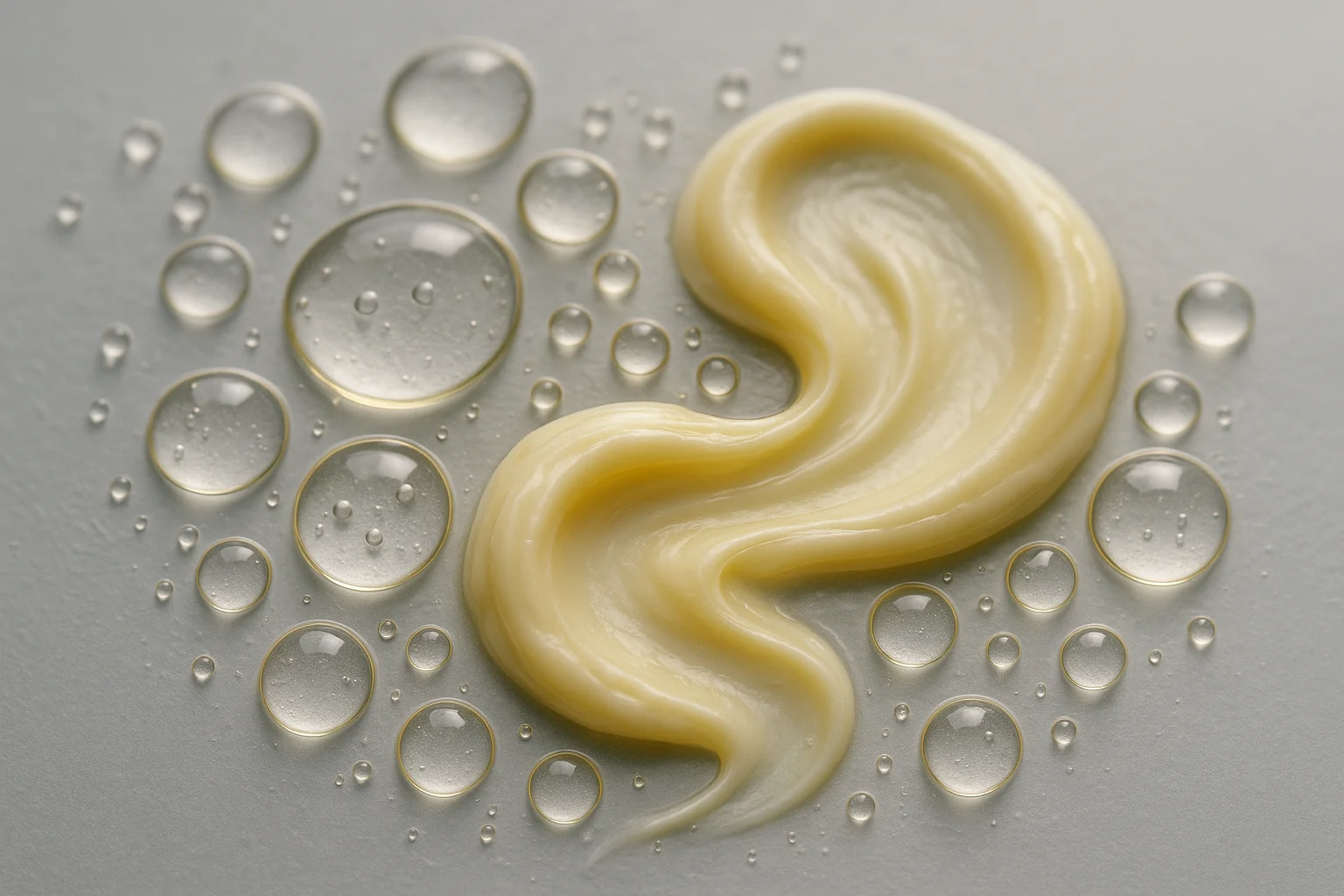
When looking closely at cosmetic ingredient lists, you often come across names like squalane, shea butter, and argan oil (argan kernel oil). All three fall under the broad category of 'oil ingredients,' but the texture and role they actually create on the skin are quite different.
Without knowing this difference, it's easy to pick a product that doesn't suit the season or skin condition just because 'it's said to be oily.' Today, let's organize these three ingredients based on molecular structure and texture.
- 1Fill in moisture with toner and ampouleBefore oil, absorb thoroughly
- 2Check dry areas firstAdjust the amount by area, such as cheeks and eye area
- 3Add oil cream as the last stepFocus on needed areas rather than the whole face
- 4Readjust the amount depending on the seasonThin in warm seasons, a bit more in dry seasons
What oil ingredients do — differences in how they lock in moisture
Oil ingredients applied to the skin share one common role: preventing the moisture previously applied from evaporating from the skin's surface. This is often called 'moisture evaporation prevention,' but the method differs by ingredient.
Squalane has a structure similar to lipids that naturally exist in human sebum, so when applied, it tends to absorb without a sense of heaviness. Its molecular size is small and its skin affinity is high, forming a thin, light film.
Shea butter is a butter-type oil that is close to solid at room temperature, with long, highly saturated fatty acid chains. When placed on the skin, it forms a thicker, denser film than squalane, often requiring rubbing with the hands to melt it in as it's applied.
Argan kernel oil sits in between the two. Though it is a liquid oil, its fatty acid composition is on the heavier side, so it applies heavier than squalane but lighter than shea butter.
| Ingredient | Texture/Weight | Suitable situations (general tendency) |
|---|---|---|
| Squalane | Light with little heaviness, tends to absorb quickly | When wanting a light finish, times when oiliness feels burdensome |
| Argan kernel oil | Medium weight, a liquid oil but with density | When you want moderate moisture and oiliness |
| Shea Butter | Forms a heavy, dense film; texture melts as you rub it in with your hands | When dryness is severe or the surface needs to be covered for a long time |
The 'right weight' that changes by season and skin condition
Even the same oil ingredient can feel different depending on when and on what skin it's used. In summer, when sweat and sebum are abundant, many say formulas centered on lightweight squalane feel less burdensome, while in dry winters or transitional seasons when flaking occurs, dense oils like shea butter play a role in covering the surface for longer.
However, this is only a general tendency, and some people feel the opposite depending on their skin type. Even oily skin with severe inner dryness may find rich oils comfortable, while some with dry skin prefer lighter formulas. Ultimately, one needs to understand the properties of the ingredients and then check directly on one's own skin.
How to check oil ingredients on the full ingredient list
The full ingredient list is arranged in order of highest to lowest concentration. Therefore, whether squalane, shea butter, or argan kernel oil appears near the front or only in small amounts near the back allows one to estimate how 'heavy' the formula actually is.
Also, when a single product combines several oil ingredients, it's worth checking whether the formula is designed to balance lighter and heavier ones together. A formula using only squalane and one combining squalane, shea butter, and argan oil show a clear difference in spreadability and finish.
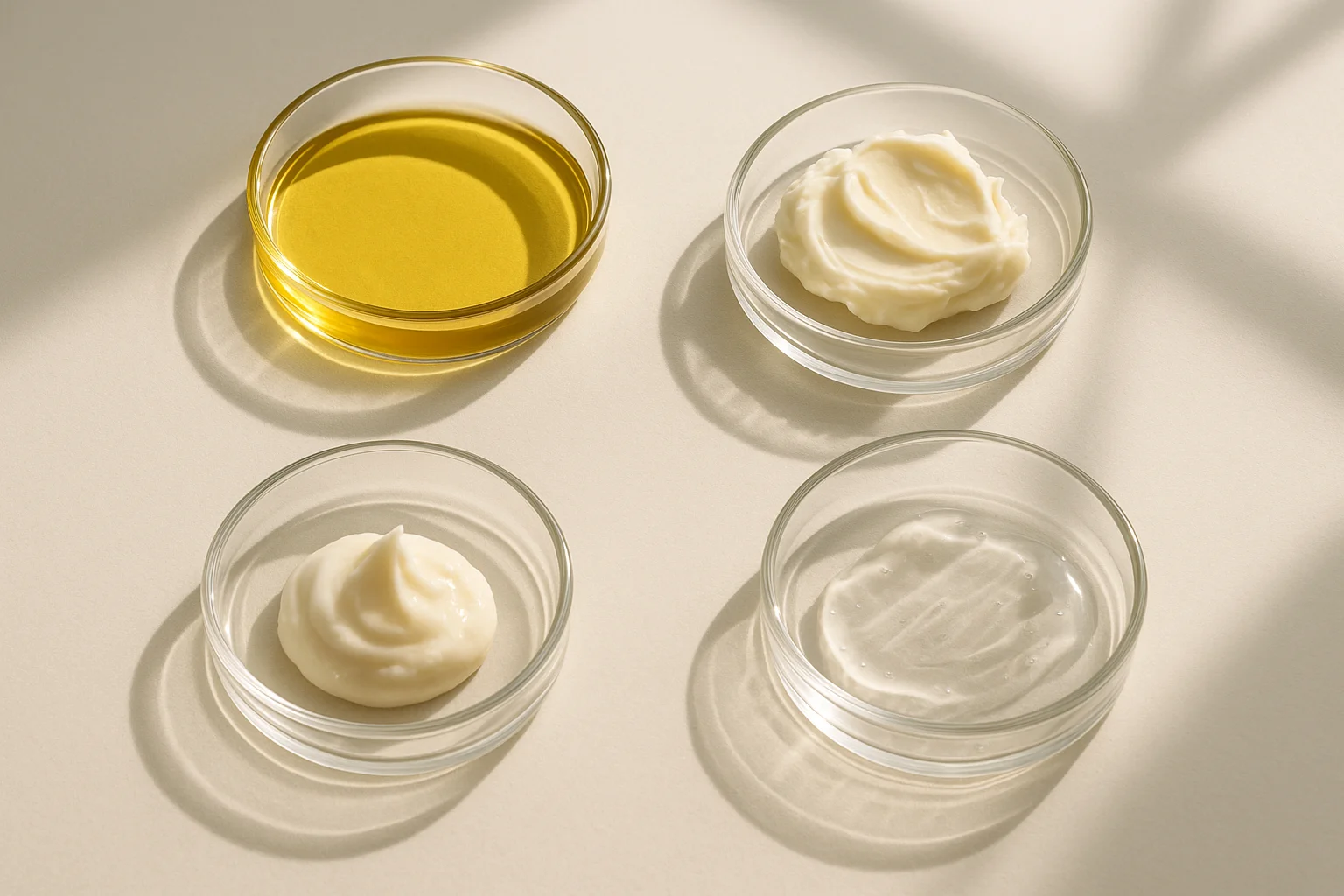
How to use oils while reducing the burden
Even a cream containing heavy oil ingredients can feel less burdensome if you adjust the amount used and the areas applied. Rather than applying the same amount over the whole face, one can concentrate on areas with severe dryness like the cheeks and eye area, while applying only a small amount to the T-zone where sebum secretion is high.
Another method is the layering order. Some suggest that if you first let moisture-focused toners and ampoules fully absorb, then apply the oil-containing cream only as the last step, the oil can focus on its intended role of forming a film on the skin's surface, reducing the feeling of it sitting on top.
During warmer weather, reducing the amount used or spreading the same product more thinly is another way to adjust.
The final step — which cream to finish with?
The reason for considering the weight of oil ingredients is ultimately to choose a finishing formula suited to one's own skin. From this standpoint, when choosing a cream, what matters as much as the type of oil ingredient is how that oil is designed together with elasticity-care ingredients. 에르쯔틴 리제너레이티브 실트 크림 combines squalane, shea butter, argan kernel oil, and olive oil in a rich-type formula that covers the surface, while also containing adenosine, which has undergone functional review for wrinkle improvement. Rather than choosing based solely on the weight of the oil ingredient, checking which other ingredients that oil is paired with can also serve as one criterion for selection.
Frequently asked questions
- What exactly is the difference between squalane and shea butter?
- Squalane is a lightweight oil with a structure similar to skin sebum, and it tends to absorb quickly. Shea butter, on the other hand, has long, highly saturated fatty acid chains, making it a heavier oil that is closer to a semi-solid at room temperature. Both play a role in preventing moisture from evaporating, but they differ in texture and density.
- If an oil ingredient is heavy, does it clog pores?
- It's hard to say definitively that an oil ingredient by itself directly clogs pores. However, applying an excessive amount in layers on areas with heavy sebum production can feel burdensome, so it's good to adjust the amount by area and observe your own skin's reaction.
- What does the label 'non-comedogenic' mean?
- Non-comedogenic is a term commonly used in the industry to indicate that a product was designed while avoiding certain ingredients known to clog pores. However, this is not an absolute guarantee but rather an indication of a general tendency, and individual differences may exist.
- What is the easiest way to reduce the burden of oil?
- Adjusting the amount used by area is the most practical approach. You can apply a bit more to dry cheeks or the eye area, only a small amount to the oily T-zone, and increase or decrease the overall amount depending on the season.
Reviewed by 아비쥬의원 의료진. (September 2, 2026)
Related products
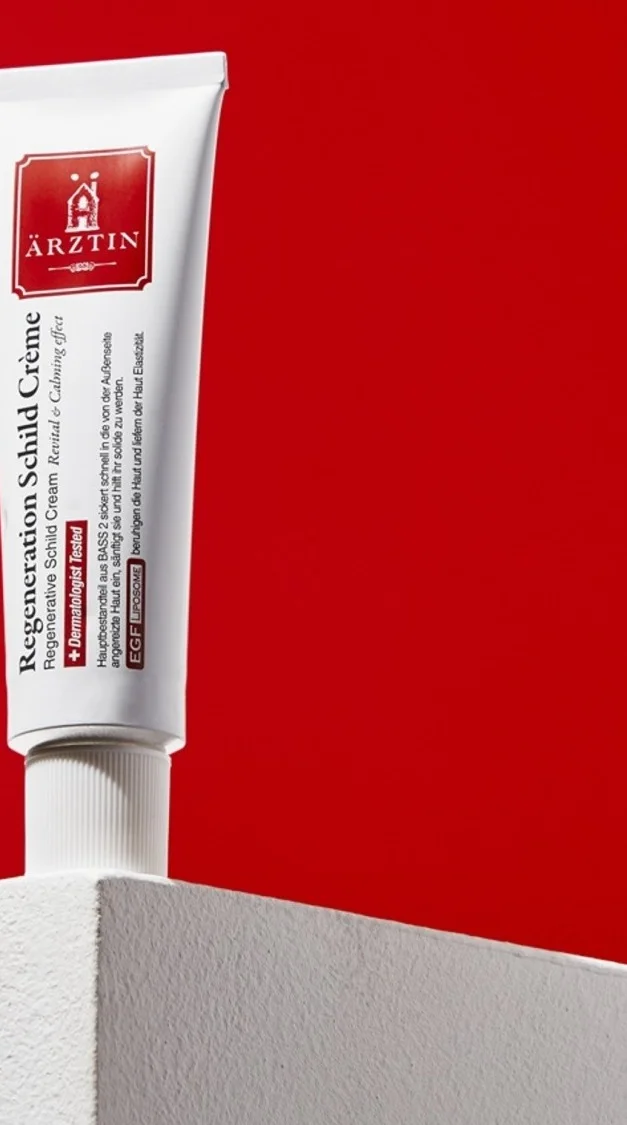 리제너레이티브 실트 크림Buy
주름 개선 기능성 화장품 · 탄력과 장벽을 함께 보는 리치 크림