
Ingredients for Sensitive Days — How to Read Panthenol and Allantoin
Panthenol and allantoin are moisturizing and soothing ingredients frequently found on full ingredient lists, playing a role in reducing irritation and filling in moisture on days when skin becomes sensitive. However, since these two ingredients alone do not address elasticity or wrinkles, after the sensitive period passes and skin stabilizes, one can consider moving toward products that also include ingredients aimed at elasticity care.
There are days, such as during seasonal transitions or when one's condition is off, when the face feels particularly red or hot after cleansing. On such days, if you check the full ingredient list of the product you reach for first, panthenol and allantoin are often listed side by side. Looking into why these two ingredients are so often used together, and whether they are ingredients limited only to sensitive days, helps sharpen how one reads an ingredient list.
- 1Identifying irritation triggersChecking causes such as seasonal change, friction, lack of sleep
- 2Simplifying ingredientsReducing irritating ingredients and focusing on panthenol and allantoin
- 3Waiting for soothingMaintaining basic care until redness and heat subside
- 4Shifting to elasticity careMoving to products containing wrinkle-improving functional ingredients once skin has stabilized
What roles do panthenol and allantoin each play
Panthenol is a derivative of vitamin B5, and it is an ingredient long used for its moisturizing function of holding moisture in the skin after absorption, along with soothing care for irritated skin. In cosmetic ingredient lists, it is often classified as a moisturizer or conditioning ingredient, and it is broadly used across formulations such as creams, lotions, and ampoules.
Allantoin is an ingredient either derived from sources such as comfrey root or made synthetically, and it is known as an ingredient that can help smooth and refine the skin's surface while reducing feelings of irritation. If panthenol carries a bit more weight toward moisture retention, allantoin can be understood as leaning a bit more toward refining texture and soothing, which makes the difference in roles between the two ingredients clear.
This also naturally explains why the two ingredients are used together. Moisturizing and soothing are different directions of care, but since sensitized skin often needs both at the same time, it is common to see this combination included together at the formulation design stage.
Why does skin become sensitive on certain days
When multiple factors overlap—sudden temperature and humidity changes during seasonal transitions, UV exposure, physical friction from masks or collars, lack of sleep, or stress—the skin surface's defense function can become looser than usual. At such times, skin tends to react more easily to external stimuli, often showing up as sensations like stinging, tightness, and redness.
It's more accurate to see this condition not as a result of lacking a single specific ingredient, but as a result of the skin surface's moisture retention and defense function being shaken together. So it's more practical to approach care by covering both moisturizing and soothing together, rather than relying on just one ingredient.
How should care differ during sensitive periods
When skin is signaling sensitivity, rather than adding various new ingredients, it may help to reduce products among those you're using that could be irritating, and simplify to products containing ingredients focused on moisturizing and soothing, such as panthenol and allantoin.
However, it's also worth remembering that this kind of care is closer to a temporary routine for getting through a sensitive period. Once redness or stinging subsides and skin returns to its usual condition, it's natural to shift attention back to elasticity or wrinkle care that you were originally interested in, rather than continuing to stay only with soothing ingredients on top of that. This is because soothing and moisturizing are 'care that maintains the basics,' while elasticity care is a separate goal layered on top of that.
If redness or irritation in a specific area doesn't subside for several days or more and keeps recurring, it is recommended to consult a dermatologist or other specialist rather than trying to resolve it with cosmetics alone.
Soothing ingredients versus moisturizing ingredients — what's the difference
One part that's often confusing when reading a full ingredient list is the distinction between soothing ingredients and moisturizing ingredients. The two concepts overlap in some ways, but their goals differ. Moisturizing ingredients focus on drawing in or holding onto moisture (panthenol, glycerin, betaine, trehalose, etc.), while soothing ingredients focus on calming an irritated, sensitized skin surface (allantoin, centella asiatica-derived ingredients, etc.).
In practice, one ingredient often partially serves both roles, so it's hard to draw a complete line between them. Still, building a habit of reading a full ingredient list while distinguishing 'is this ingredient on the moisture-filling side, or the irritation-calming side' can make product selection criteria a bit clearer.
| Category | Main Focus | Example Ingredients |
|---|---|---|
| Moisturizing Ingredients | Drawing in and holding onto moisture | Panthenol, Glycerin, Betaine, Trehalose |
| Soothing Ingredients | Calming an irritated skin surface | Allantoin, Centella asiatica-derived ingredients |
Criteria for choosing ingredients when skin is sensitive
When choosing a new product during a sensitive period, one criterion can be to first reduce the number of fragrances or potentially irritating ingredients, and prioritize products that list long-used soothing and moisturizing ingredients like panthenol and allantoin near the front. On the other hand, trying several new active ingredients at once during this period is not recommended.
Once the sensitive period has passed and skin has stabilized, the next standard changes. Moving a step beyond moisturizing and soothing, checking whether the product also contains ingredients designed for elasticity care becomes the natural criterion at this stage.
After the moisturizing and soothing stage, when you want to address elasticity too
If care during sensitive days focuses on 'calming the skin and filling it with moisture,' the care that follows naturally flows back to the original concerns of elasticity and wrinkle care on top of skin that has been settled and calmed. At this point, one can also consider products containing ingredients that have received wrinkle-improvement functional review, an area not covered by ingredients like panthenol and allantoin alone, as part of the finishing stage.
에르쯔틴 리제너레이티브 실트 크림 is a product that includes panthenol and allantoin in its full ingredient list, providing moisturizing and soothing ingredients, while also containing adenosine as a notified ingredient, having received wrinkle-improvement functional review from Korea's Ministry of Food and Drug Safety. It is one option to consider at the stage of smoothing the skin texture after sensitivity has calmed down, when you want to address moisturizing, soothing, and elasticity care together within a single product. However, since such responses may vary from person to person, it is recommended to start with a small amount and check your skin's reaction first when using it for the first time.
The final stage — which cream to finish with
Care during sensitive periods can ultimately be seen as a preparation process for the next stage. Once redness and tightness have subsided and the skin has returned to its usual state, what to layer on top of it should be chosen by a different standard than during this period. This is precisely the point to move a step beyond products filled only with moisturizing and soothing ingredients, toward products designed to address elasticity and wrinkle care together.
Frequently asked questions
- What exactly does panthenol do?
- Panthenol is a derivative of vitamin B5, and it is an ingredient long used for its moisturizing function of holding moisture in the skin, along with soothing care for irritated skin. It tends to be used broadly regardless of formulation type.
- What kind of ingredient is allantoin?
- Allantoin is known as an ingredient that can help smooth and refine the skin's surface texture while reducing feelings of irritation. If panthenol leans a bit more toward moisture retention, allantoin leans a bit more toward refining texture and soothing.
- When skin is sensitive, what standard should be used to choose ingredients?
- One standard can be reducing the number of ingredients that may cause irritation, such as fragrance, and prioritizing products where long-used moisturizing and soothing ingredients like panthenol and allantoin are listed near the top. It is not recommended to try several new active ingredients at once during this period.
- How do soothing ingredients differ from moisturizing ingredients?
- Moisturizing ingredients focus on drawing in or holding onto moisture, while soothing ingredients focus on calming the surface of irritated, sensitized skin. However, since a single ingredient can partially serve both roles in some cases, the distinction is not absolute.
- If sensitivity symptoms persist for a long time, can they be resolved with cosmetics alone?
- If redness or a feeling of irritation does not subside and keeps recurring for several days or more, it is recommended to consult a dermatologist or other specialist rather than trying to resolve it through cosmetic care alone.
Reviewed by 아비쥬의원 의료진. (September 6, 2026)
Related products
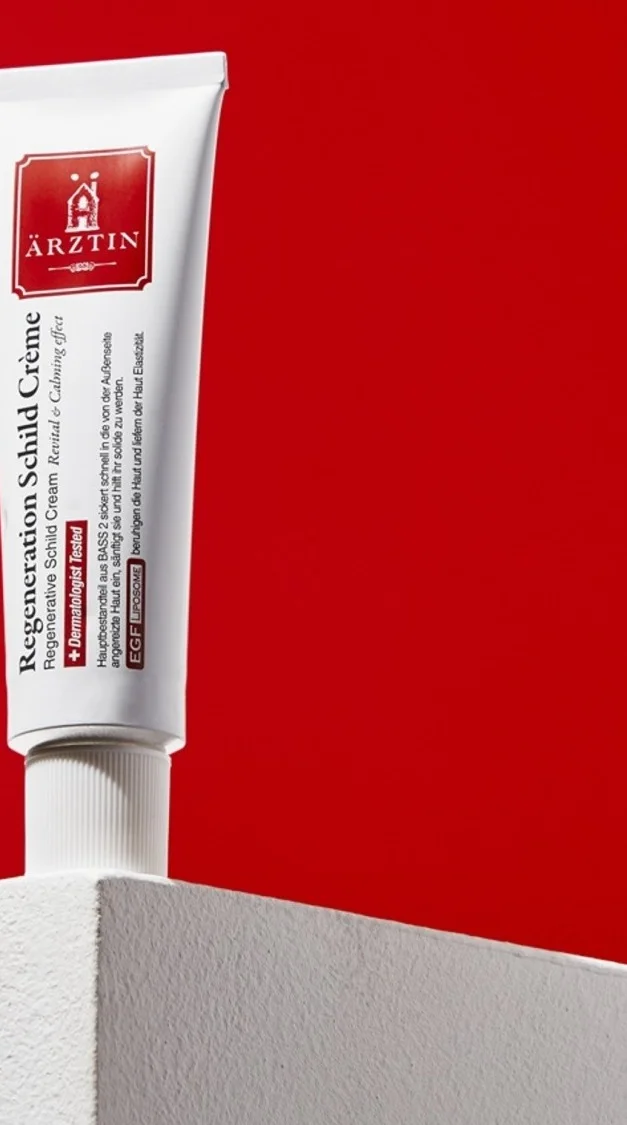 리제너레이티브 실트 크림Buy
주름 개선 기능성 화장품 · 탄력과 장벽을 함께 보는 리치 크림