
When elasticity doesn't feel like it used to, what changes in the skin
The feeling that skin has lost its firmness doesn't come from a single cause. Age-related changes in skin structure, cumulative UV exposure, dryness, and repeated facial expression habits all work together. Distinguishing what's actually changing first helps you decide where to focus in your routine.
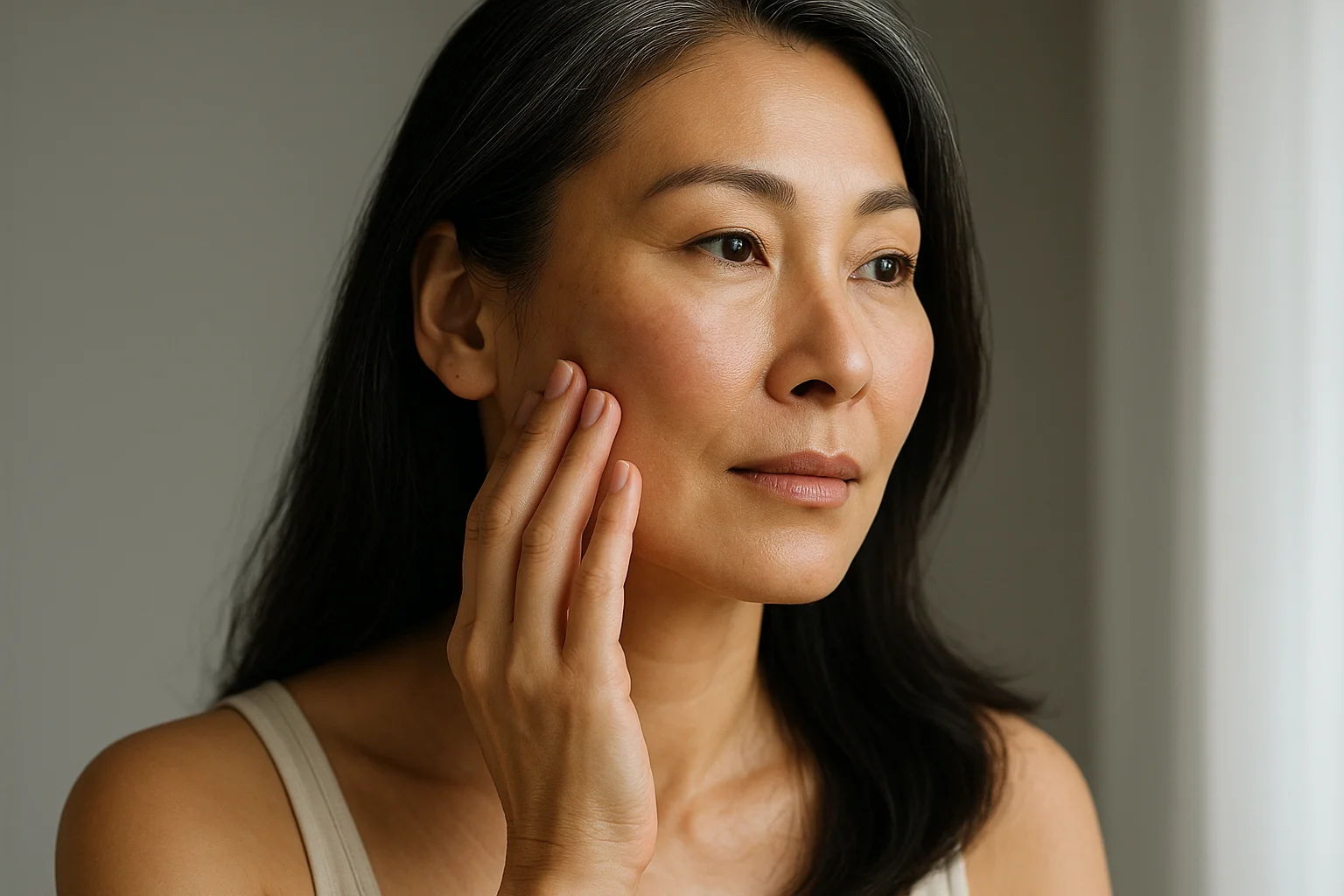
Sometimes what catches your eye in the mirror before wrinkles is a 'saggy feeling.' Elasticity is not a single indicator but an impression created by the overlap of several changes, so separating the causes makes the priorities for care clearer.
1. The structure that supports the skin changes
Inside the skin are proteins like collagen and elastin that support its shape. As we age, their amount and arrangement gradually change, and as a result, even the same expression returns to its original state at a different speed. This change is a natural process, and it is divided into areas that cosmetics can restore and areas they cannot.
2. Accumulated UV exposure plays a large role
A significant portion of the loss of elasticity is thought to be related more to the accumulation of UV exposure than to time itself. That's why, in the order of care, sun protection comes before any high-function product. The sunscreen you apply today affects your appearance years from now more than it affects your appearance today.
3. Dryness changes the impression
When moisture is lacking, texture becomes rougher and fine lines stand out more. This is a matter of condition, different in nature from structural change. Moisturizing alone won't change the structure, but the parts that appear more sagging than they actually are due to dryness can be addressed.
4. Facial expression habits create creases in place
Repeated expressions, like habitually frowning or keeping the mouth closed for long periods, create folds in the same spot. If fine lines only form in a particular direction, it's worth examining habits as well.
So where should we focus our effort
- Sun protection — every day, regardless of season. First in order of priority.
- Moisturizing and barrier care — the basics for addressing areas made more noticeable by dryness.
- Wrinkle-improvement functional items — an area where help can be expected within the scope reviewed by Korea's Ministry of Food and Drug Safety.
- Lifestyle habits — factors outside of cosmetics, such as sleep, smoking, and facial expression habits.
Skin condition and perception vary by individual. If changes are sudden or accompanied by other symptoms, please consult a specialist or similar professional.
| Cause | Nature | What care can do |
|---|---|---|
| Structural change | A natural process due to aging | Not an area cosmetics can restore |
| Accumulated UV exposure | A matter of exposure amount rather than time | Sun protection — first in order of priority |
| Dryness | A matter of condition, not structure | Can be addressed with moisturizing and barrier care |
| Facial expression habits | Repeated folds in the same spot | Worth examining habits as well |
Frequently asked questions
- At what age does loss of elasticity begin?
- It's not a change that starts uniformly at a specific age. There is significant individual variation depending on genetics, UV exposure, and lifestyle habits.
- Can cosmetics restore elasticity?
- There is a defined range of what cosmetics can address. For functional items like wrinkle improvement that have been reviewed by Korea's Ministry of Food and Drug Safety, you can expect help within that scope, but changing the internal structure of the skin is not within the domain of cosmetics.
- Does good moisturizing alone help with elasticity?
- The parts that appear more sagging than they actually are due to dryness can be improved. However, moisturizing and structural change are different matters in nature.
Reviewed by 아비쥬의원 의료진. (September 2, 2026)