
How much cream is the right amount — not too much, not too little
Applying more cream does not proportionally increase the amount absorbed, and conversely, applying too little makes the oil film thin, causing the skin to feel dry quickly. Generally, it is practical to use an amount squeezed out to about one or two finger joints in length as a guide, spread it thinly over the whole face, and supplement only especially dry areas with layered application.
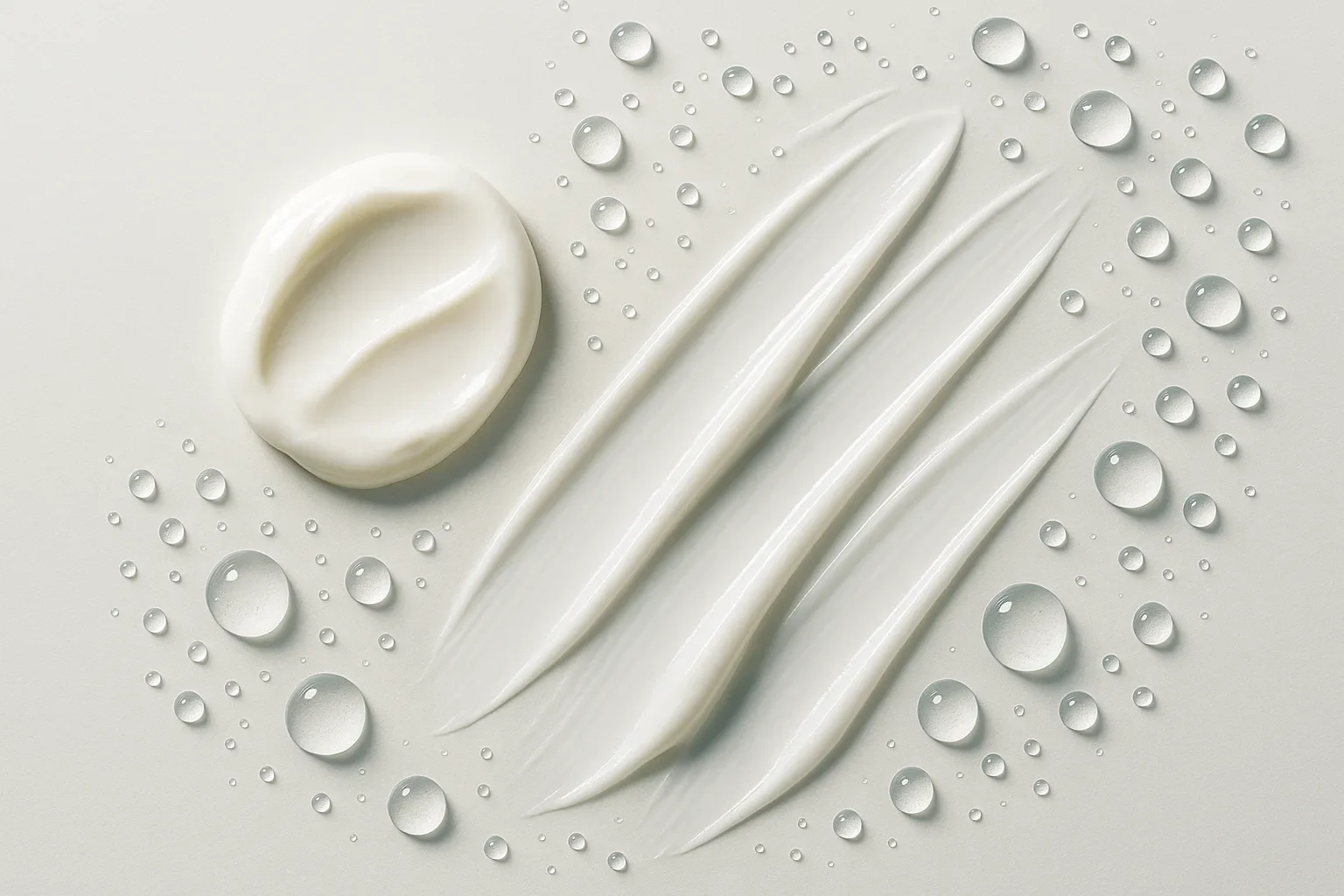
If you find yourself hesitating with cream at your fingertips, wondering 'is this enough,' that sense isn't wrong. Cream serves as the final step of skincare after cleansing, creating an oil film that prevents moisture from evaporating, and this oil film tends to depend more on whether it's evenly covered than on its thickness.
So in this article, we'll go over how much cream to dispense and how to reasonably divide it when applying.
- 1Dispensing the base amountDispense about one to two finger joints' worth onto the back of the hand
- 2Dividing by areaDistribute in dots on the forehead, cheeks, nose, and chin
- 3Layering on dry areasAfter applying overall, add extra only where it feels tight
- 4Finishing on the neck and hairlineContinue applying with the remaining amount
Why 'more is better' isn't the case
The main ingredients of cream are mostly composed of oils and moisturizing ingredients. Oil-based ingredients like squalane and shea butter form a thin film on the skin's surface that slows the rate of moisture evaporation, while ingredients like panthenol, betaine, and trehalose work to hold moisture in place. Since this function operates sufficiently once a film of a certain thickness forms, applying it even thicker beyond that doesn't increase the effect proportionally.
In fact, applying more than necessary can cause leftover cream on the surface to pill or clump, lifting makeup or creating a heavy feeling around the pores. Conversely, if the amount is too little, the oil film becomes thin and dries out quickly, and especially in dry seasons, tightness can recur repeatedly.
In the end, what matters more than 'amount' is whether it's spread thinly and evenly over the entire face. If a certain area is left with too little, that's often the spot where dryness signals appear first.
The right amount varies by skin type and season
The right amount isn't a fixed value—it shifts slightly depending on skin condition and season. For dry skin, or during seasons when indoor air is dry from heating or air conditioning, it's natural to use a bit more than the base amount; for oily skin, or during humid seasons, using slightly less than the base amount makes sense.
During periods when skin is sensitive or flaking, applying thin layers multiple times can help reduce irritation more than simply increasing the amount. Piling on a thick layer at once can leave unabsorbed cream that creates friction, which can actually lead to irritation.
Conversely, for seasons or areas where an oily feel is uncomfortable, it may be better to use less cream while adding a light patting motion at the final step to help it absorb.
| Situation | Direction for adjusting amount |
|---|---|
| Dry skin / dry season | A bit more than the base amount + use layering |
| Oily skin / humid season | Slightly less than the base amount |
| Sensitive / flaking periods | Apply thin layers multiple times rather than increasing amount |
| Areas where oiliness feels uncomfortable | Reduce the amount and pat lightly to absorb |
The step-by-step order for applying cream
1) Dispense the standard amount — take out an amount often described as 'about one or two finger joints' onto the back of the hand or palm. This is close to the base amount that can thinly cover the entire face.
2) Divide by area — dot it onto broad areas like the forehead, cheeks, nose, and chin, then spread it from the inside out and from the bottom up. Concentrating it in one spot leaves that area too thick while other areas go bare.
3) Layer over dry areas — if certain spots, like around the cheeks or eyes, feel especially tight, apply a small amount over just that area after covering the whole face once. Rather than concentrating the amount there from the start, it's more natural and avoids unevenness to first spread it evenly, then supplement the areas that need more.
4) Finish with the neck and hairline — taking out the remaining amount onto the hand and extending it down to the neck lets you use the cream without waste.
When is layering necessary
Layering is a different concept from 'increasing the amount.' Instead of applying a thick layer at once, it builds up thin layers repeatedly, so the absorption burden is lighter and unevenness is reduced. This method is especially useful for areas that are flaking or feel especially tight, or when applying a finishing cream right after a sheet mask has added moisture.
However, if skin still feels tight even after repeated layering, the issue may not be the amount of cream but that the formulation itself doesn't suit that season or skin condition. In such cases, switching to a richer type with a higher oil content could be one option.
Once you've gotten the amount right, the next step is designing the finishing formulation
Once the habit of keeping to the right amount and following the correct order of application has settled in, the next thing worth paying attention to is what the cream itself was designed to achieve. Even applying the same amount, a cream focused on hydration and a cream that considers elasticity care on top of hydration can leave a different finishing texture. 에르쯔틴 리제너레이티브 실트 크림 is a rich-type formulation designed with ceramide NP and squalane to form an oil film, while also containing adenosine, which has undergone functional review for wrinkle improvement, so that hydration and elasticity care can be considered together in the final step of a daily skincare routine. However, this too is easiest to experience in its intended texture only when the right amount is applied thinly and evenly.
Frequently asked questions
- Is there a specific standard for the right amount of cream?
- Since formulation density varies by product, there's no single exact standard, but a commonly used guideline is to squeeze out an amount about the length of one to two finger joints as the base amount for the entire face. In practice, it's realistic to use this as a default and adjust slightly according to skin condition and season.
- Is applying more cream better?
- Not necessarily. Once the oil film from the cream reaches a certain thickness, its function doesn't increase further, and excess cream left on the surface may instead pill or create a heavy feeling. It's more important to check whether the cream has been spread evenly over the whole face than to focus on the amount.
- Should the amount be different depending on the area?
- Yes. It's common to apply less on oily areas like the forehead and nose, and pay a bit more attention to drier areas like the cheeks or around the eyes. Rather than dispensing different amounts for each area from the start, it's easier to control by applying evenly overall first and then layering extra only on dry areas.
- Is layering the same as increasing the amount of cream?
- No, they're different. Layering means building up several thin layers instead of applying one thick layer at once, which tends to put less strain on absorption and cause less unevenness. Since it's gentler than simply increasing the amount, it's a method more recommended for dry or sensitive areas.
- If skin still feels tight after applying cream, is it a problem with the amount?
- If tightness persists even after increasing the amount or repeating layering, the formulation itself may not suit your current skin condition or the season. In such cases, it's recommended to try switching to a formulation with a higher oil content, and if symptoms persist for a long time, to consult a dermatologist or other specialist.
Reviewed by 아비쥬의원 의료진. (September 5, 2026)
Related products
 리제너레이티브 실트 크림Buy
주름 개선 기능성 화장품 · 탄력과 장벽을 함께 보는 리치 크림