
Skin Care Methods That Change by Age Group: 30s, 40s, 50s
Skin concerns differ in nature depending on age group. The 30s can be summarized as the period when subtle changes in hydration and elasticity begin, the 40s as the period when reduced elasticity and expression wrinkles become noticeable, and the 50s as the period when dryness and changes in skin texture stand out. Ultimately, the key is to first understand what your skin needs at your particular age, and adjust the priorities of moisturizing, elasticity, and barrier care accordingly.
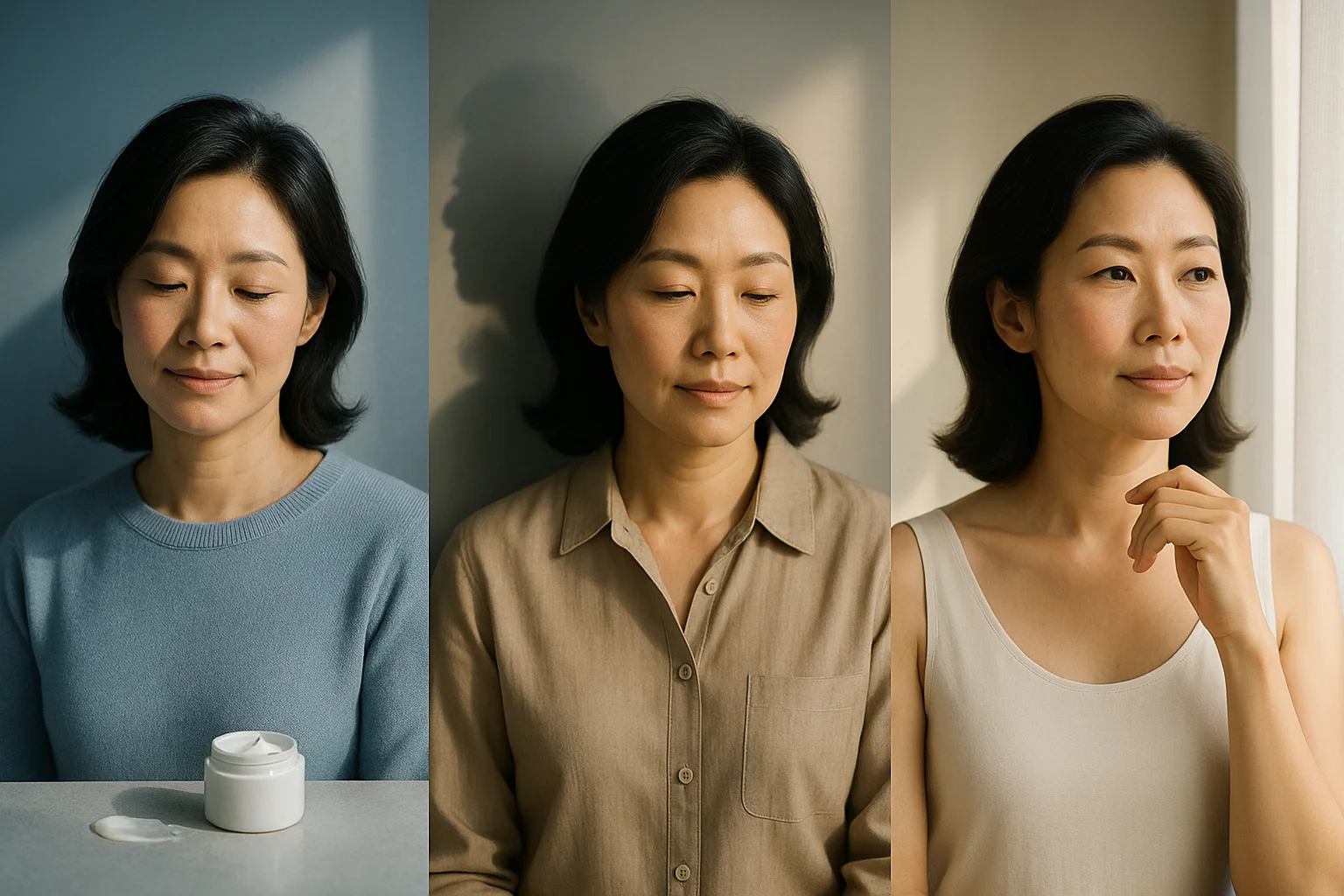
"This is the cosmetic I used to use, but lately it somehow feels lacking" — many people say this starting from their late 30s. Skin doesn't suddenly change with age; its texture shifts very gradually. So simply recognizing what stage your skin is currently at makes the direction of care much clearer.
- 1Check the basics of cleansing and moisturizingSupply moisture after cleansing
- 2Observe skin signalsDistinguish tightness, loss of elasticity, and dryness
- 3Add ingredients for specific concernsElasticity care or barrier/moisture reinforcement
- 4Finish with an oil-based creamPrevent moisture evaporation
Why skin changes as we age
Inside the skin, elastic fibers like collagen and elastin, along with hyaluronic acid that holds onto moisture, are densely arranged. When we're young, this structure is actively maintained, but over time its density and orderly arrangement naturally loosen little by little.
At the same time, the skin's surface barrier — the layer made up of lipid components such as ceramides, cholesterol, and fatty acids — also tends to gradually thin. When the barrier weakens, moisture escapes more easily, and the skin becomes more sensitive to external irritation. Added to this are external factors like facial expression habits, UV exposure, and lifestyle patterns, which is why noticeable changes appear differently by age group.
In other words, the 'slight tightness' of the 30s, the 'impression of lost elasticity' of the 40s, and the 'overall dryness and rough texture' of the 50s are all on the same continuum — it's just that different aspects stand out at each stage.
Skin in your 30s — the period when signs of change begin
In your 30s, skin concerns often start not as major trouble but as a subtle feeling that things 'aren't like they used to be.' Makeup doesn't sit as well, you feel tightness in the afternoon, or your skin tone looks slightly dull.
Since big changes haven't fully arrived yet at this stage, simply revisiting sun protection and moisturizing habits can be enough to expect meaningful care effects. Rather than aggressively adding highly active products, the key is to strengthen the basics so your skin can stay comfortable.
Skin in your 40s — a time when elasticity and expression lines become noticeable
Once you reach your 40s, many people often use the phrase 'I've lost elasticity.' Areas that become more prominent when making expressions, like nasolabial folds or fine lines around the eyes, start to stand out, and you may feel that your skin looks less firm.
At this stage, moisturizing alone may leave something to be desired, so many people also incorporate ingredients that can help support elasticity care. However, rather than expecting immediate change just because you've started a routine, it's more realistic to approach it with the mindset of managing your skin condition through a consistent routine.
Skin in your 50s — a time when dryness and changes in texture stand out
In your 50s, as barrier function weakens, dryness becomes the most noticeable concern. More people find that their skin feels tight right after washing their face in the morning, flakes, or feels more sensitive than before.
At this stage, priority should go to gentle moisturizing care that soothes the barrier rather than stimulating ingredients. It makes sense to build a solid foundation with ingredients that can address soothing and moisturizing at the same time, and then add elasticity care on top as needed.
How to approach care by age, step by step
Step one — check the basics of cleansing and moisturizing. This is the first thing to confirm regardless of age.
Step two — observe what signals your skin is currently sending. Whether it's tightness, loss of elasticity, or overall dryness determines the next step.
Step three — add ingredients tailored to your concern. If elasticity is a concern, add elasticity care ingredients; if dryness is severe, increase the proportion of barrier lipids and moisturizing ingredients.
Step four — always finish with a cream that has some richness to lock in moisture so it doesn't evaporate. This final step becomes even more important during dry seasons or at ages when dryness is more pronounced.
This flow is the same whether you're in your 30s or your 50s, but it's helpful to understand that the types and proportions of ingredients used at each step vary a little depending on age.
Points to keep in mind when deciding on a care direction
When choosing products, it helps to develop the habit of checking the full ingredient list rather than relying on flashy efficacy claims. It's enough to check whether ingredients that support the barrier and moisturizing, such as ceramides, panthenol, and allantoin, are included together with ingredients designed for elasticity care.
Of course, age group is just one broad guideline—how skin actually responds varies from person to person. Even among people in their 30s or 40s, the intensity of care needed can differ depending on individual constitution or lifestyle habits. So even if you adjust your routine according to your age group, when trying a new product for the first time, it's best to do a patch test by applying a small amount to the inner arm and observing the reaction for about a day. If irritation such as redness or stinging continues, stop use immediately, and consult a dermatologist if necessary.
Frequently asked questions
- What should I start with for skincare in my 30s?
- It's better to check the basics first rather than making big changes. Make sure sun protection and moisturizing are being done properly, and observe subtle signals your skin sends (tightness, makeup not sitting well, etc.), adding needed ingredients little by little without overdoing it.
- What direction is good for elasticity care in your 40s?
- Many people keep moisturizing as the base while also including ingredients that can help with elasticity care. However, it's more realistic to approach this from the perspective of managing skin condition through a consistent routine rather than expecting immediate change.
- How should I manage dryness in my 50s?
- Since this is a period when barrier function weakens, gentle care focused on soothing and moisturizing should come before irritating ingredients. It's recommended to first build a foundation with lipid ingredients and moisturizing ingredients that support the barrier, then add elasticity care as needed.
- Are there standards for choosing cosmetics by age group?
- It helps to develop the habit of checking the full ingredient list rather than relying on efficacy claims. It's best to first check whether ingredients suited to your skin concerns (dryness, loss of elasticity, texture, etc.) are included, and to test new products on a small area first for safety.
- Why is there such individual variation in skincare?
- Because genetic factors, lifestyle habits, degree of UV exposure, skin type, and more all differ, even people in the same age group can see different results and speeds in their skin care. If abnormal reactions persist, it's best to consult a specialist.
Reviewed by 아비쥬의원 의료진. (August 31, 2026)