
Sleep and Skin: What's Actually Related and What's Not
The claim that lack of sleep affects skin condition has some basis, but expressions like "the skin is completely regenerated while you sleep" are closer to exaggeration. Sleep is more like a time for the skin to recover its condition from daytime stress, and physical factors that act independently of sleep, such as posture or friction from bedding, also need to be addressed separately.
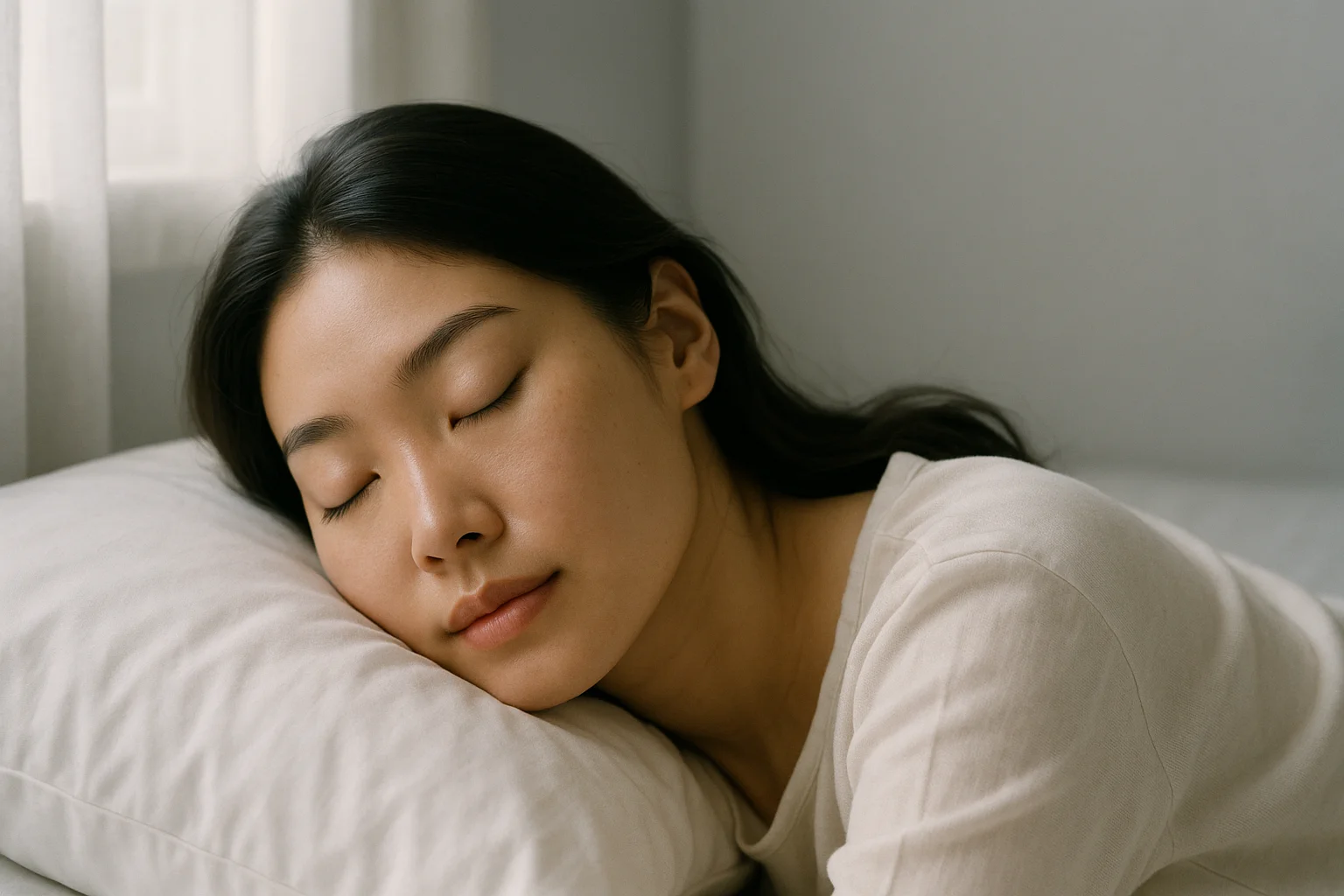
"My skin looks dull because I didn't sleep well yesterday" — everyone has probably said this at least once. And indeed, when you look in the mirror, your complexion can look dull and your eye area can look puffy. But it's worth distinguishing whether this is really a problem with the skin itself, or whether it just 'looks' that way because of your overall condition.
When talking about the relationship between sleep and skin, the phrase that comes up most often is 'skin recovers while you sleep.' This statement itself isn't wrong, but it often circulates mixed with exaggeration. Today, let's separate and organize what sleep actually does for skin from what's commonly misunderstood.
- 1Exposure to stimuli during the dayAccumulation of external stimuli such as UV rays, friction, and pollution
- 2Finishing care before bedReplenishing moisture and oil to prepare for losses during the night
- 3Relative rest during sleepA time to step away from external stimuli and settle the skin's condition
- 4Checking condition after wakingPerceived differences arise depending on sleep quality and posture
What effect does lack of sleep have on skin?
When sleep duration is insufficient or sleep quality declines, there are changes that appear immediately in the skin. Typical examples include dullness from reduced blood circulation, and sensitivity from changes in the secretion of stress hormones like cortisol. This is not unrelated to why skin tends to react especially sensitively or break out after several days of poor sleep.
Another change that's easy to notice is the skin barrier's ability to retain moisture. When sleep is lacking, the skin tends to lose its ability to hold onto moisture compared to usual, so there are days when you feel drier even with the same moisturizing routine. However, this is an area with large individual differences—some people show signs after just one night of poor sleep, while others show little effect even after several consecutive nights of poor sleep.
To sum up, it is somewhat true that lack of sleep can negatively affect skin condition. However, it's hard to say this directly leads to extreme outcomes like 'wrinkles suddenly increasing' or 'skin aging by several years'; it's more accurate to say it affects overall condition, sensitivity, and the degree of moisture retention.
How true is the saying that "skin recovers at night"?
This expression is half true and half exaggerated. The true part is that skin, which has been exposed to UV rays and external irritants during the day, gets relatively more time at night to be free from external stimuli and settle into stability. During this time, the skin gets some room to recover its condition from the stress accumulated during the day.
The exaggerated part is when this time is described as if the skin gets 'rebooted' or 'completely remade.' Skin condition fluctuates slightly moment to moment; it isn't an organ that dramatically transforms within a few nighttime hours. Phrases often used in night cream advertisements, like 'amazing changes while you sleep,' are reasonably seen as largely marketing exaggeration.
In the end, it's closer to reality to understand nighttime as something like 'rest' for the skin, not a 'reset button.'
Is sleeping posture really related to wrinkles?
This is actually more of a physical issue caused by sleeping 'posture' and 'friction' rather than the 'quality' of sleep. If you repeatedly sleep for a long time with your face pressed against the pillow in the same direction, the pattern of that area's skin being pressed and folded repeats every single night. It's commonly mentioned across various observations that the accumulation of this physical friction and pressure makes it easier for fine lines in a certain direction to become established.
On the other hand, sleeping on your back is known to put relatively less pressure on the face, which helps reduce the risk of this kind of friction-induced wrinkle formation. However, forcibly changing your sleeping posture could actually lower your sleep quality, so if you try to correct your posture, it's better to approach it without overdoing it.
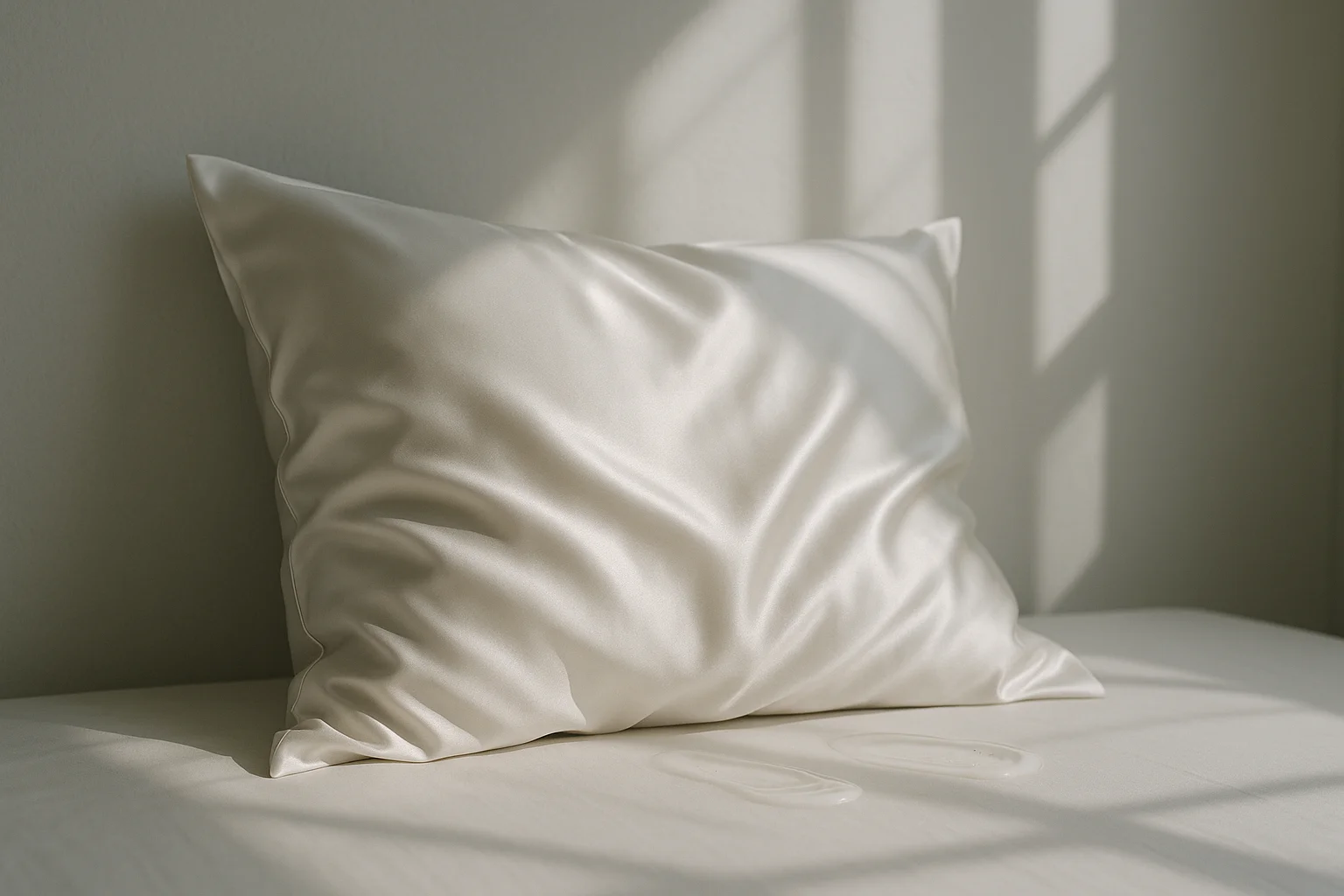
Pillowcase material is also worth considering. It's often said that smoother materials create less friction than rough cotton materials, and this can be seen as a purely physical approach to reducing friction, separate from sleep quality itself.
So, is a separate nighttime routine actually necessary?
In short, a completely different nighttime-only routine isn't essential. However, there are two things worth keeping in mind given the characteristics of nighttime. First, there's no need to apply products containing UV-blocking ingredients at night. Second, it can help to supplement moisture retention with a relatively richer texture than what you'd use during the day.
During sleep, changes in indoor humidity or the temperature under the blanket can create an environment where moisture on the skin's surface evaporates more easily than during the day. That's why many people find it a practical standard for nighttime care to build the habit of using an oil-rich texture in the final step before bed to lock in moisture.
In summary, rather than thinking of it as a separate nighttime-only routine, it's enough to understand it as placing a bit more emphasis on moisture and elasticity care during the nighttime hours, when the skin is free from daytime stressors like UV rays, friction, and pollution.
The final step: which cream to finish with
If you've ever noticed on a morning after insufficient sleep that your skin looks especially saggy and lacking in elasticity, that's likely the result of moisture retention being disrupted overnight. On days like this, making it a habit to use a texture that locks in moisture in the final step before bed can help, and placing a rich-type product like 에르쯔틴 리제너레이티브 실트 크림, which contains adenosine and has undergone functional review for wrinkle improvement, at the final nighttime step is also an option worth considering. That said, since the relationship between sleep and skin varies greatly by individual, it's more realistic to adjust your routine while observing your own sleep patterns and skin condition together.
Frequently asked questions
- Does lack of sleep make skin worse?
- Many observations commonly mention that lack of sleep can affect skin condition. Dullness from reduced blood circulation, increased sensitivity, and reduced moisture retention are cited as typical changes, but the degree varies greatly from person to person.
- Is it true that skin recovers at night?
- It's not entirely false, but there's an exaggerated element to it. Night is closer to a relative rest period during which skin steps away from daytime stimuli and settles its condition, and expressions like 'it's completely remade while you sleep' are reasonably seen as marketing exaggeration.
- Does sleeping posture affect wrinkles?
- Yes, if you repeatedly sleep with your face pressed against a pillow in the same direction, the accumulated physical friction and pressure can make fine lines in a particular direction more likely to set in. That said, it's better to approach this without forcing yourself to change posture, staying within a comfortable range.
- Is a dedicated nighttime routine essential?
- A completely separate nighttime-only routine isn't essential. However, there's no need to apply sunscreen products at night, and supplementing moisture retention with a richer formulation than during the day can be helpful.
- If I sleep well, will my skin improve?
- There's a possibility that improved sleep quality could positively affect skin condition, but it's hard to say that this alone fundamentally resolves issues like wrinkles or reduced elasticity. It's realistic to understand sleep as just one of many factors in skin care.
Reviewed by 아비쥬의원 의료진. (September 2, 2026)