
Why cholesterol and fatty acids are included together
It's no coincidence that ingredients like cholesterol and palmitic acid (a fatty acid) are listed alongside ceramide in a full ingredient list. These three lipids serve different roles in constituting the skin barrier, and since having only one of them does not complete a barrier care formulation, they are often combined together. Understanding this combination lets you look, when choosing a cream, not at 'how many lipid ingredients are included' but at 'what ratio they are combined in'.
If you look closely at a cosmetic's full ingredient list, you will often notice cholesterol listed right after ceramides, followed by a fatty acid such as palmitic acid. There is a reason these three tend to always appear together: each takes on a different position and role among the ingredients that make up the barrier.
This article organizes, from the perspective of ingredient design, why cholesterol and fatty acids are blended together with ceramides, and what meaning this combination carries when read on the full ingredient list.
Why is a single lipid insufficient to form the barrier?
The lipids that fill the spaces between skin cells in the stratum corneum are known to exist not as a single ingredient but as a combination of several lipids blended in a certain ratio. If ceramides serve as the framework of the lipid layer, cholesterol and fatty acids are understood as components that settle into the spaces in between and help the overall structure of the lipid layer remain stable.
That is why, in cosmetic formulation, it is common to include cholesterol and fatty acids together rather than using ceramides alone. This is because only when all three ingredients are present together can a cream come closer to reflecting the skin's original lipid composition. This does not mean that one ingredient is superior to another, but rather should be understood as a structure in which each takes on a different role.
What role does cholesterol play?
Cholesterol is one of the lipid components produced within the skin itself, and is known to be positioned between ceramides and fatty acids in the lipid layer that makes up the barrier, playing a role in maintaining the flexibility of that lipid layer.
The cholesterol formulated in cosmetics is a component meant to support this role, and it works less as something that separately piles up or accumulates on the skin, and more as a concept of being absorbed and organized as one of the components making up the lipid layer. The expression 'cholesterol builds up' is not an accurate description in the context of cosmetic ingredients, and it is more correct to understand it as a role played as a component of the barrier lipid structure.
Why are palmitic acid and fatty acids necessary?
Palmitic acid is a fatty acid-type component, known to form a combination together with ceramides and cholesterol in the lipid layer, taking on one part of the barrier lipid structure. It is a commonly mentioned concept in lipid formulation design that if fatty acids are left out, the balance of the lipid layer may become unstable with ceramides and cholesterol alone.
If a fatty acid-type component is listed alongside ceramides and cholesterol on the full ingredient list, this can be seen as a signal that the cream was designed to address barrier lipids as a combination rather than as a single component.
Summarizing the relationship between the three lipids
To summarize, ceramides can be classified as the component that forms the structure of the lipid layer, cholesterol as the component that supports the flexibility of that structure, and fatty acids as the component that helps balance the lipid layer together with the others. Only when all three components are formulated together can it be said that the product is equipped with barrier lipid-type components, and this can be seen as differing in formulation intent from a case where only one is included.
However, the fact that all three components are listed together on the full ingredient list does not mean the exact formulation ratio can be known. Under cosmetics regulations, the full ingredient list is written in order of content amount, but the specific ratio is not disclosed, so it is practical to refer to this only at the level of confirming the fact that they are 'included together.'
| Component | Role within the lipid layer |
|---|---|
| Ceramide | Component that forms the structure of the lipid layer |
| Cholesterol | Component that supports the flexibility of the lipid layer |
| Palmitic Acid (fatty acid) | Component that helps balance the lipid layer together |
How to check for this combination on the full ingredient list
If you want to check whether a cream contains this combination of three components when choosing one, look at the full ingredient list to see whether fatty acid-type components such as cholesterol and palmitic acid appear near the ceramide listing (such as Ceramide NP). If the three components are listed in close proximity, this can be interpreted as a higher likelihood that the barrier lipids were designed as a combination.
On top of this, the ultimate purpose of taking care to include these lipid-type components is to keep the skin barrier in an organized state so that elasticity and texture are not disrupted. Since elasticity-care components cannot properly perform their role no matter how good they are when the barrier has broken down, the formulation of lipid-type components can be seen as ultimately leading to the foundational stage of elasticity and wrinkle care.
The final step: which cream should you finish with?
Once you've developed the habit of checking whether the three barrier lipids are combined, the next thing to look at is what ingredients this lipid series is designed alongside within the cream. 에르쯔틴 리제너레이티브 실트 크림 is formulated with Ceramide NP, Cholesterol, and Palmitic Acid to cover the barrier lipid series, while also containing Adenosine, which has undergone functional wrinkle-improvement testing, so that barrier care and elasticity care can be addressed together within a single formulation. If you want to look further into the ratio between the lipid series ingredients and the functional ingredient, you can also refer to the full ingredient list.
Frequently asked questions
- What is the ideal ratio of barrier lipids?
- It is known that the skin's own barrier lipids consist of ceramides, cholesterol, and fatty acids in a certain ratio, but the exact blending ratio is not disclosed in a cosmetic's full ingredient list. It is practical to simply check whether the three ingredients are listed together as a reference point.
- Does cholesterol build up on the skin?
- The cholesterol blended into cosmetics is one of the components that makes up the barrier lipid layer, and is understood in terms of being absorbed and organized into it rather than acting by piling up or accumulating separately. It is more accurate to understand it as 'a role as a component of the lipid layer' rather than as 'accumulation.'
- What specific role does palmitic acid play?
- Palmitic acid is a fatty acid–type ingredient known to be involved, along with ceramides and cholesterol, in balancing the structure of the barrier lipid layer. It is an ingredient whose role tends to show up in combination with other lipid ingredients rather than on its own.
- How do products with only one of the three lipid ingredients differ?
- There may be products that contain only one or two of ceramides, cholesterol, and fatty acids, but there can be a difference in the completeness of the barrier lipid design compared to products that contain all three together. However, since the felt effect may vary depending on individual skin condition, testing on a small area before use is recommended.
- Does a lack of lipid-type ingredients also affect elasticity?
- Given that elasticity-care ingredients have difficulty fully performing their role when the barrier is unstable, the inclusion of lipid-type ingredients can be seen as a basic step for elasticity and wrinkle care. However, if adverse reactions persist, it is safer to consult a dermatologist or other specialist.
Reviewed by 아비쥬의원 의료진. (September 3, 2026)
Related products
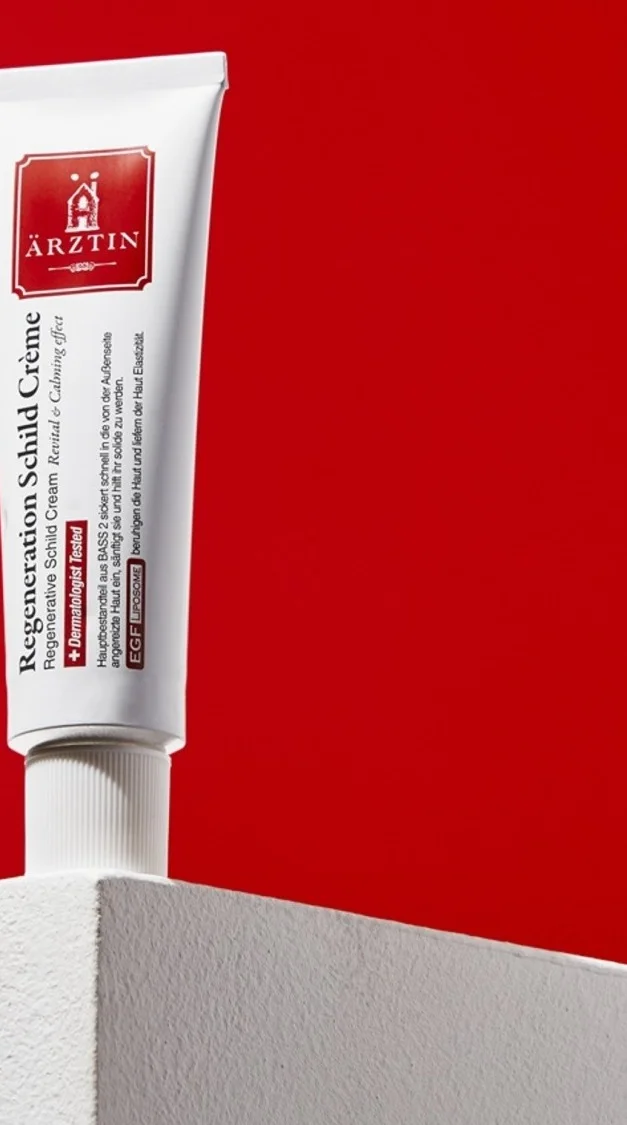 리제너레이티브 실트 크림Buy
주름 개선 기능성 화장품 · 탄력과 장벽을 함께 보는 리치 크림