
The Principle and Characteristics of Aesculus Hippocastanum (Horse Chestnut) Seed Extract
Aesculus Hippocastanum Seed Extract, also known as horse chestnut extract, is a plant-derived extract typically listed toward the latter part of a full ingredient list, where it functions as a supporting ingredient. Within the ingredient list, it is often placed alongside centella asiatica-derived ingredients and soothing/moisturizing ingredients like panthenol and allantoin, playing a role in conditioning the skin. Rather than focusing on the strength of a single ingredient, the key to understanding this ingredient is looking at where it is positioned within the overall formulation.
When reading the ingredient list on the back of a cosmetic product, you may come across the unfamiliar name 'Aesculus Hippocastanum Seed Extract' among other ingredients. The name alone makes it hard to guess its role, but by examining its position in the ingredient list and the ingredients listed around it, you can get a sense of the role this ingredient plays within the formulation.
Where Is Aesculus Hippocastanum Seed Extract Positioned in the Ingredient List?
Under cosmetic labeling regulations, ingredients are generally listed in descending order of concentration, but ingredients below a certain low concentration threshold may be listed out of strict order. Aesculus Hippocastanum Seed Extract is often found in the middle-to-latter section of the ingredient list, where plant extracts and conditioning ingredients are typically listed. This suggests that this ingredient is not a primary base ingredient but rather occupies a supporting role within the overall formulation.
Indeed, looking at the full ingredient list of the Sheald Cream, Aesculus Hippocastanum (Horse Chestnut) Seed Extract is listed alongside plant-derived ingredients such as caffeine, lactic acid, and Cardiospermum Halicacabum Flower/Leaf/Vine Extract, followed by sodium ascorbyl phosphate, rosemary leaf extract, and three types of peptides. This placement can be read as indicating that Horse Chestnut Seed Extract belongs not to the main framework of the formulation (purified water, emulsifiers, oils) but to a group of plant-derived ingredients added in a supportive role.
| Section of the Ingredient List | Characteristic | Examples |
|---|---|---|
| Front (Base) | Main raw materials forming the formulation | Purified water, glycerin, oils |
| Middle (Functional/Active) | Approved functional ingredients | Adenosine |
| Mid-to-late (Plant/Conditioning) | Soothing and conditioning support ingredient group | Centella asiatica-derived ingredients, Horse Chestnut Seed Extract, rosemary leaf extract |
| End (Low-concentration Active) | Active ingredients included in small amounts | Three types of peptides |
A Common Misunderstanding When Reading the Ingredient List
It is difficult to conclude that an ingredient listed later in the ingredient list is 'weaker in effect' or 'merely included for show.' Some ingredients are designed to perform their role even at low concentrations, and conversely, ingredients that appear in similar positions may serve entirely different formulation purposes. In particular, in the low-concentration section, it should be kept in mind that the listing order alone does not allow for an accurate comparison of concentration.
Therefore, rather than focusing on a single ingredient, it is more practical to look at what group of ingredients it is grouped with, and whether that combination aligns with the overall direction the product is aiming for.
Formulation Context Revealed When Viewed Alongside Other Ingredients
Rather than concluding the role of Horse Chestnut Seed Extract alone, it is a practical way to read the ingredient list by inferring the overall design intent through the characteristics of the ingredients combined with it. In the case of the Sheald Cream, three Centella asiatica-derived ingredients (asiaticoside, madecassic acid, asiatic acid) are responsible for skin soothing, ceramide NP, cholesterol, and palmitic acid form the lipid series that make up the barrier, and panthenol and allantoin support moisturizing and soothing. Horse Chestnut Seed Extract is positioned near this group of soothing and conditioning ingredients, and can be seen as belonging to a formulation overall aimed at refining skin texture.
However, this is only contextual within the formulation and is not grounds for concluding that an individual ingredient produces a specific effect. The actual usage feel and skin response of cosmetics can vary depending on the overall formula and individual skin condition.
A Helpful Order to Check When Reviewing the Ingredient List
① First check the front section (base such as purified water, oils, emulsifiers) to understand the character of the formulation, ② check the middle section for approved functional ingredients (e.g., adenosine), ③ look at the subsequent plant extracts, fermented ingredients, and soothing ingredient groups to see what direction the formulation is aiming for, and ④ finally check for the presence of low-concentration active ingredients such as peptides — following this order helps in reading the full ingredient list.
Reading it step by step this way allows even an unfamiliar-sounding ingredient like Horse Chestnut Seed Extract to be understood in the context of 'what aspect it supports within the overall formulation.'
Final Step: Which Cream to Finish With
In the full ingredient list of the ARZTIN Regenerative Sheet Cream, Aesculus Hippocastanum (Horse Chestnut) Seed Extract is also listed alongside plant-derived ingredients such as Cardiospermum Halicacabum Flower/Leaf/Vine Extract and Rosemary Leaf Extract. This combination forms part of the overall formulation, which brings together adenosine (a functional ingredient notified for wrinkle improvement), an elasticity care design featuring 3 types of peptides, 3 types of Centella asiatica-derived soothing ingredients, and barrier lipid ingredients such as Ceramide NP and cholesterol. If you have the habit of carefully examining full ingredient lists, you can refer to such combination structures to help choose products suited to your own concerns about elasticity and dryness.
Frequently asked questions
- Is Aesculus Hippocastanum Seed Extract the same as horse chestnut extract?
- It is an extract obtained from the seeds of the horse chestnut (Aesculus hippocastanum) tree, and under cosmetic ingredient naming conventions, it is listed as 'Aesculus Hippocastanum Seed Extract.' It is generally indicated by this standard name on ingredient lists.
- Does being listed toward the end of the ingredient list mean it has no effect?
- That cannot be concluded definitively. The listing order for low-concentration ingredients can vary, and such ingredients are sometimes designed to serve a specific formulation purpose even in small amounts. Rather than focusing on order alone, it is more useful to look at the context of the ingredient groups it is combined with.
- Can this ingredient alone improve wrinkles or elasticity?
- It is difficult to attribute efficacy to a single ingredient alone. Functional claims on cosmetics are based on the entire formulation as reviewed and approved, and in the case of cream products, wrinkle-improvement functionality is typically recognized based on officially designated ingredients such as adenosine.
- Can sensitive skin use products containing this type of plant extract?
- Reactions to plant extracts can vary by individual, even for sensitive skin. It is recommended to test a small amount on the inner arm before use to check for reactions, and to discontinue use and consult a dermatologist if symptoms such as redness or itching persist.
- What should you check first when reading an ingredient list?
- It helps to first check the ingredients at the beginning of the list that form the base of the formulation (aqueous phase, oil phase, emulsifiers), then check for officially designated functional ingredients, and finally review the composition of soothing and moisturizing ingredient groups.
Related products
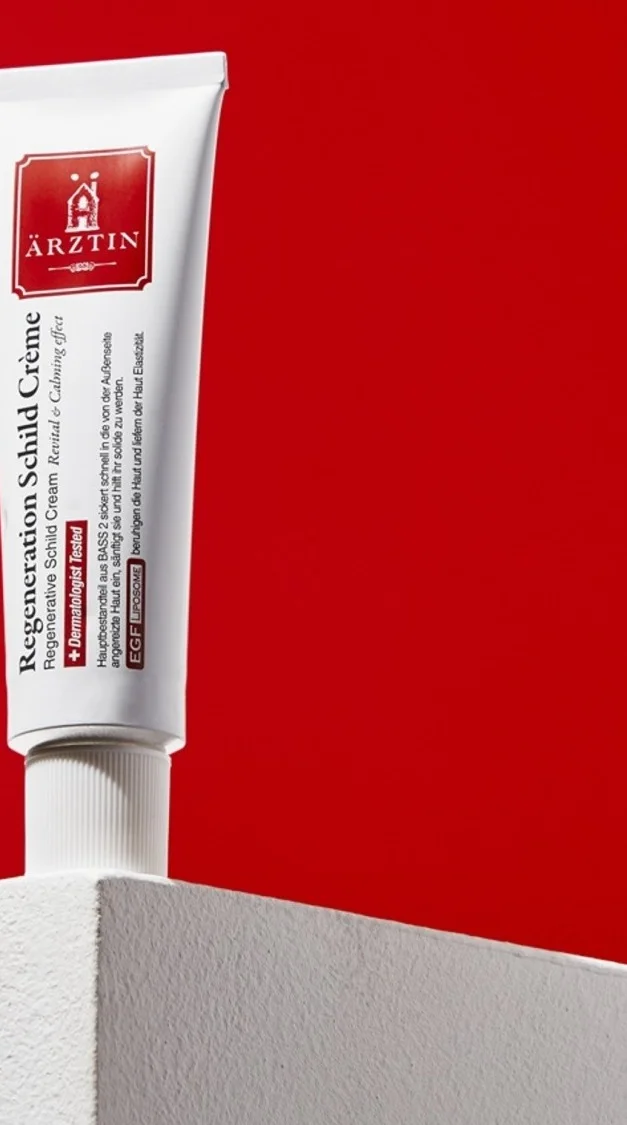 리제너레이티브 실트 크림Buy
Anti-wrinkle functional cosmetic · A rich cream that addresses both elasticity and barrier care
- 리제너레이티브 실트 크림Buy
Anti-wrinkle functional cosmetic · A rich cream that addresses both elasticity and barrier care
- 리제너레이티브 실트 크림Buy
Anti-wrinkle functional cosmetic · A rich cream that addresses both elasticity and barrier care
- 리제너레이티브 실트 크림Buy
Anti-wrinkle functional cosmetic · A rich cream that addresses both elasticity and barrier care
- 리제너레이티브 실트 크림Buy
Anti-wrinkle functional cosmetic · A rich cream that addresses both elasticity and barrier care