본문 바로가기
Topic guide

Wrinkle & Elasticity Care

Fine lines and loss of elasticity often share overlapping causes. Age-related changes, UV exposure, dryness, and repeated facial expressions all work together. This topic guide outlines what changes over time, the extent to which functional cosmetics can address these issues, and how to prioritize steps within a routine.

Articles in this topic

Skin Care Methods That Change by Age Group: 30s, 40s, 50s · Editorial Image
Skin Concerns

Skin Care Methods That Change by Age Group: 30s, 40s, 50s

Skin concerns differ in nature depending on age group. The 30s can be summarized as the period when subtle changes in hydration and elasticity begin, the 40s as the period when reduced elasticity and expression wrinkles become noticeable, and the 50s as the period when dryness and changes in skin texture stand out. Ultimately, the key is to first understand what your skin needs at your particular age, and adjust the priorities of moisturizing, elasticity, and barrier care accordingly.

When Pores Look Stretched, the Relationship Between Elasticity and Pores · Editorial Image
Skin Concerns

When Pores Look Stretched, the Relationship Between Elasticity and Pores

If your pores look vertically elongated and stretched every time you look in the mirror, this is often not because the pores themselves have gotten bigger, but because reduced skin elasticity causes the tissue around the pores to sag, making them stand out like shadows. In other words, a significant part of pore concerns is connected to the elasticity structure beneath the skin's surface. Understanding the cause makes the direction of care much clearer.

Criteria for choosing wrinkle-improving functional cosmetics, check this first · editorial image
Care Guide

Criteria for choosing wrinkle-improving functional cosmetics, check this first

Whether a product is truly a wrinkle-improving functional cosmetic should be confirmed not by advertising phrases but by the 'functional cosmetic' label on the product container or insert and by whether it contains an officially notified ingredient that has passed Korea's Ministry of Food and Drug Safety review. It is a practical standard to check together whether an officially notified ingredient such as adenosine is actually included, and whether moisturizing and barrier care ingredients are also designed into the formulation.

Why Centella Asiatica (Cica) has long been used in soothing care · editorial image
Ingredients

Why Centella Asiatica (Cica) has long been used in soothing care

Ingredients derived from Centella Asiatica (Cica) contain asiaticoside, madecassic acid, and asiatic acid together, making them ingredients that have long been used for skin soothing care. However, if you're concerned about elasticity and wrinkle care, soothing care alone is not enough, because having your skin condition stably calmed serves as the foundation for elasticity care ingredients like adenosine and 3 types of peptides to properly do their job. In other words, it's more accurate to understand Centella Asiatica ingredients not as the conclusion of an anti-aging routine in themselves, but as a condition-preparing step for elasticity and wrinkle care.

What is Adenosine? Understanding the Notified Wrinkle-Improving Functional Ingredient · Editorial Image
Ingredients

What is Adenosine? Understanding the Notified Wrinkle-Improving Functional Ingredient

Adenosine is one of the notified ingredients for wrinkle-improvement functional cosmetics recognized by Korea's Ministry of Food and Drug Safety, and it is an ingredient that can help improve wrinkles within the defined review scope. However, the effect is not determined by a single ingredient alone, so it's important to check both the full ingredient list and whether functional labeling is indicated. There may be differences in perceived effect depending on individual skin condition.

Why fine lines around the eyes appear first · Editorial image
Skin Concerns

Why Fine Lines Around the Eyes Appear First

The skin around the eyes is thinner than other parts of the face and has fewer sebaceous glands, making it weaker at holding onto moisture and oil. In addition, this area moves thousands of times a day, making it easy for expression lines to settle in. As a result, even at the same age, fine lines around the eyes are often the first to become noticeable. That's why it's better to care for the eye area earlier and differently than other parts of the face.

What does the number after the name mean in peptide cosmetics · editorial image
Ingredients

What does the number after the name mean in peptide cosmetics

In cosmetic ingredient names, the number following 'peptide' is not a grade of effectiveness but more like a kind of 'label' distinguishing the structure and order in which that ingredient was made. A larger number does not mean a better ingredient, and each peptide is designed to play a different role. When reading the ingredient list, what matters more than the number is which peptide is formulated together with which other ingredients.

Cosmetics Usage Period — How to Read the Manufacturing Date and Post-Opening Period · editorial image
Care Guide

Cosmetics Usage Period — How to Read the Manufacturing Date and Post-Opening Period

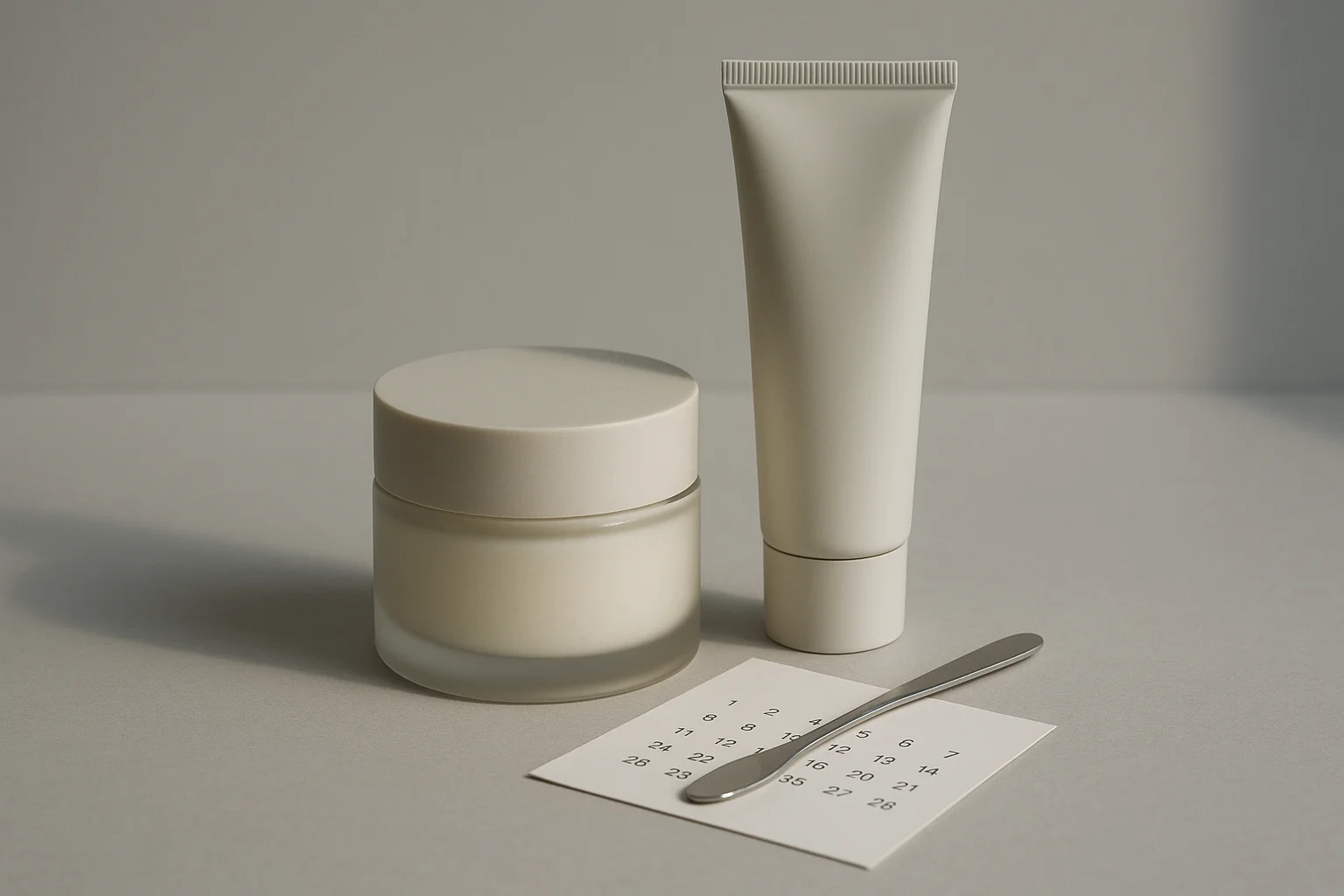
Cosmetics usage periods are broadly divided into two types of indication. One is the 'expiration/months from date of manufacture' that applies while unopened, and the other is the 'Period After Opening (PAO)' that starts fresh the moment the lid is opened. The principle is to follow whichever standard arrives first, and depending on storage conditions, actual stability may come sooner than the indicated period.

Photoaging — Changes Made by UV Rays Rather Than Age · Editorial Image
Skin Concerns

Photoaging — Changes Made by UV Rays Rather Than Age

Skin aging is broadly divided into two paths: 'natural aging' created by time, and 'photoaging' created by UV rays. In fact, it is known that a significant portion of the wrinkles, loss of elasticity, and pigmentation changes noticeable on the face stem more from accumulated UV exposure than from age itself. Because a considerable amount of UV rays reach the skin even on cloudy days or indoors, making sun protection a habit regardless of season or weather is the most basic way to slow photoaging.

The Weight of Oil Ingredients — How to Distinguish Squalane, Shea Butter, and Argan Oil · Editorial Image
Ingredients

The Weight of Oil Ingredients — How to Tell Squalane, Shea Butter, and Argan Oil Apart

Squalane, shea butter, and argan oil are all grouped under 'oils,' but their molecular structures and the weight they leave on skin differ. There's an order ranging from those that absorb lightly to those that form a film on the surface, and the criteria for choosing between them change depending on the season and skin condition. If you spot these three names on an ingredient list, it's more practical to first check what position and proportion they occupy rather than avoiding them simply for being heavy.

When Flaking Appears, What to Check Before Rubbing It Off
Skin Concerns

When Flaking Appears, What to Check Before Rubbing It Off

When skin flakes turn white and lift, the urge is to rub them off right away, but it's better to first look at why the flaking happened at this particular timing. In most cases, it's the result of the skin becoming dry so that the outer layer isn't shed properly and clumps up, so repeatedly rubbing it off physically can actually make the thinned area more sensitive. In conclusion, it's better to first read flaking as a 'sign of dryness' before treating it as something to be 'removed.'

Do You Really Need a Dedicated Eye Product? — Characteristics and Care of Thin Skin
Skin Concerns

Do You Really Need a Dedicated Eye Product? — Characteristics and Care of Thin Skin

The eye area skin is thinner than other parts of the face and has less oil secretion, making it a spot where dryness and fine lines tend to show up first. It's not absolutely necessary to have a separate eye cream, but considering the thin skin's characteristics, thinly applying a low-irritation, moisturizing formulation can help. Whether you use a dedicated product or extend your regular cream, the key is maintaining an irritation level and finishing method suited to the eye area.

Skin sensitized by mask and collar friction, how should you deal with it
Skin Concerns

Skin sensitized by mask and collar friction, how should you deal with it

If the areas where mask straps or collars rub against your skin keep turning red and stinging, it's likely that physical friction has thinned the skin's surface and made it sensitive to irritation. Along with habits that reduce friction, following a low-irritation soothing and moisturizing routine in order usually helps calm it down, but if redness persists for a long time, it's safer to consult a dermatologist or similar specialist.

Why fermented ingredients are used in cosmetics — how to read Bifida Ferment Lysate
Ingredients

Why fermented ingredients are used in cosmetics — how to read Bifida Ferment Lysate

Bifida Ferment Lysate is an ingredient obtained by refining metabolites from fermented microorganisms, and it's commonly found in cosmetic ingredient lists as a fermentation-derived ingredient for moisturizing/condition care purposes. Simply being a fermented ingredient doesn't guarantee any specific efficacy, and a more accurate approach is to look at what role it plays together with other ingredients within the overall design of the cream.

Ingredients that hold onto moisture — how to read betaine, trehalose, and glycerin
Ingredients

Ingredients that hold onto moisture — how to read betaine, trehalose, and glycerin

Betaine, trehalose, and glycerin are all humectant ingredients that 'draw in and hold onto moisture itself.' However, with these ingredients alone, the moisture held can evaporate again over time, so they need to be paired with oil ingredients to help maintain moisturization. When reading the full ingredient list, it's practical to check not just whether these ingredients are present, but also whether oil ingredients are designed to follow afterward.

A time-pressed morning — how far can you cut down the minimal routine?
Care Guide

A time-pressed morning — how far can you cut down the minimal routine?

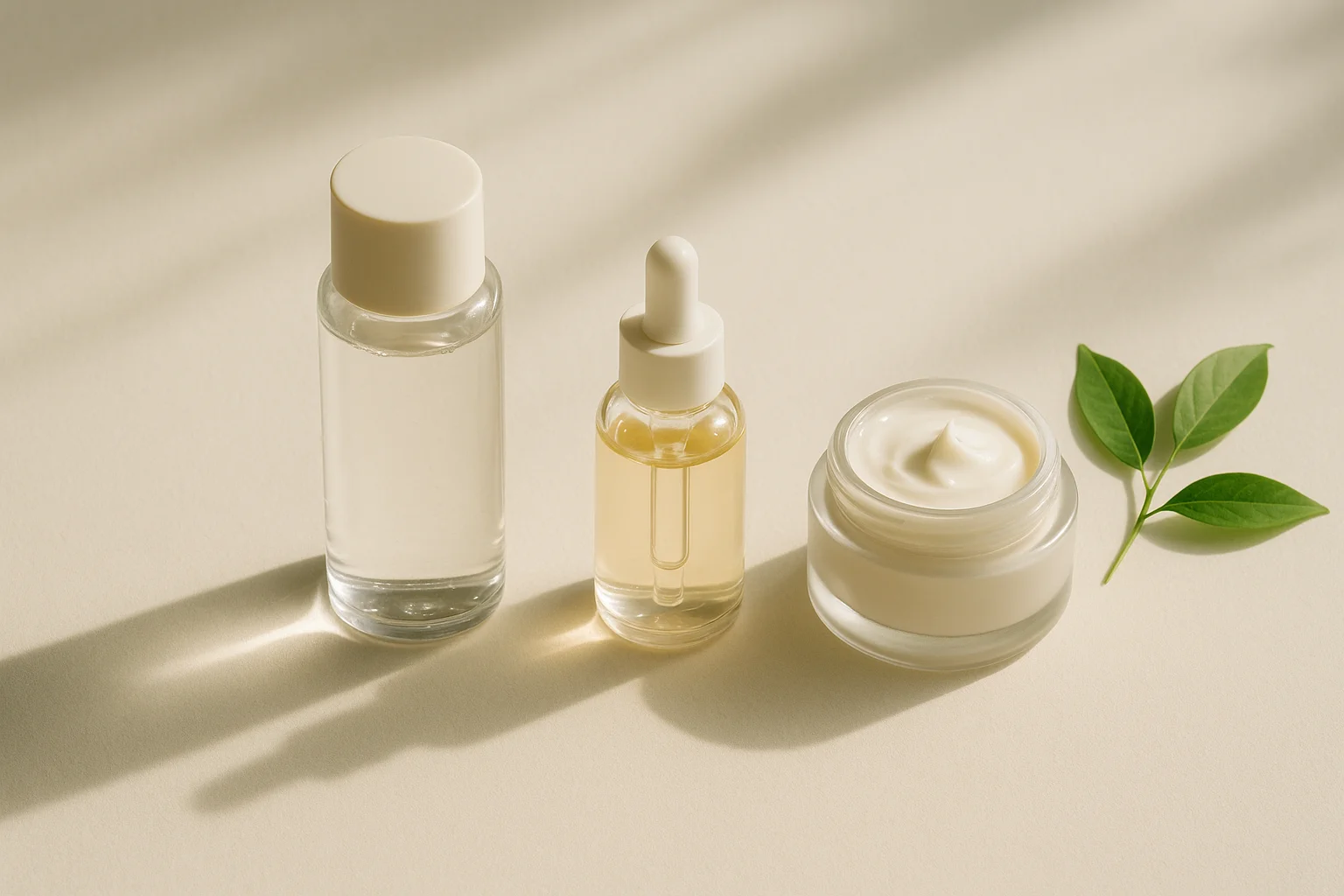
If you're short on time in the morning, keeping just these three steps — cleansing (or water-only cleansing) → moisture supply (either toner or ampoule) → cream — maintains the overall framework of skincare. On truly rushed days, finishing with just a cream is also an option, but it's worth remembering that how much you took care of your evening routine the night before affects how much leeway you have that day.

Ingredients for Sensitive Days — How to Read Panthenol and Allantoin
Ingredients

Ingredients for Sensitive Days — How to Read Panthenol and Allantoin

Panthenol and allantoin are moisturizing and soothing ingredients frequently found on full ingredient lists, playing a role in reducing irritation and filling in moisture on days when skin becomes sensitive. However, since these two ingredients alone do not address elasticity or wrinkles, after the sensitive period passes and skin stabilizes, one can consider moving toward products that also include ingredients aimed at elasticity care.

Plant extracts, the reason for many names and how to read them
Ingredients

Plant Extracts: The Reason for Many Names and How to Read Them

The reason why several names ending in '~ extract' are listed on a full ingredient list is that plant-derived raw materials used in cosmetics are each made from different plants, different parts, and different extraction methods. Just because a name is unfamiliar and there are many of them does not mean it is meaningless; what matters more is checking which extract it is and which ingredients it appears alongside. This article organizes how plant extract names are given and how to read them on a full ingredient list.

Determining Your Skin Type — How to Tell Dry, Combination, and Oily Skin Apart
Skin Concerns

Determining Your Skin Type — How to Tell Dry, Combination, and Oily Skin Apart

To determine your skin type, cleanse your face, apply nothing, and wait thirty minutes to an hour: if your whole face feels tight, you likely have dry skin; if only the T-zone gets shiny while the cheeks feel tight, that's combination skin; and if the entire face gets evenly shiny, that's closer to oily skin. However, even the same person can appear to have a different type depending on the season and condition, so repeated observation is more accurate than a single check.

Order for applying adenosine — where should it go in your skincare steps?
Ingredients

Order for applying adenosine — where should it go in your skincare steps?

Adenosine is not an ingredient that works only at a specific step; rather, it is one for which the time it stays on the skin while dissolved in a formulation matters. To put the conclusion first, for adenosine, 'what formulation it is contained in and how stably it is applied' matters more than 'which numbered step it is.' In reality, it is included across various formulations such as toners, essences, and creams, so following each product's usage instructions matters more than the order itself. That said, within the general skincare flow (formulations with more moisture → formulations with higher viscosity), adenosine-containing creams are generally placed at the last or second-to-last step.

Which Skin Type Suits Adenosine — Usage Criteria by Type
Ingredients

Which Skin Type Suits Adenosine — Usage Criteria by Type

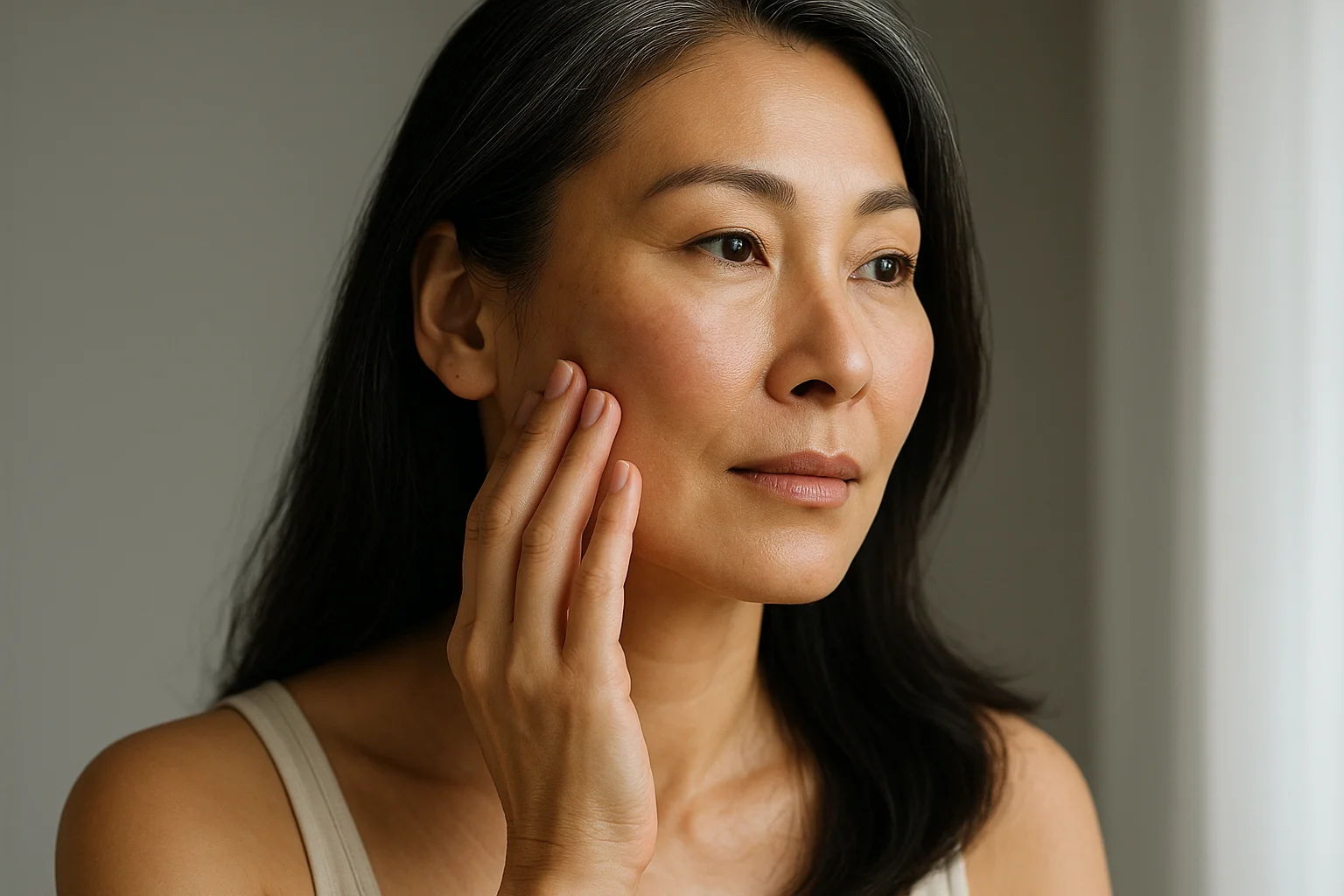
Adenosine is a wrinkle-improvement functional notified ingredient recognized by Korea's Ministry of Food and Drug Safety, and it is not limited to a specific skin type but can be used across dry, oily, and combination skin overall. However, depending on what formulation it is contained in and what ingredients are combined with it, there can be differences in perceived effect or texture by type. This article summarizes how to approach adenosine by skin type.

Ingredients

Which Skin Suits Peptides — Usage Criteria by Skin Condition

Peptides are not an ingredient category limited to a specific skin type, but rather one that can be considered alongside elasticity care for most skin types. However, depending on skin conditions such as dry, sensitive, or combination skin, how you check the accompanying ingredients and the formulation's oiliness makes the real difference in usage satisfaction. In short, rather than asking 'which skin suits peptides,' the more accurate approach is to check 'whether the formulation suited to my skin condition contains peptides.'