
Allantoin Principle and Characteristics: The Role of Moisturizing and Soothing Ingredients Seen Through the Full Ingredient List
Allantoin is an ingredient that helps smooth the skin's surface texture and supports soothing and moisturizing conditioning, often appearing toward the latter part of the full ingredient list alongside other moisturizing ingredients such as panthenol and betaine. However, allantoin alone is unlikely to address elasticity or wrinkles, so it's important to also check whether the product is formulated together with barrier lipids, oils, and functional ingredients. This article examines the principle of allantoin and explains how to check what combinations this ingredient appears in within the full ingredient list.
When searching cosmetic ingredients, you often come across the name 'allantoin.' Because of its image as mild and low-irritation, it is widely used in products for sensitive skin, but how exactly this ingredient works on the skin, and why it's included only in certain products, is not well known.
To summarize the conclusion first, allantoin is a conditioning ingredient that helps smooth the surface texture of the skin and helps maintain a sense of hydration. Rather than being an ingredient that creates dramatic change on its own, it contributes to overall usage feel and skin condition care when combined with other moisturizing and barrier ingredients.
How Does Allantoin Work on the Skin?
Allantoin is an ingredient that has long been widely used in cosmetics and ointments, and chemically it is derived from a substance obtained through uric acid metabolism. When applied to the skin, it has a conditioning effect that smooths the texture of the stratum corneum surface and helps rough skin surfaces feel smoother.
It has also long been used as an ingredient that provides a comfortable feeling while irritated skin is being calmed. However, this is strictly a level of managing the surface condition of the skin, and it would be an exaggeration to describe it as restoring damaged tissue or regulating the inflammatory response itself. It is accurate to understand allantoin's role within the scope of 'soothing care' and 'moisture retention.'
Because of these characteristics, when allantoin is combined with other moisturizing/barrier ingredients such as ceramide or panthenol, it holds a supportive position that contributes to creating an overall formulation with a comfortable, non-irritating application feel.
What the position of allantoin in the full ingredient list tells us
In principle, the full ingredient list is written in descending order of content, but low-content ingredients below a certain ratio may appear out of order. Allantoin generally appears in this low-content section, that is, toward the latter part of the list, which aligns with its characteristic of being an ingredient expected to provide conditioning effects even in small amounts.
So what matters more than 'where allantoin is listed' is 'what ingredients are placed before and after it.' For example, if moisturizing ingredients like panthenol, betaine, or trehalose are placed near allantoin, the product is likely designed with a thick moisturizing line; if lipid ingredients like ceramide, cholesterol, or palmitic acid are nearby, the formulation may also consider barrier care.
Conversely, if allantoin stands out alone with no notable moisturizing or barrier ingredients around it, this may mean that the actual design of the product is simpler than the reputation of the name 'allantoin' suggests. Looking at the 'combination' rather than a single ingredient's name is the proper way to read a full ingredient list.
| Ingredients present together | Expected design direction |
|---|---|
| Panthenol, betaine, trehalose | Moisture-retention-focused design |
| Ceramide NP, cholesterol, palmitic acid | Barrier-lipid-focused design |
| Centella asiatica-derived ingredients (asiaticoside, etc.) | Soothing-care-focused design |
| Adenosine, peptides | Elasticity/wrinkle-care-focused design |
How should allantoin be understood depending on skin condition and season
During periods when skin feels dry and rough in texture, products containing allantoin may help smooth the surface. However, the fundamental management point during this period is not allantoin but barrier lipids like ceramide and cholesterol, along with oil ingredients like squalane and shea butter; allantoin should be understood as an ingredient that supplements this combination.
When skin becomes sensitive due to seasonal changes or heating/cooling, products containing allantoin often provide a comfortable feel as well. In this case too, rather than allantoin alone, it is reasonable to check whether it is combined with ingredients traditionally used for soothing care, such as those derived from Centella asiatica.
For those who begin to become concerned about both skin texture and elasticity as they age, the moisturizing and soothing condition care provided by allantoin alone is insufficient. During this period, the more important criterion is whether ingredients designed for elasticity management, such as adenosine or peptides, are included alongside supportive ingredients like allantoin.
How to make good use of allantoin at each stage
Allantoin is not limited to a single step in a skincare routine and is widely used across various formulations such as toners, ampoules, and creams. However, if a product used in the final step, such as a rich cream, contains allantoin, it can be seen as playing a role in comfortably finishing off the moisture and hydrating ingredients applied in the previous steps.
When putting together a routine, rather than focusing on whether allantoin is included or not, it is more practically helpful to check how the overall ingredient list balances hydrating, barrier-supporting, and functional ingredients. Allantoin can be understood as one piece that complements this balance.
If you're looking beyond hydration and soothing to elasticity as well
As summarized so far, allantoin is an ingredient that helps smooth skin texture and create a comfortable feel upon use, but it is not an ingredient that manages elasticity or wrinkles on its own. That's why, when looking at an ingredient list, it's important to distinguish whether allantoin appears alone or whether it is formulated together with ingredients designed for elasticity care within the same product.
The ingredient list of the ARZTIN Regenerative Silt Cream also includes allantoin, and this product is formulated not only with allantoin but also with adenosine, which has been reviewed and approved as a functional cosmetic ingredient for wrinkle improvement, as well as three types of peptides designed for elasticity care (sh-Oligopeptide-1, rh-Oligopeptide-2, and rh-Polypeptide-1). In other words, it is designed so that while allantoin complements surface texture and usage feel, ingredients targeting elasticity care work together on top of that.
Looking at actual test results, a human application test conducted on adult women aged 30 to 59 showed improvements in skin elastic recovery, cheek elasticity, and jawline lifting indicators immediately after a single use, and significant changes in skin soothing indicators were also confirmed after two weeks of use. This should be accurately understood as a result of the overall functional design, including adenosine and peptides, working together rather than as the effect of a supporting ingredient like allantoin, and the degree of perceived effect may vary depending on individual skin conditions.
Frequently asked questions
- Is allantoin a safe ingredient for sensitive skin?
- Allantoin has long been widely used as a mild conditioning ingredient, but reactions can vary depending on individual skin condition and other ingredients it is combined with. If redness, stinging, or other adverse reactions occur during use, it is safer to stop use and consult a dermatologist or other specialist.
- If allantoin appears near the end of the full ingredient list, does that mean it's present in a small amount?
- For ingredients below a certain proportion, the listing order may not precisely correspond to actual content. Appearing later in the list doesn't mean the ingredient is meaningless—given that such ingredients can serve a conditioning role even in small amounts, this position can be quite natural.
- Can allantoin alone manage wrinkles or elasticity?
- Allantoin is an ingredient that helps smooth the skin's surface and supports soothing and moisturizing conditioning; it is not designed for improving elasticity or wrinkles. If elasticity care is the goal, it's necessary to check whether the product also contains ingredients separately reviewed for functional efficacy or formulated specifically for elasticity care, such as adenosine or peptides.
- What is the difference between allantoin and panthenol?
- Both are ingredients used for moisturizing and conditioning, but it's more accurate to understand panthenol as a moisturizing ingredient that fills in hydration, while allantoin is an ingredient that smooths surface texture and supports a comfortable feel upon use. In practice, they are often combined together to complement each other.
Related products
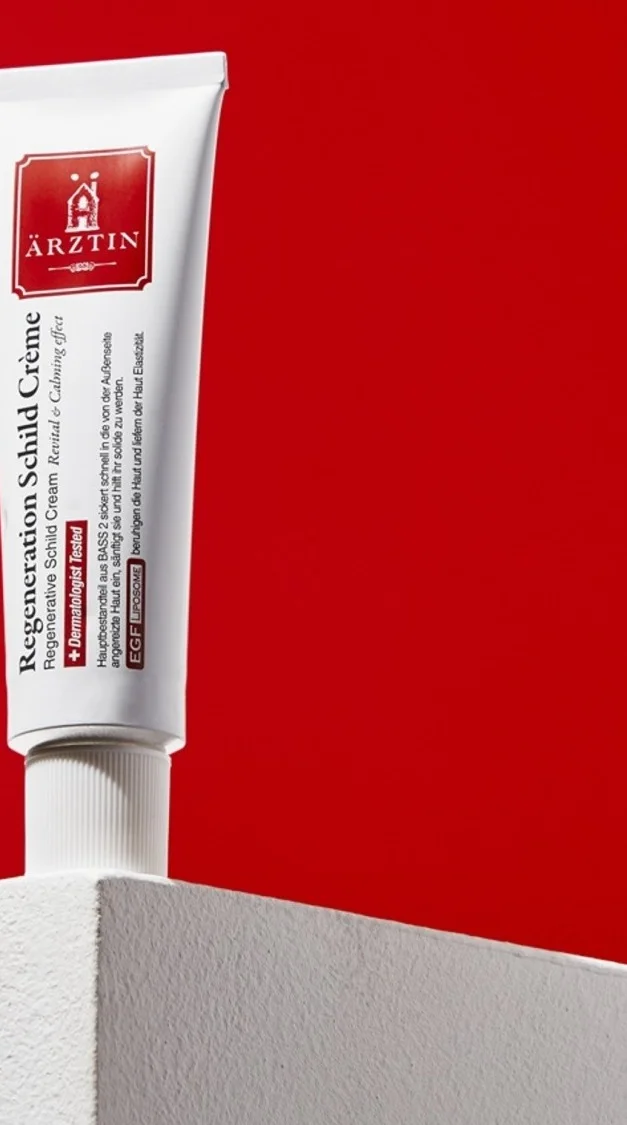 리제너레이티브 실트 크림Buy
Anti-wrinkle functional cosmetic · A rich cream that addresses both elasticity and barrier care
- 리제너레이티브 실트 크림Buy
Anti-wrinkle functional cosmetic · A rich cream that addresses both elasticity and barrier care
- 리제너레이티브 실트 크림Buy
Anti-wrinkle functional cosmetic · A rich cream that addresses both elasticity and barrier care
- 리제너레이티브 실트 크림Buy
Anti-wrinkle functional cosmetic · A rich cream that addresses both elasticity and barrier care
- 리제너레이티브 실트 크림Buy
Anti-wrinkle functional cosmetic · A rich cream that addresses both elasticity and barrier care