본문 바로가기
Topic guide

Barrier & Moisture Design

When wondering what to add for dry, tight-feeling skin, the first thing to look at is the barrier. The lipids that make up the barrier, the ingredients that hold onto moisture, and the oils that cover the surface each play a different role. This topic guide organizes a way of reading formulations and ingredients by dividing them according to these roles.

Articles in this topic

How to Read the Full Ingredient List — Order, Labeling, and What to Check · Editorial Image
Ingredients

How to Read the Full Ingredient List — Order, Labeling, and What to Check

Cosmetic full ingredient lists are labeled in order of the amount blended, and once the concentration falls below a certain ratio, the order doesn't necessarily match the actual content anymore. Ingredient names look unfamiliar because they follow international standard names (labeling based on ingredient dictionaries), and to grasp a product's direction, it's practical to look at both the ingredients placed near the front and where the key ingredients are located.

Why Skin Becomes Sensitive with Every Seasonal Transition and How to Cope · Editorial Image
Skin Concerns

Why Skin Becomes Sensitive with Every Seasonal Transition and How to Cope

Sensitivity during seasonal transitions is a natural response that occurs when the skin barrier fails to keep up with changes in temperature and humidity, and it's also a time when, beyond tightness or redness, skin texture can become rougher and elasticity can appear diminished. When the barrier is unsettled during this time, the moisturizing foundation weakens, which can make expression lines or fine lines appear more pronounced, so care that addresses elasticity along with soothing and moisturizing is needed. Simplifying the routine while considering both moisturizing and elasticity care together is key to maintaining skin condition during seasonal transitions.

Why wrinkles appear more pronounced when dry · editorial image
Skin Concerns

Why wrinkles appear more pronounced when dry

When skin becomes dry, the lack of moisture in the stratum corneum can cause the surface to lift and crack along fine lines, making it appear as though fine wrinkles have formed. This is different from actual deep dermal wrinkles and is known as 'dry wrinkles (dehydration-related fine lines),' which often improve with added moisture, but this differs from the approach needed for structural wrinkles that have formed over time. That's why it's important to manage skin care by distinguishing between these causes.

Rich Cream vs. Gel Cream, When to Use What · Editorial Image
Comparison

Rich Cream vs. Gel Cream, When to Use What

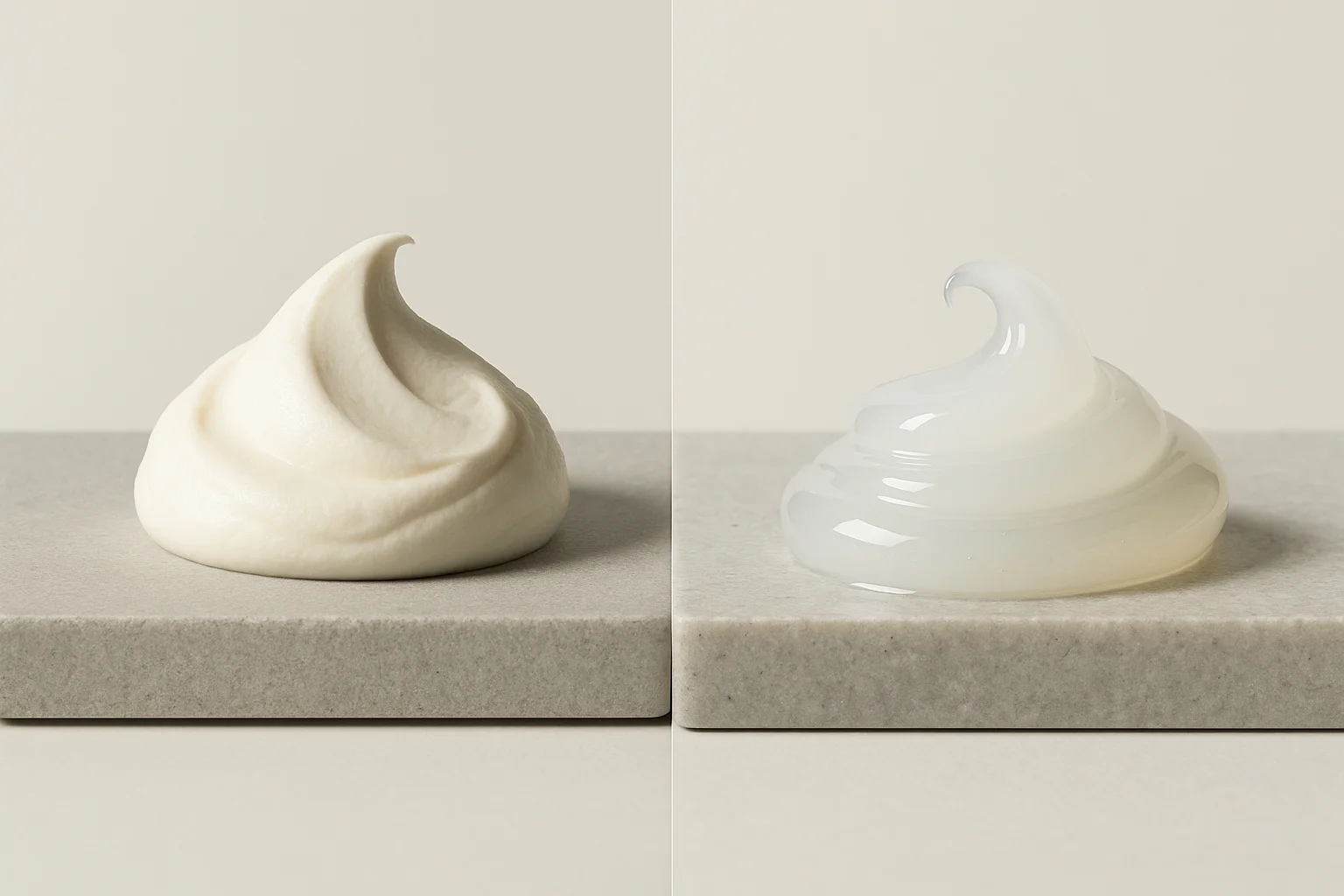
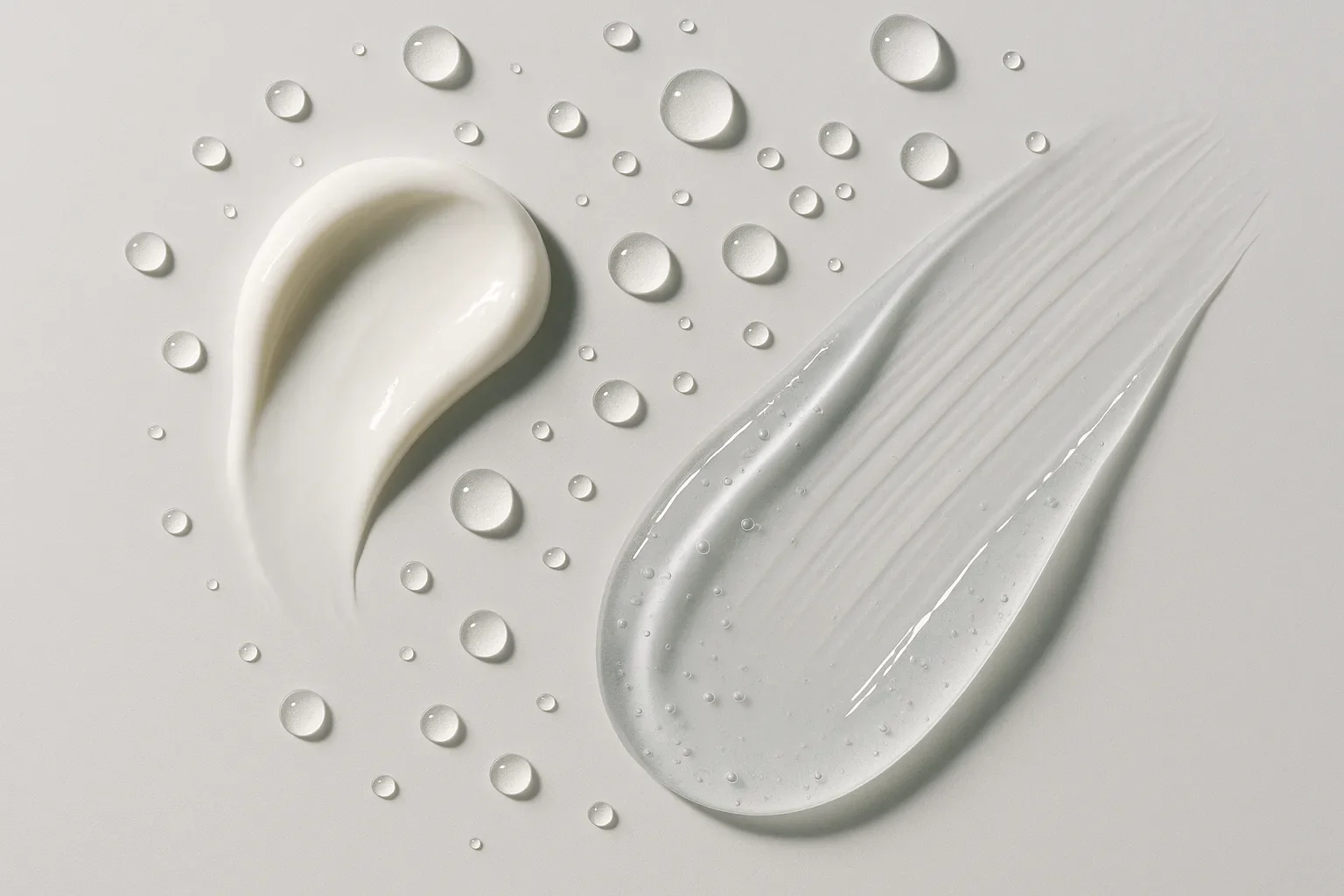
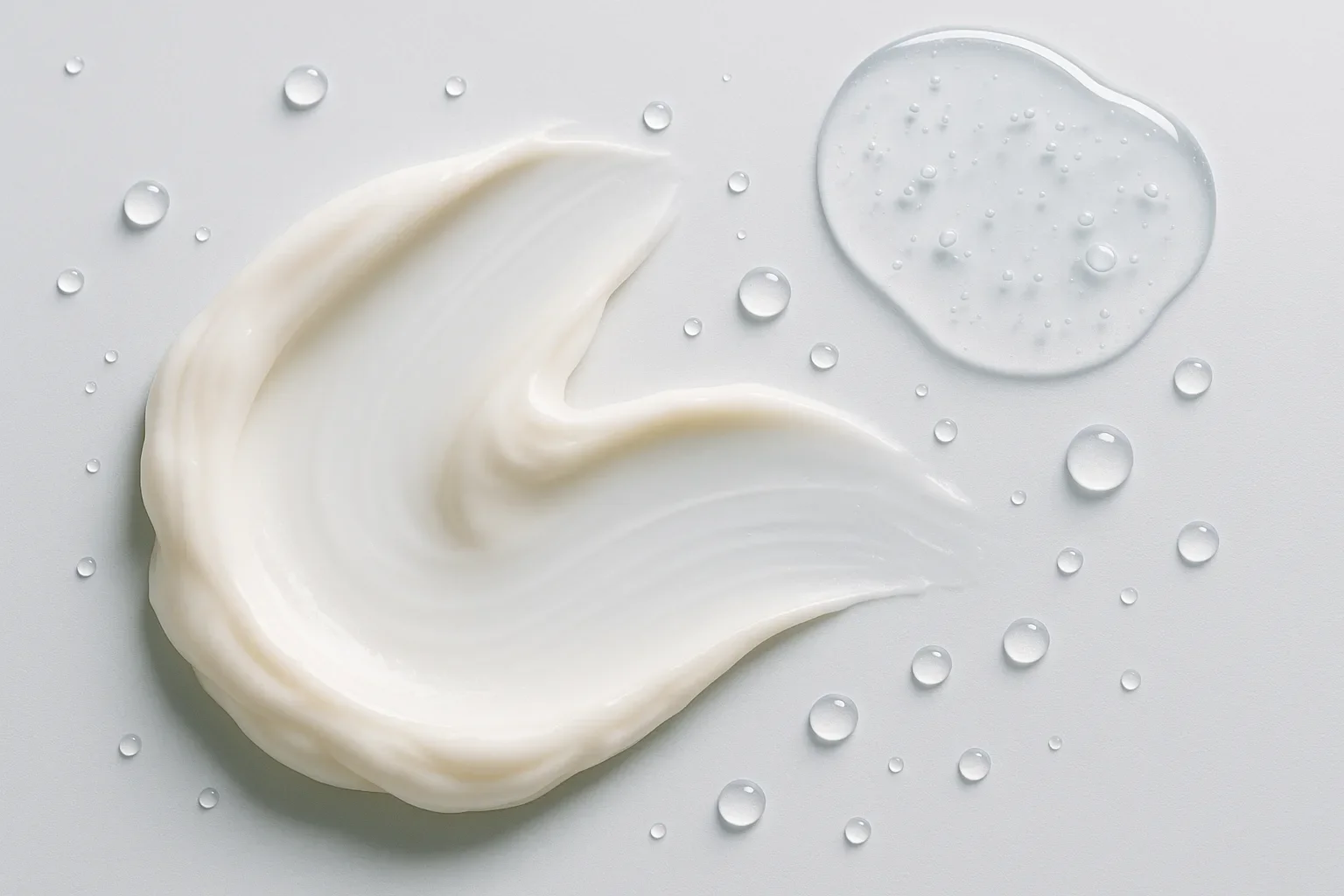
To put the conclusion first, rich cream can be a more suitable choice during periods when skin feels dry and tight, while gel cream may be a better fit during hot and humid periods when sebum and moisture balance are prone to being disrupted. However, this is not an absolute rule, and it's best to adjust flexibly depending on skin type and daily condition. Rather than sticking to just one, using both textures together according to the season and indoor environment is a practical alternative.

Dry Season Moisturizing Routine, How to Layer and Adjust Amounts? · Editorial Image
Skin Concerns

Dry Season Moisturizing Routine, How to Layer and Adjust Amounts?

In dry seasons, the key is to layer products from lighter to heavier textures to prevent moisture loss. Layering cream by applying it twice is a fine method for most skin types, and especially on days with severe tightness, increasing the amount of the final rich cream step more than usual can help. However, if it leaves excessive oiliness, adjustments considering individual differences, such as controlling the interval until the next cleansing, are needed.

Ceramide, Cholesterol, Fatty Acid: How to Read the Three Barrier Lipids · Editorial Image
Ingredients

Ceramide, Cholesterol, Fatty Acid: How to Read the Three Barrier Lipids

The skin barrier can be understood as a structure in which three lipids—ceramide, cholesterol, and fatty acid—work together, and only when this barrier is stable is the foundation laid for ingredients like adenosine and peptides, used for elasticity and wrinkle care, to properly play their role. That's why checking whether these three lipids appear together in the full ingredient list serves as a practical standard not only for barrier care but also when choosing an anti-aging routine. 에르쯔틴 실트 크림 contains barrier lipids such as ceramide NP, cholesterol, and palmitic acid together with adenosine and three types of peptides in its full ingredient list, allowing you to confirm a design that considers both barrier care and elasticity care together.

When your skin feels tight in a dry indoor environment, what to address first · Editorial image
Skin Concerns

When your skin feels tight in a dry indoor environment, what to address first

If your skin feels tight in indoor spaces with strong heating or air conditioning, the cause is often a combination of 'lack of moisture in the air' and 'reduced moisture retention capacity of the skin itself.' When you're in a hurry, it's practical to first soothe surface tightness with a mist or moisture cream, and fundamentally, to check your cleansing habits and finishing cream in order. This article summarizes the reasons for tightness and the order of response by priority.

There Are Different Types of Ceramide Too — Reading Ceramide NP · Editorial Image
Ingredients

There Are Different Types of Ceramide Too — Reading Ceramide NP

Ceramide is not a single ingredient but a collective name for several types with different structures (NP, AP, EOP, and so on). When the full ingredient list simply states 'ceramide' versus when it specifies a concrete name like 'Ceramide NP,' the level of information you can verify differs. When choosing a cream, it is practical to check both whether the specific type name is stated and whether it is formulated together with other barrier lipids and moisturizing ingredients.

Why cholesterol and fatty acids are included together
Ingredients

Why cholesterol and fatty acids are included together

It's no coincidence that ingredients like cholesterol and palmitic acid (a fatty acid) are listed alongside ceramide in a full ingredient list. These three lipids serve different roles in constituting the skin barrier, and since having only one of them does not complete a barrier care formulation, they are often combined together. Understanding this combination lets you look, when choosing a cream, not at 'how many lipid ingredients are included' but at 'what ratio they are combined in'.

Ingredients That Work Well With Adenosine — Combination Criteria Checked Through the Full Ingredient List
Ingredients

Ingredients That Work Well With Adenosine — Combination Criteria Checked Through the Full Ingredient List

Adenosine is a notified ingredient for wrinkle-improving functional cosmetics under South Korea's Ministry of Food and Drug Safety and can pass review on its own, but in actual products it is often combined with peptides, Centella asiatica-derived ingredients, barrier lipids, and moisturizing ingredients. This is because adenosine covers a different area of function than the other ingredients, and ultimately when checking the full ingredient list, it makes sense to look not just at adenosine alone but at what combination it is placed within.

Criteria for choosing adenosine — what to check on the full ingredient list
Ingredients

Criteria for choosing adenosine — what to check on the full ingredient list

Adenosine is a wrinkle-improvement functional ingredient notified by the Ministry of Food and Drug Safety, and the key criterion is whether it is included above a certain concentration and has passed review. Judging by the ingredient name alone is difficult; you also need to check whether the product has been reviewed as a 'functional cosmetic (wrinkle improvement)' and what moisturizing and oil ingredients adenosine is formulated alongside. This article organizes practical criteria for choosing adenosine, focusing on the full ingredient list.

Ingredients

How to Find Adenosine on the Full Ingredient List — Checking by Notation Position and Name

When looking for adenosine on the full ingredient list, simply search for the exact notation 'adenosine' itself. Since it is not called by another name or substituted with a similar-sounding ingredient, you only need to scan the entire ingredient list to check whether this word appears or not. It should also be kept in mind that the actual formulation amount cannot be known from the full ingredient list alone.

Ingredients

Peptide Principles and Characteristics — Understanding Through Facts Confirmed in the Full Ingredient List

Peptide is an umbrella term for substances made of short chains of amino acids, and on cosmetic ingredient lists, they can be identified through labels such as oligopeptide or polypeptide. Depending on the type, they are used in formulations aimed at elasticity care, and rather than being a single named ingredient, it is often the case that several peptides are combined, each serving a different role. This article organizes how peptides are labeled on ingredient lists and what criteria can be used to distinguish the purpose of their inclusion.