
Which Skin Types Suit Argan Kernel Oil? — Checking Suitability by Skin Type Through the Full Ingredient List
Argan kernel oil is an oil-based ingredient that forms a thin film on the skin's surface to prevent moisture loss, making it especially suitable for dry or frequently tight-feeling skin and skin sensitive to seasonal changes. On the other hand, for oily skin where oiliness itself can feel burdensome, it's better to first check where this ingredient is listed in the full ingredient list and what ingredients are placed alongside it. In conclusion, rather than labeling oil ingredients as simply good or bad on their own, the practical standard is to look at which ingredients they are formulated together with in the full ingredient list.
When you come across the name 'argan kernel oil' while looking at a cosmetic label, it's not easy to judge whether this ingredient suits your skin or not. The word 'oil' itself can read as a burden for oily skin and as welcome news for dry skin.
To cut to the conclusion, argan kernel oil is not a dedicated ingredient for a specific skin type, but rather an oil-based ingredient that helps prevent moisture loss from the skin's surface. Which skin type it suits better is hard to judge from the ingredient alone, and you need to look at where this ingredient is positioned in the full ingredient list and which ingredients it is placed alongside.
What role does argan kernel oil play in the skin?
Argan kernel oil is a plant-derived oil obtained from the seeds of the argan tree, and in cosmetics it is classified as an oil ingredient. The basic role of oils is to form a thin film on the skin's surface that slows the rate at which moisture evaporates. This does not create new moisture by itself, but works by holding onto moisture already present in the skin so it doesn't escape.
For this reason, argan kernel oil's role becomes clearer when used together with humectants (such as glycerin, betaine, and trehalose) or barrier-forming lipid ingredients (such as ceramides, cholesterol, and fatty acids). A formulation where the oil stands alone and one where it is combined with these ingredients may differ in feel and in the results left on the skin.
Why it feels different depending on skin type
Dry skin, or skin that frequently feels tight due to seasonal changes or heating/cooling, often has a relatively weaker ability to retain oil on its own. For such skin, oils like argan kernel oil often work in a way that helps maintain moisture.
On the other hand, skin with heavy sebum production or sensitivity to oiliness itself may find the texture of the same ingredient heavy. In this case, rather than excluding the ingredient outright, it is more practical to check how early in the full ingredient list the oils are positioned and whether they are balanced with lighter silicone or ester ingredients.
However, it should also be considered that while the full ingredient list is arranged in order of concentration, the order for low-concentration ingredients can vary. Rather than judging the overall oiliness of a product based solely on the position of argan kernel oil, it is better to look comprehensively at the combination of oils, humectants, and barrier lipids listed together.
Steps for checking argan kernel oil in the full ingredient list
First, check where argan kernel oil is positioned in the full ingredient list. It commonly appears in the section where silicones or oils are grouped, after the basic base ingredients like water and glycerin.
Next, check whether other oils such as squalane, shea butter, or sunflower seed oil are present nearby. If several oils overlap, the formulation is likely rich; if only one is present in a small amount, it is likely intended to give a lighter finish.
Finally, check whether barrier- and moisture-related ingredients such as ceramides, cholesterol, panthenol, and allantoin are present together. If oils and these ingredients are designed together, the formulation likely considers overall skin condition rather than simply coating the surface.
| Features seen in the full ingredient list | Likely direction to infer |
|---|---|
| Multiple types of oils listed overlapping | Likely a rich-finish formulation |
| Barrier lipids (ceramides, cholesterol, etc.) listed near the oils | Likely a design that considers both moisture and barrier care |
| Oils listed later in position and fewer in number | Likely a formulation intended for a light finish |
Why oils should be considered together from an elasticity and wrinkle-care perspective
During periods when you're concerned about elasticity or fine lines, it's important to also consider moisture retention. When skin is dry, the surface can fold thinly, making fine lines appear more pronounced, and if this condition repeats, the skin's overall condition may become unstable before elasticity-care ingredients can do their job.
In this context, it's accurate to understand oil-type ingredients like argan kernel oil as playing a supportive role in reducing surface moisture loss while elasticity-care ingredients work. It's worth keeping in mind that oil-type ingredients themselves are not wrinkle-improving ingredients, and their role is clearly distinct from ingredients that have undergone functional cosmetic approval.
The final step — which cream should you finish with?
If you're concerned about both elasticity and fine lines at the same time, it helps to develop the habit of checking the full ingredient list — not just the oil-type ingredients alone — to see how oils, barrier lipids, and approved functional ingredients are ordered and combined. In the full ingredient list of ARZTIN Regenerative Silt Cream, oil-type ingredients including argan kernel oil are combined with squalane and shea butter to design a rich finish, while also listing adenosine and three types of peptides, which are functional ingredients approved for wrinkle improvement. When choosing a rich cream to apply as the final step, it's recommended to check the label yourself to see whether this kind of composition is actually present.
Frequently asked questions
- If a product contains argan kernel oil, is it automatically good for dry skin?
- It's hard to say definitively. Argan kernel oil is an oil-based ingredient that helps prevent moisture from evaporating, so it can be helpful for skin that often feels dry, but the usage feel and results can vary depending on the other ingredients combined with it and the overall formulation.
- Should oily skin avoid products containing argan kernel oil?
- There's no need to exclude it based on a single ingredient alone. It's more realistic to check how early and how many oil-based ingredients appear in the full ingredient list, start with a small amount, and observe how your own skin responds.
- Can the order of the full ingredient list tell you the exact content amount?
- Up to a certain concentration, ingredients are generally listed in descending order of amount, but for lower-concentration ingredients, the listing order can vary, so it's difficult to determine exact amounts from order alone. It's more useful to look at the combination of ingredients listed nearby.
- Does it make sense to use oil ingredients together with elasticity-care ingredients?
- When skin becomes dry, fine lines can appear more noticeable, so a formulation that combines oil ingredients that help maintain moisture with ingredients designed for elasticity care can often be advantageous. However, since individual differences exist, it's best to adjust according to your own skin condition.
- What should I do if trouble occurs after applying an oil ingredient?
- Stop using it and monitor your skin condition, but if redness or itching persists, it's recommended to consult a dermatologist or other specialist rather than making your own judgment.
Related products
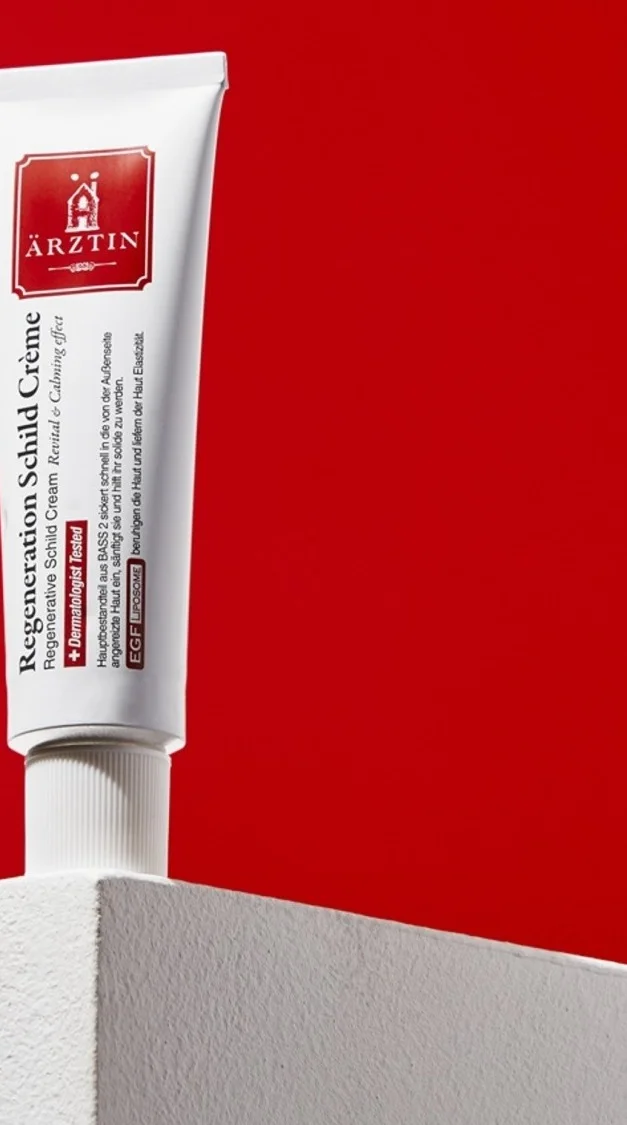 리제너레이티브 실트 크림Buy
Anti-wrinkle functional cosmetic · A rich cream that addresses both elasticity and barrier care
- 리제너레이티브 실트 크림Buy
Anti-wrinkle functional cosmetic · A rich cream that addresses both elasticity and barrier care
- 리제너레이티브 실트 크림Buy
Anti-wrinkle functional cosmetic · A rich cream that addresses both elasticity and barrier care
- 리제너레이티브 실트 크림Buy
Anti-wrinkle functional cosmetic · A rich cream that addresses both elasticity and barrier care
- 리제너레이티브 실트 크림Buy
Anti-wrinkle functional cosmetic · A rich cream that addresses both elasticity and barrier care