
Asiatic Acid Application Order: How Full Ingredient Lists Determine Skincare Step Placement
Asiatic acid isn't an ingredient that only works when applied at a specific step—what matters more is how it's designed to combine with other ingredients and in what formulation within the full ingredient list. Following the general skincare order (toner → essence/ampoule → cream), the principle of applying lighter textures first and heavier, more oily textures later applies, and where a product containing asiatic acid falls in the routine can be judged by its formulation type. In particular, for creams used in the final step, checking whether asiatic acid is formulated together with barrier lipids and moisturizing ingredients is a practical criterion for judgment.
"Should asiatic acid be applied at the toner step, or the cream step?" This is a common question among those who've started reading full ingredient lists. The short answer is that this ingredient itself doesn't require a specific order. What determines the order isn't a single ingredient, but the formulation type that ingredient is contained in.
- 1Toner after cleansingTexture refinement, light soothing care
- 2Essence/AmpouleConcentrated active ingredient step
- 3Cream (Finishing step)Finishing with barrier lipids and oils, checking whether elasticity-care ingredients are included
Why is 'order' determined by formulation, not by the ingredient itself?
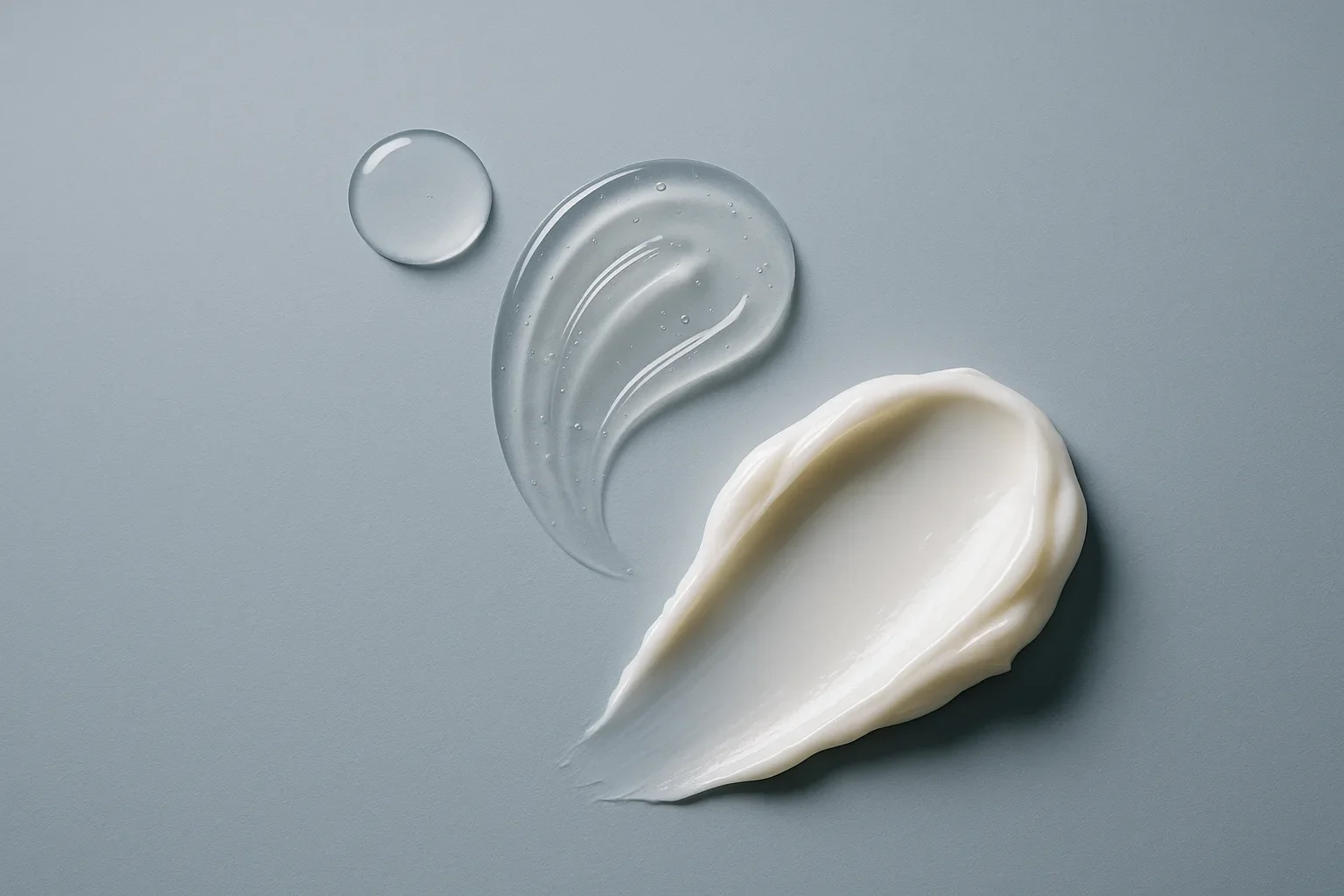
The general principle of skincare order is to apply from lighter to heavier textures. The reason for arranging watery toner, then more viscous essences/ampoules, and finally oil- and viscosity-heavy creams is due to formulation design considering absorption order, not solely because of the chemical properties of specific ingredients.
Asiatic acid is one of the components isolated from Centella asiatica (gotu kola) extract, and it is often grouped together with other Centella-derived ingredients (asiaticoside, madecassic acid, asiatic acid) that frequently appear together on ingredient lists. This group of ingredients can be formulated into various product types such as toners, ampoules, and creams, so the formula 'asiatic acid = a specific step number' does not hold. Instead, a more accurate approach is to check 'what type of formulation the product containing this ingredient represents within your routine.'
Why placement varies by formulation type
Even the same asiatic acid, if contained in a watery toner, is naturally used first right after cleansing, while if contained in a rich cream, it is generally used as a finishing step at the end of the routine. This stems not from a difference in the ingredient's efficacy, but from differences in the oil and viscosity composition of the formulation containing it.
When looking at an ingredient list, it's also worth noting that ingredients formulated in low concentrations may appear in different listing orders across products. Ingredients used in relatively larger amounts, such as purified water and glycerin, tend to be listed earlier, while ingredients that function even in small amounts, such as Centella-derived ingredients, tend to be listed later. This only indicates concentration order and does not imply superiority in sequence or magnitude of efficacy.
| Formulation type | Typical usage order | Formulation points to check together |
|---|---|---|
| Watery toner | First step right after cleansing | Whether the formulation is centered on soothing care |
| Essence/ampoule | Step following toner | Whether moisturizing and elasticity care ingredients are included |
| Rich cream | Final step of the routine | Combination with barrier lipid and elasticity care ingredients |
What to check at each step in a typical routine
In the first step after cleansing, a watery toner is often used to smooth the skin texture, and the Centella-derived ingredients at this stage are commonly formulated for the purpose of soothing care.
In the middle step of essence/ampoule, active ingredient concentrations are often designed to be relatively higher, so it's good to check whether Centella-derived ingredients are combined with peptides and moisturizing ingredients.
In the final cream step, oil and barrier lipid ingredients (such as ceramides, cholesterol, and fatty acids) become key, and if Centella-derived ingredients are included together at this stage, it can be seen as a design that completes soothing care, barrier care, and even elasticity care all at once.
3 checkpoints for determining order from an ingredient list
First, check the formulation type of the product (water, essence, or cream). Second, look at what other ingredients the Centella asiatica-derived ingredient is combined with. Whether it's a soothing-only formula or a complex design combined with barrier lipid, moisturizing, and elasticity care ingredients determines the role the product plays in a routine. Third, while ingredients in a full ingredient list tend to be listed in order of concentration, the listing order at lower concentration ranges can vary by manufacturer and formulation, so it's difficult to determine the exact amount of a specific ingredient based on order alone.
The Final Step: Combinations Worth Checking in Creams
The final step of a routine serves to lock in the moisture and active ingredients applied in previous steps so they don't evaporate. If a Centella asiatica-derived ingredient is included in this step, a practical way to read the full ingredient list is to check whether the accompanying ingredients stop at soothing, or extend into elasticity and wrinkle care.
ARZTIN Regenerative Cilt Cream is a wrinkle-improvement functional cosmetic that combines three Centella asiatica-derived ingredients (asiaticoside, madecassic acid, and asiatic acid) with barrier lipid-series ingredients such as ceramide NP, cholesterol, and palmitic acid, along with adenosine, an officially recognized wrinkle-improvement functional ingredient—designed so that soothing, barrier, and elasticity care can all be considered together in the final step of a routine.
What Was Confirmed Through Clinical Data
This product showed significant improvement compared to before use in a human clinical trial across several indicators, including skin elasticity recovery, cheek elasticity, and jawline lifting, and improvement was also observed in the degree of recovery of a physically damaged skin barrier after use, as well as in skin-soothing related indicators. However, these are results from a specific test condition (20 adult women aged 30–59), and actual experience may vary depending on individual skin condition and usage environment.
The Final Step: Which Cream Should You Finish With?
It's natural to wonder about the "position" of asiatic acid in the full ingredient list, but a more practical question is, "which formulation in my routine contains this ingredient, and what other ingredients is it combined with?" ARZTIN Regenerative Cilt Cream is a rich-type cream designed for use in the final step of a routine, combining three Centella asiatica-derived ingredients with barrier lipid-series ingredients, adenosine, and three types of peptides, so that soothing, barrier care, and elasticity/wrinkle care can all be addressed in a single step.
사용 전과 비교해 사용 직후 통계적으로 유의하게 개선됐습니다. 개선율(%)은 사용 전 대비 변화량의 비율이며(|사용 후−사용 전|÷사용 전×100), 개인차가 있을 수 있습니다.
출처 P&K 피부임상연구센타 인체적용시험 결과보고서 (PNK-24610-RD1R2, 2024)
사용 전과 비교해 사용 직후 통계적으로 유의하게 개선됐습니다. 개선율(%)은 사용 전 대비 변화량의 비율이며(|사용 후−사용 전|÷사용 전×100), 개인차가 있을 수 있습니다.
출처 P&K 피부임상연구센타 인체적용시험 결과보고서 (PNK-24610-RD1R2, 2024)
자극으로 일시적으로 손상된 장벽이 자극 직후 상태와 비교해 얼마나 돌아왔는지를 나타내는 비율이며, 피부가 그만큼 좋아진다는 뜻은 아닙니다. 개선율(%)은 사용 전 대비 변화량의 비율이며(|사용 후−사용 전|÷사용 전×100), 개인차가 있을 수 있습니다.
출처 P&K 피부임상연구센타 인체적용시험 결과보고서 (PNK-24610-RD1R2, 2024)
사용 전과 비교해 2주 사용 후 통계적으로 유의하게 개선됐습니다. 개선율(%)은 사용 전 대비 변화량의 비율이며(|사용 후−사용 전|÷사용 전×100), 개인차가 있을 수 있습니다.
출처 P&K 피부임상연구센타 인체적용시험 결과보고서 (PNK-24610-RD1R2, 2024)
Frequently asked questions
- Should products containing asiatic acid always be applied last?
- No. Asiatic acid itself isn't an ingredient that requires being applied last. Order is generally determined by the formulation type (water, essence, cream) of the product containing it, and if it's a rich cream, using it as the final step in the routine is natural.
- If both a toner and a cream contain Centella asiatica-derived ingredients, how should I order them?
- You can place them based on the texture of the formulation. Following the general principle of using the water-type toner first and the heavier, more oily cream later makes it easier for the ingredients in each product to do their job.
- If asiatic acid appears further down the ingredient list, does that mean it's less effective?
- Not necessarily. Ingredient lists are generally listed in order of concentration, but at lower concentration ranges, the listing order can vary by manufacturer and formulation, so it's difficult to determine the exact amount or effect based on order alone.
- What should I do if I feel irritation while using a product containing Centella asiatica-derived ingredients?
- Every ingredient can react differently depending on individual skin condition. If redness, stinging, or other adverse reactions persist during use, it's recommended to stop use and consult a dermatologist or other specialist.
- Can I use a cream containing asiatic acid together with other elasticity-care products?
- There's generally no major issue in terms of formulation, but when layering multiple products, it's common practice to follow each product's oil and viscosity order, applying lighter formulations before heavier ones.
Related products
 리제너레이티브 실트 크림Buy
Anti-wrinkle functional cosmetic · A rich cream that addresses both elasticity and barrier care
- 리제너레이티브 실트 크림Buy
Anti-wrinkle functional cosmetic · A rich cream that addresses both elasticity and barrier care
- 리제너레이티브 실트 크림Buy
Anti-wrinkle functional cosmetic · A rich cream that addresses both elasticity and barrier care
- 리제너레이티브 실트 크림Buy
Anti-wrinkle functional cosmetic · A rich cream that addresses both elasticity and barrier care
- 리제너레이티브 실트 크림Buy
Anti-wrinkle functional cosmetic · A rich cream that addresses both elasticity and barrier care