
Asiatic Acid Precautions: What to Check on the Full Ingredient List
Asiatic acid is a component derived from Centella asiatica, used for skin-soothing care purposes, but it typically appears at a low concentration in the full ingredient list, making it hard to determine formulation weight from listing order alone. Rather than judging a product based on a single ingredient, the practical precaution is to look at what oils, moisturizing, and barrier ingredients it's formulated with, and how your own skin responds to the overall formulation.

As information about how Centella asiatica-derived ingredients can help with soothing care has become known, more people are looking for the name asiatic acid on the full ingredient list. However, there are points commonly overlooked when checking this ingredient. Finding the name isn't the end of it—it's more important to understand what that name does and doesn't signify within the ingredient list.
Asiatic Acid: What Exactly Does It Indicate?
Asiatic acid is one of the components derived from Centella asiatica, often mentioned together with madecassic acid and asiaticoside as the three Centella-derived components. This group belongs to a family of ingredients that has long been used in cosmetics both domestically and internationally for skin-soothing care purposes.
However, the mere presence of this ingredient does not determine the overall direction of the product. Soothing skin care is not completed by this single ingredient alone; the level of completion varies depending on its combination with other formulated oils, lipids, and moisturizing ingredients, as well as how the formulation is delivered. This is why Asiatic acid is described as an 'ingredient that requires careful attention'—not because the ingredient itself is risky, but because judging the entire product based solely on this ingredient can overlook many aspects.
The order of ingredients on the full ingredient list doesn't tell you as much as you might think
Cosmetic ingredients are listed in descending order of the amount used, but ingredients below a certain concentration threshold may be listed regardless of order. In other words, the fact that Asiatic acid appears further down the list does not necessarily mean it was added in a 'less meaningful' amount, and conversely, appearing near the top does not necessarily mean it determines the product's core efficacy.
This is the first practical point to be careful about when checking for Asiatic acid. The assumption that 'a lower position means a lower content' may not be accurate in the low-concentration range. Rather than judging the significance of this ingredient's role based solely on its listed order, it is more reliable to also refer to the ingredient explanations or formulation intent disclosed by the brand.
The second point to be careful about is not to assume that the presence of Asiatic acid means the product was designed exclusively for soothing or for sensitive skin. Centella asiatica-derived ingredients are often included in formulations aimed at elasticity care or moisture retention as well. It is important to read the entire ingredient list together, rather than focusing on a single ingredient name.
| Common Misconception | Actual Verification Standard |
|---|---|
| Lower position on the list = almost no content | Ingredients below a certain content level may be listed regardless of order |
| One ingredient = the product's overall efficacy | Check the combination with other formulated ingredients (barrier lipids, moisturizers, oils) |
| Centella asiatica-derived ingredient = product exclusively for soothing | May be a component that supports soothing care separately from functional cosmetic review items (e.g., wrinkle improvement) |
A low content does not mean there was no intent behind the formulation
Some consumers wonder, 'If it's listed near the bottom, wasn't it just added for show?' However, ingredients intended for soothing skin care are sometimes designed to be formulated in small amounts due to the raw material's characteristics, as the standards for usage sensitivity and formulation proportion differ by ingredient. Therefore, it can be a hasty interpretation to conclude either that 'this position means it's insignificant' or that 'being near the top means it's a core ingredient' based solely on the listed position of Asiatic acid.
For this reason, when checking the full ingredient list, it is more practical to look at which other ingredients a particular ingredient is combined with and what functional claims the product has been reviewed for, rather than focusing on the position of a single ingredient. In the case of functional cosmetics, there are clearly notified ingredients that have undergone review by the Ministry of Food and Drug Safety, and it is more accurate to understand Centella asiatica-derived ingredients as components that support soothing care separately from those notified ingredients.
The order of verification: how to look at the whole design, not just one ingredient
When checking Centella asiatica-derived ingredients, including asiatic acid, on the full ingredient list, it is recommended to approach it in the following order. First, check what functional efficacy the product was reviewed and approved for. Second, see whether the Centella asiatica-derived ingredients are formulated together with barrier lipid ingredients (such as ceramides and cholesterol) and moisturizing ingredients (such as panthenol, betaine, trehalose). Third, check whether oil-based ingredients (such as squalane and shea butter) are also included, to gauge whether the formulation is designed to hold in moisture.
Looking at these three points together allows you to grasp the overall design direction of the product in a more balanced way, rather than fixating on the position of a single ingredient like asiatic acid. Ultimately, viewing this ingredient 'with caution' is not about being wary of it, but rather about reading the ingredient list in a more three-dimensional way.
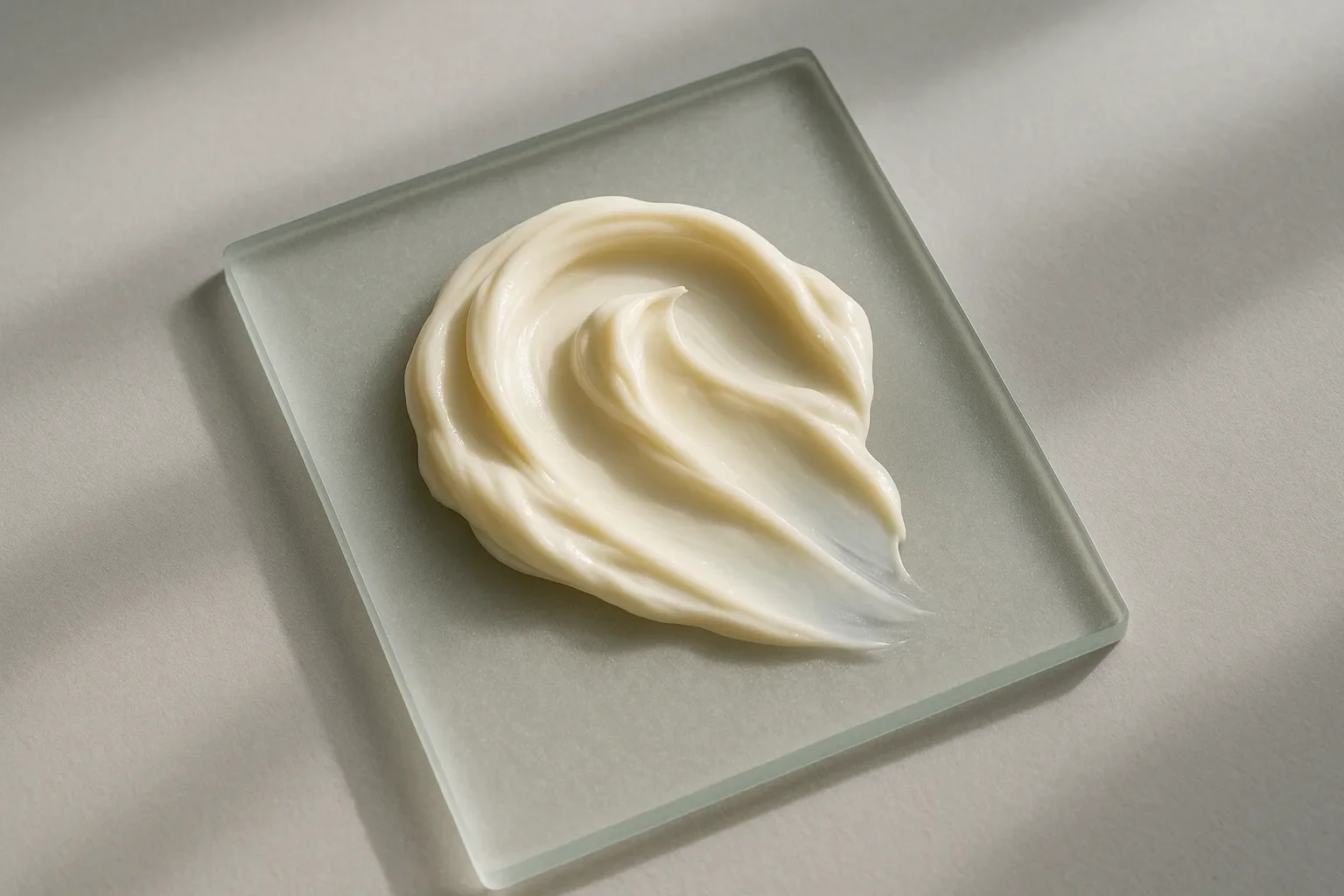
Skin reactions cannot be fully predicted from the ingredient list alone
No matter how carefully you check the full ingredient list, actual skin reactions can vary depending on individual skin condition and usage environment. Even with a product containing Centella asiatica-derived ingredients, if unusual reactions such as redness or stinging occur after use, the priority is to stop use and recheck the ingredient list, and if the reaction persists or recurs, it is recommended to consult a dermatologist or other specialist.
The final step: which cream should you finish with?
If the purpose of checking the full ingredient list goes beyond 'is this ingredient safe' to 'does this formulation match my skin goals,' the next step is to look at the hierarchy in which Centella asiatica-derived ingredients are designed together with other ingredients for elasticity and wrinkle care. ARZTIN Regenerative Silt Cream is a product centered on adenosine, which has been reviewed and approved for wrinkle improvement efficacy, formulated together with three types of Centella asiatica-derived ingredients alongside barrier lipid ingredients such as ceramide NP and cholesterol, and oil-based ingredients such as squalane and shea butter, so that the entire ingredient list reads as a single coherent direction.
사용 전과 비교해 사용 직후 통계적으로 유의하게 개선됐습니다. 개선율(%)은 사용 전 대비 변화량의 비율이며(|사용 후−사용 전|÷사용 전×100), 개인차가 있을 수 있습니다.
출처 P&K 피부임상연구센타 인체적용시험 결과보고서 (PNK-24610-RD1R2, 2024)
사용 전과 비교해 2주 사용 후 통계적으로 유의하게 개선됐습니다. 개선율(%)은 사용 전 대비 변화량의 비율이며(|사용 후−사용 전|÷사용 전×100), 개인차가 있을 수 있습니다.
출처 P&K 피부임상연구센타 인체적용시험 결과보고서 (PNK-24610-RD1R2, 2024)
Frequently asked questions
- If asiatic acid appears near the end of the ingredient list, does that mean it's only added as a token amount?
- It's hard to conclude that. Ingredients below a certain concentration threshold may be listed regardless of order, so rather than judging formulation weight by position alone, it's more accurate to also look at what other ingredients it's combined with.
- If a product contains Centella asiatica-derived ingredients, does that mean it's exclusively for sensitive skin?
- No. Centella asiatica-derived ingredients are formulated into various product types for skin-soothing care purposes, and are often included together in products aimed at elasticity care or moisture retention as well. It's best not to assume a product's overall direction based on a single ingredient.
- What should I do if I notice redness while using a product containing asiatic acid?
- If you notice a reaction different from usual, it's best to stop use first and check the full ingredient list again. If the reaction persists or recurs, consulting a dermatologist or other specialist is recommended. Individual differences may apply.
- If a product is a functional cosmetic, does that mean the Centella asiatica-derived ingredient has also undergone review?
- No. Functional cosmetics undergo Ministry of Food and Drug Safety review for specific notified ingredients (e.g., adenosine), and Centella asiatica-derived ingredients are typically formulated separately as components that support soothing care, apart from that review.
Related products
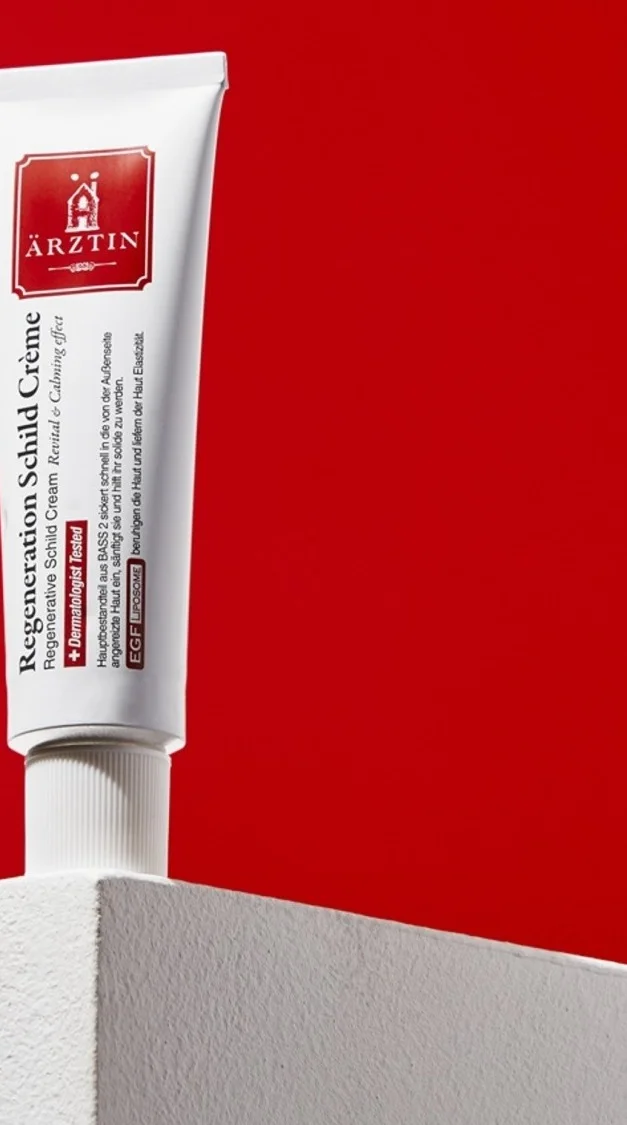 리제너레이티브 실트 크림Buy
Anti-wrinkle functional cosmetic · A rich cream that addresses both elasticity and barrier care
- 리제너레이티브 실트 크림Buy
Anti-wrinkle functional cosmetic · A rich cream that addresses both elasticity and barrier care
- 리제너레이티브 실트 크림Buy
Anti-wrinkle functional cosmetic · A rich cream that addresses both elasticity and barrier care
- 리제너레이티브 실트 크림Buy
Anti-wrinkle functional cosmetic · A rich cream that addresses both elasticity and barrier care
- 리제너레이티브 실트 크림Buy
Anti-wrinkle functional cosmetic · A rich cream that addresses both elasticity and barrier care