
Betaine Application Order: Where Should It Go?
Betaine is a moisturizing ingredient that holds onto moisture, so it isn't fixed to one particular step in a skincare routine. It can be included in light formulas like toners and essences, as well as heavier formulas like creams. Rather than focusing on 'which step to apply it,' it's more important to look at what role it's designed to play within the entire ingredient list. When used in a final step alongside oil-based ingredients, it can help seal in moisture so it doesn't evaporate.
"Which step should betaine be included in for skincare?" Trying to determine the order based solely on the ingredient's name can actually be more confusing. Betaine isn't an ingredient designed for one specific step—it's a moisturizing ingredient that holds onto moisture, so it can be included in a variety of formulas, from toners to creams.
So this article covers why betaine isn't an ingredient tied to a specific order, where it actually appears in ingredient lists, and how to design an overall routine if you want to manage elasticity and moisture together.
- 1Toner/EssenceQuickly delivers moisture in a light formula
- 2AmpouleSupports both moisture retention and skin condition care
- 3Cream (Finishing step)Works with oil-based ingredients to seal in moisture and prevent evaporation
Why betaine should be understood by 'role' rather than 'order'
Betaine is a moisture-retaining ingredient also found in plants and marine organisms, and in cosmetics it functions to help moisture stay between the skin surface and the stratum corneum. Since this role is needed regardless of the weight of the formulation, it can be included in both light toners and viscous creams.
In other words, it's more accurate to understand betaine not as an 'ingredient for a specific step number' but as an 'ingredient that helps retain moisture no matter which step it's included in.' Rather than worrying about order, it's more practical to look at the overall design of the product.
Why does betaine's position on the ingredient list differ by product?
The full ingredient list is required to be listed in order from highest to lowest concentration. For ingredients like betaine that are typically formulated at relatively low concentrations, their listed position can naturally vary depending on the overall formulation ratio of that particular product.
Therefore, there's no need to interpret whether betaine appears earlier or later on the list as meaning you must 'apply in that order.' Instead, it's more meaningful to check what other ingredients are placed around betaine — in other words, whether the product was designed to combine moisture-retaining ingredients, oil components, and barrier-related ingredients together.
Organized by formulation type: the difference between light steps and finishing steps
If betaine is included in a light formulation like a toner or essence, it can be seen as playing the role of quickly delivering moisture before moving on to the next step.
On the other hand, if betaine is included in a rich-type formulation applied last, like a cream, it's closer to a finishing role of locking in previously delivered moisture together with oil components so it doesn't evaporate. Even the same ingredient can play a practically different role depending on what formulation and what step it's incorporated into.
Considering elasticity too: designing a routine that doesn't stop at moisturizing alone
Moisture-retaining ingredients like betaine clearly help keep the skin hydrated, but they are not, in themselves, ingredients that manage elasticity or wrinkles. Since moisture and elasticity are issues on different levels, following the order carefully doesn't automatically take care of elasticity as well.
If you feel your elasticity isn't what it used to be, or if fine lines and dryness are both a concern, placing a finishing-step product designed for elasticity care alongside your moisturizing step, separately, can be a way to complete your overall routine.
In this context, when choosing a product to fill the final step, it helps to form the habit of looking at the overall design of the full ingredient list rather than just a single moisture-retaining ingredient. ARZTIN Regenerative Silt Cream is a rich-type cream that combines moisture-retaining ingredients like betaine and trehalose with adenosine, a wrinkle-improvement functional ingredient recognized by the authorities, three types of peptides designed for elasticity care, barrier-forming lipid ingredients such as ceramide NP, cholesterol, and palmitic acid, and squalane, shea butter, and argan kernel oil to help lock in moisture — making it worth considering when you want to address both moisturizing finish and elasticity care in a single step.
In an actual human application test, statistically significant improvements were observed in skin elasticity recovery, pore area firmness, cheek elasticity, and jawline lifting immediately after a single use among adult women aged 30 to 59, and improvement in skin calming was also confirmed after two weeks of use. However, these results are based on specific test conditions and may vary depending on individual skin condition.
If you experience adverse reactions
Betaine is known as a mild ingredient, but any ingredient may not suit everyone. If unusual reactions such as redness or itching persist for a long time after using a new product in the correct order, it is safer to stop use and consult a dermatologist or other specialist.
The final step, what cream should you finish with
No matter how elaborately you design your moisturizing routine, if it lacks a final step for elasticity care, the routine is only half complete. Choosing a product that combines moisture-retaining ingredients with elasticity care ingredients for the final step can be one option.
사용 전과 비교해 사용 직후 통계적으로 유의하게 개선됐습니다. 개선율(%)은 사용 전 대비 변화량의 비율이며(|사용 후−사용 전|÷사용 전×100), 개인차가 있을 수 있습니다.
출처 P&K 피부임상연구센타 인체적용시험 결과보고서 (PNK-24610-RD1R2, 2024)
사용 전과 비교해 사용 직후 통계적으로 유의하게 개선됐습니다. 개선율(%)은 사용 전 대비 변화량의 비율이며(|사용 후−사용 전|÷사용 전×100), 개인차가 있을 수 있습니다.
출처 P&K 피부임상연구센타 인체적용시험 결과보고서 (PNK-24610-RD1R2, 2024)
사용 전과 비교해 사용 직후 통계적으로 유의하게 개선됐습니다. 개선율(%)은 사용 전 대비 변화량의 비율이며(|사용 후−사용 전|÷사용 전×100), 개인차가 있을 수 있습니다.
출처 P&K 피부임상연구센타 인체적용시험 결과보고서 (PNK-24610-RD1R2, 2024)
사용 전과 비교해 사용 직후 통계적으로 유의하게 개선됐습니다. 개선율(%)은 사용 전 대비 변화량의 비율이며(|사용 후−사용 전|÷사용 전×100), 개인차가 있을 수 있습니다.
출처 P&K 피부임상연구센타 인체적용시험 결과보고서 (PNK-24610-RD1R2, 2024)
사용 전과 비교해 2주 사용 후 통계적으로 유의하게 개선됐습니다. 개선율(%)은 사용 전 대비 변화량의 비율이며(|사용 후−사용 전|÷사용 전×100), 개인차가 있을 수 있습니다.
출처 P&K 피부임상연구센타 인체적용시험 결과보고서 (PNK-24610-RD1R2, 2024)
Frequently asked questions
- Should betaine be included in a toner or a cream?
- Both are possible. Betaine isn't an ingredient designed for a specific step—it's an ingredient that holds moisture, so it can be formulated into light toners and essences as well as finishing creams. Rather than focusing on which step it appears in, it's more useful to look at what other ingredients the product is designed alongside overall.
- Since betaine's position in the ingredient list differs by product, should I apply products in a specific order?
- The order of ingredients listed is based on concentration from highest to lowest, and the order for lower-concentration ingredients can vary. This doesn't indicate an application order—it's simply a labeling convention based on formulation ratios.
- Will elasticity improve if I just focus on betaine?
- Betaine is a moisturizing ingredient that holds onto moisture; it isn't designed for elasticity or wrinkle care. If you want to address elasticity as well, it may help to add a separate product specifically designed for elasticity care to your routine.
- Does applying a betaine-containing product in the last step produce a different effect?
- Applying a rich formula in the last step can help seal in the moisture delivered earlier, working alongside oil-based ingredients to keep it from evaporating. However, this is a difference in role based on the formula's position in the routine, and the actual experience may vary depending on individual skin conditions.
- What should I do if irritation occurs after applying betaine?
- Betaine is generally known as a mild ingredient, but it may not suit everyone. If redness or itching persists for a long time, it's safer to stop use and consult a dermatologist or other specialist.
Related products
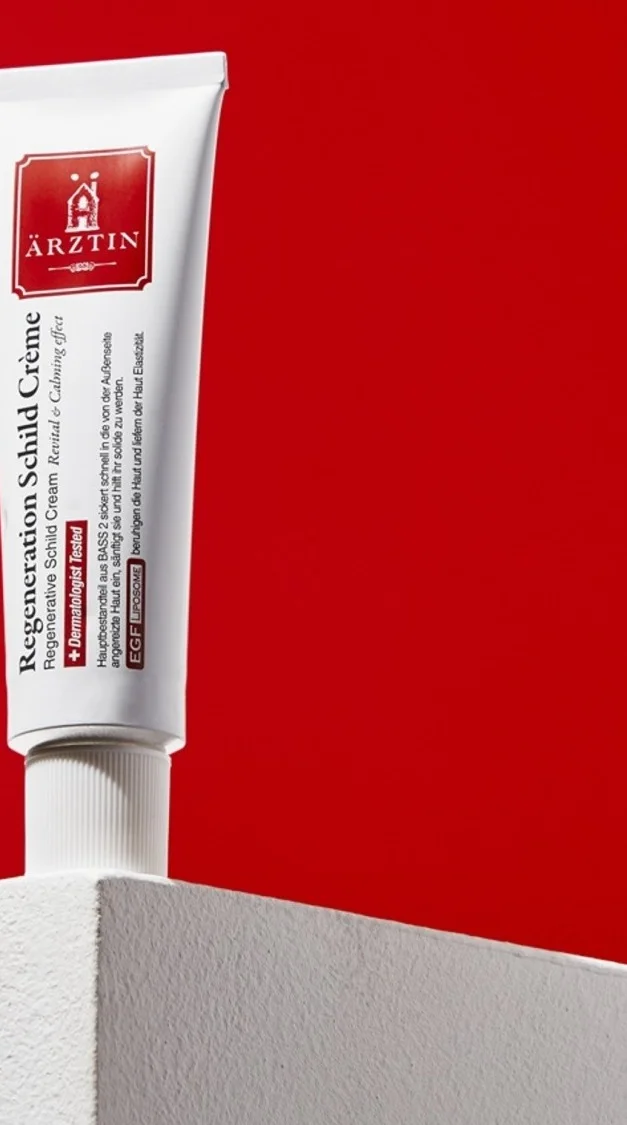 리제너레이티브 실트 크림Buy
Anti-wrinkle functional cosmetic · A rich cream that addresses both elasticity and barrier care
- 리제너레이티브 실트 크림Buy
Anti-wrinkle functional cosmetic · A rich cream that addresses both elasticity and barrier care
- 리제너레이티브 실트 크림Buy
Anti-wrinkle functional cosmetic · A rich cream that addresses both elasticity and barrier care
- 리제너레이티브 실트 크림Buy
Anti-wrinkle functional cosmetic · A rich cream that addresses both elasticity and barrier care
- 리제너레이티브 실트 크림Buy
Anti-wrinkle functional cosmetic · A rich cream that addresses both elasticity and barrier care