
Betaine Precautions — Key Points to Check on the Full Ingredient List
Betaine is an ingredient with low reported skin irritation risk that helps retain moisture, and it is used relatively safely in most products. However, the order in which it appears on the full ingredient list is not enough to determine its actual concentration, betaine alone cannot be expected to manage elasticity or wrinkles, and it's important to look at the overall formulation design—these are the practical points to watch for.
I often get questions like 'Is betaine actually bad for you?' or 'Is it okay that it's listed near the top of the ingredient list?' To cut to the conclusion, betaine is a moisture-retaining ingredient commonly used in cosmetics, and it is not an ingredient widely reported to carry significant irritation risk on its own. That said, there are points commonly misunderstood when reading ingredient lists, which I'd like to address here.
What kind of ingredient is betaine?
Betaine is an amino acid derivative that can be obtained from sources like sugar beets, and in cosmetics it is mainly used to draw in and hold onto moisture. It is often classified, along with trehalose and glycerin, as a 'humectant' (moisture-retaining ingredient), and it also serves a supporting role in making the texture feel lighter.
It should first be noted that betaine itself is not an ingredient that rebuilds the skin barrier or improves wrinkles. Betaine is closer to a 'moisture-retention helper,' and if you're expecting changes in elasticity or texture, other ingredients need to be formulated alongside it.
A commonly misunderstood point about ingredient list ordering
Cosmetic ingredient lists are generally ordered from highest to lowest concentration, but below a certain concentration threshold, the listed order is not legally required to reflect the actual concentration order. So just because betaine appears near the top or middle of the ingredient list doesn't necessarily mean it's 'a core ingredient of this product,' and conversely, its appearance near the end doesn't necessarily mean it's 'barely included.'
Especially in formulations like rich creams where multiple types of ingredients (aqueous, oil-based, thickening, moisturizing) are blended together, it is more practical to look at which ingredients betaine is combined with, rather than judging its concentration solely by its position on the ingredient list.
| Common Misconception | Actual Checkpoint |
|---|---|
| If it's near the front, it's a key ingredient | Below a certain concentration threshold, listing order may no longer reflect actual concentration |
| If it's near the back, it's barely included | Even low-concentration ingredients can appear in different positions depending on formulation purpose |
| Moisturizing ingredients alone are enough | To address elasticity and wrinkles as well, you need to check for other ingredient groups designed alongside it |
Skin conditions and periods requiring caution
Reports of irritation from betaine itself are relatively rare, but for skin that already has a weakened barrier or becomes sensitive during certain seasons, the issue may not be betaine itself but rather its combination with other ingredients in the product (fragrances, certain alcohols, specific extracts, etc.) that can act as irritants. When using a new product, it is still worthwhile to test a small amount on the inner arm first.
During periods when skin becomes rough due to seasonal changes or heating/cooling, it helps to check whether a moisturizing ingredient is used alongside lipid-based ingredients that make up the skin barrier, rather than relying on a single moisturizing ingredient. If abnormal reactions recur or persist, it is safer to consult a dermatologist or other specialist rather than making a self-judgment.
A step-by-step method for checking the ingredient list
① Check betaine's position, but do not treat it as an absolute indicator of concentration. ② Look for whether moisturizing and conditioning ingredients such as trehalose, panthenol, and glycerin appear alongside betaine. ③ Check whether barrier lipid ingredients such as ceramides and cholesterol are included. ④ If you expect wrinkle improvement, also check whether functional ingredients approved for that purpose, such as adenosine, are included in the formulation.
Going through these four steps can help you distinguish between a product that 'only moisturizes' and one that is 'also designed for elasticity and wrinkles.'
What betaine alone cannot address
Even if betaine faithfully performs its role of retaining moisture, it does not resolve concerns like reduced elasticity or fine lines that become noticeable with age. This is not a limitation of betaine per se, but rather because it was designed for a different role from the start. That is why, when reviewing an ingredient list, it is important to check not just for a single moisturizing ingredient, but whether the product also includes a combination of ingredients designed to address elasticity and wrinkles.
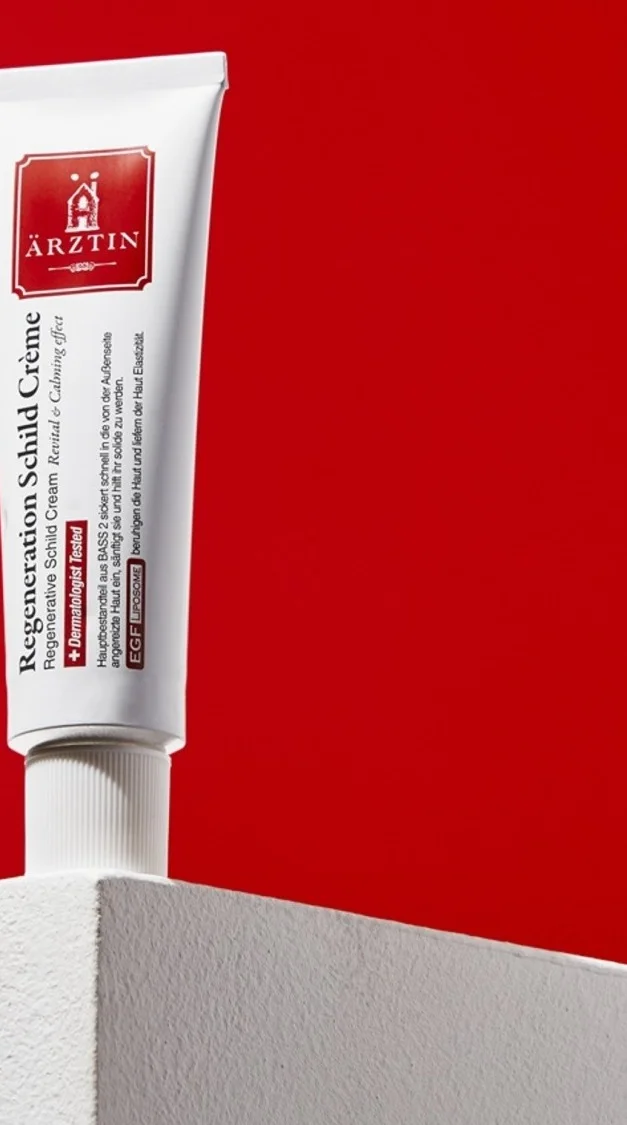
The full ingredient list of ARZTIN Regenerative Silt Cream includes moisture-retaining ingredients such as betaine and trehalose, alongside barrier lipid ingredients such as ceramide NP, cholesterol, and palmitic acid, as well as adenosine, a functional ingredient approved for wrinkle improvement, and three types of peptides for elasticity care. After understanding the role and limitations of moisturizing ingredients, reviewing the full ingredient list can help you understand why this kind of multi-layered formulation is necessary.
The final step — which cream should you finish with?
After understanding the role and limitations of moisturizing ingredients, reviewing the full ingredient list can help you understand why this kind of multi-layered formulation is necessary.
Frequently asked questions
- Can betaine be used on sensitive skin?
- Betaine itself is known as a moisturizing ingredient with relatively low irritation risk, but reactions can vary depending on its combination with other ingredients in the full formula. If you're trying a product for the first time, it's safer to test a small amount first.
- Does it matter where betaine appears on the ingredient list?
- Position alone is not enough to determine the concentration. Below a certain concentration threshold, the listed order may not accurately reflect actual content, so it's more useful to look at the other ingredients formulated alongside it.
- If a product only contains betaine, does that help with elasticity care?
- Betaine is closer to playing a role in retaining moisture. If you want elasticity or wrinkle improvement, it's better to check whether functional ingredients like adenosine or elasticity-care peptides are also included in the formulation.
- What should I do if my skin becomes red or stings while using betaine?
- First, stop using the product and monitor the symptoms. If the reaction is recurring or persists for a long time, it's recommended to consult a dermatologist or specialist rather than making your own judgment.
Related products
 리제너레이티브 실트 크림Buy
Anti-wrinkle functional cosmetic · A rich cream that addresses both elasticity and barrier care
- 리제너레이티브 실트 크림Buy
Anti-wrinkle functional cosmetic · A rich cream that addresses both elasticity and barrier care
- 리제너레이티브 실트 크림Buy
Anti-wrinkle functional cosmetic · A rich cream that addresses both elasticity and barrier care
- 리제너레이티브 실트 크림Buy
Anti-wrinkle functional cosmetic · A rich cream that addresses both elasticity and barrier care
- 리제너레이티브 실트 크림Buy
Anti-wrinkle functional cosmetic · A rich cream that addresses both elasticity and barrier care