
Bifida Ferment Lysate: Points to Watch — Checkpoints from the Full Ingredient List
Bifida Ferment Lysate is a fermentation-derived conditioning ingredient that commonly appears on ingredient lists, but it's worth noting that its listed order alone doesn't confirm its exact concentration, and as a fermentation byproduct, individual skin reactions can vary. This article outlines the actual points to check when looking at this ingredient, and where it tends to be positioned in products aimed at elasticity and wrinkle care.
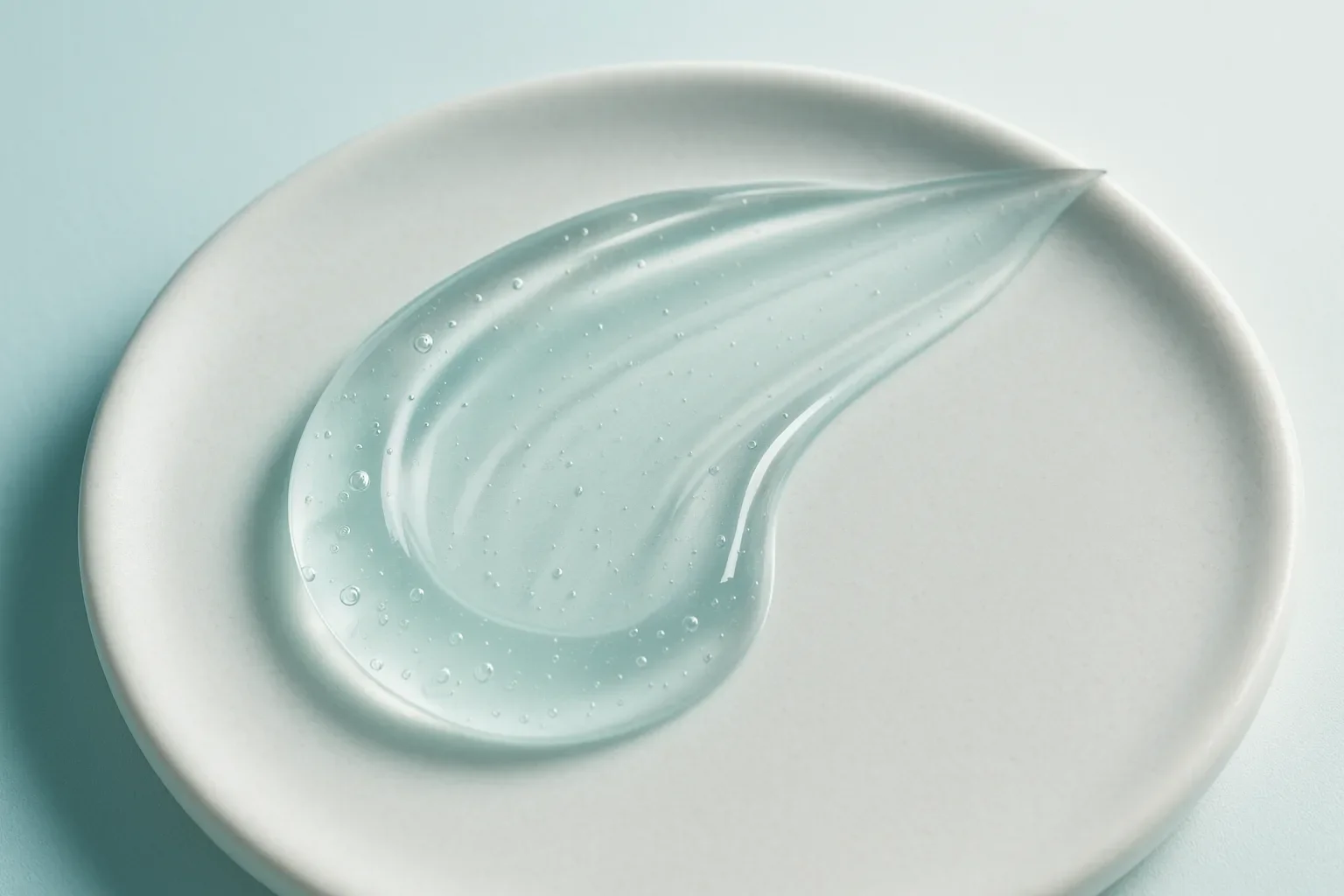
Seeing the name 'Bifida Ferment Lysate' on an ingredient list can easily give the impression that it's a beneficial ingredient. Indeed, this ingredient undergoes a fermentation process and is classified in cosmetics as an ingredient that helps manage skin condition. However, apart from the impression its name gives, there are a few practical points worth checking when reading the ingredient list.
What is Bifida Ferment Lysate and why is it used?
Bifida Ferment Lysate is a lysate obtained from the fermentation process of a specific bacterial strain, and as a cosmetic ingredient it is used to help refine skin condition. Because it is fermentation-derived, it carries an image of being a gentle, natural ingredient, but it should first be noted that under cosmetics regulations, this ingredient has no assigned functional efficacy and is strictly a formulation ingredient within the conditioning care category.
This ingredient often appears in a mid-range position on the full ingredient list. Cosmetic ingredient lists are arranged in descending order of content, but there is a regulatory characteristic whereby, for ingredients present in low amounts, the listed order may not accurately reflect the actual formulation ratio. Therefore, judging an ingredient as 'high' or 'low' in content based solely on its position on the list is not an accurate approach.
Points to Watch Carefully on the Full Ingredient List
First, fermentation-derived raw materials can vary in characteristics from product to product depending on the purification and stabilization process of the raw material itself. Even ingredients with the same name may differ in the level of residue management depending on the manufacturer or raw material supplier, so it is difficult to judge the overall safety of a product based on this ingredient alone.
Second, due to the nature of fermentation byproducts, some skin conditions may notice changes in how the skin feels. This does not mean the ingredient is harmful—it is a general characteristic common to fermentation-derived ingredients as a whole, and it means that when trying a product for the first time, it is recommended to first test a small amount.
Third, one should not judge the character of an entire product based on this single ingredient alone. The full ingredient list is only meaningful when read in the context of the overall formulation, not as individual ingredients. A practical way to check is to look at what ingredients are placed alongside Bifida Ferment Lysate and what roles those ingredients play—whether moisturizing, barrier support, or soothing.
| Check Item | Meaning | Practical Approach |
|---|---|---|
| Listed Position | For low-content ingredients, the order may not accurately reflect the actual formulation ratio | Do not judge content based on position alone |
| Raw Material Characteristics | Fermentation-derived raw materials can vary in characteristics depending on purification and stabilization processes | Approach with the assumption of product-by-product differences |
| Surrounding Ingredient Group | Whether it is placed alongside moisturizing, barrier, or soothing ingredients | Judge in overall context, not in isolation |
| Individual Condition | Reactions may vary depending on skin condition | Test new products with a small amount first |
Why It Should Be Viewed Differently Depending on Skin Condition
When skin condition is stable, many people use products containing this ingredient without much concern. On the other hand, when the barrier is temporarily weakened or the skin has become sensitive due to seasonal changes or heating/cooling, it is a safer approach to check the overall composition of the product once more before introducing any new ingredient, including fermentation-derived ones.
In the end, caution regarding this ingredient does not mean 'avoid it,' but rather 'understand its role within the overall formulation before using it.' In particular, when choosing a product aimed at elasticity and wrinkle care, it helps to distinguish whether this ingredient supports a core functional ingredient or is emphasized on its own.
A Checklist Organized by Order of Review
When checking the full ingredient list, it is practical to look in the following order. First, check whether Bifida Ferment Lysate appears in the early, middle, or late section of the full ingredient list. Next, examine what group of ingredients is placed around it—whether moisturizing ingredients, barrier lipid ingredients, or soothing ingredients. Finally, look at how this ingredient connects to the product's core functional ingredients (e.g., approved wrinkle-improvement ingredients).
Checking in this order gives more useful information for judging whether the overall formulation is designed to fit your skin goals, rather than simply questioning the risk of Bifida Ferment Lysate alone.
The final step: which cream should you finish with?
The process of checking the position of Bifida Ferment Lysate in the full ingredient list and the surrounding ingredient groups is ultimately a way to judge what role the product assigns to this ingredient. ARZTIN Regenerative Cell Cream is a formulation that does not emphasize Bifida Ferment Lysate on its own, but instead places it in a supporting, conditioning role while centering on adenosine—recognized through functional cosmetics review for wrinkle improvement—and 3 types of peptides for elasticity care. For those in the habit of checking full ingredient lists, judging for themselves whether a product has a clear hierarchy between core and supporting ingredients in this way can be one useful approach.
Frequently asked questions
- Does a product containing Bifida Ferment Lysate automatically mean it's gentle?
- Being fermentation-derived doesn't guarantee gentleness. Product characteristics can vary depending on the refining and stabilization process of the raw material and the overall formulation, so it's safer to patch-test a small amount when trying a new product for the first time.
- If this ingredient appears near the top of the ingredient list, does that mean it's present in a high amount?
- Generally, ingredients listed earlier tend to be present in higher amounts, but at lower concentration ranges, listing order may not precisely reflect the actual formulation ratio, so it's hard to be certain based on position alone.
- Could this ingredient cause skin sensitivity?
- As a fermentation byproduct, some skin conditions may experience changes in feel. If unusual reactions persist during use, it's recommended to stop use and consult a dermatologist or specialist if needed.
- Does Bifida Ferment Lysate directly help improve wrinkles?
- This ingredient itself is classified as a fermentation-derived conditioning ingredient, and it is not a wrinkle-improvement ingredient under Korea's functional cosmetics notification system. If wrinkle improvement is the goal, you should separately check whether the product contains an officially notified functional ingredient.
- Is it enough to check only this ingredient when reading the ingredient list?
- Rather than judging the entire product based on a single ingredient, it's more practical to check what other categories of ingredients are placed around it and how it relates to the core functional ingredients.
Related products
 리제너레이티브 실트 크림Buy
Anti-wrinkle functional cosmetic · A rich cream that addresses both elasticity and barrier care
- 리제너레이티브 실트 크림Buy
Anti-wrinkle functional cosmetic · A rich cream that addresses both elasticity and barrier care
- 리제너레이티브 실트 크림Buy
Anti-wrinkle functional cosmetic · A rich cream that addresses both elasticity and barrier care
- 리제너레이티브 실트 크림Buy
Anti-wrinkle functional cosmetic · A rich cream that addresses both elasticity and barrier care
- 리제너레이티브 실트 크림Buy
Anti-wrinkle functional cosmetic · A rich cream that addresses both elasticity and barrier care