
Which Skin Type Suits Bifida Ferment Lysate: A Guide Based on Ingredient Characteristics
Bifida Ferment Lysate is a fermentation-derived conditioning ingredient that is not designed to exclusively target a specific skin type. However, the group of ingredients it's combined with (moisturizing, barrier lipid, or elasticity care ingredients) becomes the practical criterion for judging suitability—that is, 'what skin concern was it used alongside?' When reading a full ingredient list, it is more useful to look at which neighboring ingredients this component is placed with, rather than just its position in the listing order.
The question 'would Bifida Ferment Lysate suit my skin' is actually difficult to answer with a single ingredient alone. This is because fermentation-derived ingredients are often placed within the overall formulation to fine-tune condition alongside other ingredients, rather than being designed to target a specific skin type. So to properly answer this question, one must first identify 'what skin condition was this ingredient meaningfully used alongside?'
Why Bifida Ferment Lysate Is Used in Cosmetics
Bifida Ferment Lysate is a lysate obtained through a microbial fermentation process, and is classified in ingredient lists as a fermentation-derived conditioning ingredient. Rather than being an ingredient that claims a specific effect on its own, it tends to be placed alongside other ingredients within formulations aimed at moisturizing and condition management.
For this reason, to judge whether 'this ingredient suits my skin,' it is more practical to look at which group of role-based ingredients this ingredient is placed alongside within the same product, rather than the ingredient's name alone. If it's alongside moisturizing ingredients, more weight can be placed on moisture retention; if alongside barrier lipid ingredients, more weight can be placed on condition management.
Why It Reads Differently Depending on Skin Condition
If your skin tends to feel dry often, it can help to check whether Bifida Ferment Lysate is positioned alongside moisture-retaining ingredients such as betaine and trehalose. This combination is often designed to add a sense of hydration to the skin.
If your skin tends to become sensitive due to seasonal changes or heating/cooling, checking whether it's placed near soothing and moisturizing ingredients like panthenol and allantoin can serve as a criterion for judgment. On the other hand, if elasticity or fine lines are also a concern, whether ingredients aimed at elasticity care, such as adenosine and peptides, are included alongside is a more important check point than the fermented-derived ingredient alone.
In other words, 'skin suited to Bifida Ferment Lysate' depends less on the property of the ingredient itself and more on what skin concerns the product containing it is designed to address together.
| Skin Condition | Ingredient Groups to Check Together | Expected Role |
|---|---|---|
| When dryness is often felt | Moisture-retaining ingredients such as betaine and trehalose | Maintaining hydration |
| When sensitivity increases due to seasonal changes or heating/cooling | Soothing and moisturizing ingredients such as panthenol and allantoin | Condition management |
| When elasticity and fine lines are also a concern | Elasticity care ingredients such as adenosine and peptides | Positioned for elasticity care purposes |
Common misunderstandings when checking the full ingredient list
The order of listing on the full ingredient list roughly shows the order of quantity, but for lower-content ingredients, the listed order can vary, making it difficult to estimate the exact formulation ratio from order alone. This stands out even more for conditioning ingredients like Bifida Ferment Lysate that are typically formulated in small amounts.
Therefore, rather than judging 'more or less' based on order, a more practical approach is to look at what purpose-oriented ingredient groups the ingredient is neighbored by, and what skin concerns the product as a whole is designed to target.
Order of checking in a routine: step-by-step check
Step 1, first organize what your skin's main concern is (whether it's closer to dryness, sensitivity, or loss of elasticity).
Step 2, check which ingredient group (moisturizing, soothing, barrier lipids, elasticity care) Bifida Ferment Lysate is placed near on the full ingredient list.
Step 3, also check what ultimate purpose the product is designed to achieve (whether it's simple condition management or includes elasticity and wrinkle care).
Step 4, if an adverse reaction occurs or symptoms persist, it is safer to stop use and consult a dermatologist or other specialist.
Final step, which cream to finish with
The answer to the question of 'what skin Bifida Ferment Lysate suits' ultimately comes down to what the product containing it is designed to achieve. ARZTIN Regenerative Silt Cream is a product that has undergone functional review for wrinkle improvement; it positions Bifida Ferment Lysate as a conditioning ingredient while also designing elasticity care through adenosine and 3 types of peptides, and is composed to finish in a rich type with barrier lipid ingredients such as ceramide NP and cholesterol, along with oil-based ingredients like squalane and shea butter. If your skin feels both dryness and reduced elasticity, you can refer to this overall composition to judge whether it suits your routine.
사용 전과 비교해 사용 직후 통계적으로 유의하게 개선됐습니다. 개선율(%)은 사용 전 대비 변화량의 비율이며(|사용 후−사용 전|÷사용 전×100), 개인차가 있을 수 있습니다.
출처 P&K 피부임상연구센타 인체적용시험 결과보고서 (PNK-24610-RD1R2, 2024)
사용 전과 비교해 2주 사용 후 통계적으로 유의하게 개선됐습니다. 개선율(%)은 사용 전 대비 변화량의 비율이며(|사용 후−사용 전|÷사용 전×100), 개인차가 있을 수 있습니다.
출처 P&K 피부임상연구센타 인체적용시험 결과보고서 (PNK-24610-RD1R2, 2024)
Frequently asked questions
- Can Bifida Ferment Lysate be used on sensitive skin as well?
- Fermentation-derived conditioning ingredients themselves are widely used, but individual reactions can vary. If you're trying a product for the first time, it's safer to test a small amount first to check your reaction, and to stop use and consult a dermatologist or other professional if any adverse reaction occurs.
- If Bifida Ferment Lysate appears near the top of the ingredient list, does that mean it's present in a high concentration?
- Listing order generally reflects concentration order, but for lower-concentration ingredients, the order can vary, making it difficult to determine exact concentration from order alone. It's more useful to also look at which group of ingredients it's placed alongside.
- Would the same product suit both dry and oily skin?
- Suitability can vary depending on the overall formulation and texture (whether it's a rich type or a light type) rather than a single ingredient. It's best to consider both your skin condition and your preferred texture together when choosing.
- If I'm expecting elasticity improvement, is it enough to just look at this ingredient?
- Since Bifida Ferment Lysate is an ingredient meant for condition management, if you're expecting elasticity care, it's more important to check whether ingredients aimed at elasticity care, such as adenosine or peptides, are included as well.
Related products
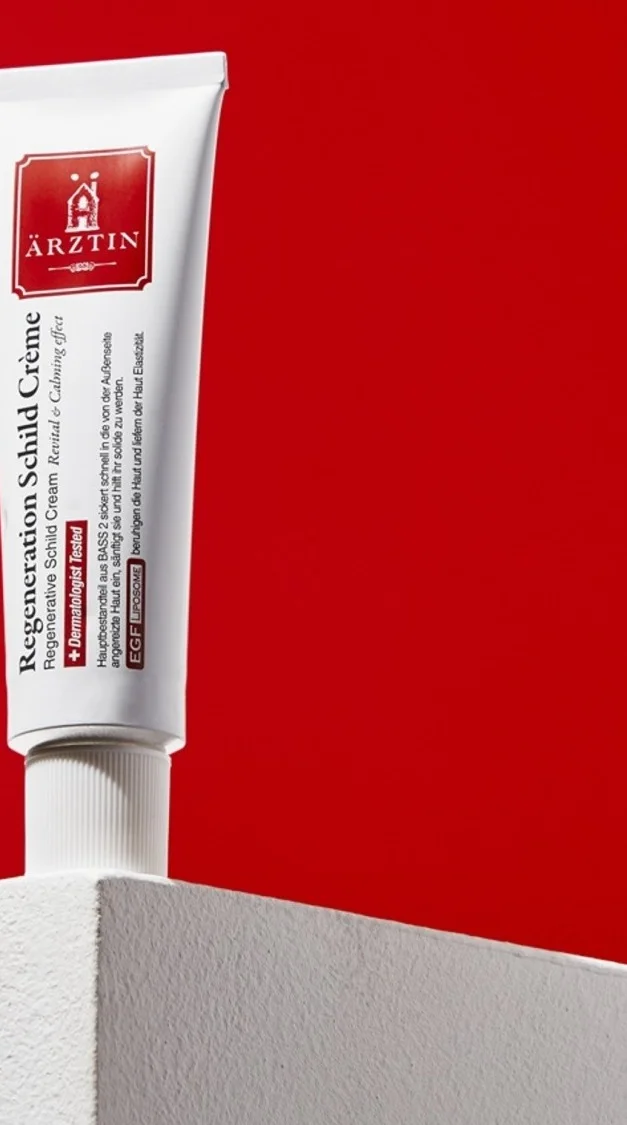 리제너레이티브 실트 크림Buy
Anti-wrinkle functional cosmetic · A rich cream that addresses both elasticity and barrier care
- 리제너레이티브 실트 크림Buy
Anti-wrinkle functional cosmetic · A rich cream that addresses both elasticity and barrier care
- 리제너레이티브 실트 크림Buy
Anti-wrinkle functional cosmetic · A rich cream that addresses both elasticity and barrier care
- 리제너레이티브 실트 크림Buy
Anti-wrinkle functional cosmetic · A rich cream that addresses both elasticity and barrier care
- 리제너레이티브 실트 크림Buy
Anti-wrinkle functional cosmetic · A rich cream that addresses both elasticity and barrier care