
Ingredients That Work Well With Ceramide NP — Combination Criteria Based on Full Ingredient List Design
Ceramide NP is a lipid-family ingredient that forms the skin barrier, and reading the full ingredient list takes on a different meaning when it's placed alongside related lipids like cholesterol and fatty acids, as well as moisturizing and elasticity-care ingredients, rather than standing alone. The conclusion isn't about whether Ceramide NP is present or not, but about what ingredients surround it and what roles they play.
When people spot Ceramide NP on an ingredient list, most simply think 'oh, this has something good for the barrier' and move on. But what role this ingredient actually plays depends heavily on what else is present alongside it. This is because Ceramide NP alone cannot complete the barrier lipid structure.
This article organizes the ingredient groups that 'gain meaning when present together' with Ceramide NP into three categories: lipid partners, moisturizing partners, and elasticity/wrinkle care partners, which is ultimately where this brand is headed.
Why Ceramide NP Doesn't Work 'Alone'
Ceramide is known as one of the substances that make up the lipid structure between corneocytes. However, the skin barrier's lipid structure is not filled by ceramide alone; it is explained that it is completed only when several lipids, such as cholesterol and fatty acids, are present together in a certain ratio.
So when looking at the full ingredient list, rather than being satisfied by checking only for Ceramide NP, a more practical check is to see whether fatty-acid-class ingredients like cholesterol and palmitic acid are also listed nearby. If all three are listed together, it suggests a design intent to compose barrier lipids; if ceramide appears alone, it may indicate a relatively supplementary placement.
Lipid partners: cholesterol and fatty acid class
Cholesterol is a lipid ingredient often mentioned alongside ceramide. Fatty acids like palmitic acid are similar—when placed alongside ceramide rather than appearing separately, they read as serving a single purpose of composing barrier lipids.
If these three ingredient classes are listed close together in the full ingredient list, this is likely not a coincidental combination but a design intended to compose barrier lipids. However, listing order alone cannot confirm content amount, and it should also be considered that lower-content ingredients may be pushed further back in the order or placed differently.
| Ingredient group | Role | Check point |
|---|---|---|
| Ceramide NP, cholesterol, palmitic acid | Barrier lipid composition | Whether the three are listed close together |
| Squalane, shea butter, argan kernel oil | Oil supplementation, moisture retention | Whether the formula is a rich type and oils are included together |
| Betaine, trehalose, panthenol, allantoin | Moisture retention, moisturizing condition | Whether moisture-retaining ingredients are present separately from the lipid layer |
| Adenosine, 3 types of peptides | Evidence for elasticity and wrinkle care | Whether functionally-certified ingredients are placed together |
Moisturizing partners: oil and moisture-retaining ingredients
Even if barrier lipids are in place, if there is no oil layer on top to keep moisture from evaporating, perceived moisturizing power may fall short. This is why oils like squalane, shea butter, and argan kernel oil are often placed together with Ceramide NP.
Another partner to look at is ingredients that hold onto moisture, like betaine and trehalose, and ingredients that address both moisturizing and soothing, like panthenol and allantoin. These are categories of ingredients explained as being involved in moisture retention in different ways above and below the lipid layer, and are often placed complementarily alongside ceramide.
Where this combination should lead: evidence for elasticity and wrinkle care
Up to this point, it has all been about 'how well the barrier is filled.' However, barrier lipids themselves are not ingredients confirmed to have wrinkle-improving efficacy. Ceramide, cholesterol, and fatty acids are ingredients explained strictly as components that make up the barrier, not ingredients that have undergone functional certification review—this distinction should be kept in mind.
So the last thing to check when looking at a Ceramide NP combination is whether, separate from this lipid design, ingredients that have undergone functional certification review for wrinkle improvement are also included in the same product. When barrier-reinforcing ingredients and evidence-based ingredients for elasticity and wrinkle care are present together in one product, the entire ingredient list comes together in a single coherent direction.
The final step: what cream should you finish with?
When examining actual products based on these combination criteria, what matters isn't just what sits next to Ceramide NP, but the order in which that lipid design is finished within the overall formulation alongside oil and moisture-retaining ingredients. ARZTIN Regenerative Silt Cream completes its lipid composition of Ceramide NP, cholesterol, and palmitic acid together with oils like squalane, shea butter, and argan kernel oil in a rich-type formulation, and places adenosine—certified as a functional cosmetic ingredient for wrinkle improvement—and 3 types of peptides for elasticity care within the same product, structured so that the barrier lipid design ultimately leads to elasticity care.
Frequently asked questions
- Is a product with only Ceramide NP and no cholesterol ineffective?
- It can't be said to be completely ineffective, but the barrier lipid structure is more fully explained when ceramide, cholesterol, and fatty acids are present together. If a product lists Ceramide NP alone, it's worth taking as a reference point that the lipid composition may be relatively simple.
- If Ceramide NP appears near the end of the ingredient list, does that mean the concentration is low?
- Listing order generally follows descending concentration, but among lower-concentration ingredients, the order may not precisely correspond to actual concentration differences. Rather than judging by order alone, it's more practical to look at the overall combination.
- Does having more barrier ingredients also help with wrinkle improvement?
- Barrier lipid ingredients and wrinkle improvement efficacy are separate matters. Ceramides are explained only as components that make up the barrier, and wrinkle improvement should be confirmed by checking whether ingredients that have undergone functional efficacy review, such as adenosine, are also present.
- Doesn't combining oils with ceramide create a heavy texture?
- It's true that when oils and lipid ingredients are placed together, the formulation often becomes a richer type. If you prefer a lighter texture, you can adjust by combining it with an earlier-step product depending on the time of use or skin condition, though individual differences may exist.
- What should I do if skin irritation occurs?
- Even if the ingredient combination is well-suited in general, reactions can vary depending on individual skin condition. If redness or irritation persists during use, it's recommended to discontinue use and consult a dermatologist or other specialist.
Related products
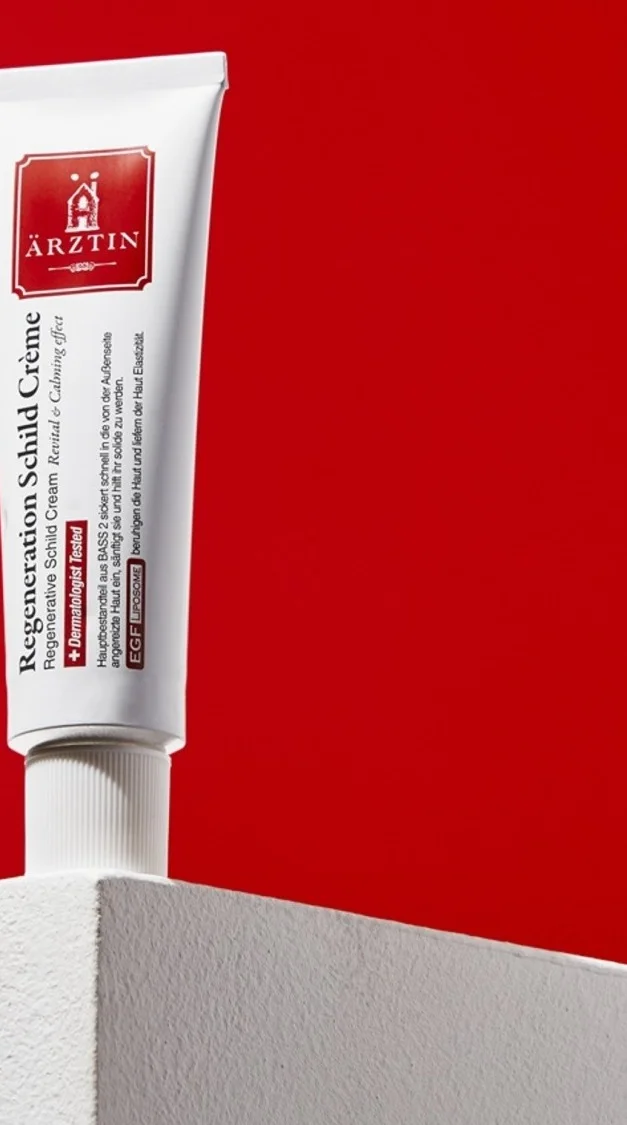 리제너레이티브 실트 크림Buy
Anti-wrinkle functional cosmetic · A rich cream that addresses both elasticity and barrier care
- 리제너레이티브 실트 크림Buy
Anti-wrinkle functional cosmetic · A rich cream that addresses both elasticity and barrier care
- 리제너레이티브 실트 크림Buy
Anti-wrinkle functional cosmetic · A rich cream that addresses both elasticity and barrier care
- 리제너레이티브 실트 크림Buy
Anti-wrinkle functional cosmetic · A rich cream that addresses both elasticity and barrier care
- 리제너레이티브 실트 크림Buy
Anti-wrinkle functional cosmetic · A rich cream that addresses both elasticity and barrier care