
Precautions for Ceramide NP — Real Risk Points to Check in the Full Ingredient List
Ceramide NP itself is known as an ingredient belonging to the same family as the lipids that make up the skin barrier, so the real risk lies less in irritation concerns and more in 'misunderstanding the labeling position and formulation method.' For ingredients in a low concentration range, the order of listing in the full ingredient list alone cannot confirm the actual amount, and Ceramide NP alone cannot explain the entire barrier. This article addresses three common consumer misunderstandings and organizes the actual criteria to check when reading a full ingredient list.

The judgment that 'it contains Ceramide NP, so it must be good for the barrier' is only half correct. Confirming the Ceramide NP label on the full ingredient list and knowing what role that ingredient is actually designed to play are different matters.
This article does not mean that Ceramide NP is a dangerous or problematic ingredient. Rather, its purpose is to address three misunderstandings that actually occur frequently when reading a full ingredient list, so as to help avoid judging a product based on a single ingredient alone.
Misunderstanding 1 — Assuming that the listed order equals the concentration order
While cosmetic ingredient lists are, in principle, listed in order of decreasing concentration, once the concentration falls below a certain level, the order may not exactly match the actual formulation ratio. In other words, one should read the list with the premise that ingredients in a low concentration range may have their listed order altered.
Insisting that an ingredient like Ceramide NP, which appears in the mid-to-late section of the full ingredient list, is 'at that position so it's basically negligible' or conversely 'at that position so it must be sufficiently abundant' both stem from a misunderstanding of how ingredient lists are labeled. Rather than judging the amount solely by position, it is more practical to look at which group of ingredients it is bundled with.
Misconception 2 — Judging a product as a 'barrier care product' based on Ceramide NP alone
Ceramide NP is described as belonging to the same category as the lipids that make up the skin barrier, but the skin barrier is not composed of a single type of ceramide alone. Cholesterol and fatty acid components must also be present for the lipid structure to be properly accounted for, and checking whether these three elements are present together is a more meaningful checkpoint than the labeling of Ceramide NP alone.
Also, no matter how well the lipid components are formulated, it is difficult to prevent moisture loss without the support of oils. Getting into the habit of checking whether oil-based ingredients are placed near Ceramide NP in the full ingredient list is closer to understanding the actual formulation design than relying on the name value of a single ingredient.
Misconception 3 — The overinterpretation that 'since there's a barrier ingredient, it will also help with wrinkles'
Lipid ingredients like Ceramide NP are only described as components that make up the barrier, not as ingredients with confirmed wrinkle-improvement efficacy. Lumping these two together into the same context is one of the most common overinterpretations made when reading a full ingredient list.
In fact, the basis on which the Ministry of Food and Drug Safety reviews cosmetics as functional wrinkle-improvement products is a separately notified ingredient (e.g., adenosine), which falls into an entirely different review category from barrier lipid ingredients. Therefore, when reading a full ingredient list, it is necessary to distinguish between 'ingredients that make up the barrier' and 'ingredients that have undergone functional review.'
Three things to actually check when reading a full ingredient list
First, don't just look at the labeling position of Ceramide NP — check whether cholesterol and fatty acid components are present together. Second, check whether oil-based ingredients are placed near the lipid components, to see whether the formulation is designed to support moisture retention. Third, if wrinkle improvement is desired, check whether a separately functionally-reviewed ingredient is also listed, apart from the barrier lipid ingredients.
By checking these three points in order, you can more accurately judge the overall design of a product without relying on the labeling of Ceramide NP alone.
| Common misconception | Actual criteria to check |
|---|---|
| Assuming labeling order equals content order | Check surrounding ingredient groups, assuming order may vary at lower concentration ranges |
| Judging a product as a barrier care product based on Ceramide NP alone | Check whether cholesterol/fatty acid components are present, and whether oils are placed nearby |
| Overinterpreting barrier ingredients as wrinkle-improvement ingredients | Check functionally-reviewed ingredients separately from barrier lipid ingredients |
Where this connects to elasticity and wrinkle care
The process of carefully checking barrier lipid design is meaningful in itself, but if elasticity or wrinkles are also a concern, it's necessary to broaden the scope of checking one step further. Once you understand that barrier lipid ingredients and functionally-reviewed ingredients play different roles, the natural next question becomes 'are both of these designed together within a single product?'
Taking ARZTIN Regenerative Sheet Cream's full ingredient list as an example, Ceramide NP, cholesterol, and palmitic acid are listed together as the lipid composition, and separately, adenosine, which underwent functional review for wrinkle improvement, and 3 types of peptides arranged for elasticity care design, are listed side by side within the same ingredient list. This does not mean that one ingredient substitutes for the efficacy of the other; rather, it means that the ingredient list confirms that ingredient groups with different roles were designed together within a single formulation.
Frequently asked questions
- Is Ceramide NP an irritating ingredient?
- Ceramide NP is an ingredient described as belonging to the same lipid family that makes up the skin barrier, and it is generally not classified as an irritating ingredient. However, reactions may vary depending on individual skin condition or the overall formulation, so if any abnormal reaction is felt during use, it is safer to stop use and consult a dermatologist or other specialist.
- If Ceramide NP appears later in the ingredient list, does that mean it's in a low amount?
- Once the concentration falls below a certain level, the listed order may not exactly match the actual formulation ratio, making it difficult to determine the amount based on position alone. Rather than the listed position, it is more practical to check which group of ingredients it is placed alongside.
- If a product contains Ceramide NP, does it also help with wrinkles?
- Lipid ingredients like Ceramide NP are described only as components that make up the barrier, and are not ingredients with confirmed wrinkle-improving efficacy. If wrinkle improvement is desired, it is necessary to check whether a separately functionally certified ingredient, such as adenosine, is also listed.
- How are barrier lipid ingredients different from oils?
- Lipid ingredients such as Ceramide NP, cholesterol, and fatty acids are described as components that form the barrier structure itself, while oils such as squalane and shea butter are described as playing a role in preventing moisture from evaporating on top of that structure. Checking whether both ingredient groups are placed together helps in understanding the formulation design.
Related products
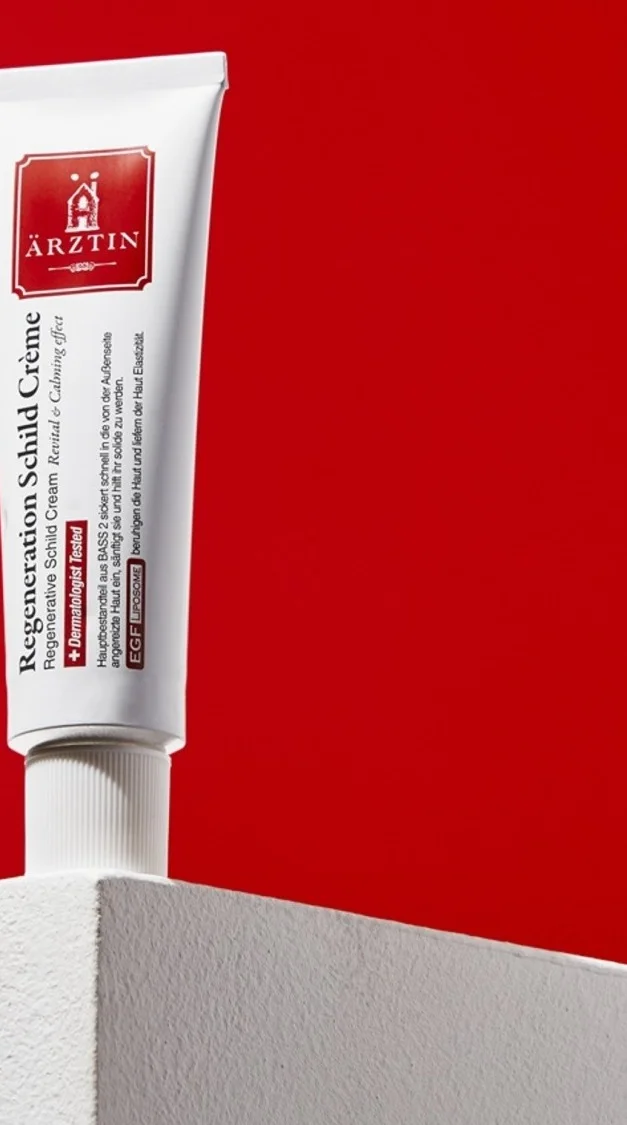 리제너레이티브 실트 크림Buy
Anti-wrinkle functional cosmetic · A rich cream that addresses both elasticity and barrier care
- 리제너레이티브 실트 크림Buy
Anti-wrinkle functional cosmetic · A rich cream that addresses both elasticity and barrier care
- 리제너레이티브 실트 크림Buy
Anti-wrinkle functional cosmetic · A rich cream that addresses both elasticity and barrier care
- 리제너레이티브 실트 크림Buy
Anti-wrinkle functional cosmetic · A rich cream that addresses both elasticity and barrier care
- 리제너레이티브 실트 크림Buy
Anti-wrinkle functional cosmetic · A rich cream that addresses both elasticity and barrier care