
Fermented Ingredient Principles and Features — How Fermentation-Derived Ingredients Work, Understood Through the Full Ingredient List
Fermented ingredients are components whose molecular structure has been transformed through microbial metabolism, and they appear on the full ingredient list under names such as "OO Ferment Filtrate" or "OO Ferment Lysate." Fermentation itself does not guarantee any specific effect—what strain fermented what, and which other ingredients it is paired with in the product, need to be checked together to gauge its actual role. This article organizes how fermented ingredients are labeled and how to check them.
When the word 'ferment' is attached to a skincare ingredient name, it vaguely gives the impression of being gentler or better absorbed. However, on the full ingredient list, a fermented ingredient is simply one raw material category, and even within that category, the way it is made and how it is labeled vary widely.
This article examines how fermented ingredients appear on the full ingredient list, and what can and cannot be known from the name alone, focusing on ingredient labeling rules.
What are fermented ingredients, and how are they written on the full ingredient list?
A fermented ingredient refers to the result obtained by metabolizing a raw material (mainly plant extracts or culture medium components) using microorganisms. In this process, the original molecules can be broken down into smaller units, or new metabolites can be created—this change is the reason fermented ingredients are said to potentially 'work differently.'
The label name on the full ingredient list is determined by the microorganism and raw material used in fermentation, as well as the final form (filtrate, lysate, extract, etc.). For example, 'Bifida Ferment Lysate' means a lysate obtained after fermentation with Bifidobacterium, so the name itself summarizes the manufacturing process.
However, the name alone does not reveal the fermentation concentration, raw material ratio, or degree of activity. The full ingredient list indicates which ingredients are included, not an indicator of how strongly that ingredient acts.
Listing order and content — how to read it qualitatively
In principle, cosmetic ingredient lists are arranged in descending order of content, but ingredients below a certain low concentration threshold may have their listed order rearranged. So a fermented ingredient appearing in the middle or latter part of the list cannot be assumed to be 'just for show,' nor can one assume that an ingredient near the top is necessarily the core of the product.
A more meaningful approach when looking at fermented ingredients is to consider 'what group of ingredients surrounds it.' If it is near moisturizing/conditioning ingredients (betaine, trehalose, panthenol, etc.), the fermented ingredient is likely positioned for conditioning purposes; if it is scattered among oils and thickening agents, it may play a role in supporting the formulation.
Ultimately, rather than searching for information on the name of a single fermented ingredient, looking at the overall context of where it is placed in the full ingredient list is a more practical standard for judgment.
| Category | Identifiable from the label name | Not identifiable from the label name alone |
|---|---|---|
| Raw material information | The strain and raw material type used in fermentation | The detailed composition of the fermentation medium |
| Form | Distinction of final form such as filtrate or lysate | Degree of molecular size reduction |
| Formulation position | Approximate position on the ingredient list | Exact content (%) |
| Estimated role | Relationship with surrounding ingredient groups | Whether it acts alone |
The actual role of fermented ingredients — broken down by condition
The roles fermented ingredients play in skincare generally fall into a few categories. First is moisturizing and conditioning purposes, where the raw material becomes smaller in molecular size during fermentation, making the feel left on skin lighter. Second is a supporting role in arranging skin condition when placed together with barrier-care ingredients. Third is adjusting the usage feel of the formulation (spreadability, absorption feel).
During periods when dryness is a concern, it helps to check whether the fermented ingredient is paired with moisture-retaining ingredients like betaine or trehalose. Conversely, during periods when skin texture or tone feels uneven, it is better to look at how diversely the conditioning ingredient group is composed in the overall formulation rather than at the fermented ingredient alone.
However, the mere presence of a fermented ingredient does not guarantee improvement of a specific symptom. Skin reactions vary by individual, and if irritation or abnormal reactions persist, it is safer to stop use and consult a dermatologist or other specialist.
How to position fermented ingredients within a routine
Products containing fermented ingredients can span various formulations such as toners, essences, and creams. When building a routine, it is more practical to consider the formulation stage of the product first, rather than the fermented ingredient itself. The general order is to use lighter formulations right after cleansing and richer formulations at the final stage of the routine.
It's not necessarily a problem if fermented ingredients overlap across multiple steps, but rather than layering the same-role ingredients repeatedly, structuring each step to serve a different role (hydration, barrier care, oil finishing) improves the overall completeness of the routine.
Especially when managing concerns that take time, such as elasticity or fine lines, it's more reasonable to distribute roles within a product designed with functionally-assessed ingredients like adenosine along with fermented ingredients and barrier lipid ingredients working together, rather than relying on a single fermented ingredient alone.
Fermented Ingredients from a Full Ingredient List Design Perspective — The Case of the Silt Cream
Understanding the 'principle' of a fermented ingredient and confirming 'what purpose it was used for' are different questions. To answer the latter, one must look not just at a single fermented ingredient, but at the scope of the product's functional assessment and how other key ingredients are arranged in relation to one another.
ARZTIN Regenerative Silt Cream is a product assessed as a functional cosmetic for wrinkle improvement, with adenosine as its notified functional ingredient. Within the full ingredient list, Bifida Ferment Lysate is positioned alongside a group of moisturizing and conditioning ingredients such as panthenol, betaine, and trehalose, while a separate group of three centella-derived ingredients (asiaticoside, madecassic acid, asiatic acid) forms a soothing-purpose ingredient group, and ceramide NP, cholesterol, and palmitic acid form the barrier lipid composition group.
In other words, in this product, the fermented ingredient is not one that produces results on its own, but rather occupies a supporting position refining conditioning within a design centered on adenosine and the three peptides aimed at elasticity care. Checking this positional relationship, rather than relying on the name value of the fermented ingredient, is closer to how one should properly read a full ingredient list.
As a rich-type cream, it is designed to be used as the last step of a routine, and since individual skin conditions and reactions may vary, it is recommended to discontinue use and consult a specialist if any adverse reaction is felt during use.
The Final Step — Which Cream Should You Finish With
Once you understand the principle of fermented ingredients, the next practical question is 'how closely does this ingredient relate to the concern I want to manage (elasticity, wrinkles)?' Since fermented ingredients generally remain in a supporting conditioning role, it becomes a more practical criterion to examine what functional goal the product as a whole was designed around, rather than focusing on the ingredient itself.
Frequently asked questions
- Are fermented ingredients always gentle and well-absorbed?
- This impression comes from the fact that raw material molecules sometimes become smaller during fermentation, but not all fermented ingredients undergo the same degree of size reduction, and this does not guarantee mildness. Characteristics vary depending on the raw material, the strain, and the final form, so it is difficult to generalize based on the name alone.
- If a fermented ingredient appears near the end of the ingredient list, does that mean it's present in a low amount?
- Generally, listing order follows concentration order, but for low-concentration ingredients the order can vary, so it's hard to say that an ingredient listed near the end can simply be dismissed. It's more useful to look at its relationship with surrounding ingredient groups as well.
- How can fermented ingredients be distinguished from regular extracts on the full ingredient list?
- You can distinguish them by whether the name includes terms indicating a fermentation process, such as 'ferment filtrate,' 'ferment lysate,' or 'ferment extract.' If such terms are absent, it is a regular extract that has not undergone fermentation.
- Does using a product containing fermented ingredients also help with elasticity or wrinkles?
- Fermented ingredients themselves are mainly used for conditioning and moisturizing purposes. If your goal is elasticity or wrinkle care, it is more direct to check whether functionally reviewed ingredients like adenosine are also formulated into the product.
- What should I do if I experience irritation from a fermented ingredient?
- Although rare, individual reactions to certain fermentation raw materials or metabolites can occur. If stinging or redness persists during use, it is safest to stop use and consult a dermatologist or other specialist.
Related products
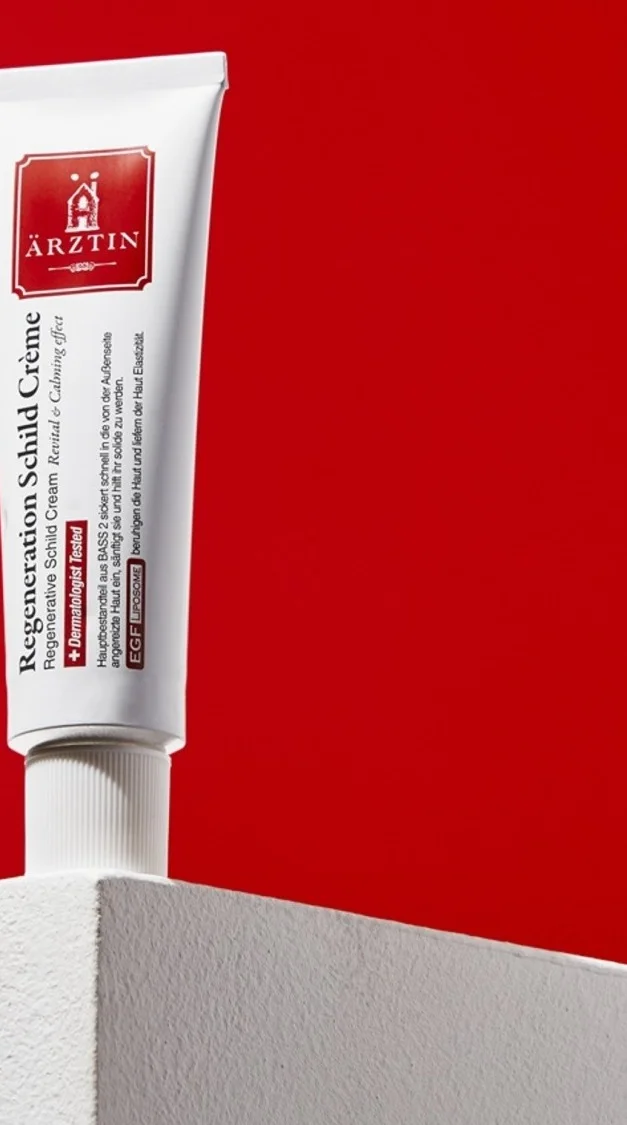 리제너레이티브 실트 크림Buy
Anti-wrinkle functional cosmetic · A rich cream that addresses both elasticity and barrier care
- 리제너레이티브 실트 크림Buy
Anti-wrinkle functional cosmetic · A rich cream that addresses both elasticity and barrier care
- 리제너레이티브 실트 크림Buy
Anti-wrinkle functional cosmetic · A rich cream that addresses both elasticity and barrier care
- 리제너레이티브 실트 크림Buy
Anti-wrinkle functional cosmetic · A rich cream that addresses both elasticity and barrier care
- 리제너레이티브 실트 크림Buy
Anti-wrinkle functional cosmetic · A rich cream that addresses both elasticity and barrier care