
Ingredients That Pair Well with Fermented Ingredients — The Principle of Combination Design Read from the Full Ingredient List
Fermented ingredients (such as bifida ferment lysate) are not ingredients that act alone — a product's goal is completed when they are placed together with other ingredient groups. The key is not 'fermented ingredient + what,' but checking in the full ingredient list what functional goal (especially elasticity and wrinkle care) the combination was ultimately designed for. This article organizes, by role, the ingredient groups often paired with fermented ingredients, and presents criteria for judging such combinations.
Many people finish their judgment simply on the fact that 'it contains a fermented ingredient' when choosing cosmetics. However, fermentation-derived ingredients are usually placed in a supportive position within the full ingredient list, refining skin condition, and the actual experience varies greatly depending on which ingredients they are combined with.
So this article organizes not 'a single fermented ingredient' but the combination of 'fermented ingredient + what' from the perspective of reading the full ingredient list. Especially for those whose care goal is elasticity or wrinkles, which ingredient groups are placed around the fermented ingredient can serve as a practical criterion for product selection.
Why fermented ingredients require a 'combination'
Fermentation-derived ingredients have the characteristic that, as the raw material undergoes fermentation and metabolic processes, water-soluble low-molecular-weight substances are generated. Thanks to this characteristic, they blend smoothly into formulations and are often used to refine skin condition, but they are not, by themselves, an ingredient group that creates structural changes such as elasticity or wrinkle improvement.
In other words, fermented ingredients are closer to playing a 'role of refining the foundation,' while the functions directly tied to solving actual skin concerns are typically handled by other ingredient groups (for example, regulation-approved functional ingredients, peptides, barrier lipid ingredients). For this reason, when reading the full ingredient list, one should not just look for the fermented ingredient alone, but also check what role groups are placed around it.
Ingredient groups often paired with fermented ingredients — organized by role
First, moisture-retaining ingredient groups. Ingredients like betaine and trehalose are placed alongside fermented ingredients to help retain moisture in the skin. While fermented ingredients refine skin condition, this ingredient group works to keep moisture from evaporating.
Second, barrier lipid ingredient groups. Ingredients from the same family as skin barrier lipids, such as ceramide NP, cholesterol, and palmitic acid, are placed alongside fermented ingredients to form the foundation of barrier care.
Third, core ingredient groups targeting elasticity and wrinkle care. This includes adenosine (an ingredient officially recognized for wrinkle-improvement functionality) and peptides (a category of substances made of short chains of amino acids). When fermented ingredients are found alongside this group, there is grounds to judge that the overall product aims beyond simple condition care toward elasticity and wrinkle management.
Fourth, soothing and moisturizing finishing ingredient groups. Panthenol and allantoin are placed alongside fermented ingredients to complement the role of reducing irritation and refining texture.
When these four role groups are found together within the full ingredient list, fermented ingredients can be understood as functioning not 'alone' but as 'part of a designed combination.'
| Ingredient group | Representative ingredient examples | Role within the product |
|---|---|---|
| Moisture-retaining ingredient group | Betaine, trehalose | Helps retain moisture |
| Barrier lipid ingredient group | Ceramide NP, cholesterol, palmitic acid | Same family as barrier lipids, forming the basis of barrier care |
| Elasticity/wrinkle core ingredient group | Adenosine, 3 types of peptides | Central to wrinkle-improvement functionality and elasticity care design |
| Soothing/moisturizing finishing ingredient group | Panthenol, allantoin | Eases irritation, complements texture refinement |
Order for judging combinations from the full ingredient list
In principle, the full ingredient list is written in order of highest to lowest content, but for low-content ingredients, the listed order may vary, making it difficult to determine proportion by order alone. So when checking which ingredients are used alongside fermented ingredients, it is better to look first at 'which role groups are present together' rather than 'order.'
Next, infer the goal that the combination targets. If only fermented ingredients along with moisture-retaining and barrier lipid ingredients are present, the product is likely centered on condition care; if officially recognized functional ingredients or elasticity care ingredient groups are also included, the design is more likely aimed at elasticity and wrinkle management.
Finally, check the functional certification notation. Whether a product has been certified as a wrinkle-improvement functional cosmetic can be confirmed in the labeling next to the full ingredient list, which serves as a much clearer basis for judgment than the position of fermented ingredients.
How to view combinations differently by season
During transitional seasons when dryness worsens, or periods with continuous heating and cooling, the combination of fermented ingredients + barrier lipid ingredient groups may be relatively helpful. On the other hand, during periods when reduced skin elasticity is a concern (a factor influenced more by individual condition changes than by season), it is practical to first check whether a combination of fermented ingredients + elasticity care ingredient groups is present.
However, this distinction is not an absolute standard, and it should be considered alongside the fact that perceived effects may vary depending on individual skin condition and environmental factors.
The final step — which cream should you finish with?
When applying this role-group classification to actual products, it becomes clear that the key judgment point is not simply 'whether a fermented ingredient is present,' but 'which role groups that fermented ingredient is designed alongside.' ARZTIN Regenerative Sheeld Cream places Bifida Ferment Lysate together with moisture-retaining ingredients like betaine and trehalose, as well as barrier lipid ingredients like ceramide NP and cholesterol, while also including adenosine—which has undergone functional review for wrinkle improvement—and 3 types of peptides for elasticity care, all within the same full ingredient list. In other words, rather than judging based on a single fermented ingredient alone, checking whether multiple role groups like these are configured together within one product can serve as a practical selection criterion.
사용 전과 비교해 사용 직후 통계적으로 유의하게 개선됐습니다. 개선율(%)은 사용 전 대비 변화량의 비율이며(|사용 후−사용 전|÷사용 전×100), 개인차가 있을 수 있습니다.
출처 P&K 피부임상연구센타 인체적용시험 결과보고서 (PNK-24610-RD1R2, 2024)
사용 전과 비교해 사용 직후 통계적으로 유의하게 개선됐습니다. 개선율(%)은 사용 전 대비 변화량의 비율이며(|사용 후−사용 전|÷사용 전×100), 개인차가 있을 수 있습니다.
출처 P&K 피부임상연구센타 인체적용시험 결과보고서 (PNK-24610-RD1R2, 2024)
사용 전과 비교해 2주 사용 후 통계적으로 유의하게 개선됐습니다. 개선율(%)은 사용 전 대비 변화량의 비율이며(|사용 후−사용 전|÷사용 전×100), 개인차가 있을 수 있습니다.
출처 P&K 피부임상연구센타 인체적용시험 결과보고서 (PNK-24610-RD1R2, 2024)
Frequently asked questions
- Are there fixed ingredients that go well with fermented ingredients?
- There is no single fixed answer, but when placed together with ingredient groups that play different roles — moisture-retaining ingredients (betaine, trehalose), barrier lipid ingredients (ceramide NP, cholesterol), and elasticity-care ingredients (peptides) — they can form a complementary structure.
- If a fermented ingredient appears near the front of the ingredient list, does that mean the product is better?
- In principle, listing order follows concentration, but for lower-concentration ingredients the order can vary, so it's hard to determine superiority from order alone. It's more practical to also look at the roles of the ingredient groups placed alongside it.
- Can fermented ingredients alone manage elasticity and wrinkles?
- Fermented ingredients tend to play a supportive role in refining skin condition overall. If your goal is elasticity or wrinkle care, it's more important to check whether wrinkle-improvement functional ingredients approved by regulation or elasticity-care ingredients are also included in the formula.
- What should I do if I feel irritation while using a product containing fermented ingredients?
- Stop use and monitor your skin condition; if redness or irritation persists, it is recommended to consult a dermatologist or other professional. Reactions can vary depending on individual skin condition.
Related products
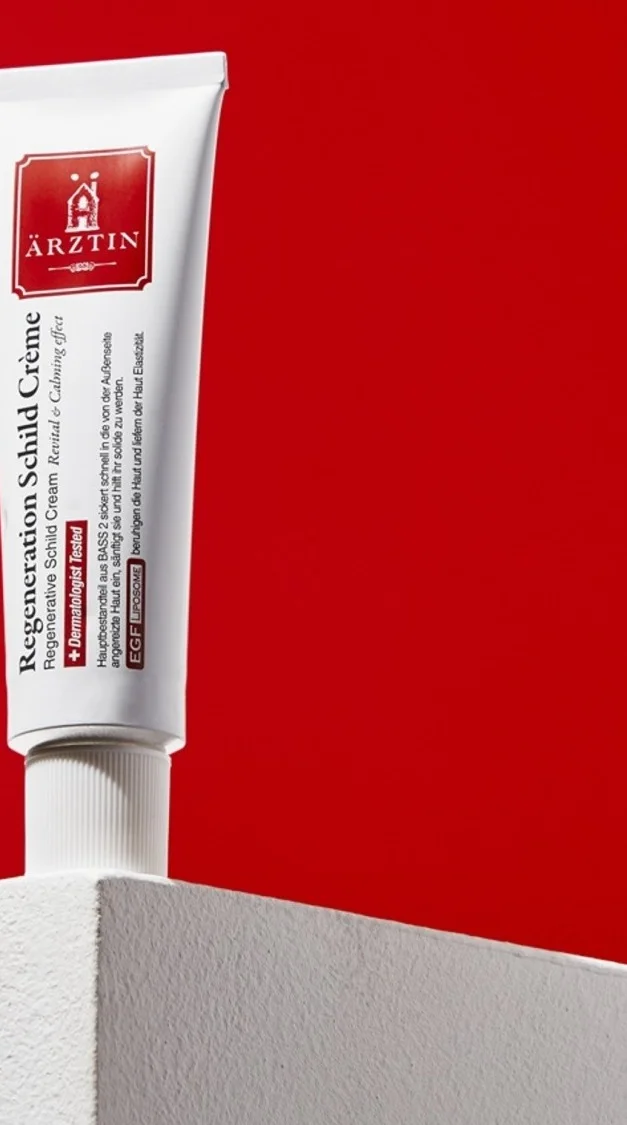 리제너레이티브 실트 크림Buy
Anti-wrinkle functional cosmetic · A rich cream that addresses both elasticity and barrier care
- 리제너레이티브 실트 크림Buy
Anti-wrinkle functional cosmetic · A rich cream that addresses both elasticity and barrier care
- 리제너레이티브 실트 크림Buy
Anti-wrinkle functional cosmetic · A rich cream that addresses both elasticity and barrier care
- 리제너레이티브 실트 크림Buy
Anti-wrinkle functional cosmetic · A rich cream that addresses both elasticity and barrier care
- 리제너레이티브 실트 크림Buy
Anti-wrinkle functional cosmetic · A rich cream that addresses both elasticity and barrier care