
Which Skin Type Suits Fermented Ingredients? — A Guide to Checking Compatibility by Skin Type
Fermented ingredients (typically Bifida Ferment Lysate) are not suited to a specific skin type per se; rather, they are conditioning ingredients whose perceived effect depends on which other ingredient groups they are combined with on the full ingredient list. For dry, sensitive, combination, and other skin types, checking the accompanying ingredients matters more than whether a fermented ingredient is present at all. Ultimately, the practical approach is to look at what role a fermented ingredient plays within the overall goal of elasticity and wrinkle care.
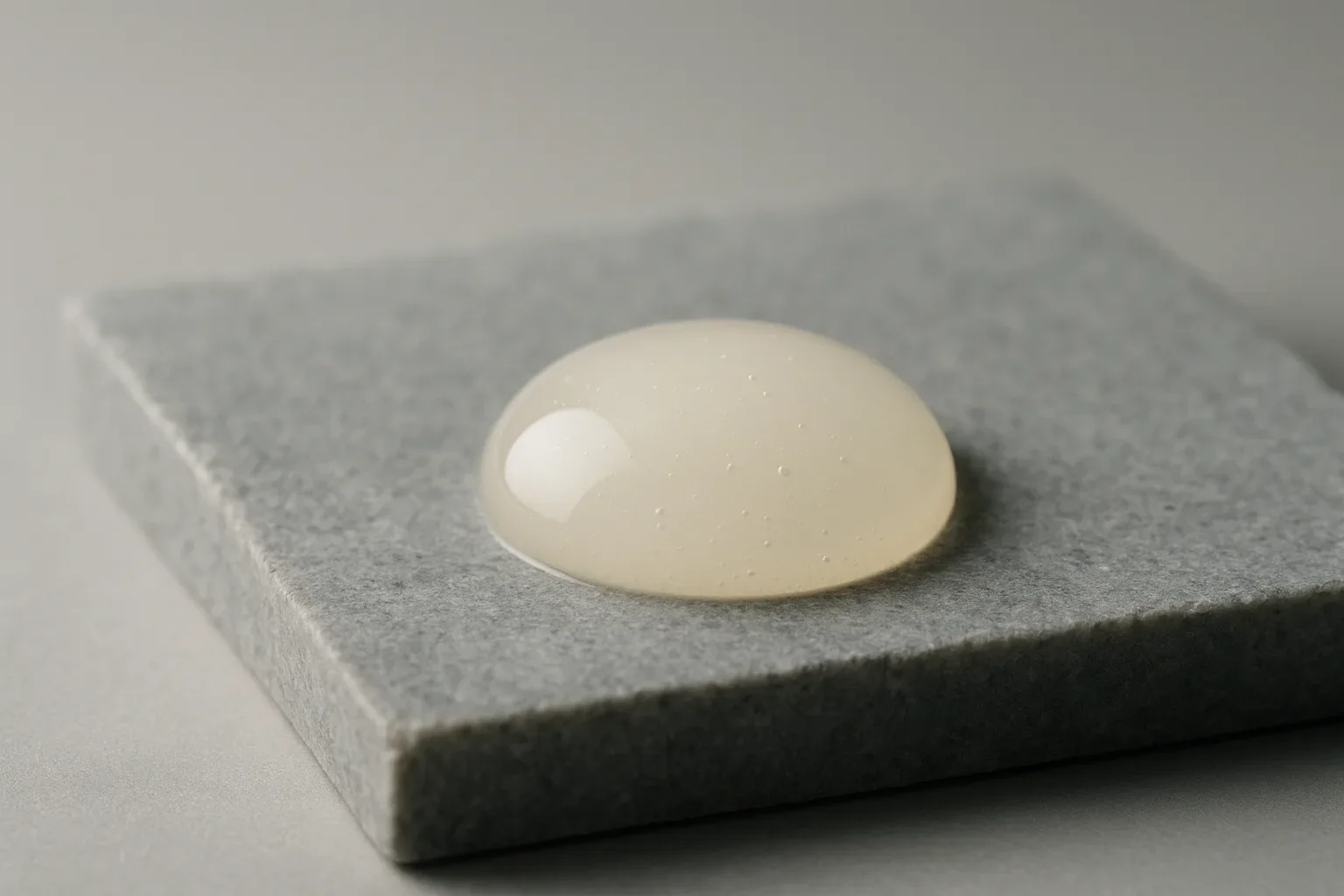
When reading the full ingredient list on cosmetics, names like '~ Ferment Filtrate' or '~ Ferment Lysate' come up often. Neither assuming that a fermentation-derived ingredient is automatically gentle, nor assuming it will be irritating simply because it's fermented, is well supported. Whether a fermented ingredient suits a particular skin type depends less on the ingredient itself and more on what other ingredients it's paired with in the product.
This article organizes, from the perspective of reading the full ingredient list, what to actually check when looking at fermented ingredients by skin type—dry, sensitive, combination, and skin concerned with aging.
Why fermented ingredients aren't divided into 'type-exclusive' categories
Raw materials that have undergone a fermentation process tend to be broken down into lower-molecular-weight forms that are easier to absorb. This trait alone isn't an advantage limited to a specific skin type, but rather a supportive property that relates to overall texture and conditioning across formulations.
So explanations that neatly divide skin types, like 'fermented ingredients = for oily skin only' or 'fermented ingredients = for dry skin only,' don't align with how these ingredients actually function. Rather, even the same fermented ingredient can be favorable for dry skin or favorable for oily/combination skin depending on what moisturizing, barrier, or oil-based ingredients are placed around it.
'Co-formulated ingredients' to check by skin type
For dry skin, it's practical to check whether moisture-retaining ingredients like betaine and trehalose, or barrier lipid ingredients like ceramides and cholesterol, are present alongside the fermented ingredient. If the fermented ingredient stands alone with little oil or lipid content, there's a possibility of experiencing tightness as is.
For sensitive skin, check whether soothing and moisturizing ingredients like panthenol and allantoin, or long-used soothing care ingredients like centella asiatica-derived components, are included together. The presence of a fermented ingredient doesn't guarantee irritation relief, so you need to look at the overall irritation management design of the formulation.
For those concerned with combination skin and oil-water balance, what matters for actual experience is how light oils (like squalane) and heavy oils (like shea butter or other oil types) are combined alongside the fermented ingredient. Since the listed order of low-concentration ingredients on the full ingredient list can vary, it's safer to look at the overall composition of ingredient groups rather than concluding exact proportions from order alone.
For skin concerned with both elasticity and wrinkles, what should be checked before the fermented ingredient is whether the product contains ingredients that have passed functional cosmetics review for wrinkle improvement (e.g., adenosine), and whether elasticity-care design ingredients like peptides are included together. Fermented ingredients often play a supporting role to this design.
| Skin Type | Ingredient Groups to Check Together | Check Point |
|---|---|---|
| Dry | Betaine, trehalose, ceramides, cholesterol | Whether barrier lipids and oils are sufficient |
| Sensitive | Panthenol, allantoin, centella asiatica-derived ingredients | Whether soothing care ingredients are included |
| Combination | Light oils (squalane) and heavy oils (shea butter, etc.) | Balance of oil-water proportion |
| Elasticity/Wrinkle Concern | Adenosine, peptides | Whether functional review basis ingredients are included |
How experience changes by season — seasonal transitions, heating/cooling periods, and everyday use
During seasonal transitions or periods of frequent heating/cooling use, skin tends to become dry and sensitive easily, and in these periods, the proportion of barrier lipid and oil ingredients often has a greater effect on how the skin feels than the fermented ingredient does. It's reasonable to view fermented ingredients as playing a supporting role in fine-tuning condition during these periods.
During everyday care periods, you can judge based on whether the formulation containing the fermented ingredient feels light, and whether it moves on to the next step without stuffiness after absorption.
However, if abnormal reactions (redness, stinging, etc.) persist, it's safer to consult with a dermatologist or other specialist to check the cause rather than concluding that a single specific ingredient is responsible.
A routine organized as a checking sequence
Step 1, check the position of the fermented ingredient on the full ingredient list. Step 2, see what ingredient groups (moisturizing, barrier, soothing, oil-based) are placed around it. Step 3, check whether the product claims any functional benefit (such as wrinkle improvement) and what the basis ingredient for that claim is. Step 4, compare the oil and moisture proportions against your own skin type and seasonal condition.
Once you go through this process, you can more practically judge how well the entire product suits your skin condition, rather than relying on the reputation of a single fermented ingredient.
In the end, 'overall design and goal' matter more than fermented ingredients
Determining which skin type a fermented ingredient suits ultimately comes down to checking whether that ingredient is not standing alone, but is designed together with other ingredients under a specific goal (moisture retention, barrier care, elasticity management, etc.). For example, for skin concerned with both elasticity and wrinkles, it makes more sense to first check whether the product has been reviewed as a functional cosmetic for wrinkle improvement or whether it contains peptides for elasticity care, rather than focusing on the presence or absence of a fermented ingredient.
ARZTIN Regenerative Silt Cream is a rich-type cream that includes bifida ferment lysate as a conditioning ingredient, while also incorporating adenosine—reviewed as a functional cosmetic for wrinkle improvement—along with three types of peptides for elasticity care and barrier lipid ingredients such as ceramide NP and cholesterol. Given this composition, it is appropriate to read the fermented ingredient as playing a supplementary conditioning role within the overall design.
Changes in actual usage contexts may vary by individual, and the clinical data below reflects results confirmed under the test conditions of the relevant product.
The final step: which cream should you finish with?
Determining which skin type a fermented ingredient suits ultimately comes down to checking whether that ingredient is not standing alone, but is designed together with other ingredients under a specific goal. ARZTIN Regenerative Silt Cream is a rich-type cream that includes bifida ferment lysate as a conditioning ingredient, while also incorporating adenosine—reviewed as a functional cosmetic for wrinkle improvement—along with three types of peptides for elasticity care and barrier lipid ingredients.
사용 전과 비교해 사용 직후 통계적으로 유의하게 개선됐습니다. 개선율(%)은 사용 전 대비 변화량의 비율이며(|사용 후−사용 전|÷사용 전×100), 개인차가 있을 수 있습니다.
출처 P&K 피부임상연구센타 인체적용시험 결과보고서 (PNK-24610-RD1R2, 2024)
사용 전과 비교해 사용 직후 통계적으로 유의하게 개선됐습니다. 개선율(%)은 사용 전 대비 변화량의 비율이며(|사용 후−사용 전|÷사용 전×100), 개인차가 있을 수 있습니다.
출처 P&K 피부임상연구센타 인체적용시험 결과보고서 (PNK-24610-RD1R2, 2024)
자극으로 일시적으로 손상된 장벽이 자극 직후 상태와 비교해 얼마나 돌아왔는지를 나타내는 비율이며, 피부가 그만큼 좋아진다는 뜻은 아닙니다. 개선율(%)은 사용 전 대비 변화량의 비율이며(|사용 후−사용 전|÷사용 전×100), 개인차가 있을 수 있습니다.
출처 P&K 피부임상연구센타 인체적용시험 결과보고서 (PNK-24610-RD1R2, 2024)
사용 전과 비교해 2주 사용 후 통계적으로 유의하게 개선됐습니다. 개선율(%)은 사용 전 대비 변화량의 비율이며(|사용 후−사용 전|÷사용 전×100), 개인차가 있을 수 있습니다.
출처 P&K 피부임상연구센타 인체적용시험 결과보고서 (PNK-24610-RD1R2, 2024)
Frequently asked questions
- Does a product containing a fermented ingredient automatically mean it's gentle?
- That can't be assumed. Having undergone a fermentation process alone doesn't guarantee low irritation; the accompanying ingredient groups and the overall formulation design determine the actual experience.
- Can I use a cream with fermented ingredients if I have dry skin?
- Yes. However, it's best to first check whether barrier lipids like ceramides and cholesterol, or moisture-retaining ingredients like betaine and trehalose, are sufficiently included alongside the fermented ingredient.
- If a fermented ingredient appears near the end of the ingredient list, does that mean it's ineffective?
- That interpretation is difficult to support. Since low-concentration ingredients can appear in varying order, it's safer to look at the overall ingredient composition rather than judging effectiveness by position alone.
- What is the relationship between fermented ingredients and elasticity/wrinkle care?
- Fermented ingredients themselves are not functional anti-wrinkle ingredients. If elasticity and wrinkle care are the goal, it's more practical to check whether ingredients that have undergone functional efficacy review, like adenosine, or ingredients designed for elasticity care, like peptides, are also included.
- What should I do if redness or stinging occurs during use?
- Rather than immediately assuming a single ingredient is the cause, it's recommended to stop use and consult a dermatologist or other specialist if symptoms persist.
Related products
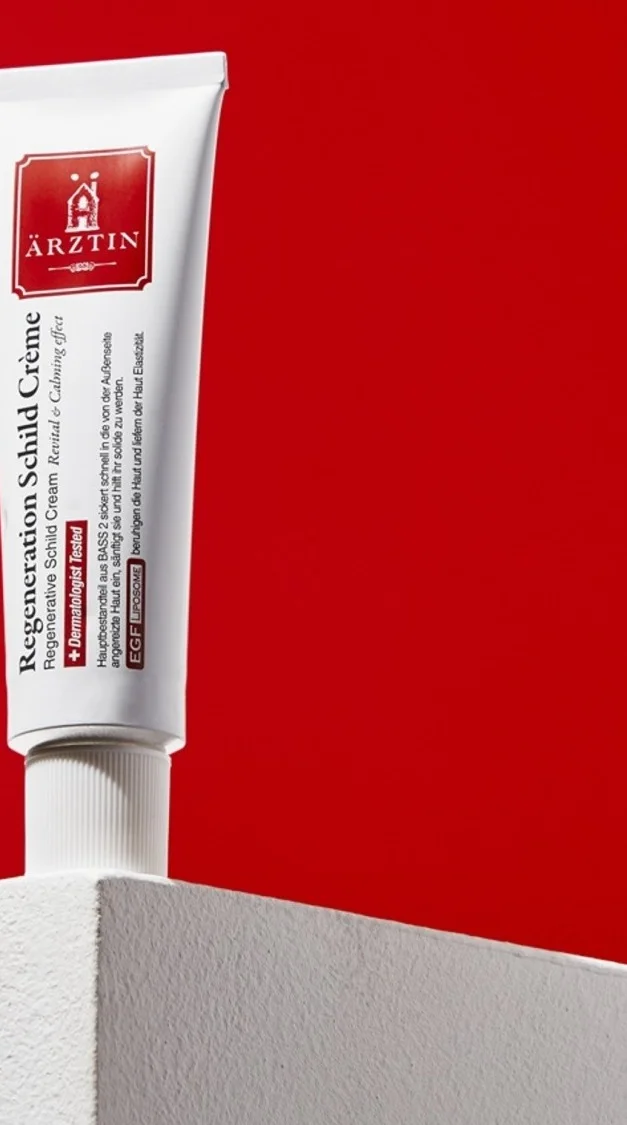 리제너레이티브 실트 크림Buy
Anti-wrinkle functional cosmetic · A rich cream that addresses both elasticity and barrier care
- 리제너레이티브 실트 크림Buy
Anti-wrinkle functional cosmetic · A rich cream that addresses both elasticity and barrier care
- 리제너레이티브 실트 크림Buy
Anti-wrinkle functional cosmetic · A rich cream that addresses both elasticity and barrier care
- 리제너레이티브 실트 크림Buy
Anti-wrinkle functional cosmetic · A rich cream that addresses both elasticity and barrier care
- 리제너레이티브 실트 크림Buy
Anti-wrinkle functional cosmetic · A rich cream that addresses both elasticity and barrier care