
The Order of Applying Cholesterol — A Placement Principle Based on Ingredient List Position
Cholesterol is an ingredient that gains meaning as a barrier lipid when combined with ceramides and fatty acids, so in a skincare routine, "which step it's applied in" matters less than "which formulation stage it's included in." Generally, this combination is included in a cream stage with an oily texture, applied after toner/essence, and it's natural to apply that cream as the last step in the routine. Reading the position of cholesterol on the full ingredient list together with the ingredients placed alongside it reduces confusion about ordering.
Behind questions about the order of applying cholesterol, there's usually confusion about whether it comes after toner, during the cream stage, or needs to be addressed separately. To state the conclusion first: cholesterol is not an ingredient that determines order on its own. It's designed to function as part of barrier lipid composition when combined with lipid ingredients like Ceramide NP and palmitic acid, and this combination is often included in a cream stage with an oily texture in terms of formulation.
In other words, the question of 'at which step should I apply cholesterol' should actually be reframed as 'what formulation was the product containing this ingredient made into within the overall routine' in order to be answered accurately.
- 1CleansingClearing the skin's surface
- 2TonerDelivering moisture, preparing for absorption of the next step
- 3Essence/AmpouleFocused on delivering active ingredients
- 4Rich CreamLipid composition such as Ceramide NP, Cholesterol, Palmitic Acid, etc. + finishing with oils
Why cholesterol affects the order
The skin's stratum corneum consists of a structure that holds moisture and a lipid layer that supports that structure, and cholesterol is known as one of the components that make up this lipid layer along with ceramides and fatty acids. The explanation commonly used in the cosmetics industry is that these three form the barrier lipid when present together in a certain ratio, and it is difficult for cholesterol alone to complete that role.
So when looking at the full ingredient list, the first clue for judging the order is not to check cholesterol alone, but to check whether it is placed close to Ceramide NP and Palmitic Acid. If the three ingredients are close together, the product is likely designed for barrier lipid composition, and is generally made in a formulation with some oiliness—closer to a cream texture than a lotion.
Where it goes by formulation stage
The skin/toner stage is aimed at delivering moisture and helping absorption in the next stage, so it is rare for lipid ingredients like cholesterol to be the main focus. In the essence/serum stage, many formulations focus on delivering active ingredients, so lipid composition tends to be included lightly or omitted altogether.
On the other hand, the lipid composition of cholesterol, Ceramide NP, and Palmitic Acid is often placed in rich-type creams together with oils such as squalane, shea butter, and argan kernel oil. This kind of formulation is structured to finish with an oil film while retaining moisture, so it generally comes at the last stage of the routine rather than the earlier stages.
One thing to note here is that the listing order on the full ingredient list does not necessarily show absolute ranking by content amount. Below a certain content level, the listing order can vary, so it is difficult to conclude that cholesterol's content is large or small just because it appears in the middle of the list. Instead, a practical standard is to look at which ingredients it is placed near and what texture the overall formulation finishes with.
| Formulation Stage | Main Purpose | Tendency for Cholesterol-type Lipid Composition Placement |
|---|---|---|
| Skin/Toner | Moisture delivery, absorption prep | Rare |
| Essence/Serum | Active ingredient delivery | Relatively low |
| Rich Cream | Oil film formation, finishing | Often placed together with Ceramide NP and Palmitic Acid |
Should the order be viewed differently by season
During transitional seasons when dryness or tightness worsens, or times when indoor humidity drops due to heating/cooling, it is often recommended to place creams containing lipid composition ingredients at the last stage of the routine. This is because finishing with only a light lotion during these times may leave tightness due to insufficient oil film formation.
Conversely, during humid weather when oiliness feels burdensome, even with products containing the same ingredients, it is more practical to adjust the amount used or apply differently by area, adjusting quantity rather than order. The order itself does not change much by season, but the amount and thickness of the cream applied at the last stage can vary depending on the season.
Summary of the step-by-step routine
In summary, lipid components containing cholesterol usually appear after the toner-essence steps following cleansing, showing up at the cream stage with a certain richness, and this is generally brought in as the last step of the routine. When determining order, it's more practical to first check 'what formulation stage the product containing that ingredient was designed for' rather than 'what number cholesterol appears at.'
The last step — what cream should you finish with?
Applying this placement principle to an actual product, the order decision ultimately comes down to 'was this cream designed to take on the last step of the routine?' ARZTIN Regenerative Cylt Cream was designed to be applied at the last step of the routine, containing a lipid composition of cholesterol, ceramide NP, and palmitic acid in a rich-type formulation. The same full ingredient list also includes adenosine, which has been certified as a functional cosmetic ingredient for wrinkle improvement, along with 3 types of peptides for elasticity care. Rather than managing lipid components alone, this is a composition worth referencing when you want to wrap up both lipid and elasticity care at once in the final step.
자극으로 일시적으로 손상된 장벽이 자극 직후 상태와 비교해 얼마나 돌아왔는지를 나타내는 비율이며, 피부가 그만큼 좋아진다는 뜻은 아닙니다. 개선율(%)은 사용 전 대비 변화량의 비율이며(|사용 후−사용 전|÷사용 전×100), 개인차가 있을 수 있습니다.
출처 P&K 피부임상연구센타 인체적용시험 결과보고서 (PNK-24610-RD1R2, 2024)
Frequently asked questions
- Should cholesterol be applied after toner, or during the cream stage?
- It's more accurate to look at the formulation of the product containing the ingredient rather than cholesterol itself. When combined with Ceramide NP and palmitic acid, it's usually formulated as an oily cream, and such creams are generally applied as the last step in the routine, after toner and essence.
- If cholesterol appears further down on the ingredient list, does that mean it's present in a smaller amount?
- Not necessarily. Below a certain concentration, the listing order may not precisely correspond to the actual formulated amount, so it's difficult to determine content based on position alone. Instead, checking the ingredients placed alongside it along with the overall texture of the formulation is a more practical criterion.
- If multiple products at different steps each contain cholesterol, how should the order be determined?
- Follow the basic principle of applying products from thinner to more oily textures. Creams that emphasize lipid composition are generally naturally placed toward the end of the routine, as the last step.
- What should I do if I feel irritation after applying a cream containing barrier lipid ingredients?
- It's recommended to pause use and monitor your skin's condition. If redness or itching persists, it's safer to consult a dermatologist or other professional rather than continuing based on self-judgment. Reactions to ingredients can vary by individual.
- Should the order of using a cholesterol-containing cream change by season?
- Rather than changing the order itself, it's more practical to adjust the amount and thickness applied. During dry periods, you might apply the last-step cream a bit more generously, and during humid periods, apply it more thinly.
Related products
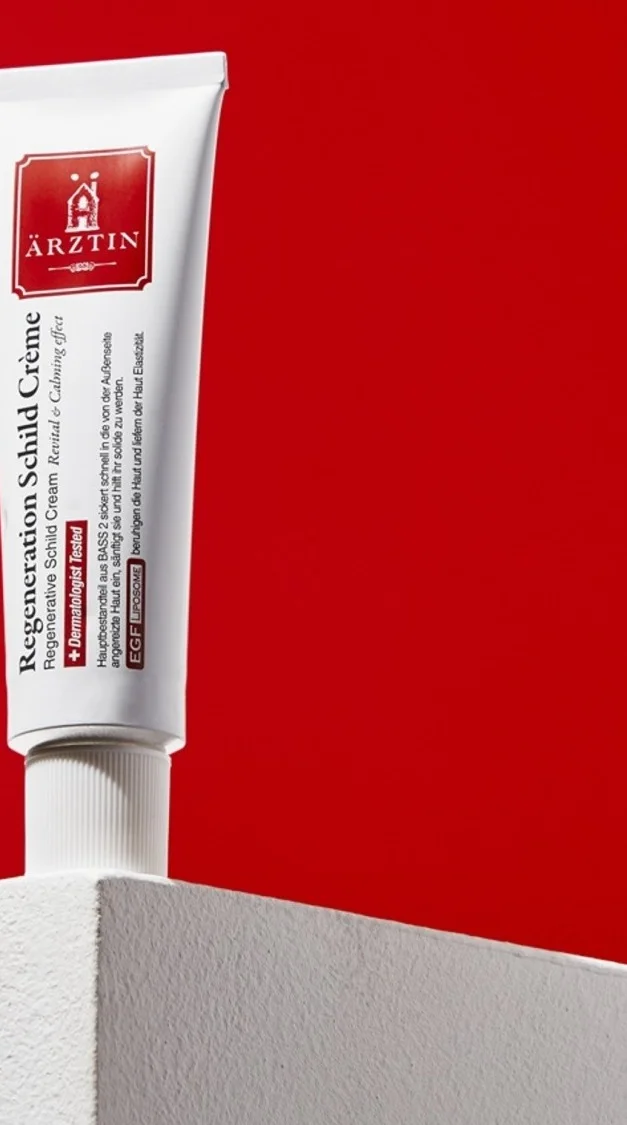 리제너레이티브 실트 크림Buy
Anti-wrinkle functional cosmetic · A rich cream that addresses both elasticity and barrier care
- 리제너레이티브 실트 크림Buy
Anti-wrinkle functional cosmetic · A rich cream that addresses both elasticity and barrier care
- 리제너레이티브 실트 크림Buy
Anti-wrinkle functional cosmetic · A rich cream that addresses both elasticity and barrier care
- 리제너레이티브 실트 크림Buy
Anti-wrinkle functional cosmetic · A rich cream that addresses both elasticity and barrier care
- 리제너레이티브 실트 크림Buy
Anti-wrinkle functional cosmetic · A rich cream that addresses both elasticity and barrier care