
How to Choose Argan Kernel Oil — Checkpoints to Verify in the Full Ingredient List
For argan kernel oil, what matters more than the content amount itself is which ingredients it's positioned alongside in the full ingredient list. Listing order alone cannot confirm the exact content amount, since lower-content ingredients may appear in varying order, so a practical selection criterion is checking whether barrier lipids and functionally approved ingredients are designed alongside the oil components. This article outlines four checkpoints to consider when choosing argan kernel oil.
Many people choose products based solely on the phrase 'contains argan kernel oil,' but even with the same ingredient, the intended formulation design can differ completely depending on its position in the full ingredient list and what ingredients it's placed alongside. Under cosmetics regulations, the full ingredient list must be ordered from highest to lowest content, but there's a principle that ingredients below a certain content threshold may appear in a different order. In other words, listing order alone cannot precisely tell you 'how much of this oil is actually included.' That's why choosing argan kernel oil shouldn't rely on content ranking alone, but should involve cross-checking several factors together.
Criterion 1 — Listing Position and the Meaning of the 'Low-Content Range'
In the full ingredient list, components that appear near the front, like purified water and glycerin, tend to be present in higher amounts, while those further down are more likely to be minor ingredients. However, under labeling rules, ingredients present below a certain threshold may be listed in any order among themselves, so it's more realistic to compare where argan kernel oil falls relative to other oil components (squalane, shea butter, sunflower seed oil, etc.) rather than focusing on its absolute position alone. Rather than fixating on one oil's placement, it's more helpful to see whether the oil components are grouped together as a cluster within the ingredient list, which can reveal how the formulation's oil design was approached.
Criterion 2 — Composition of oils listed alongside it
On its own, argan kernel oil mainly contributes oiliness and moisture retention. However, in many ingredient lists, this oil appears alongside other oil ingredients such as squalane, shea butter, and olive oil. This kind of composition can be read as a sign that the formulation was designed to combine multiple oil ingredients to prevent moisture loss, rather than relying on a single oil. Conversely, if argan kernel oil is the only oil ingredient present, the formulation's oil design can be considered relatively simple.
Criterion 3 — Whether it's paired with barrier lipid ingredients
Oil ingredients and barrier lipid ingredients play different roles. By checking whether ingredients belonging to the same family as skin barrier lipids—such as ceramide NP, cholesterol, and palmitic acid—are listed alongside argan kernel oil, you can gauge whether the formulation simply smooths the surface or also considers barrier care. If you're concerned about both dryness and fine lines, this gives you a reason to pay closer attention to formulations that pair barrier lipid-family ingredients alongside oil components, rather than ones that contain oils alone.
Criterion 4 — Whether it's listed together with approved functional ingredients
Oil ingredients like argan kernel oil are not themselves ingredients reviewed for wrinkle-improvement functional efficacy. So if you're looking for a product that also addresses elasticity and wrinkles, you need to separately check whether the ingredient list includes a wrinkle-improvement functional ingredient notified by the Ministry of Food and Drug Safety, such as adenosine, and whether that is confirmed through the product's functional labeling (whether it has passed review). If oil ingredients and notified functional ingredients are designed together within the same formulation, it can be understood as a product that considers both moisture retention and wrinkle-improvement care together.
Why these four points need to be checked together
It's difficult to judge argan kernel oil as 'good' or 'bad' in isolation. Only by checking the listing order, the accompanying oil composition, whether barrier lipid-family ingredients are present, and whether functional ingredients are listed together can you infer what purpose the oil was designed to serve. Making a habit of reading the full ingredient list this way allows you to judge a product's design intent based on the labeled facts alone, rather than on advertising claims.
| Checkpoint | How to check | Meaning |
|---|---|---|
| Listing position | Relative order compared to other oil ingredients | Determining whether oils are grouped together |
| Accompanying oils | Whether listed alongside squalane, shea butter, etc. | Single-oil reliance vs. combined design |
| Barrier lipid pairing | Whether listed alongside ceramide/cholesterol family | Whether barrier care is considered |
| Notified functional ingredients | Whether notified ingredients like adenosine are listed and approved | Whether wrinkle-improvement support is designed in |
Example from the full ingredient list of ARZTIN Silt Cream
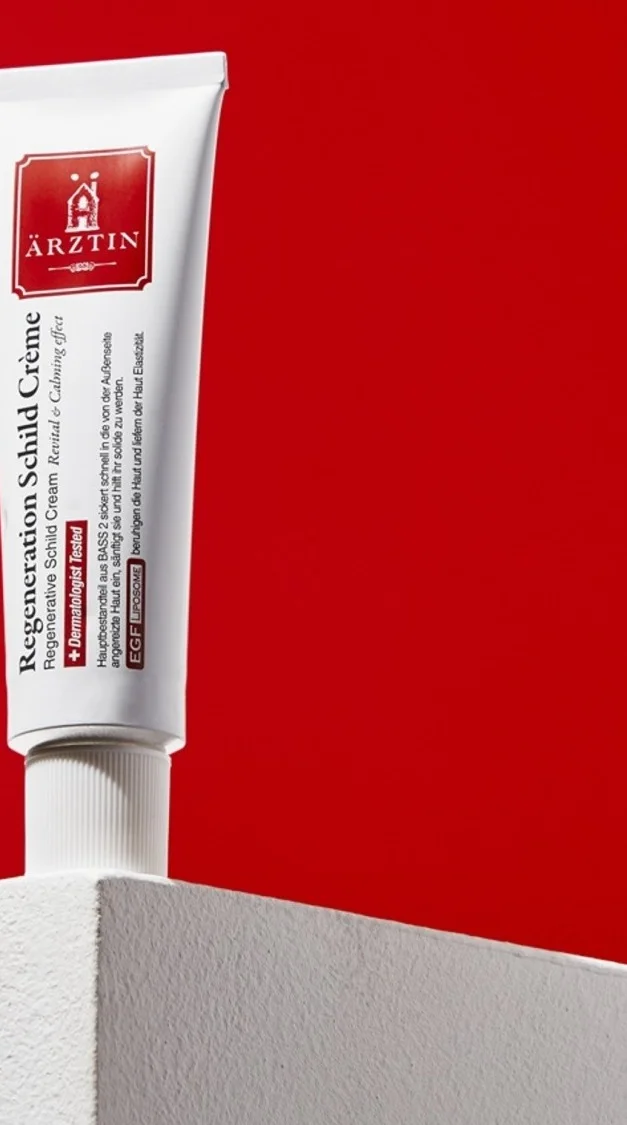
Looking at the full ingredient list of ARZTIN Regenerative Silt Cream through these four criteria offers a useful reference example. Argan kernel oil is positioned after caprylic/capric triglyceride and before trehalose, and further down the list, other oil components such as squalane, olive oil, and shea butter are also listed. In addition, barrier lipid-related ingredients like ceramide NP, cholesterol, and palmitic acid, the functionally notified wrinkle-improvement ingredient adenosine, and three peptides (sh-oligopeptide-1, rh-oligopeptide-2, rh-polypeptide-1) are all placed together within the same ingredient list. This is an example where, just from the ingredient list alone, one can confirm that the formulation is designed as a rich-type cream that weaves together oils, barrier lipids, and functionally notified ingredients rather than relying on a single oil category. However, this is merely an example looking at the composition of this one product, and actual perceived effects may vary depending on individual skin conditions; if any adverse reaction is felt during use, it is safer to discontinue use and consult a dermatologist or other specialist.
The final step — which cream to finish with
If you make a habit of examining the full ingredient list through these four criteria, you'll find that rather than focusing on a single ingredient like argan kernel oil, what matters more for an actual choice is 'what other ingredients this oil is paired with in the design.' ARZTIN Regenerative Silt Cream is a cosmetic that has undergone functional review for wrinkle improvement, and in the company's own human application test, improvements in items such as skin elasticity recovery and cheek firmness were reported immediately after a single use (P&K Skin Research Center human application test report, PNK-24610-RD1R2, 2024, conducted on 20 adult women aged 30–59, individual results may vary). If you are looking for a formulation that lists oils, barrier lipids, and functionally notified ingredients together, checking this kind of overall ingredient structure is one way to go about it.
사용 전과 비교해 사용 직후 통계적으로 유의하게 개선됐습니다. 개선율(%)은 사용 전 대비 변화량의 비율이며(|사용 후−사용 전|÷사용 전×100), 개인차가 있을 수 있습니다.
출처 P&K 피부임상연구센타 인체적용시험 결과보고서 (PNK-24610-RD1R2, 2024)
사용 전과 비교해 사용 직후 통계적으로 유의하게 개선됐습니다. 개선율(%)은 사용 전 대비 변화량의 비율이며(|사용 후−사용 전|÷사용 전×100), 개인차가 있을 수 있습니다.
출처 P&K 피부임상연구센타 인체적용시험 결과보고서 (PNK-24610-RD1R2, 2024)
Frequently asked questions
- If argan kernel oil appears near the front of the full ingredient list, does that mean it's high in content?
- Generally, listing order follows the principle of listing ingredients from highest to lowest content, but within a certain lower-content range, the order among low-content ingredients can vary. So rather than determining the exact content based on position alone, it's better to use it as a reference point by comparing it with other oil ingredients listed nearby.
- What's the difference when argan kernel oil is used together with shea butter?
- Both belong to a category of oil ingredients that help prevent moisture loss. If both ingredients appear together in the full ingredient list, it suggests the product was designed to combine multiple oil ingredients for texture and moisture retention rather than relying on a single oil.
- If a product just has a lot of oil ingredients, does that help with wrinkle improvement too?
- Oil ingredients themselves are primarily focused on moisture retention. Wrinkle improvement falls under a separate category involving functional ingredients (such as adenosine) separately approved by the Ministry of Food and Drug Safety, which can only be claimed by products that have undergone the relevant review. It's more accurate to check both the full ingredient list and the product's labeled claims to see whether oil ingredients and approved functional ingredients are designed together.
- Is it possible to choose a product based on the full ingredient list alone?
- The full ingredient list is a useful resource for checking what ingredients are included and their approximate order of placement. However, it doesn't reveal exact content amounts or individual experience, so it's best used as a reference alongside consideration of your own skin condition.
- What should I do if irritation occurs during use?
- Any oil ingredient can cause different reactions depending on individual skin condition. If you experience irritation or any abnormal reaction during use, stop use immediately, and if symptoms persist, it's recommended to consult a dermatologist or other specialist.
Related products
 리제너레이티브 실트 크림Buy
Anti-wrinkle functional cosmetic · A rich cream that addresses both elasticity and barrier care
- 리제너레이티브 실트 크림Buy
Anti-wrinkle functional cosmetic · A rich cream that addresses both elasticity and barrier care
- 리제너레이티브 실트 크림Buy
Anti-wrinkle functional cosmetic · A rich cream that addresses both elasticity and barrier care
- 리제너레이티브 실트 크림Buy
Anti-wrinkle functional cosmetic · A rich cream that addresses both elasticity and barrier care
- 리제너레이티브 실트 크림Buy
Anti-wrinkle functional cosmetic · A rich cream that addresses both elasticity and barrier care