
Criteria for Choosing Barrier Lipids — How to Check Ceramides, Cholesterol, and Fatty Acids on the Full Ingredient List
Barrier lipids cannot be judged by ceramides alone; the standard is whether all three families—ceramides, cholesterol, and fatty acids—are listed together. Checking whether these three families appear close together on the full ingredient list, and whether oil and moisturizing ingredients are formulated alongside them, reveals the formulation's design intent. Since the listed order only allows for a rough estimate of content and not an exact ratio, it should be used only as a reference indicator.
When looking for a 'cream that's good for the barrier,' many people only check whether ceramides are included. However, comparing multiple full ingredient lists side by side reveals that a formulation containing only ceramides has a fundamentally different listing structure from one that includes ceramides, cholesterol, and fatty acids together.
To establish criteria for choosing barrier lipids, it's necessary to first understand why barrier lipids are not a single ingredient but a combination.
- 11. Find the three familiesCheck for ceramides, cholesterol, and fatty acids
- 22. Check positioningCheck whether the three families appear close together
- 33. Check surrounding ingredientsWhether oil, moisturizing, and soothing ingredients are included
- 44. Placement in routineUse in the last step according to skin condition
Why barrier lipids work as a combination
It is generally explained that ceramides, cholesterol, and fatty acids exist in a certain ratio in the skin's stratum corneum. Since these three have different structures and roles, filling in only one of them is not said to balance out the whole.
That's why, when reading a cosmetic's full ingredient list, a more practical criterion is not simply 'is there ceramide?' but 'are ceramide, cholesterol, and fatty acid types present together?' If all three types are listed together, it suggests the formulation may have been designed with barrier lipid composition in mind.
Three types to check in the ingredient list
The first is the ceramide type. Look for ingredients whose name includes 'ceramide,' such as Ceramide NP.
The second is cholesterol. It's not hard to check, since it's clearly listed as 'Cholesterol' in the ingredient list.
The third is the fatty acid type. Check for ingredients ending in '~ acid,' such as Palmitic Acid, that correspond to oily fatty acids.
If these three types appear close to each other in the ingredient list, it can be taken as evidence that the formulation was designed around barrier lipid composition as one axis. However, since low-concentration ingredients can shift order slightly the further down the list they go, it is safer not to determine exact concentration ratios based on order alone.
| Type | Representative Labeling Example | Check Point |
|---|---|---|
| Ceramide type | Ceramide NP | Check whether the name includes 'ceramide' |
| Cholesterol | Cholesterol | Check whether it's clearly listed in the ingredient list |
| Fatty acid type | Palmitic Acid | Check whether it's an oily fatty acid ending in '~ acid' |
Barrier lipid signals that look different depending on skin condition
The priority for checking barrier lipids can vary depending on skin condition. During periods of noticeable dryness, it helps to see whether oil ingredients such as squalane and shea butter are present together with the ceramide, cholesterol, and fatty acid types. Oil is not itself a barrier lipid, but it is often included together to help coat the surface and prevent moisture loss.
During seasonal transitions or when skin becomes sensitive due to heating/cooling, it can also help to check whether soothing and moisturizing ingredients such as panthenol and allantoin are present together with the barrier lipid types. Such combinations can be understood as designed to consider barrier care and moisture retention together.
For those at an age where elasticity is also a concern, it's worth checking not only for barrier lipid types but also whether ingredients designed for elasticity care, such as the 3 types of peptides, are included in the same formulation.
A step-by-step routine for checking barrier lipids
Step 1 is to find and mark each of the three types—ceramide, cholesterol, and fatty acid—in the ingredient list.
Step 2 is to check whether these three types are located close to each other or far apart. If they're close together, they are likely grouped as a single design axis.
Step 3 is to check whether oil, moisturizing, and soothing ingredients are present around that axis. A formulation where oil and moisture are woven in together, rather than barrier lipids standing alone, may feel different in terms of usage feel and lasting effect.
Step 4 is judging which axis matters more based on your own skin condition (dryness, sensitivity, reduced elasticity), and placing this type of formulation at the last step of your routine. Rich-type creams are generally used at the final step of a routine to form an oil film that reduces moisture loss.
Checking the full ingredient list design in practice
Once you develop the habit of reading the full ingredient list by these criteria, you move on to asking, 'Does this formulation address only the barrier lipid axis, or does it address another axis together with it?' Looking at the full ingredient list of ARZTIN Regenerative Cell Cream, you can see that Ceramide NP, Cholesterol, and Palmitic Acid are listed together as the barrier lipid composition, and within the same formulation, Adenosine (a functional ingredient approved for wrinkle improvement) and 3 types of peptides are included together as an elasticity care design.
In other words, rather than looking at the barrier lipid group alone, this is a way of checking for yourself through the full ingredient list how the barrier axis and the elasticity axis are woven together within a single rich-type cream. Usage feel and degree of improvement vary by individual, and if any abnormal reaction is felt during use, it is safe to stop use and consult a dermatologist or other specialist.
The final step — which cream should you finish with?
Once you can identify the position of the three barrier lipid groups in the full ingredient list yourself, you then move on to examining whether this cream stays within the barrier axis alone or is designed together with other care purposes. ARZTIN Regenerative Cell Cream is a functional cosmetic (approved for wrinkle improvement) that forms the barrier lipid axis with Ceramide NP, Cholesterol, and Palmitic Acid, while also arranging an elasticity care axis together with Adenosine and 3 types of peptides. Rather than choosing based on barrier lipids alone, it is recommended to check for yourself through the full ingredient list which axis is placed alongside it.
Frequently asked questions
- Is it enough if a product just contains ceramides?
- Rather than ceramides alone, it's more practical to check whether cholesterol and fatty acid families are also listed together. If all three families are present, the formulation may have been designed with barrier lipid composition in mind.
- Can the order on the ingredient list tell you the exact content amounts?
- Up to a certain concentration, ingredients are generally listed in descending order of amount, but in the lower concentration range, the listed order may not reflect actual content accurately. It's safer to use the order as a reference indicator rather than a basis for judging exact ratios.
- How are barrier lipid ingredients different from oil ingredients?
- Ceramides, cholesterol, and fatty acids are classified as lipids that make up the stratum corneum, while oils like squalane or shea butter are occlusive agents that coat the surface to prevent moisture loss. Since their roles differ, it's good to distinguish between them on the ingredient list.
- If both dryness and elasticity are concerns, what should be checked first?
- It's recommended to first check for the presence of barrier lipid families, then check whether ingredients aimed at elasticity care, such as adenosine or peptides, are also included in the same formulation.
- What should be done if skin becomes sensitive during use?
- Usage experience and reactions vary by individual. If irritation or an abnormal reaction is felt, stop use immediately, and if symptoms persist, it is safer to consult a dermatologist or other specialist.
Related products
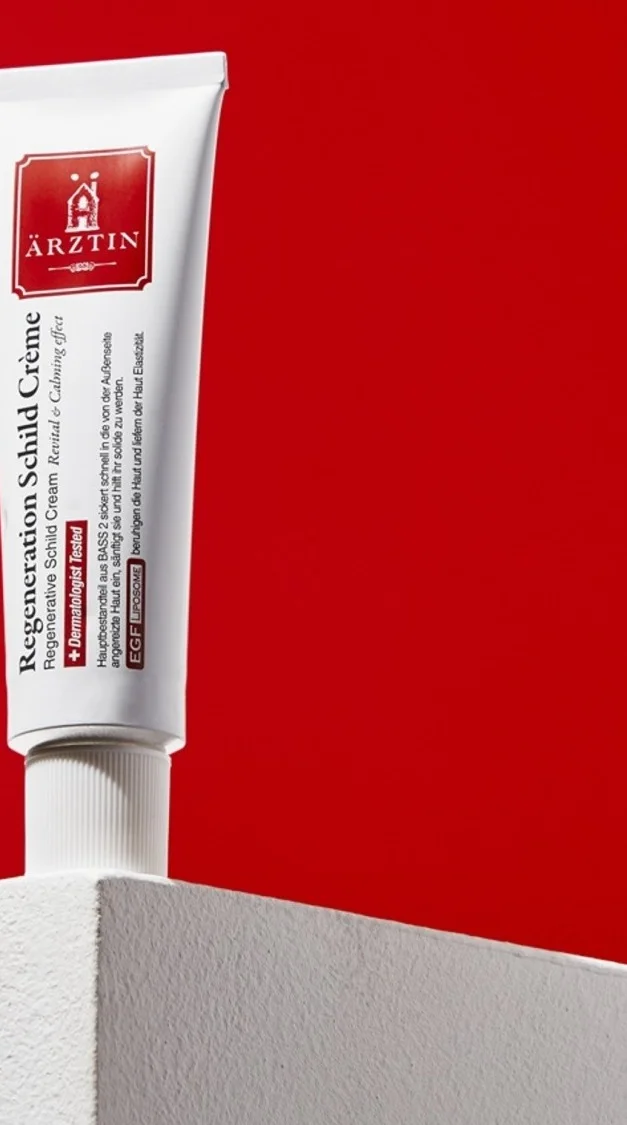 리제너레이티브 실트 크림Buy
Anti-wrinkle functional cosmetic · A rich cream that addresses both elasticity and barrier care
- 리제너레이티브 실트 크림Buy
Anti-wrinkle functional cosmetic · A rich cream that addresses both elasticity and barrier care
- 리제너레이티브 실트 크림Buy
Anti-wrinkle functional cosmetic · A rich cream that addresses both elasticity and barrier care
- 리제너레이티브 실트 크림Buy
Anti-wrinkle functional cosmetic · A rich cream that addresses both elasticity and barrier care
- 리제너레이티브 실트 크림Buy
Anti-wrinkle functional cosmetic · A rich cream that addresses both elasticity and barrier care