
Criteria for Choosing Bifida Ferment Lysate: Ingredient List Position to Check
Rather than judging Bifida Ferment Lysate's presence alone, it's more practical to read the product's design intent by looking at which ingredient groups it's placed alongside in the full ingredient list. Listing order alone cannot indicate exact concentration, and for lower-concentration ingredients, the listed order can vary between products. This article outlines what to look for when choosing Bifida Ferment Lysate, and what role it can be expected to play in an elasticity and wrinkle care routine.

Bifida Ferment Lysate, as its name suggests, is an ingredient obtained through a fermentation process, and is found in the ingredient lists of many moisturizing and conditioning care products. The problem is that the mere fact that 'this ingredient is included' makes it difficult to judge what role the product will play for your skin.
In principle, the ingredient list is arranged in order of concentration from highest to lowest, but below a certain proportion, the listed order can vary at the manufacturer's discretion. So rather than debating whether Bifida Ferment Lysate appears near the front or the back, it's more practical to look at which functional group of ingredients it's formulated alongside.
- 1Check PositionIdentify the approximate formulation order in the ingredient list
- 2Check Neighboring IngredientsWhether it's paired with moisture-retaining, barrier lipid, or oil ingredients
- 3Check Relationship with Key IngredientsWhether it aligns with notified functional ingredients or elasticity care ingredients
- 4Assess Formula and Seasonal SuitabilityWhether it's a light or rich-type formula, and whether it suits your skin condition
Bifida Ferment Lysate: what should you check?
The first thing to check is whether this ingredient exists alone, or is designed together with other ingredients aimed at moisture retention, barrier care, or elasticity care. A single fermentation-derived ingredient alone cannot determine the overall direction of a product. Rather, checking whether it is placed alongside moisture-retaining ingredients like betaine or trehalose, or barrier lipid ingredients like ceramides or cholesterol, allows you to gauge at what level the product approaches 'condition care.'
The next thing to check is the formulation. Even the same Bifida Ferment Lysate can leave a different impression on skin depending on whether it's in a light toner or a rich cream formulated with oil ingredients. In water-based formulations, it tends to play a role in refining skin condition, while in formulations combined with oils and barrier lipids, it can also be expected to help lock in that moisture.
Lastly, it's worth checking whether this ingredient is aligned with the same direction as the product's other key ingredients (for example, wrinkle-improvement functional ingredients notified by regulatory standards, or peptides designed for elasticity care). If the fermentation-derived ingredient handles the role of refining condition while other ingredients handle elasticity or wrinkle care, the overall formulation can be seen as working toward a single purpose.
How to read it differently by formulation and season
Even the same ingredient can feel different depending on which formulation and which season it's used in. During times when skin tends to become rough due to seasonal changes or heating/cooling, choosing a formulation where Bifida Ferment Lysate is combined with barrier lipids and oil ingredients may be helpful. Conversely, during seasons when skin is relatively stable, a light formulation that simply refines condition may be sufficient.
The approach can also differ by age group. If you feel your elasticity isn't what it used to be, rather than relying on the fermentation-derived ingredient alone, it's more practical to first check whether it's combined with ingredients specifically designed for elasticity and wrinkle care, such as peptides or adenosine. It makes more sense to understand the fermentation-derived ingredient as playing a supporting role, refining condition so that these ingredients can work more stably.
| Formulation type | Ingredient groups placed together | Expected role |
|---|---|---|
| Light toner/ampoule | Moisture-retaining ingredients (betaine, trehalose, etc.) | Skin texture refinement, condition care |
| Formulations containing barrier lipids | Ceramides, cholesterol, fatty acid types | Supporting role in holding moisture in place |
| Rich-type cream | Oils (squalane, shea butter, etc.) + elasticity care ingredients | Joint action of moisture retention and elasticity care ingredients |
Order for checking the full ingredient list: step-by-step routine
① Scan through the entire ingredient list once to check the approximate position of Bifida Ferment Lysate. ② Look at what ingredient groups are placed around it — moisture-retaining ingredients, barrier lipid types, or oils. ③ Check what the product's key ingredients are (functional ingredients notified by regulatory standards, ingredients aimed at elasticity care), and judge whether the fermentation-derived ingredient is designed to align with them. ④ Check the formulation type (whether it's light or rich) to gauge whether it suits your skin condition and the season.
Final step: which cream should you finish with
If the purpose of checking Bifida Ferment Lysate on the full ingredient list stops at 'is there an ingredient that helps refine skin condition,' the next question naturally follows: 'what ultimate outcome has this ingredient been positioned to achieve?' ARZTIN Regenerative Silt Cream is a wrinkle-improvement functional cosmetic that combines Bifida Ferment Lysate with moisturizing and soothing ingredients like panthenol and allantoin, along with ingredients designed for elasticity and wrinkle care such as adenosine and 3 types of peptides. It can be understood as a structure where the fermentation-derived ingredient helps refine skin condition, while the other ingredients set the direction for elasticity care.
Frequently asked questions
- If Bifida Ferment Lysate is listed near the end of the ingredient list, does that mean it's ineffective?
- That cannot be concluded definitively. Below a certain concentration, listing order can vary at the manufacturer's discretion, making it difficult to judge the amount or effect from position alone. It's more practical to look at which ingredient groups it's placed alongside.
- Do Bifida Ferment Lysate and Adenosine play the same role?
- No. Adenosine is a wrinkle-improvement functional ingredient recognized and notified by the Ministry of Food and Drug Safety, while Bifida Ferment Lysate is a fermentation-derived conditioning ingredient with a different role. In the ingredient list, it's more meaningful to check whether the two are placed together and how they're hierarchically arranged.
- What skin types suit products containing Bifida Ferment Lysate?
- It depends on the formula. In lighter formulas, it tends to be used for conditioning purposes, while in richer-type formulas combined with oils and barrier lipids, it tends to help support moisture retention. It's best to choose while considering season, skin condition, and individual differences.
- What should I do if irritation occurs on my skin?
- Reactions can occur due to the overall formula or interaction with other ingredients rather than the ingredient itself. It's recommended to stop use and consult a dermatologist or other specialist if symptoms persist.
Related products
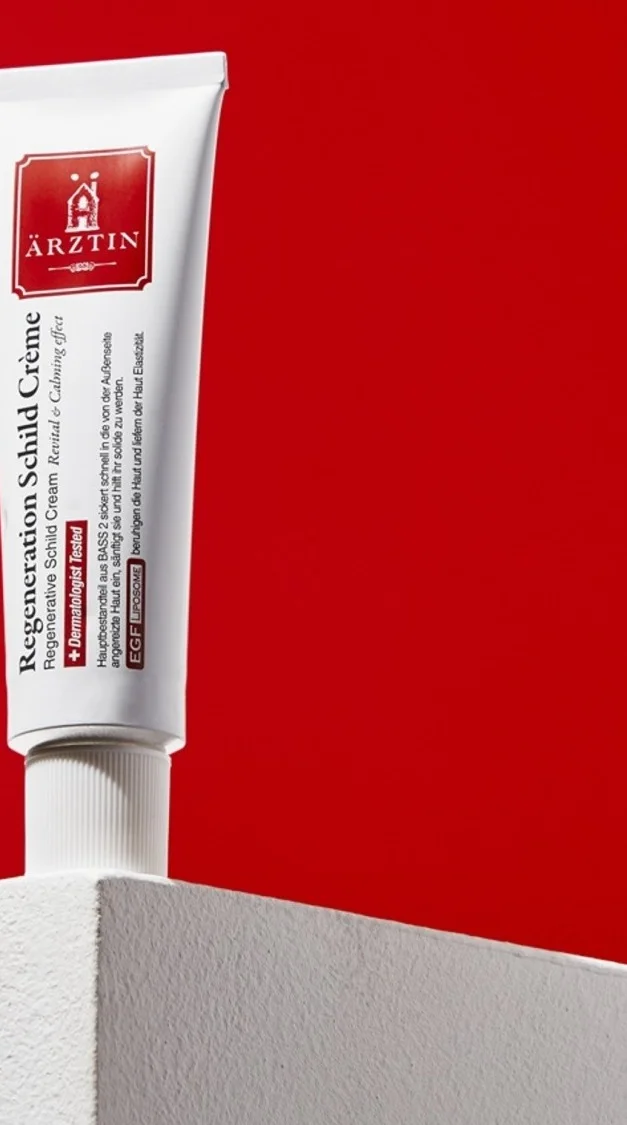 리제너레이티브 실트 크림Buy
Anti-wrinkle functional cosmetic · A rich cream that addresses both elasticity and barrier care
- 리제너레이티브 실트 크림Buy
Anti-wrinkle functional cosmetic · A rich cream that addresses both elasticity and barrier care
- 리제너레이티브 실트 크림Buy
Anti-wrinkle functional cosmetic · A rich cream that addresses both elasticity and barrier care
- 리제너레이티브 실트 크림Buy
Anti-wrinkle functional cosmetic · A rich cream that addresses both elasticity and barrier care
- 리제너레이티브 실트 크림Buy
Anti-wrinkle functional cosmetic · A rich cream that addresses both elasticity and barrier care