
Criteria for Choosing Palmitic Acid — What to Look for in the Full Ingredient List
Rather than judging palmitic acid's value on its own, it's better to look at which lipid and oil ingredients it's paired with in the full ingredient list. Since ingredients in low concentrations may not appear in strict order of amount, position alone can't reliably indicate concentration. Ultimately, the key question is what role this fatty acid plays within the overall barrier lipid composition. If you're also concerned about elasticity and wrinkles, it's worth checking whether the lipid composition and elasticity-care ingredients are designed together in the same formulation.
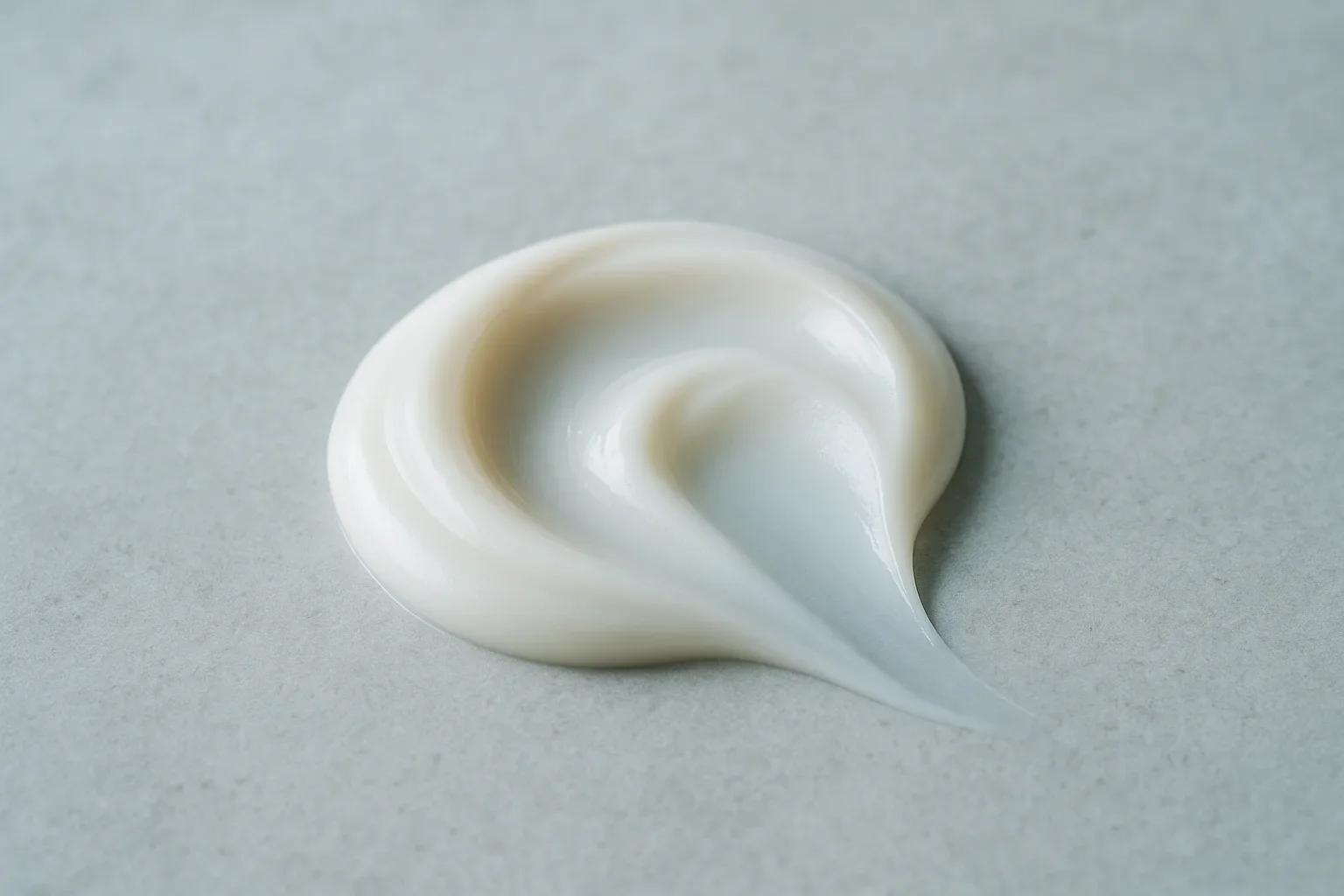
When looking through a cosmetic's full ingredient list and spotting the name palmitic acid, it's easy to be unsure whether to consider it a 'good ingredient' or just a 'common fatty acid.' To cut to the conclusion, judging this ingredient as good or bad on its own doesn't help much when reading an ingredient list. You need to look at the context—what other ingredients it's used alongside—to determine whether the product actually suits your skin.
Especially for those who also care about elasticity or wrinkles, a more practical standard is not the 'lipid composition' that palmitic acid belongs to by itself, but whether that lipid composition is designed together with elasticity-care ingredients.
What role does palmitic acid play in the full ingredient list?
Palmitic acid is a fatty acid belonging to the same family as the lipids that make up the skin barrier. The lipid composition of the skin surface is formed through the combination of various fatty acids, cholesterol, and ceramides, and palmitic acid can be understood as one of those components.
That's why it's difficult to isolate palmitic acid alone from an ingredient list and judge that 'having a lot of this ingredient is good' or 'having little is disappointing.' Rather than the presence of a single fatty acid, how well that fatty acid is balanced with other lipid ingredients is more closely related to actual usage feel.
Why can't we check the content percentage as a number?
Under domestic cosmetic ingredient labeling rules, the listing order of ingredients below a certain concentration can be shuffled. In other words, being toward the back of the ingredient list doesn't necessarily mean the ingredient is present in a small amount, and being toward the front doesn't necessarily mean it's present in a large amount. It's good to first understand that at low concentration ranges, order alone makes it difficult to gauge the exact ratio.
Therefore, to use palmitic acid as a 'selection criterion,' it's more realistic to read where this ingredient is positioned relative to other nearby ingredients and what purpose the overall formulation was designed for, rather than trying to find a number.
Three criteria for judging palmitic acid within lipid composition
First, the types of lipid ingredients placed alongside it. If palmitic acid is listed close to cholesterol and ceramides, this can be seen as a signal that the lipid composition making up the skin barrier was intentionally designed. A product containing palmitic acid alone and a product where multiple lipid ingredients are woven together have fundamentally different design intentions.
Second, the connection with oil ingredients. If oils such as squalane, shea butter, or other oil types follow the lipid composition ingredients, this means the formulation was also designed to help hold in moisture so it doesn't evaporate.
Third, the position within the formulation stage. Products rich in lipid composition and oils are usually designed for the last step of a routine, i.e., as cream types. Checking this position can also help determine when this product should be applied.
| Element to check | Meaning | How to read it on the ingredient list |
|---|---|---|
| Lipid ingredients placed nearby | Whether barrier lipid composition was designed | Close proximity to cholesterol and ceramides |
| Connection with oil ingredients | Whether oils that help retain moisture are blended in | Position of squalane, shea butter, oils, etc. |
| Position within the formulation stage | Determining order of use within a routine | Whether it's a last-step formulation such as a cream |
A part easy to overlook when also considering elasticity and wrinkle care
There's one more point to note here. When searching for lipid composition ingredients out of concern for dryness or tightness, elasticity and wrinkle care—which you also wanted to address—can easily fall by the wayside. Lipid ingredients like palmitic acid can help keep skin texture comfortable and smooth, but they are not themselves ingredients designed for the purpose of elasticity or wrinkle care.
So when reading an ingredient list, it's worth checking not only the position of the lipid components but also whether ingredients designed for elasticity care (such as peptides or wrinkle-improvement functional ingredients) are included in the same list. If both of these approaches are designed together in one product, it means you don't have to separately manage barrier care and elasticity care.
Applying this standard to an actual product
It helps to apply this standard to an actual product. In the ARZTIN Regenerative Cell Cream ingredient list, ceramide NP, cholesterol, and palmitic acid are placed close together to form the barrier lipid composition, followed by oils such as squalane, shea butter, and argan kernel oil, finishing as a rich-type formulation. At the same time, the same ingredient list includes adenosine, which has undergone functional review for wrinkle improvement, along with three peptides designed for elasticity care (sh-Oligopeptide-1, rh-Oligopeptide-2, rh-Polypeptide-1).
In other words, the structure combines texture refinement through lipid composition with ingredients designed for elasticity care, all within a single formulation. Once you check this kind of composition, you naturally develop the habit of looking at the overall design rather than just a single ingredient like palmitic acid when setting a 'standard for choosing' fatty acids.
The last step — which cream to finish with
After breaking down the lipid composition this way, a natural question arises: 'Then which product should I look at if I want to manage this lipid balance while also caring for elasticity and wrinkles?' The ARZTIN Regenerative Cell Cream is designed to combine a barrier lipid composition including palmitic acid with adenosine, which has undergone functional review for wrinkle improvement, and three peptides for elasticity care, all in one rich-type formulation, so that lipid care and elasticity care can be addressed together in the final step of a routine.
사용 전과 비교해 사용 직후 통계적으로 유의하게 개선됐습니다. 개선율(%)은 사용 전 대비 변화량의 비율이며(|사용 후−사용 전|÷사용 전×100), 개인차가 있을 수 있습니다.
출처 P&K 피부임상연구센타 인체적용시험 결과보고서 (PNK-24610-RD1R2, 2024)
자극으로 일시적으로 손상된 장벽이 자극 직후 상태와 비교해 얼마나 돌아왔는지를 나타내는 비율이며, 피부가 그만큼 좋아진다는 뜻은 아닙니다. 개선율(%)은 사용 전 대비 변화량의 비율이며(|사용 후−사용 전|÷사용 전×100), 개인차가 있을 수 있습니다.
출처 P&K 피부임상연구센타 인체적용시험 결과보고서 (PNK-24610-RD1R2, 2024)
Frequently asked questions
- If palmitic acid appears near the end of the ingredient list, does that mean it's in a low concentration?
- Not necessarily. Below a certain concentration threshold, the listed order may not strictly reflect the actual formulation ratio, so position alone can't confirm the amount. It's better to look at its relationship with other lipid and oil ingredients listed alongside it.
- Is palmitic acid alone enough for adequate moisturizing?
- Palmitic acid is one of the fatty acids that make up barrier lipids. Rather than on its own, it may be more helpful for smoothing texture when combined with other lipid ingredients like cholesterol and ceramides, as well as oil components. The actual effect can vary depending on individual skin condition.
- Do I really need to check lipid composition ingredients together with elasticity-care ingredients?
- It's not essential, but if you're concerned about both dryness and elasticity, checking whether the full ingredient list includes both lipid composition and ingredients designed for elasticity care (such as peptides or approved anti-wrinkle functional ingredients) can help simplify your routine.
- Are there skin types that don't do well with palmitic acid?
- Reactions to specific ingredients can vary depending on individual skin condition or state. If you experience unusual, persistent reactions after using a new product, it's recommended to stop use and consult a dermatologist or other specialist.
Related products
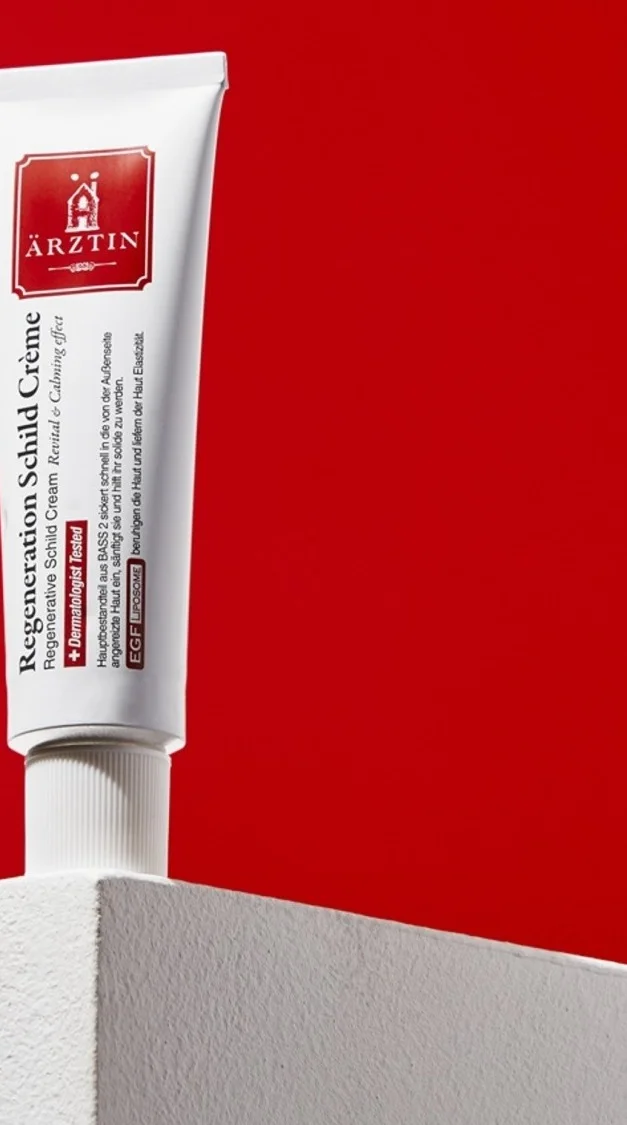 리제너레이티브 실트 크림Buy
Anti-wrinkle functional cosmetic · A rich cream that addresses both elasticity and barrier care
- 리제너레이티브 실트 크림Buy
Anti-wrinkle functional cosmetic · A rich cream that addresses both elasticity and barrier care
- 리제너레이티브 실트 크림Buy
Anti-wrinkle functional cosmetic · A rich cream that addresses both elasticity and barrier care
- 리제너레이티브 실트 크림Buy
Anti-wrinkle functional cosmetic · A rich cream that addresses both elasticity and barrier care
- 리제너레이티브 실트 크림Buy
Anti-wrinkle functional cosmetic · A rich cream that addresses both elasticity and barrier care