
Which Skin Type Suits Madecassic Acid — Usage Criteria Based on Full Ingredient List
Madecassic acid is a component derived from Centella asiatica, part of an ingredient family long used for soothing skin care purposes. Rather than being suited to a specific skin type, what matters is its combination with lipid and moisturizing ingredients when skin frequently feels irritated or has a weakened barrier. To make a practical judgment, you need to look at both its position on the ingredient list and the ingredients formulated alongside it.
When searching for cosmetic ingredients, you often come across statements like 'madecassic acid is good for sensitive skin.' But this statement alone makes it hard to judge whether it actually suits your skin. What matters more than the name of a single ingredient is where it appears in the full ingredient list and which ingredients it's combined with.
This article summarizes what skin conditions madecassic acid is meaningful for, and what to check alongside it when reading a full ingredient list.
What Is Madecassic Acid, and Why Does It Appear?
Madecassic acid is one of the components derived from Centella asiatica (gotu kola), often listed together with asiaticoside and asiatic acid as the 'three Centella asiatica-derived components.' This ingredient family has long been used in cosmetics aimed at soothing skin care.
However, rather than expecting effects from madecassic acid in isolation on the ingredient list, it's more aligned with actual usage experience to understand it in combination with barrier lipids like ceramides and cholesterol, and moisturizing/soothing ingredients like panthenol and allantoin, formulated alongside it.
Why It Works Differently by Skin Condition — What the Position on the Ingredient List Tells You
Under cosmetics regulations, the full ingredient list is generally listed in descending order of content, but once the content drops below a certain level, the order can be shuffled. In other words, having madecassic acid listed near the front doesn't necessarily mean it's in a high concentration, and having it listed further back doesn't mean the formulation is meaningless. It's important to first understand that the listing order of lower-content ingredients can vary.
What's more practical to check is 'what base this product built madecassic acid on top of.' Depending on whether the formula has a well-balanced water-oil ratio, whether barrier lipid ingredients are included together, or whether the formula contains many irritating factors like fragrance or alcohol, the same ingredient can feel very different on the skin.
During seasonal transitions or times when heating/cooling makes skin dry and sensitive, or when you feel your skin's elasticity isn't what it used to be, it's more important to look at the overall formulation design—where barrier lipids and moisturizing ingredients are combined together—rather than focusing on a single soothing ingredient.
A Step-by-Step Way to Read the Full Ingredient List
First, look at the ingredients that come right after water and glycerin to gauge the base of the formula (whether it's water-centered or oil-centered). Next, check whether barrier-forming lipid ingredients like ceramides, cholesterol, and palmitic acid are present. Then, look at the position of Centella asiatica-derived ingredients and soothing/moisturizing ingredients like panthenol and allantoin. Finally, checking how far toward the front potentially irritating ingredients like fragrance and essential oils appear can help you judge the overall balance.
| Order | What to Check | Check Points |
|---|---|---|
| 1 | Formula Base | Whether water-centered or oil-centered |
| 2 | Barrier Lipid Ingredients | Presence of ceramides, cholesterol, fatty acids |
| 3 | Soothing/Moisturizing Ingredients | Position of Centella asiatica-derived ingredients, panthenol, allantoin |
| 4 | Potentially Irritating Ingredients | Listing position of fragrance, etc. |
How the Full Ingredient Design of the Silt Cream Is Structured
ARZTIN Regenerative Silt Cream is a wrinkle-improvement functional cosmetic (approved), combining the notified ingredient adenosine with three types of peptides (sh-Oligopeptide-1, rh-Oligopeptide-2, rh-Polypeptide-1) for elasticity care.
In addition, three Centella asiatica-derived ingredients (asiaticoside, madecassic acid, asiatic acid) are added for skin soothing care, and ceramide NP, cholesterol, and palmitic acid together form the barrier lipid composition. Oil ingredients such as squalane, shea butter, and argan kernel oil serve to lock in moisture and prevent it from evaporating, designed to suit a rich-type cream applied as the final step.
In other words, rather than choosing a product based on madecassic acid alone, checking the overall composition where elasticity-care ingredients, barrier lipids, and moisturizing ingredients are combined together is the proper way to make use of this ingredient's meaning.
Points to Keep in Mind When Using
Skin condition and reactions can vary from person to person. When using a new product, it is safest to first test a small amount to check your reaction, and if abnormal reactions such as redness or itching persist, it is recommended to stop use and consult a dermatologist or other specialist.
The Final Step — Which Cream Should You Finish With?
If you'd like to check where Madecassic Acid appears on an ingredient list and what it's combined with, looking at the full ingredient list of ARZTIN Regenerative Cilt Cream can serve as a useful reference. You can directly compare how, alongside adenosine-based wrinkle-improvement functionality, three centella-derived ingredients, barrier lipids, and moisturizing ingredients are structured within a rich-type cream.
사용 전과 비교해 2주 사용 후 통계적으로 유의하게 개선됐습니다. 개선율(%)은 사용 전 대비 변화량의 비율이며(|사용 후−사용 전|÷사용 전×100), 개인차가 있을 수 있습니다.
출처 P&K 피부임상연구센타 인체적용시험 결과보고서 (PNK-24610-RD1R2, 2024)
Frequently asked questions
- Is madecassic acid only necessary for sensitive skin?
- It isn't exclusive to a specific skin type. It belongs to an ingredient family long used for soothing purposes, and is often formulated even in products aimed at skin concerned with elasticity and hydration. It's important to look at the combination with other ingredients included alongside it.
- Does being listed further down the ingredient list mean it's present in a low concentration?
- Below a certain concentration threshold, the listed order may not strictly reflect actual concentration order. Since the order of low-concentration ingredients can vary, it's difficult to determine concentration from order alone.
- Does containing madecassic acid mean there's absolutely no irritation?
- You can't determine irritation potential from a single ingredient alone. Reactions can vary depending on the overall formulation, the other ingredients combined with it, and individual skin condition, so a patch test before use is recommended.
- How is madecassic acid included in the ARZTIN Silt Cream?
- Three Centella asiatica-derived components (asiaticoside, madecassic acid, and asiatic acid) are formulated for soothing skin care purposes, together with adenosine-based wrinkle-improvement functional ingredients and barrier lipid components.
- What should I do if my skin remains persistently sensitive and red?
- If persistent sensitivity can't be managed through cosmetic ingredients alone, it's recommended to consult a dermatologist or other specialist to identify the underlying cause.
Related products
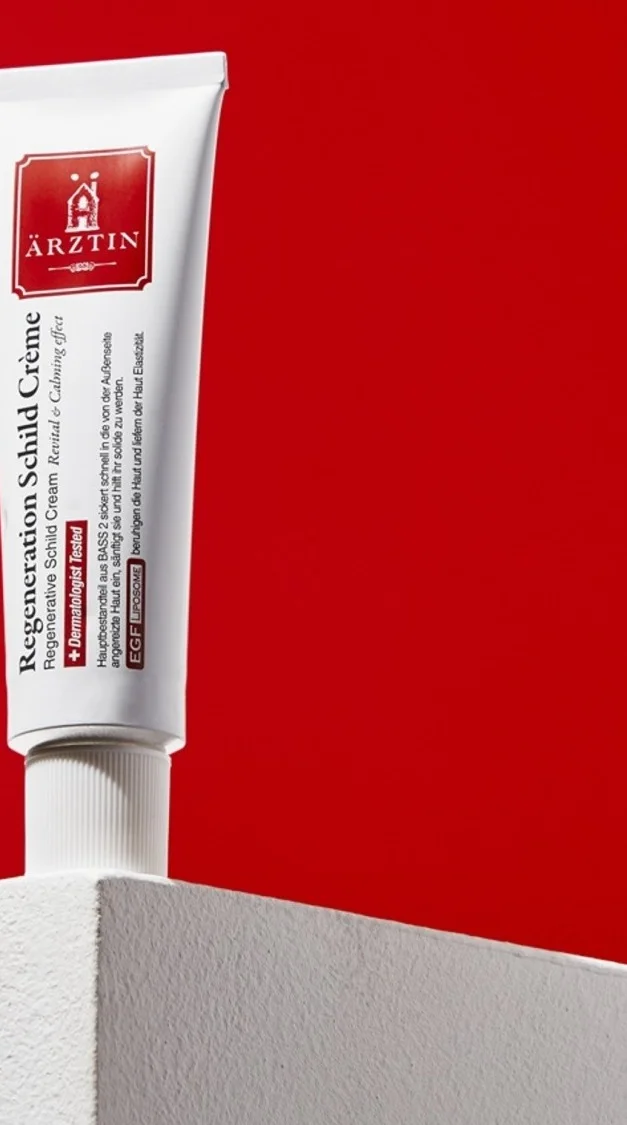 리제너레이티브 실트 크림Buy
Anti-wrinkle functional cosmetic · A rich cream that addresses both elasticity and barrier care