
Order of Applying Olive Oil — Checking the Placement Principle of Oil Ingredients via Full Ingredient Lists
Oil ingredients like olive oil fulfill their role when placed 'last' in a skincare routine. This is because the basic order is to first let moisture and active ingredients into the skin, then cover the surface with oil to slow moisture loss. By checking the position of olive oil in a full ingredient list, you can also read what role the product was designed to play within this order.
The question 'At what step should I apply olive oil?' is actually naturally resolved once you understand what oil ingredients do for the skin, rather than focusing on the order itself.
To state the conclusion first: oil ingredients like olive oil can fully perform their role only when placed at the last step of skincare, that is, after moisture and active ingredients have been let into the skin.
- 1CleansingPreparing the skin surface
- 2TonerLight, moisture-rich formulation
- 3Essence/AmpouleActive ingredient absorption step
- 4Lotion/CreamMoisturizing finishing step
- 5Olive oil (optional)The very last, surface-sealing finish
Why oil must come 'last' — what happens on the skin's surface
The order in which skincare products are absorbed into the skin is largely determined by the formulation's viscosity and ingredient composition. Formulations with strong moisture content and low viscosity, like toners and essences, touch the skin surface first and soak in, while formulations with high viscosity and a greater proportion of oil, like creams or oils, work by covering the layer above.
Fatty acids and triglycerides, the main components of olive oil, are oily substances that do not mix well with water. If this oily film settles on the skin's surface first, it becomes difficult for subsequently applied water-based ingredients to penetrate into the skin. Conversely, if water-based and active ingredients are absorbed first and the oil is applied last, the oil can work by covering the surface so that moisture does not evaporate.
In other words, the core principle of order is 'from light formulations to heavy formulations,' and olive oil is almost always placed last in this flow.
Olive oil's position by formulation type — single oil product vs. olive oil in a cream
The order in which olive oil is applied needs to be understood slightly differently depending on whether it is a 'standalone oil product' or 'an ingredient included within a cream.'
When used as a standalone oil product, it is common to apply a small amount at the very end, after completing all skincare steps including cleansing, toner, essence, and cream. In this case, the oil functions less as a moisturizing ingredient itself and more as a finishing layer that covers the surface so the previously applied moisture and active ingredients do not evaporate.
On the other hand, if olive oil is included in a cream's full ingredient list, consumers don't need to worry separately about order. The cream itself is already designed as a 'formulation to be applied in the last step,' and olive oil is formulated as one of several ingredients making up the oil portion of that cream. In this case, what matters more than order is 'which ingredients the olive oil is positioned alongside in the full ingredient list.'
| Category | Position in routine | Points to check |
|---|---|---|
| Standalone oil product | Very last step of all skincare | Apply a small amount after preceding moisture and active ingredients are sufficiently absorbed |
| Ingredient within a cream | The cream itself is the last step | Check the composition of ingredients surrounding olive oil in the full ingredient list |
| Evening routine | Place a formulation with a higher oil proportion last, more so than during the day | Purpose of slowing moisture evaporation during sleep |
Points to note when reading the order of the full ingredient list
The principle is that the full ingredient list is arranged in order of decreasing amount, but for ingredients present in lower amounts, the order may not correspond exactly to actual content. In other words, one should read it keeping in mind that the listed order of low-content ingredients can vary.
Therefore, it is difficult to conclude that 'this product contains a lot/little olive oil' based solely on whether olive oil appears near the front or back of the full ingredient list. Instead, looking at which group of ingredients (e.g., other oil components, barrier lipid ingredients, active ingredients) olive oil is placed near can help gauge what purpose the product is using the oil for.
Step-by-step routine — the basic order of placing oil last
The general skincare order is cleansing → toner → essence/ampoule → eye cream → lotion/cream → (if needed) oil. If olive oil is used standalone, it belongs at the very end of this flow, after lotion or cream.
If olive oil is included in a cream, that cream itself handles the final moisturizing step, so there isn't much need to apply oil on top of it again. Rather than layering oil redundantly, it is more useful information to check what other ingredients, besides the oil, that cream is formulated with.
In the evening routine in particular, it is common to place a formula with a higher oil content last. Since moisture continues to evaporate during sleep, the oil film from the final step can help maintain hydration during that time.
The Place of Olive Oil, and What to Check Next
Once you understand 'when to apply' olive oil, the next thing worth checking is 'what purpose, besides oil, the cream occupying that final step also carries.' Since the final step is the spot that stays on the skin the longest in a daily routine, whether the product placed there stops at maintaining hydration or is also designed with the next goal of elasticity care in mind ultimately makes a difference.
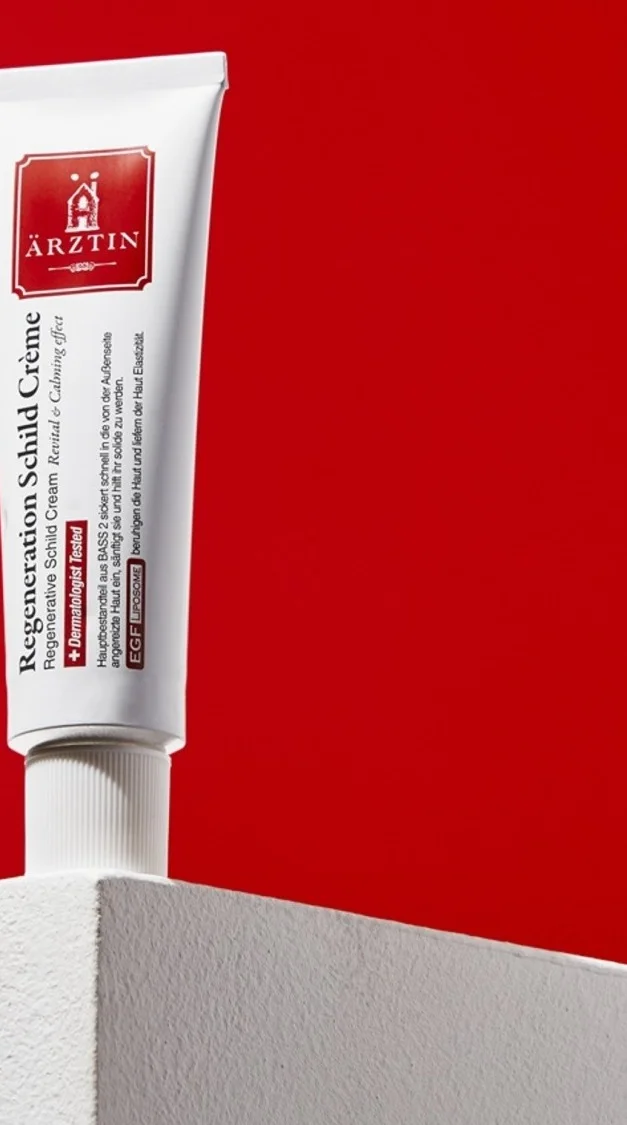
ARZTIN Regenerative Seat Cream is a rich-type cream that finishes the final step according to its full ingredient list, combining oil-based ingredients including olive oil with adenosine, a functional ingredient recognized for wrinkle improvement, along with 3 types of peptides for elasticity care. When choosing a cream to fill the final step, one way is to directly compare the full ingredient list to see whether that step stays limited to an oil finish or extends to elasticity care.
In an actual usage test, significant changes compared to before use were confirmed in items such as cheek elasticity, pore-area elasticity, jaw-area lifting, and skin elastic recovery, though results may vary by individual.
The Final Step: Which Cream to Finish With
The final step is the spot that stays on the skin the longest in a daily routine. ARZTIN Regenerative Seat Cream is a rich-type cream that does not limit this step to an oil finish alone, but is designed with adenosine and 3 types of peptides together to also achieve the goal of elasticity care.
사용 전과 비교해 사용 직후 통계적으로 유의하게 개선됐습니다. 개선율(%)은 사용 전 대비 변화량의 비율이며(|사용 후−사용 전|÷사용 전×100), 개인차가 있을 수 있습니다.
출처 P&K 피부임상연구센타 인체적용시험 결과보고서 (PNK-24610-RD1R2, 2024)
사용 전과 비교해 사용 직후 통계적으로 유의하게 개선됐습니다. 개선율(%)은 사용 전 대비 변화량의 비율이며(|사용 후−사용 전|÷사용 전×100), 개인차가 있을 수 있습니다.
출처 P&K 피부임상연구센타 인체적용시험 결과보고서 (PNK-24610-RD1R2, 2024)
사용 전과 비교해 사용 직후 통계적으로 유의하게 개선됐습니다. 개선율(%)은 사용 전 대비 변화량의 비율이며(|사용 후−사용 전|÷사용 전×100), 개인차가 있을 수 있습니다.
출처 P&K 피부임상연구센타 인체적용시험 결과보고서 (PNK-24610-RD1R2, 2024)
사용 전과 비교해 사용 직후 통계적으로 유의하게 개선됐습니다. 개선율(%)은 사용 전 대비 변화량의 비율이며(|사용 후−사용 전|÷사용 전×100), 개인차가 있을 수 있습니다.
출처 P&K 피부임상연구센타 인체적용시험 결과보고서 (PNK-24610-RD1R2, 2024)
Frequently asked questions
- Can I apply olive oil right after toner?
- This is not recommended. Since oil ingredients have high viscosity and work by covering the skin surface, applying them at an early stage like right after toner can interfere with the absorption of essences or creams used afterward. It is generally used last, after cleansing through to cream.
- If a cream already contains olive oil, do I still need to apply oil separately?
- It's not essential. Since the cream itself is already a final-step formulation containing oil, layering additional oil on top may result in excessive buildup. It's reasonable to adjust by adding a small amount depending on the season or skin condition.
- If olive oil appears near the end of the ingredient list, does that mean the content is low?
- At low concentration ranges, listing order may not precisely correspond to actual content, so it's hard to conclude based on order alone. Instead, it's more useful to look at which ingredients olive oil is placed alongside.
- Should I also apply olive oil as the last step in the morning?
- Morning routines often favor lighter formulations with a lower proportion of oil, but the ordering principle itself remains the same. If used, it's generally applied in a small amount as the final step after other skincare.
- What should I do if my skin becomes sensitive after applying olive oil?
- Reactions to oil ingredients can vary from person to person. If redness or irritation persists after use, discontinue use, and if symptoms continue for a long time, it is safer to consult a dermatologist or similar specialist.
Related products
 리제너레이티브 실트 크림Buy
Anti-wrinkle functional cosmetic · A rich cream that addresses both elasticity and barrier care
- 리제너레이티브 실트 크림Buy
Anti-wrinkle functional cosmetic · A rich cream that addresses both elasticity and barrier care
- 리제너레이티브 실트 크림Buy
Anti-wrinkle functional cosmetic · A rich cream that addresses both elasticity and barrier care
- 리제너레이티브 실트 크림Buy
Anti-wrinkle functional cosmetic · A rich cream that addresses both elasticity and barrier care
- 리제너레이티브 실트 크림Buy
Anti-wrinkle functional cosmetic · A rich cream that addresses both elasticity and barrier care