
Palmitic Acid Application Order — How to Judge by Ingredient List Position
Palmitic acid is a fatty acid ingredient that often appears in the ingredient list after water and humectants but before oils and waxes. However, this position only reflects the concentration order, not an instruction on "apply this first." The actual order of use is more accurately judged by whether the product itself is a lotion or cream, and at which step of the routine that texture belongs.
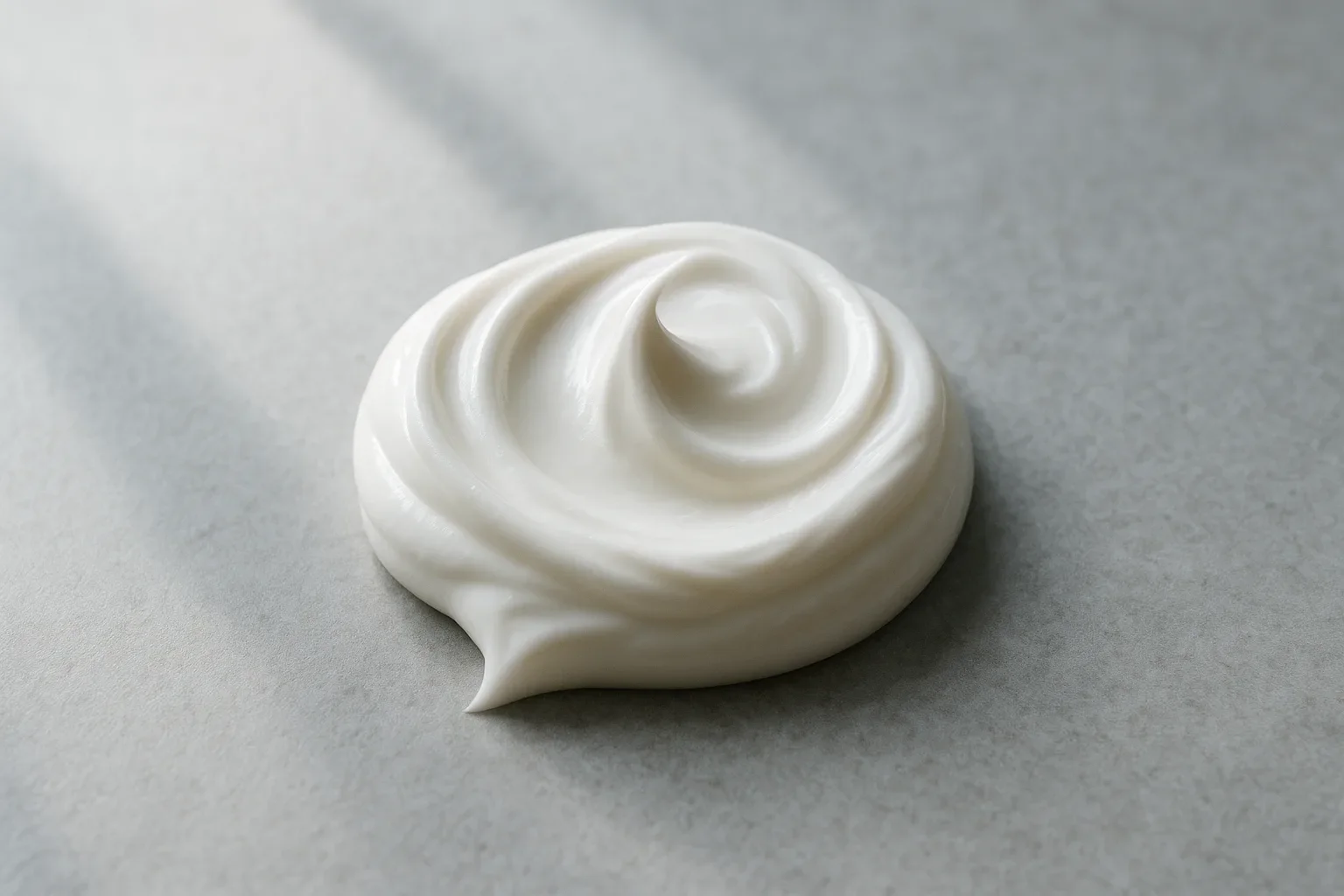
I'm often asked, "Is there a specific order for applying palmitic acid?" The short answer is that palmitic acid itself has no fixed 'order.' This is because the ingredient is not an ampoule-type product applied alone at a specific step, but rather a fatty acid ingredient already blended into emulsified formulas such as creams and lotions. What needs to be judged for order is not the ingredient itself, but 'the formula that contains that ingredient.'
- 1CleansingSkin preparation through cleansing
- 2Toner/EssenceLight hydration step
- 3AmpouleIntensive care step for elasticity and condition
- 4Cream FinishFinishing with oil using fatty acid and lipid ingredients
Where palmitic acid is positioned in the ingredient list
In cosmetic ingredient lists, ingredients are generally listed from highest to lowest concentration, but for low-concentration ingredients, the order can be shuffled or clustered toward the end. Palmitic acid commonly appears in creams after the water phase (purified water, glycerin, butylene glycol, etc.), in a section similar to oils, waxes, and emulsifiers. This is because palmitic acid is a fatty acid used to stabilize emulsification and texture, but the exact concentration ranking varies by product, and it should be understood that the listed order of trace ingredients can be reversed.
In other words, a rough estimate that 'it's listed earlier, so it's present in a higher amount' is possible, but deriving a specific usage order from this is a misreading of the ingredient list. The criterion for determining order is not the position on the ingredient list, but the texture of the formulation and the stage in the routine.
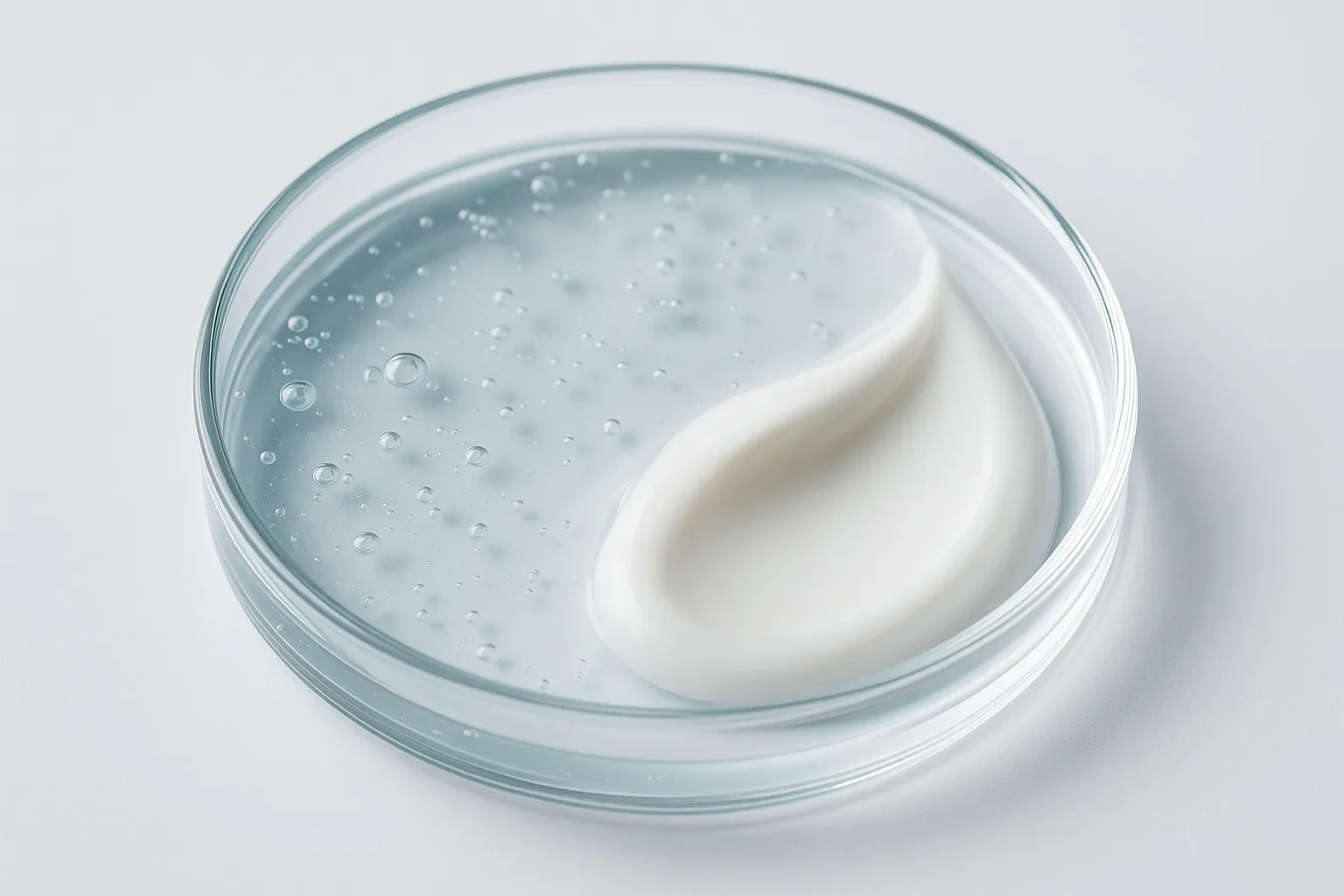
The criterion for 'application order' that differs by formulation type
After cleansing, a skincare routine generally proceeds from lighter-feeling textures to heavier ones. Steps with strong moisture like toners and essences come first, followed by ampoules and serums, finishing with an oily cream. If a product containing palmitic acid is a cream type, it can be considered to be placed at the very last stage in this flow.
Conversely, if palmitic acid is contained in a lotion or emulsion type, that product is often used in a middle stage before the cream. Ultimately, the criterion for judgment is not 'what percentage of palmitic acid is contained,' but 'what texture and formulation type this ingredient is found in.'
| Formulation type | Texture | Position in routine |
|---|---|---|
| Toner/essence | Light, moisture-focused | Stage 1 |
| Ampoule/serum | Concentrated functional ingredients | Stage 2 |
| Lotion/emulsion | Light oiliness | Stage 3 |
| Cream | Rich oiliness | Final stage |
Why the sensation differs by skin condition and season
During periods of severe dryness or seasonal transitions, applying a thin layer of a rich cream containing fatty acid ingredients as the final step can be helpful. On the other hand, during periods when oiliness feels burdensome, it may be better to choose a lighter lotion form even if it contains the same ingredient, adjusting the order accordingly.
Even in this case, rather than approaching it with 'more is better,' it is more practical to adjust the amount used and the stage according to the degree of tightness or roughness of one's own skin. If abnormal reactions such as redness or itching persist during use, it is recommended to consult a dermatologist or other specialist rather than arbitrarily layering multiple products.
The final stage of the routine, what to look for
The reason a cream containing fatty acid ingredients is placed at the end of the routine is simple. Oily formulations do not allow other products to absorb well over them, so applying them last in order prevents interference with the absorption of subsequent products. Understanding this principle allows the same criterion to be applied not only to palmitic acid but also to products containing barrier lipid ingredients like ceramides and cholesterol.
However, when choosing the final-stage cream, it helps the overall efficiency of the routine to look not only at the fatty acid and lipid composition, but also at whether the combined ingredients are designed to also address elasticity or skin texture refinement.
What cream should you finish the final stage with?
Once you develop the habit of reading where fatty acid ingredients like palmitic acid are positioned in the full ingredient list, the next thing you start to notice is 'what role does this cream also play at the final step of the routine.' ARZTIN Regenerative Sealed Cream is a rich-type cream used at the final step of the routine, and it is a functional cosmetic (certified for wrinkle improvement) that combines a barrier lipid composition of ceramide NP, cholesterol, and palmitic acid together with adenosine (an officially recognized functional ingredient for wrinkle improvement) and an elasticity care design featuring 3 types of peptides. It's worth considering if you want to look not only at the lipid composition but also at the elasticity care aspect when choosing a final-step cream.
Frequently asked questions
- If palmitic acid appears near the top of the ingredient list, should it always be applied first?
- No. The order of the ingredient list roughly reflects concentration, not the order of use. Ingredients present in lower amounts can sometimes appear in a different listed order, so the actual order of use should be judged based on the texture of the formula (lotion, cream, etc.).
- Can I apply a product containing palmitic acid before an ampoule?
- If the product containing palmitic acid has a rich, oily texture like a cream, it makes more sense in terms of absorption flow to apply it after lighter ampoules or essences. Conversely, if it's a lighter lotion form, it is often used at an earlier step than a cream.
- Is there a rule for order when using palmitic acid and ceramide together?
- Both ingredients are classified as barrier-forming lipids and are often blended together within the same cream formula. In this case, there's no need to separate the order by ingredient — you only need to check which step in the routine that cream belongs to.
- What should I do if my skin becomes sensitive after using a cream containing fatty acid ingredients?
- Even with the same ingredient, reactions can vary by individual. Try reducing the amount used or adjusting frequency of use, and if redness or itching persists, it is recommended to consult a dermatologist rather than arbitrarily adding other products.
Related products
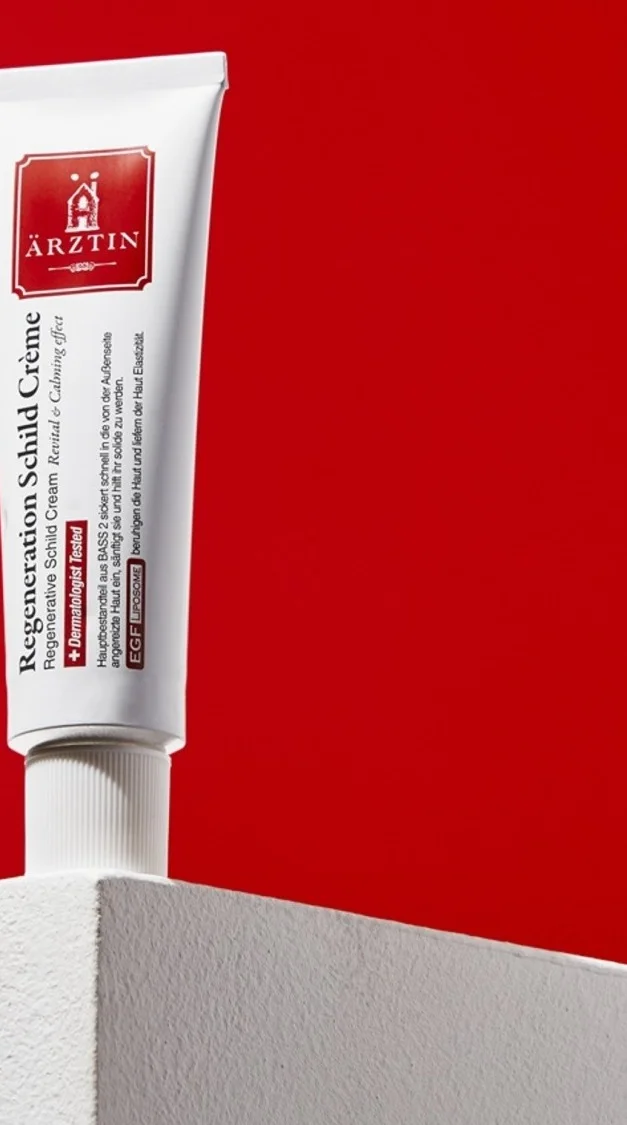 리제너레이티브 실트 크림Buy
Anti-wrinkle functional cosmetic · A rich cream that addresses both elasticity and barrier care
- 리제너레이티브 실트 크림Buy
Anti-wrinkle functional cosmetic · A rich cream that addresses both elasticity and barrier care
- 리제너레이티브 실트 크림Buy
Anti-wrinkle functional cosmetic · A rich cream that addresses both elasticity and barrier care
- 리제너레이티브 실트 크림Buy
Anti-wrinkle functional cosmetic · A rich cream that addresses both elasticity and barrier care
- 리제너레이티브 실트 크림Buy
Anti-wrinkle functional cosmetic · A rich cream that addresses both elasticity and barrier care