
Ingredients That Work Well With Palmitic Acid — Understanding Combination Principles Through the Full Ingredient List
Palmitic acid is one of the lipids that make up the skin barrier, and it is often designed to function alongside ceramides and cholesterol. The key to reading a combination is checking whether these three are placed near each other on the full ingredient list, and whether oil-based and moisturizing ingredients that support them are also present. In conclusion, it is more reasonable to choose products where a 'lipid combination + moisture + elasticity care ingredients' are designed together, rather than relying on palmitic acid alone.
When looking at the full ingredient list of cosmetics, you often encounter the name 'palmitic acid.' It is a type of fatty acid, classified in the same family as one of the lipid ingredients that make up the skin barrier. However, rather than discussing this ingredient alone, the practical way to read the full ingredient list is to look at which ingredients it is placed alongside.
- 11. Check positionCheck what is listed before and after palmitic acid
- 22. Check lipid axisWhether ceramides and cholesterol are present
- 33. Check oil axisWhether squalane, shea butter, or oils are present
- 44. Check moisture axisWhether panthenol, betaine, or trehalose are present
- 55. Check elasticity care axisWhether adenosine or peptides are listed
Why does palmitic acid matter more 'together' than 'alone'?
The skin barrier is known to be composed of three lipid families—ceramides, cholesterol, and fatty acids—blended together in a certain ratio. Palmitic acid falls into the fatty acid category among these. In other words, a formulation containing palmitic acid alone, without ceramides or cholesterol, represents only one piece of the puzzle from the perspective of barrier lipid composition.
That's why, when checking the full ingredient list, the first checkpoint is to see whether names like Ceramide NP or cholesterol appear near palmitic acid. If all three are present together, it can be considered likely that the formulation was designed with barrier lipid composition in mind.
Types of combinations you can check in the full ingredient list
It's also worth knowing that while the full ingredient list is generally listed in descending order of concentration, ingredients below a certain low threshold may have their order rearranged. So the fact that palmitic acid appears earlier or later in the list doesn't necessarily indicate a high or low concentration on its own. Instead, it's more practical to check 'which group of ingredients it's paired with.'
This can broadly be organized into three combination axes. The first is the lipid axis—whether ceramides, cholesterol, and fatty acids are present together. The second is the oil axis—whether ingredients like squalane, shea butter, or argan kernel oil, which help seal the surface to prevent moisture loss, are included. The third is the moisturizing/conditioning axis—whether ingredients like panthenol, allantoin, betaine, or trehalose, which hold in moisture or soothe the skin, are present.
| Axis | Example Ingredients | Check Point |
|---|---|---|
| Lipid Axis | Ceramide NP, Cholesterol, Palmitic Acid | Whether the lipid families that make up the barrier are present together |
| Oil Axis | Squalane, Shea Butter, Argan Kernel Oil | Whether oils that prevent moisture evaporation are present |
| Moisturizing/Conditioning Axis | Panthenol, Allantoin, Betaine, Trehalose | Whether ingredients that hold in moisture and soothe the skin are present |
| Elasticity Care Axis | Adenosine, 3 Types of Peptides | Whether ingredients aimed at wrinkle and elasticity care are designed together |
The center of gravity of combinations by skin condition and season
During periods when skin becomes rough and sensitive due to seasonal changes or heating/cooling, the combination of the lipid axis (ceramides, cholesterol, palmitic acid) and the oil axis can be considered to play a relatively important role. When this combination is well balanced within the formulation, the skin is more likely to feel settled rather than sitting on the surface, with a smoother texture.
Conversely, during ordinary times without major seasonal changes, the moisturizing/conditioning axis (panthenol, betaine, trehalose) tends to be relatively more noticeable. However, this may vary depending on individual skin condition and environment, so it's difficult to treat this as an absolute standard.
A step-by-step checking routine — the order for reading the full ingredient list
Step 1, find palmitic acid and check whether ceramide and cholesterol are listed nearby. Step 2, check whether oil-based ingredients (squalane, shea butter, oils) are also present. Step 3, check for moisturizing and soothing ingredients such as panthenol, allantoin, betaine, or trehalose. Step 4, finally, if the product claims elasticity care, also check for adenosine or peptide listings.
Going through these four steps allows a more three-dimensional understanding of the product's overall design direction than judging by palmitic acid alone. Especially during periods when both elasticity and barrier care matter, checking whether lipid combinations and elasticity-care ingredients are included together in one formulation becomes a practical checkpoint.
Such combinations can actually be confirmed within a full ingredient list
For example, looking at the full ingredient list of ARZTIN Regenerative Silt Cream, after panthenol and palmitic acid come ceramide NP and cholesterol, followed by oil-based ingredients such as squalane, shea butter, and argan kernel oil, centella asiatica-derived ingredients, and adenosine along with three peptides (sh-oligopeptide-1, rh-oligopeptide-2, rh-polypeptide-1). This can be seen as an example where the lipid axis, oil axis, moisture axis, and elasticity-care axis discussed earlier are all placed together within one formulation.
However, it's worth noting that this cream is a rich-type formulation meant to be used as a final step. Those who prefer lighter textures or have a different skin oil balance may find the sensation different, and if any adverse reaction occurs, discontinuing use and consulting a dermatologist or other specialist is recommended.
The final step, which cream to finish with
By forming the habit of reading a full ingredient list along the lipid axis, oil axis, moisture axis, and elasticity-care axis, one can grasp the overall design intent of a formulation instead of relying on a single ingredient like palmitic acid. ARZTIN Regenerative Silt Cream is a wrinkle-improvement functional cosmetic (certified) that places these four axes together within one formulation, and can serve as a reference for those who want to check the full ingredient list directly while managing both elasticity and barrier care.
자극으로 일시적으로 손상된 장벽이 자극 직후 상태와 비교해 얼마나 돌아왔는지를 나타내는 비율이며, 피부가 그만큼 좋아진다는 뜻은 아닙니다. 개선율(%)은 사용 전 대비 변화량의 비율이며(|사용 후−사용 전|÷사용 전×100), 개인차가 있을 수 있습니다.
출처 P&K 피부임상연구센타 인체적용시험 결과보고서 (PNK-24610-RD1R2, 2024)
사용 전과 비교해 사용 직후 통계적으로 유의하게 개선됐습니다. 개선율(%)은 사용 전 대비 변화량의 비율이며(|사용 후−사용 전|÷사용 전×100), 개인차가 있을 수 있습니다.
출처 P&K 피부임상연구센타 인체적용시험 결과보고서 (PNK-24610-RD1R2, 2024)
Frequently asked questions
- Does palmitic acid have moisturizing effects on its own?
- Palmitic acid is classified as one of the lipid-family ingredients that make up the skin barrier. When present alongside other lipid-family ingredients such as ceramides and cholesterol, it can be considered meaningful from the perspective of barrier lipid composition, but it is difficult to determine effects based solely on standalone content.
- Does being listed toward the end of the ingredient list mean the content is low?
- In principle, the full ingredient list is listed in order of content amount, but ingredients below a certain proportion may have their listing order altered. Therefore, rather than determining the amount of content based on position alone, it is more practical to look at which ingredient groups it is placed alongside.
- Are products containing palmitic acid okay for sensitive skin as well?
- Reactions may vary depending on individual skin condition and usage environment. If abnormal reactions such as itching or redness occur during use, it is recommended to stop use and consult with a dermatologist or other specialist.
- If a product has ceramides, is palmitic acid unnecessary?
- The barrier is known to be composed of ceramides, cholesterol, and fatty acid-family ingredients working together. Since palmitic acid falls under the fatty acid family, it can be helpful to check whether a formulation is designed with all three placed together.
- What ingredient combinations should I look for to care for both elasticity and barrier at once?
- One approach is to check the full ingredient list for whether the lipid axis (ceramides, cholesterol, palmitic acid), the oil axis (squalane, shea butter, etc.), and the moisture axis (panthenol, betaine, etc.) are designed together with elasticity care ingredients such as adenosine or peptides.
Related products
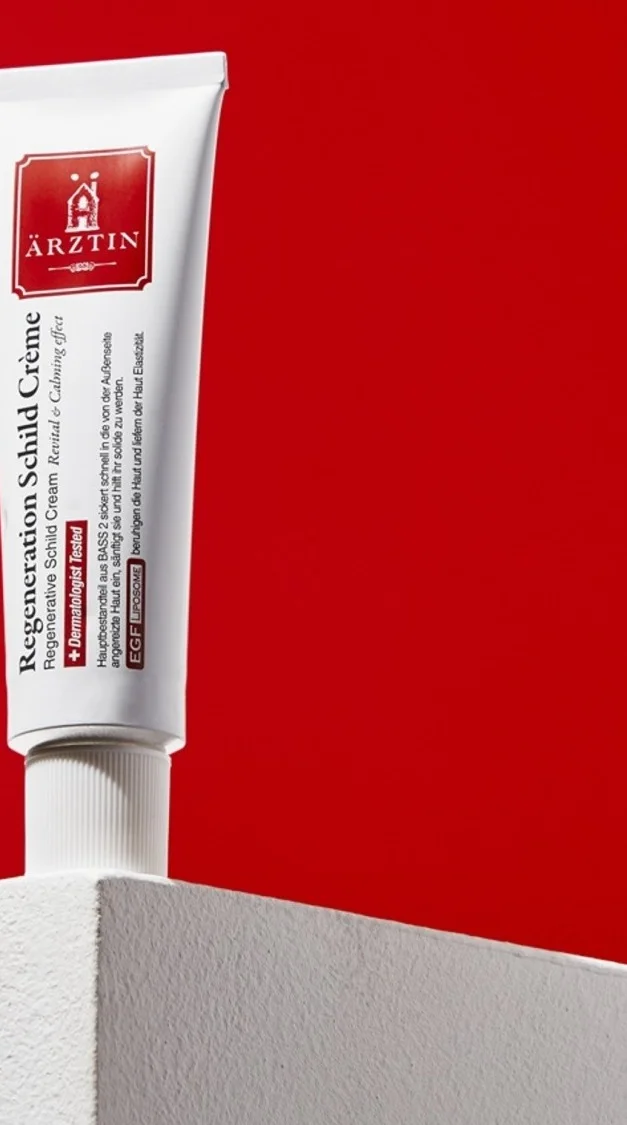 리제너레이티브 실트 크림Buy
Anti-wrinkle functional cosmetic · A rich cream that addresses both elasticity and barrier care
- 리제너레이티브 실트 크림Buy
Anti-wrinkle functional cosmetic · A rich cream that addresses both elasticity and barrier care
- 리제너레이티브 실트 크림Buy
Anti-wrinkle functional cosmetic · A rich cream that addresses both elasticity and barrier care
- 리제너레이티브 실트 크림Buy
Anti-wrinkle functional cosmetic · A rich cream that addresses both elasticity and barrier care
- 리제너레이티브 실트 크림Buy
Anti-wrinkle functional cosmetic · A rich cream that addresses both elasticity and barrier care