
Palmitic Acid Precautions — What to Check on the Full Ingredient List
Palmitic acid is a fatty acid belonging to the same family as the lipid components that make up the skin barrier. When it appears alongside ceramides and cholesterol on the full ingredient list, it can be a signal to examine the barrier-care design of the formula. However, since low-concentration ingredients can appear in varying order, it's difficult to determine a formula's weight based solely on the position of a single ingredient. Ultimately, the precaution to keep in mind when looking at palmitic acid is not to focus on 'this one ingredient' but to read the 'overall composition of lipid, oil, and moisturizing ingredients placed together.'
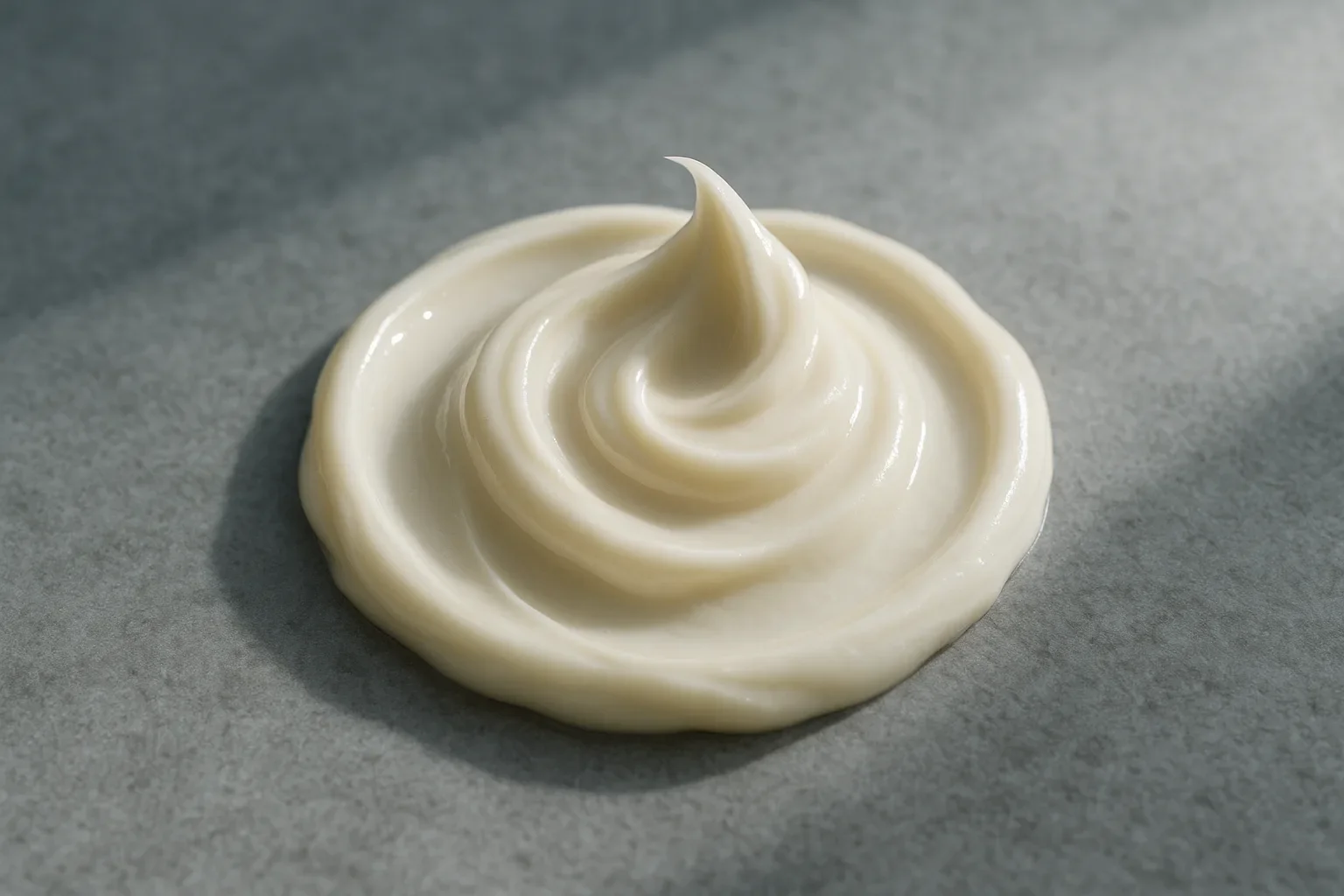
When palmitic acid appears on the full ingredient list, many people wonder 'how much of this ingredient is included, given its position near the front or back.' To cut to the conclusion: cosmetic ingredient lists are arranged in order of descending concentration, but once concentration drops below a certain level, the order becomes flexible under labeling regulations. In other words, it can be a hasty interpretation to conclude that palmitic acid being in the middle or toward the end of the list means it's 'barely present,' just as it would be hasty to conclude that being near the front means it's a 'primary ingredient.'
Why and where is palmitic acid placed?
Palmitic acid is a fatty acid belonging to the same family as the lipid components that make up the skin's surface barrier. Because it has a structure similar to lipid components already present in the skin itself, it is often placed alongside ingredients like ceramides and cholesterol within the barrier lipid axis of a cream formula. When these three ingredients appear together in an ingredient list, it can be read as a hint that the formulation was intended to have a composition similar in texture to the skin's surface lipid film, rather than being designed solely for oiliness or spreadability.
However, there is a point to be careful about here. Palmitic acid alone is not enough to judge the direction of barrier care. If an ingredient list contains palmitic acid alone without ceramides or cholesterol, it may simply be playing a supporting role in emulsification or thickening. This is why it's necessary to develop the habit of looking at the 'combination in which ingredients appear together' rather than just the 'name' of an ingredient.
Points that should be read differently depending on skin condition
If your skin is severely dry and flaking, it's practical to first check whether moisturizing and barrier-related ingredients such as ceramides, cholesterol, and panthenol are present alongside palmitic acid. Conversely, if your skin is already sensitive and reacts to oiliness, it's more useful to look at the overall weight of the oil axis—how much overlap there is among squalane, shea butter, and other oils—rather than focusing on palmitic acid alone.
The same applies during periods when skin condition fluctuates due to seasonal or environmental changes. During periods when moisture evaporates quickly due to heating or air conditioning, formulas that incorporate lipid-family ingredients together may help maintain hydration, but this doesn't apply equally to all skin types due to individual differences. If you feel more sensitive than usual or notice any abnormal reaction, it is safer to stop use and consult a dermatologist or other specialist.
A step-by-step routine for reading an ingredient list
The first step is to check what ingredients appear alongside palmitic acid. The key is whether barrier lipid-family ingredients such as ceramides and cholesterol are in the same section. The second step is to check the oil axis separately. Looking at the proportion in which squalane, shea butter, argan kernel oil, and similar ingredients are placed can help gauge how rich the formulation is. The third step is the moisturizing/conditioning axis. Checking whether ingredients like panthenol, allantoin, betaine, and trehalose are present together can help determine whether the lipid ingredients were also designed to 'help lock in moisture.'
By making it a habit to check these three axes in order, you can grasp the overall design intent of a formulation rather than getting caught up in the position of palmitic acid alone. Especially during periods when elasticity or fine lines are also a concern, checking whether the barrier lipid axis is included in the same formula as elasticity-care ingredients is the final step in reading this kind of ingredient list.
| Axis | Example ingredients to check | Meaning |
|---|---|---|
| Barrier lipid axis | Ceramide NP, Cholesterol, Palmitic Acid | Whether the composition resembles the skin's surface lipid film |
| Oil axis | Squalane, Shea Butter, Argania Kernel Oil | The degree to which moisture is kept from evaporating |
| Moisturizing/conditioning axis | Panthenol, Allantoin, Betaine, Trehalose | A supporting role in holding onto moisture |
Even a formulation equipped with a barrier lipid axis is not, by itself, the answer to elasticity or wrinkle care. Lipid ingredients like palmitic acid function more to lock in moisture and prevent it from evaporating, while elasticity care is an area that can only be discussed when a separate design axis—functional notified ingredients like adenosine, peptide-based ingredients—is also present. That's why, when reading the full ingredient list, it's more accurate to check the barrier lipid axis and the elasticity care axis separately.
Reading a formulation that combines palmitic acid with an elasticity care axis
ARZTIN Regenerative Silt Cream is a wrinkle-improvement functional cosmetic (certified) that places both a barrier lipid composition made up of ceramide NP, cholesterol, and palmitic acid, and an elasticity care design made up of adenosine and three peptides (sh-oligopeptide-1, rh-oligopeptide-2, rh-polypeptide-1), together within a single rich cream. Once you develop the habit of reading the full ingredient list by axis, you can distinguish for yourself which role the 'lipid axis' and the 'elasticity axis' each play in such a formulation. Usage feel and degree of improvement vary by individual, and if any adverse reaction is felt during use, it is safer to stop use and consult a specialist.
The final step—which cream should you finish with?
Once you develop the habit of reading the full ingredient list by axis, you can distinguish for yourself which role the 'lipid axis' and the 'elasticity axis' each play in such a formulation. Usage feel and degree of improvement vary by individual, and if any adverse reaction is felt during use, it is safer to stop use and consult a specialist.
Frequently asked questions
- Is palmitic acid an irritating ingredient?
- Palmitic acid is a fatty acid similar in family to the lipid components that make up the skin barrier, and it is not classified as an ingredient that inherently causes irritation. However, since every ingredient can react differently depending on the user's skin condition and the overall formula composition, if any sensitive reaction occurs after use, it is safer to stop use and consult a dermatologist or other specialist.
- If it's near the end of the ingredient list, does that mean there's almost none of it?
- Not necessarily. Cosmetic ingredient lists are generally arranged in descending order of concentration, but once concentration drops below a certain level, the listing order can vary. So rather than judging concentration by position alone, it's more accurate to also look at the combination of ingredients placed nearby.
- Does palmitic acid only matter when combined with ceramides?
- Palmitic acid alone can serve supporting roles such as emulsification or thickening, but when combined with ceramides and cholesterol, the design intent of barrier lipid composition becomes clearer to read. It's useful to develop the habit of checking the combination of ingredients placed together rather than a single ingredient alone.
- Does having a lot of lipid ingredients also help with elasticity?
- The barrier lipid axis and the elasticity-care axis are different design areas. Lipid ingredients like palmitic acid are closer to playing a role in maintaining moisture, while elasticity care is a matter that can only be discussed when separately designed ingredients, such as adenosine or peptide-family ingredients, are present. When looking at the full ingredient list, it's accurate to check these two axes separately.
Related products
 리제너레이티브 실트 크림Buy
Anti-wrinkle functional cosmetic · A rich cream that addresses both elasticity and barrier care
- 리제너레이티브 실트 크림Buy
Anti-wrinkle functional cosmetic · A rich cream that addresses both elasticity and barrier care
- 리제너레이티브 실트 크림Buy
Anti-wrinkle functional cosmetic · A rich cream that addresses both elasticity and barrier care
- 리제너레이티브 실트 크림Buy
Anti-wrinkle functional cosmetic · A rich cream that addresses both elasticity and barrier care
- 리제너레이티브 실트 크림Buy
Anti-wrinkle functional cosmetic · A rich cream that addresses both elasticity and barrier care