
Palmitic Acid Principle and Characteristics — Understanding the Role of Fatty Acids Through the Ingredient List
Palmitic acid is a saturated fatty acid belonging to the same family as one of the lipid components that make up the skin's stratum corneum, and is an ingredient used alongside ceramides and cholesterol to form barrier lipid composition. In the ingredient list, the listing order and which ingredients it's placed near can give clues about the role it was designed for. Ultimately, what matters more than palmitic acid alone is how this lipid is balanced within a formulation together with elasticity and wrinkle-care ingredients.
When asked, "I saw palmitic acid in the ingredient list, what role does this ingredient play?", the answer is not as simple as it might seem. Palmitic acid sounds unfamiliar just by name, but it's actually a saturated fatty acid belonging to the same family as one of the lipid components that make up the skin.
When it's listed alone in the ingredient list, its role isn't clearly visible, but the story changes when it's placed alongside other lipid ingredients such as ceramides or cholesterol. This article examines what kind of ingredient family palmitic acid belongs to in terms of how it works on the skin, and how to read this in the ingredient list.
What kind of ingredient is palmitic acid — the basic principle of fatty acids
Palmitic acid is a type of saturated fatty acid commonly found in nature. As a cosmetic ingredient, it's also used for emulsion stability or texture adjustment purposes, but it's often mentioned in the context of lipid composition that forms the skin barrier.
The skin's stratum corneum is known to have a structure filled with various types of interlocking lipids, among which fatty acids are included. Since palmitic acid shares properties with this fatty acid class, when it appears alongside ceramides and cholesterol in the full ingredient list, it's worth considering the possibility that these three were designed together as a barrier lipid composition group.
However, palmitic acid itself is a multifunctional ingredient used for various purposes in cosmetics, so it's difficult to conclude that a product is 'beneficial for the barrier' based on this ingredient alone. It's necessary to look at the overall design together with the other formulated ingredients.
What the position of palmitic acid in the full ingredient list tells us
There is a regulation stating that cosmetic full ingredient lists are listed in order of formulated amount, but below a certain concentration, the order may be rearranged. In other words, this means that for ingredients in the low-concentration range, it's difficult to know the exact formulation ratio from the listing order alone.
So when reading palmitic acid, the meaningful information isn't the exact number but 'which ingredients it's listed close to.' If Ceramide NP, cholesterol, and palmitic acid appear near each other, this can be seen as a clue that these three were included in the design as a single lipid composition set.
Conversely, if palmitic acid is positioned close to surfactant or emulsifier-type ingredients, it should also be considered that in that product it may have been used for formulation stabilization purposes rather than for barrier lipids.
| Check Point | Meaning |
|---|---|
| Proximity to other ingredients | If close to ceramides and cholesterol, may indicate barrier lipid composition purpose |
| Limitations of listing order | At low concentrations, the exact formulation ratio cannot be known from order alone |
| Co-occurring ingredient groups | Understanding design direction through coexistence with elasticity-care ingredients (peptides, adenosine) |
The balance of lipid composition that cannot be completed by fatty acids alone
It's important to note that the lipids composing the barrier are not completed by a single ingredient. When ceramide-type ingredients, sterol-type ingredients like cholesterol, and fatty acid-type ingredients are present together, they are often explained in the context of a balance of lipid composition.
If only one of these balance elements is present and the rest are missing, the full ingredient list may state that 'lipid ingredients are included,' but the actual design intent may be different. So when looking at palmitic acid, it's necessary to always develop the habit of checking whether 'this ingredient is alone, or present together with other lipid classes.'
Also, even if the lipid composition is well arranged, oil-based ingredients are needed together to keep it on the skin's surface for a long time. Oils like squalane, shea butter, and argan kernel oil play a role in preventing moisture from evaporating, and are factors that determine texture and lasting feel separately from the lipid composition.
Why elasticity and wrinkle care should be viewed together with lipid design
Taking this a step further leads to the point consumers are actually curious about. No matter how well the lipid composition is arranged, that alone does not resolve concerns like elasticity or wrinkles. Lipids play a role in creating an environment where moisture is maintained, while elasticity and wrinkle care are areas that require separate ingredient design.
That's why it's important to read the full ingredient list as an 'overall design' rather than ingredient by ingredient. Checking whether lipid-forming ingredients (Ceramide NP, Cholesterol, Palmitic Acid) and elasticity-care ingredients (3 types of peptides, Adenosine, a functional wrinkle-improvement ingredient) are included together in one formulation is a more practical judgment criterion than understanding the role of Palmitic Acid alone.
From this perspective, Palmitic Acid is less an ingredient that gives a conclusion on its own, and more a clue for reading the full ingredient list. Through this clue, we can distinguish whether a product only focused on lipid balance, or whether it was designed to manage both lipids and elasticity together.
Placement of Lipid and Elasticity Ingredients Seen Through a Product Design Case
Applying this criterion to an actual product allows for a more concrete understanding. Looking at the full ingredient list of ARZTIN Regenerative Silt Cream, Palmitic Acid is positioned near Panthenol, and further back, it appears together with Cholesterol and Ceramide NP as well. This means Palmitic Acid is formulated in a position that can be read in the context of both moisturizing/conditioning ingredients and barrier lipid ingredients.
At the same time, the same ingredient list also contains Adenosine, which has undergone functional review for wrinkle improvement, and 3 types of peptides introduced as elasticity-care design (sh-Oligopeptide-1, rh-Oligopeptide-2, rh-Polypeptide-1). Here, oils such as Squalane, Shea Butter, and Argania Spinosa Kernel Oil are added, completing a rich-type formulation structure.
In other words, in this product, Palmitic Acid is not an ingredient that acts alone, but can be seen as playing its role within an overall structure where lipid composition and elasticity-care design are placed together. The perceived effect may vary depending on individual skin condition or season, and if any adverse reaction is felt during use, it is recommended to stop use and consult a dermatologist or other specialist.
The Final Step, Which Cream to Finish With
Once you build the habit of checking the position of Palmitic Acid in the full ingredient list, you naturally move on to the next question. 'Then, aside from this one fatty acid, in what actual ratio are the overall lipid composition and elasticity-care ingredients placed at the final step of the same formulation?' The answer to this question becomes clearer not by looking at ingredient names one by one, but by also examining what order the formulation was designed to be used in within a routine.
Frequently asked questions
- Is palmitic acid an irritating ingredient?
- Palmitic acid is a fatty acid ingredient commonly used in cosmetics. However, since reactions may vary depending on individual skin conditions, if you notice abnormal reactions such as redness or itching during use, it's advisable to stop use and consult a dermatologist or other specialist.
- Does having palmitic acid alone help the skin barrier?
- It's hard to say that barrier lipid composition is complete with palmitic acid alone. It helps to check whether it's formulated together with other lipid-family ingredients such as ceramides and cholesterol.
- Can the position of palmitic acid in the ingredient list tell us its exact concentration?
- It's difficult to determine the exact concentration. Since the listing order can vary for ingredients below a certain concentration, it's more appropriate to use the position as reference information for roughly guessing the formulation context.
- How can I check for products that contain both lipid composition ingredients and elasticity-care ingredients together?
- By checking whether lipid-family ingredients such as ceramides, cholesterol, and palmitic acid are listed together with elasticity-care ingredients such as adenosine and peptides in the ingredient list, you can roughly gauge the formulation direction.
Related products
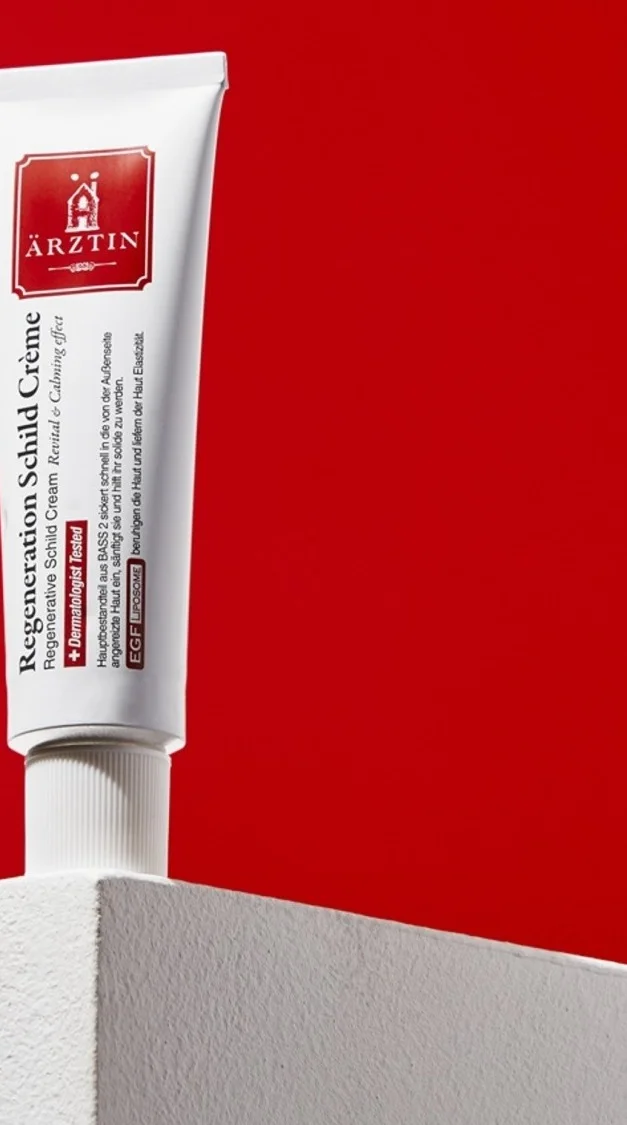 리제너레이티브 실트 크림Buy
Anti-wrinkle functional cosmetic · A rich cream that addresses both elasticity and barrier care
- 리제너레이티브 실트 크림Buy
Anti-wrinkle functional cosmetic · A rich cream that addresses both elasticity and barrier care
- 리제너레이티브 실트 크림Buy
Anti-wrinkle functional cosmetic · A rich cream that addresses both elasticity and barrier care
- 리제너레이티브 실트 크림Buy
Anti-wrinkle functional cosmetic · A rich cream that addresses both elasticity and barrier care
- 리제너레이티브 실트 크림Buy
Anti-wrinkle functional cosmetic · A rich cream that addresses both elasticity and barrier care