
Panthenol Cautions: Checkpoints to Verify via the Ingredient List
Panthenol is an ingredient long used for moisturizing and skin condition care, but it's not one where 'the more, the better' applies. You need to look at where panthenol appears in the ingredient list, what thickeners and oil-based ingredients are combined with it, and the product's overall formulation design together to judge whether it actually suits your skin. Below, we cover the limits of interpreting listing order, points easily missed by skin type, and a checklist routine.
Panthenol (pro-vitamin B5) is an ingredient long used for moisturizing and skin condition care, and it can easily be found in the ingredient lists of many skincare products. However, caution is needed before concluding, based solely on the ingredient list, that 'panthenol is near the front so it's a good product' or 'a product with more panthenol is better.' There are several points worth examining regarding the relationship between listing order and actual formulation design.
How far can you trust the order of the ingredient list?
Cosmetic ingredients are, in principle, listed in order of decreasing concentration, but regulations include exceptions for low-concentration ingredients (generally those in a lower blending ratio range), where the listing order isn't required to strictly follow concentration order. In other words, for ingredients appearing in the later portion of the list, it's difficult to accurately compare concentrations based on order alone.
Depending on the product, panthenol may be placed in the earlier section of the ingredient list, or it may appear later alongside other active or functional ingredients. A later position doesn't necessarily mean the product's moisturizing design is weaker, and conversely, an earlier position doesn't guarantee a stronger perceived hydrating effect. What matters is not 'where panthenol is positioned' but 'what ingredients it is combined with.'
What to check beyond concentration: the nature of co-formulated ingredients
Panthenol alone can help maintain surface-level hydration, but how long that effect lasts depends on the other ingredients it's combined with. Whether humectants like betaine and trehalose are included, whether barrier lipid ingredients such as ceramides, cholesterol, and fatty acids are present, and whether emollients like squalane or shea butter follow can all make the perceived experience different between products that both simply state 'contains panthenol.'
Another point to be careful about is that even if a product contains panthenol, this doesn't mean panthenol is responsible for the product's functional claims (such as wrinkle improvement). Items certified as functional cosmetics are based on specific approved ingredients listed in the full ingredient list (such as adenosine), and panthenol separately plays a role in moisturizing and conditioning care. It's helpful to read the label with this distinction in mind.
| Ingredient Category | Role | Reason to Check |
|---|---|---|
| Betaine, Trehalose | Moisture retention | Determines whether panthenol's hydrating effect lasts |
| Ceramide NP, Cholesterol, Palmitic Acid | Barrier lipid composition | Especially important during dry or sensitive periods |
| Squalane, Shea Butter | Emollient, moisture evaporation prevention | Affects texture weight and longevity |
| Adenosine, 3 Types of Peptides | Elasticity care formulation | Check when considering elasticity beyond hydration |
Points easily overlooked depending on skin condition and season
For dry skin, or during seasonal transitions or heating/cooling periods when skin becomes dry, a lightweight formula containing only panthenol may not feel sufficiently hydrating. In this case, checking how much emollient and barrier lipid ingredients are combined with panthenol becomes a practical checkpoint.
Conversely, for oily or combination skin, even a product containing panthenol may require adjusting when it's used (morning/evening, season) if the overall formula is designed to be heavy. Rather than focusing on panthenol itself, it's important to check the overall oiliness and texture of the formula.
For sensitized skin or right after experiencing irritation, people often choose low-irritation products containing panthenol. Even then, it's necessary to check the full ingredient list for other potentially irritating ingredients such as fragrance or essential oil components. If adverse reactions persist, it's recommended to consult a dermatologist rather than arbitrarily layering multiple ingredients.
Check routine: how to read panthenol labeling
First, don't just look at the position of panthenol, but also read which ingredients appear before and after it. Second, interpret low-concentration ranges (usually toward the end of the list) with the understanding that listed order and actual concentration may not precisely match. Third, understand separately what functional claim the product was reviewed for versus the actual role of panthenol. Fourth, depending on your skin condition (dry/oily/sensitive), check whether oils, barrier lipids, or thickening agents are formulated alongside panthenol.
This kind of checking routine helps you read the overall design direction of a product through the full ingredient list, rather than relying on a single ingredient. In particular, for products addressing concerns like elasticity or fine lines that take time to show results, it's worth checking not just for moisturizing ingredients but also whether ingredients for elasticity care are included in the formulation.
The final step: which cream to finish with
Once you develop the habit of reading the full ingredient list this way, you start looking at the overall design of a product rather than judging it by panthenol alone. For example, if it's a rich-type cream used as the final step, a practical standard would be to check what proportion moisturizing ingredients like panthenol are formulated at alongside barrier lipids such as ceramide NP, cholesterol, and palmitic acid, and oils such as squalane and shea butter, and whether elasticity-care ingredients like adenosine and the three types of peptides are separately included. ARZTIN Regenerative Silt Cream is one such product worth checking directly from its full ingredient list from this perspective.
Frequently asked questions
- If panthenol appears near the end of the ingredient list, does that mean it's in a small amount?
- Ingredients are generally listed in descending order of concentration, but for lower-concentration ranges, regulations allow the listing order to not strictly match actual concentration. Rather than assuming weak moisturizing design just because it appears later, it's more accurate to look at what other moisturizing or oil-based ingredients are combined with it.
- Is a product with only panthenol enough for moisturizing?
- Panthenol alone can help with skin condition care, but how well that effect is maintained can depend on what water-retaining ingredients, barrier lipids, or oil-based ingredients are combined with it. During periods of severe dryness, it's better to check the entire formulation together.
- Does a product containing panthenol also help with wrinkle improvement?
- Panthenol itself is an ingredient for moisturizing and condition care; wrinkle-improvement functionality is based on separately reviewed and approved functional ingredients (e.g., adenosine) certified by the Ministry of Food and Drug Safety. It's accurate to understand these two roles as distinct.
- Is it okay to use a panthenol-containing product if I have sensitive skin?
- Panthenol is known as a low-irritation ingredient, but it's good to check the full ingredient list for other ingredients, such as fragrance, that might irritate your particular skin. If adverse reactions persist during use, consulting a dermatologist is recommended.
- Should I just look for products that display the panthenol concentration?
- Cosmetic ingredient lists generally do not display exact concentrations (%). Rather than concentration, it's more realistic to gauge a product's formulation direction by the approximate position in the listing order and what types of ingredients are combined with it.
Related products
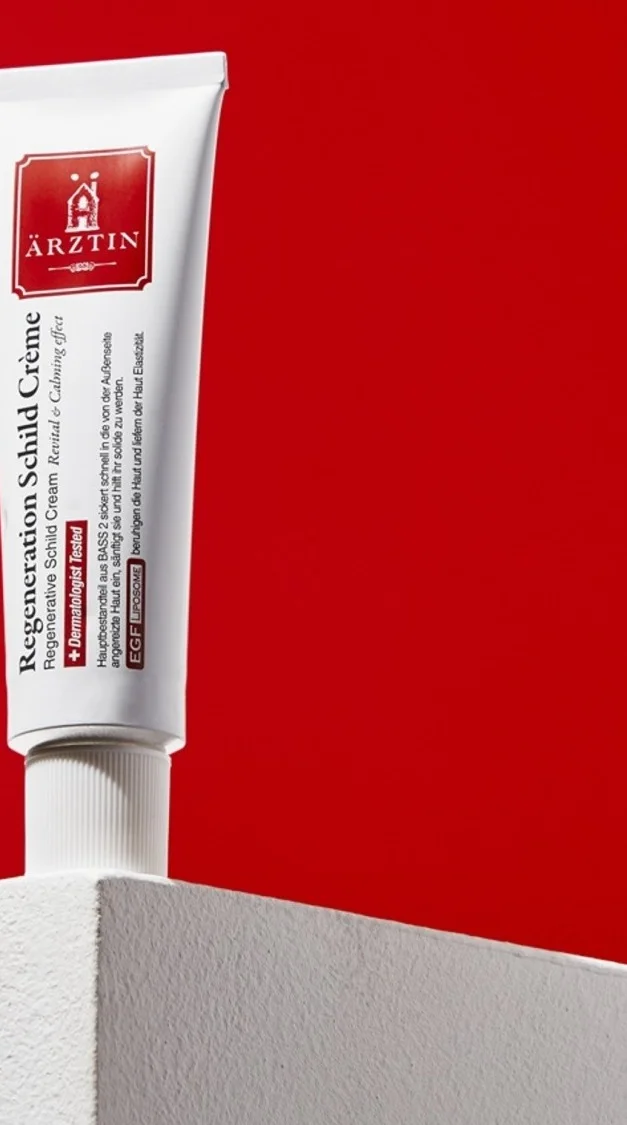 리제너레이티브 실트 크림Buy
Anti-wrinkle functional cosmetic · A rich cream that addresses both elasticity and barrier care
- 리제너레이티브 실트 크림Buy
Anti-wrinkle functional cosmetic · A rich cream that addresses both elasticity and barrier care
- 리제너레이티브 실트 크림Buy
Anti-wrinkle functional cosmetic · A rich cream that addresses both elasticity and barrier care
- 리제너레이티브 실트 크림Buy
Anti-wrinkle functional cosmetic · A rich cream that addresses both elasticity and barrier care
- 리제너레이티브 실트 크림Buy
Anti-wrinkle functional cosmetic · A rich cream that addresses both elasticity and barrier care