
Precautions for Purslane Extract — Real Checkpoints via the Full Ingredient List
Purslane extract has long been used as a plant extract for soothing purposes, but the actual perceived effect can vary greatly between products depending on the concentration and placement in the formulation. You can't simply conclude that a product 'contains a lot' of purslane extract based on its position in the full ingredient list alone — you need to also look at the combination with moisturizing, barrier, and elasticity ingredients formulated together. Since individual differences exist, if you experience any adverse reaction during use, it is safer to stop use and consult a specialist.
Purslane extract is a plant-derived ingredient that frequently appears on cosmetic ingredient lists under the name 'Portulaca Oleracea Extract' or 'purslane extract.' Because it contains omega-3 fatty acids and various polyphenol components, it is widely formulated into products aimed at soothing care. However, the reason this ingredient is often searched as something to 'be cautious about' usually stems not from the actual risk of the ingredient itself, but from misunderstandings about its position in the ingredient list and how its content is estimated.
This article organizes how purslane extract is typically labeled on ingredient lists, what misunderstandings arise when judgments are made based solely on listing order, and how this ingredient is designed to work alongside other moisturizing, barrier, and elasticity ingredients, using the ingredient list as the standard for review.
Why Is the Position of Purslane Extract on Ingredient Lists Confusing?
Under cosmetic ingredient labeling regulations, ingredients are listed in descending order of content, but excluding fragrances and preservatives, ingredients that make up a low proportion of the total formulation may not have an order that precisely corresponds to actual content. In other words, the intuitive assumption that 'being listed earlier means a higher amount' can break down in the lower-content range.
Ingredients like purslane extract, which are positioned after base ingredients such as water and glycerin, similar to silicones or emulsifiers, are simply interspersed among ingredients that form the structural framework of the formulation—this position does not necessarily mean it is a 'core active ingredient.' Conversely, being listed further down does not mean it is ineffective either. Ingredients such as centella asiatica derivatives or peptides are often formulated in small amounts according to their intended purpose and commonly appear further down the list.
Therefore, when checking 'points to be cautious about with purslane extract,' the first thing to examine is not the order itself, but which ingredients it is combined with and whether the product's overall design purpose is soothing, moisturizing, or elasticity care.
| Section | Representative Ingredient Examples | Points to Check |
|---|---|---|
| Base/Emulsification Section | Water, Glycerin, Emulsifiers | Forms the basic structure of the formulation, positioned earlier in content order |
| Soothing/Conditioning Section | Purslane Extract, Panthenol, Allantoin | Serves a soothing/moisturizing support purpose; content is difficult to determine from listing order alone |
| Barrier Lipid Section | Ceramide, Cholesterol, Palmitic Acid | Whether ingredients are combined for moisture retention and barrier care purposes |
| Functional/Elasticity Design Section | Adenosine, Peptides | A key section where ingredients are formulated according to design purpose even in small amounts |
What Matters More Than Estimating Content — Formulation Purpose and Accompanying Ingredients
Purslane extract alone is not an ingredient that newly builds the skin barrier or improves wrinkles. This ingredient is generally formulated as a supporting ingredient to aid skin soothing care, and the overall completeness of a product only gains meaning as a true 'design' when combined with barrier lipid ingredients such as ceramides, cholesterol, and palmitic acid; moisturizing and soothing ingredients such as panthenol and allantoin; and elasticity-targeted peptides or the functionally approved ingredient adenosine.
So when reviewing the full ingredient list, rather than judging the purslane extract line in isolation, it's more useful to look at what oils (such as squalane, shea butter, argan kernel oil) and what moisturizing/conditioning ingredients (such as betaine, trehalose) are placed around it to understand the actual usage and purpose.
Why the experience can vary depending on skin condition
Even with the same formulation, the experience can differ depending on skin condition. During dry, tight periods, barrier lipid-type ingredients and oil-rich, rich-type formulations may help, while during seasonal changes or when skin is sensitized by heating/cooling, ingredient combinations aimed at soothing care may be relatively more noticeable.
It's hard to say that a product containing purslane extract works the same way for every skin concern. Since individual differences can exist, it's reasonable to consider the overall design direction of the product along with your own skin condition, rather than focusing on the name of a single ingredient.
How to check the full ingredient list, step by step
First, check the emulsifier/oil section that comes after the base of purified water and glycerin, then look at the section where plant extracts aimed at soothing/conditioning, such as purslane extract, are placed. Next, check whether barrier lipid ingredients such as ceramides and cholesterol are present, and finally check whether functional/elasticity-design ingredients such as adenosine or peptides are included in small amounts toward the end—this order is practical.
Going through these four steps lets you assess what kind of care the product as a whole is designed for, without being swayed by the listing position of a single ingredient.
Full ingredient design that also considers elasticity and wrinkle care
While it's important to carefully check soothing-purpose ingredients like purslane extract, for skin concerns after your 30s, elasticity and wrinkles often become the central focus. Rather than a formulation that ends with soothing/moisturizing ingredients alone, it's practically useful to check whether the formulation is built on a base of barrier lipids and soothing ingredients, with wrinkle-improvement functional ingredients and elasticity-care design ingredients layered on top—this is how to make practical use of the full ingredient list.
The full ingredient list of ARZTIN Regenerative Silt Cream also includes purslane extract, placed alongside moisturizing/soothing ingredients such as panthenol and allantoin, and barrier lipid ingredients such as ceramide NP, cholesterol, and palmitic acid. On top of that, adenosine, a wrinkle-improvement functional ingredient, and three types of peptides designed for elasticity care (sh-oligopeptide-1, rh-oligopeptide-2, rh-polypeptide-1) are included together, showing a full ingredient design that considers elasticity and wrinkle care beyond just soothing and moisturizing. As a rich-type cream meant for the final step, it's recommended to check the full ingredient list yourself to see if it suits your skin condition.
The final step—which cream should you finish with?
Once you've checked the position and role of purslane extract in the full ingredient list, it helps with actual product selection to also look at what barrier, moisturizing, and elasticity ingredients it's designed alongside. ARZTIN Regenerative Silt Cream can be referenced as an example of this kind of full ingredient design check.
사용 전과 비교해 사용 직후 통계적으로 유의하게 개선됐습니다. 개선율(%)은 사용 전 대비 변화량의 비율이며(|사용 후−사용 전|÷사용 전×100), 개인차가 있을 수 있습니다.
출처 P&K 피부임상연구센타 인체적용시험 결과보고서 (PNK-24610-RD1R2, 2024)
사용 전과 비교해 2주 사용 후 통계적으로 유의하게 개선됐습니다. 개선율(%)은 사용 전 대비 변화량의 비율이며(|사용 후−사용 전|÷사용 전×100), 개인차가 있을 수 있습니다.
출처 P&K 피부임상연구센타 인체적용시험 결과보고서 (PNK-24610-RD1R2, 2024)
자극으로 일시적으로 손상된 장벽이 자극 직후 상태와 비교해 얼마나 돌아왔는지를 나타내는 비율이며, 피부가 그만큼 좋아진다는 뜻은 아닙니다. 개선율(%)은 사용 전 대비 변화량의 비율이며(|사용 후−사용 전|÷사용 전×100), 개인차가 있을 수 있습니다.
출처 P&K 피부임상연구센타 인체적용시험 결과보고서 (PNK-24610-RD1R2, 2024)
Frequently asked questions
- Is purslane extract an irritating ingredient?
- Purslane extract is a plant extract that has long been used for soothing care purposes and is generally classified as a mild ingredient. However, the perceived effect can differ depending on individual skin condition or the overall formulation of the product, so if redness or stinging occurs during use, it is safer to stop use and consult a dermatologist if necessary.
- If purslane extract appears near the end of the ingredient list, does that mean it has no effect?
- That conclusion cannot be drawn. In cosmetic ingredient labeling, the order in the lower concentration range doesn't necessarily correspond exactly to the actual amount formulated. Even if it appears near the end, it is often included in a small amount intentionally designed for a specific purpose, so rather than judging an ingredient's role based solely on its listed position, it's better to look at the overall combination of ingredients formulated together.
- If a product contains purslane extract, should I only expect a soothing effect?
- Purslane extract is often formulated as a supporting ingredient to help with soothing care, but the overall purpose of the product depends on the other ingredients formulated together. If barrier lipid ingredients are included, it may be designed for moisturizing and barrier care, and if adenosine or peptides are included, it may also be designed with elasticity and wrinkle care in mind — so it's good to check the entire ingredient list together.
- Are there ingredients that work well when combined with purslane extract?
- There's no absolute answer, but when combined with moisturizing and soothing ingredients like panthenol and allantoin, or barrier lipid ingredients like ceramides and cholesterol, it can be seen as a formulation designed with both soothing and moisturizing in mind. If elasticity and wrinkle care are also a goal, it may be worth checking whether peptides or adenosine, a functional ingredient recognized for wrinkle improvement, are also included.
- I have sensitive skin — is it okay to use a product containing purslane extract?
- It is generally used for soothing purposes, but since individual differences exist, it cannot be assumed to be equally suitable for all sensitive skin types. If it's your first time using the product, it's best to test a small amount first, and if adverse reactions persist during use, stop use and consult a specialist.
Related products
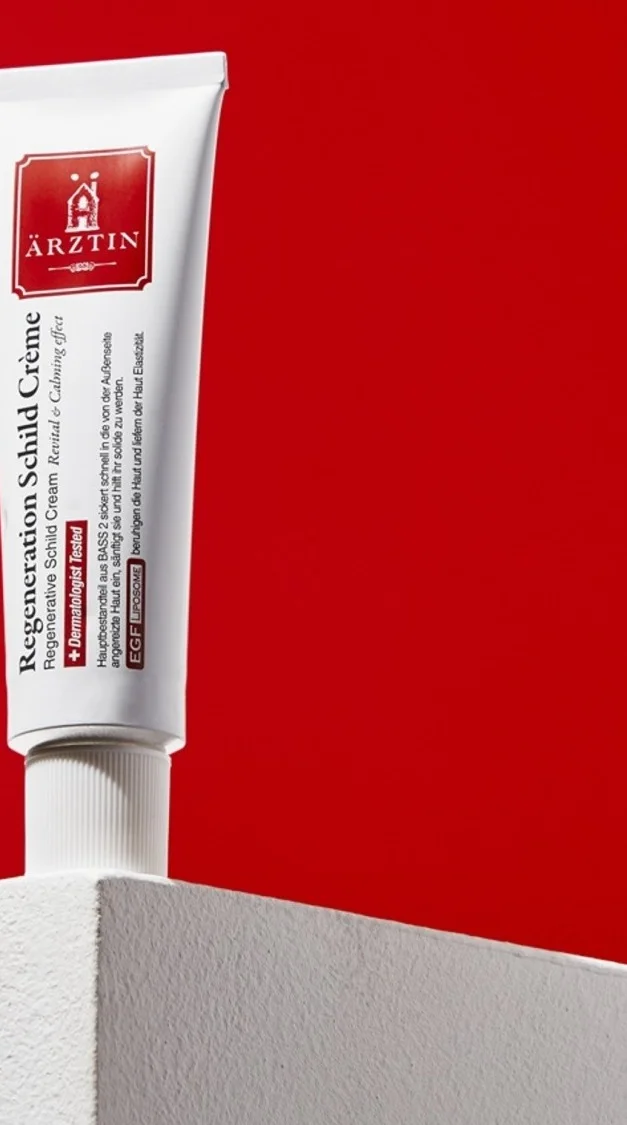 리제너레이티브 실트 크림Buy
Anti-wrinkle functional cosmetic · A rich cream that addresses both elasticity and barrier care
- 리제너레이티브 실트 크림Buy
Anti-wrinkle functional cosmetic · A rich cream that addresses both elasticity and barrier care
- 리제너레이티브 실트 크림Buy
Anti-wrinkle functional cosmetic · A rich cream that addresses both elasticity and barrier care
- 리제너레이티브 실트 크림Buy
Anti-wrinkle functional cosmetic · A rich cream that addresses both elasticity and barrier care
- 리제너레이티브 실트 크림Buy
Anti-wrinkle functional cosmetic · A rich cream that addresses both elasticity and barrier care