
Rich Cream vs. Gel Cream, When to Use What
To put the conclusion first, rich cream can be a more suitable choice during periods when skin feels dry and tight, while gel cream may be a better fit during hot and humid periods when sebum and moisture balance are prone to being disrupted. However, this is not an absolute rule, and it's best to adjust flexibly depending on skin type and daily condition. Rather than sticking to just one, using both textures together according to the season and indoor environment is a practical alternative.
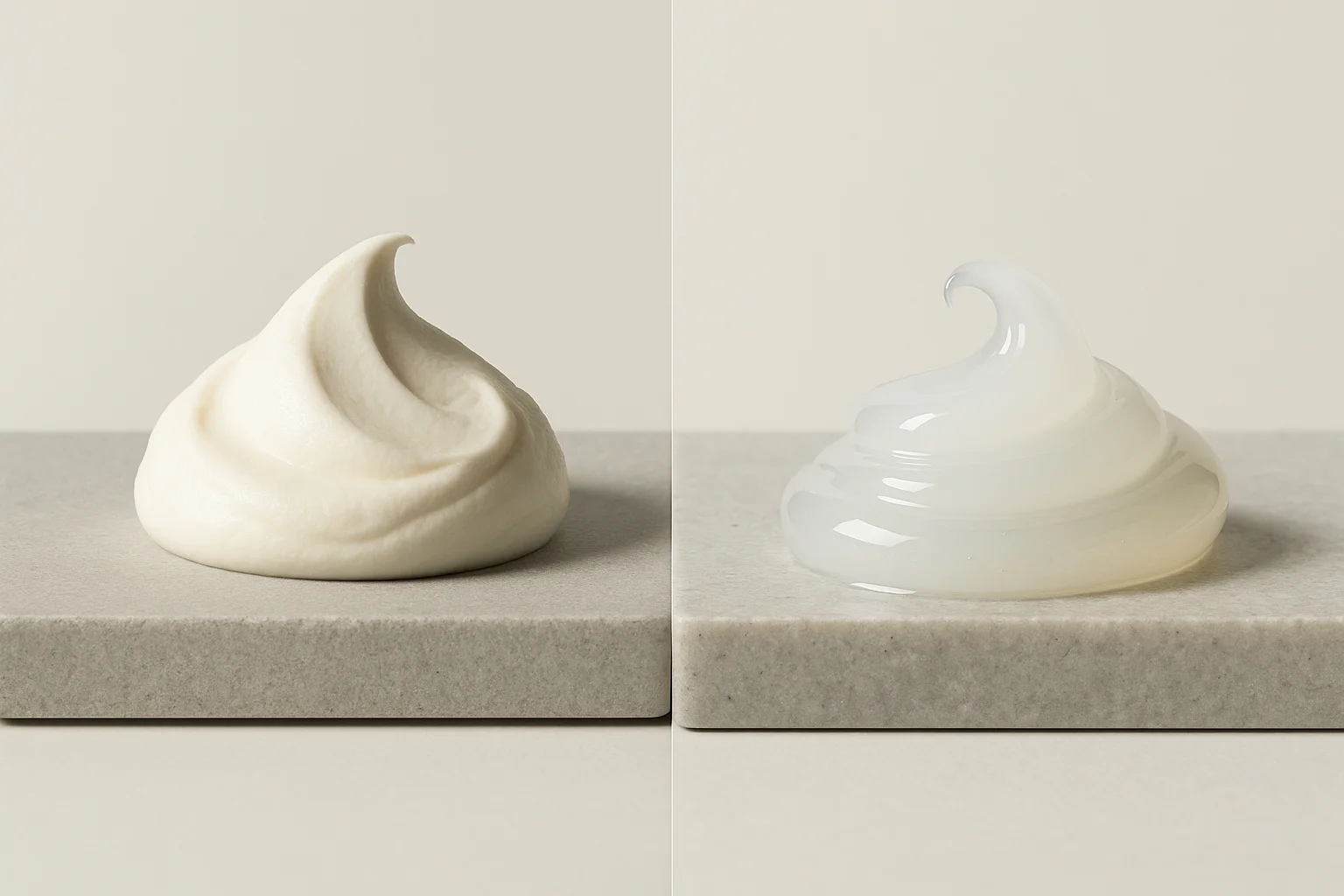
If you look around skincare shelves, you'll often see two formulations—'rich cream' and 'gel cream'—placed side by side even within the same line. Both are creams applied at the final step, but their texture, application feel, and lasting sensation differ. If you're confused about which criteria to use when choosing, the first step is to understand where the difference in formulation comes from.
Rich Cream and Gel Cream, What's the Difference
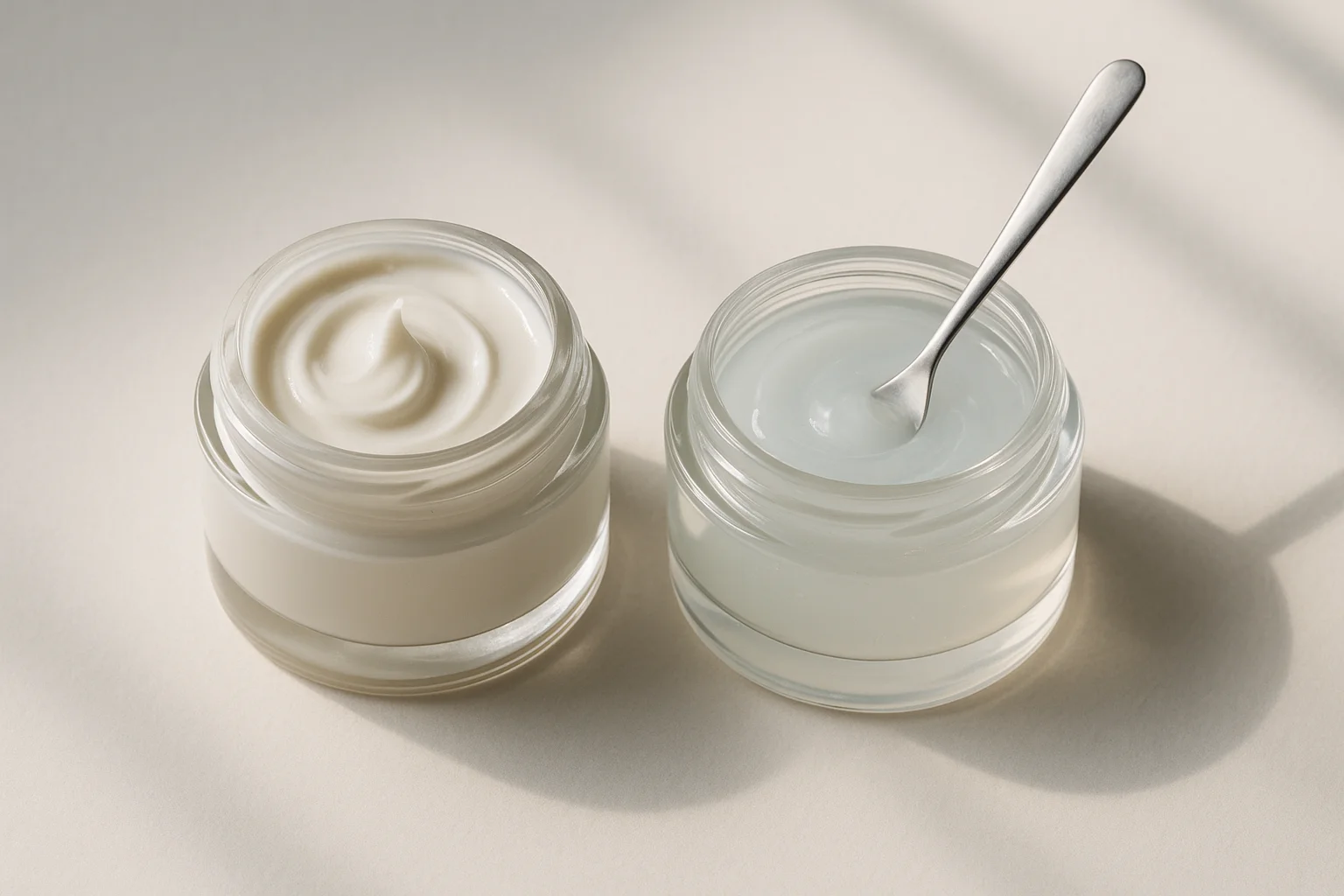
The biggest difference between the two formulations lies in the ratio of oil to water, and the structure that holds it together. Rich creams have a relatively high proportion of oil components such as squalane, shea butter, and plant-derived oils, giving a feeling of an oil film sitting on the skin's surface. Since this oil plays a role in holding moisture in so it doesn't escape, it can be helpful in states of severe dryness or weakened barrier function.
Gel creams, on the other hand, are characterized by a relatively high water content and low viscosity, giving a light and refreshing absorption when applied. They are often designed mainly with moisture-retaining ingredients like trehalose and betaine, and are chosen when one wants to maintain moisture without a heavy oil-film feel. However, since the oil coating is relatively thin, moisturizing may feel insufficient in states of severe dryness.
In other words, it's not a matter of 'which formulation is better,' but rather the correct approach is to see it as a concept where the necessary ratio of oil to water differs depending on the environment and condition the skin is in.
| Category | Rich Cream | Gel Cream |
|---|---|---|
| Texture·Application feel | Dense application with an oil-film feel | Light and refreshing absorption |
| Main formulation ingredients | Squalane·shea butter·plant-derived oils | Moisture ingredients such as trehalose·betaine |
| Suitable condition | States of dryness·weakened barrier | When wanting moisture without a heavy oil-film feel |
| Points to note | May feel heavy on areas with a lot of sebum | May feel insufficiently moisturizing if dryness is severe |
Breaking it down by season and skin condition
In periods like autumn and winter, when the air is dry and indoor humidity drops due to heating, the skin's moisture evaporates faster, making tightness, flaking, and fine lines more noticeable. During such times, a rich cream with a thick oil film can be a more suitable choice, as it helps prevent moisture loss.
Conversely, during periods when temperature and humidity rise together after spring, or for skin that naturally produces a lot of sebum, a heavy oily feel may feel stuffy or lead to breakouts, so a light formula like gel cream may feel more comfortable.
Also, even within the same season, the level of care needed can vary greatly depending on indoor and outdoor heating/cooling environments, individual skin type, and that day's condition. If abnormal reactions or breakouts continue, it is safer to consult a dermatologist or specialist, separate from simply changing the formula.
Routine management organized step by step
Step one, check your skin condition first after cleansing. If there is severe tightness and flaking, this is a sign that oil needs to be supplemented, so it's good to lean toward rich cream in step two.
Step two, finish moisture and condition care first with toner and ampoules, then finish with cream in the last step, deciding how much oil is needed that day. You can adjust flexibly within a single day, going lighter in the morning and denser in the evening.
Step three, if you're worried about the oil burden, a 'partial use' strategy is more realistic than applying a thick layer of rich cream to the whole face — layering it only on especially dry areas like the cheeks and eye area, while using gel cream or just a small amount on sebum-heavy areas like the T-zone.
Step four, when seasons change, rather than switching formulas all at once, it's a way to reduce irritation to layer both for about two to three weeks, watch how your skin reacts, and gradually shift the balance.
- 1Step 1Check skin condition for tightness and flaking after cleansing
- 2Step 2Finish condition care with toner and ampoule, then finish with cream, adjusting oil amount by time of day
- 3Step 3Use rich cream on dry areas and gel cream on the T-zone, applied partially
- 4Step 4During seasonal transitions, layer both for two to three weeks while gradually shifting the balance
In the end, what's needed is the 'finishing step that suits my skin'
Once the criteria for choosing a formula are clear, the next step is to look at what ingredients are contained in that cream. 에르쯔틴 리제너레이티브 실트 크림 is a rich-type cream used as the final finishing step, formulated together with lipid-series ingredients that make up the skin barrier, such as ceramide NP, cholesterol, and palmitic acid, along with oil ingredients like squalane, shea butter, argan kernel oil, and olive oil. On top of this, adenosine, a wrinkle-improvement functional ingredient reviewed and notified by Korea's Ministry of Food and Drug Safety, is added, making it worth considering as an option when you want to address both elasticity care and moisturizing finish during periods of pronounced dryness.
The final step, which cream to finish with
Once you've established clear criteria for choosing a texture, the next step is to look at what ingredients are actually in that cream. 에르쯔틴 리제너레이티브 실트 크림 is a rich-type cream used as a final finishing step, formulated with lipid-based ingredients and oil components that make up the skin barrier, along with adenosine, an ingredient notified for wrinkle-improvement functionality. It's worth considering when you want to address both elasticity care and moisture finishing during periods when dryness stands out.
Frequently asked questions
- Is it okay to use a rich cream in summer?
- It's not something that must be avoided simply because it's summer. However, as temperature and humidity rise, the oily feel can seem heavy or lead to breakouts, so it's recommended to use it sparingly and spread thinly only on areas that are particularly dry, such as around the eyes or cheeks. If you spend long hours in strongly air-conditioned indoor spaces, it may actually help, so it's best to judge flexibly based on your skin's condition.
- Does a gel cream lack moisturizing power?
- It's true that gel creams have a thinner oil coating than rich creams, but if they contain moisture-retaining ingredients like trehalose or betaine, they can help maintain a light yet moisturized feel. However, in cases of severe dryness, using it together with a formulation that has added oil components can help supplement it.
- When is it good to switch creams by season?
- Rather than a fixed date, it's better to judge based on your skin's response. If tightness or flaking increases, gradually shift toward a more oil-rich formulation; conversely, if shine or breakouts increase, shift toward a lighter formulation, but it's recommended to overlap the two for about two to three weeks and observe the changes.
- I want to reduce the oily burden while still keeping up moisture—is there a way?
- Instead of applying thickly over the whole face, there's a method of layering it partially only on areas that are particularly dry. Alternatively, you can thoroughly care for moisture and skin condition at the toner and ampoule stage after cleansing, then finish with a thin layer of cream, adjusting the oily feel in that order.
Reviewed by 아비쥬의원 의료진. (August 31, 2026)
Related products
 리제너레이티브 실트 크림Buy
주름 개선 기능성 화장품 · 탄력과 장벽을 함께 보는 리치 크림