
Ingredients That Work Well With Shea Butter — How to Read the Section Next to Oils in the Ingredient List
Shea butter fills in oiliness on its own, but the role a cream plays depends on what section is placed 'next to' shea butter in the ingredient list. The practical standard is to check in order whether barrier lipid ingredients (ceramides, cholesterol, fatty acids), moisture-retention ingredients (panthenol, betaine, trehalose), and elasticity-targeted functional ingredients are designed together.
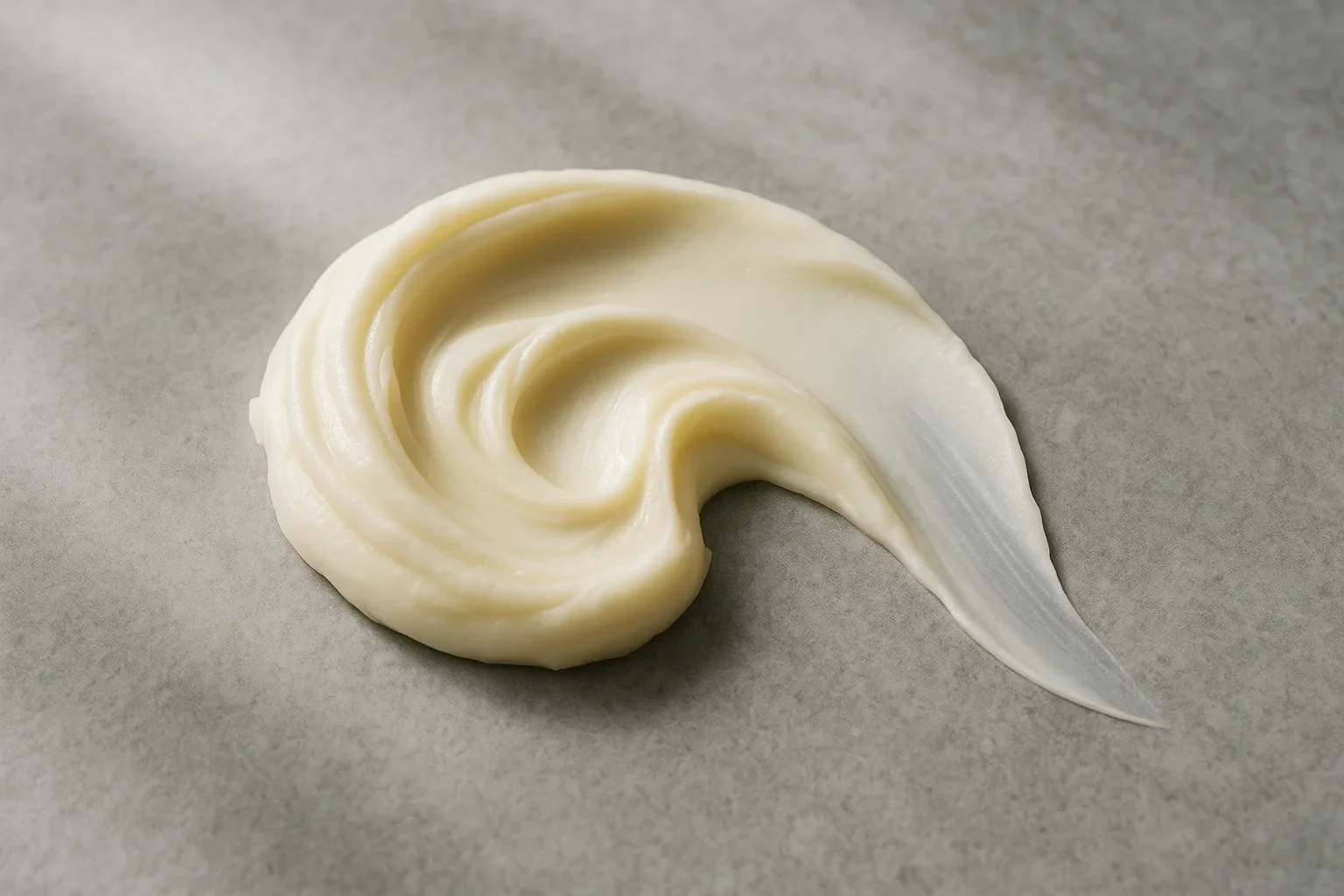
Shea butter is an oil ingredient commonly listed toward the back of the ingredient list, near the section where content amounts decrease. Since it's an oil-based ingredient that doesn't dissolve in water, it plays the role of sitting on top like a thin film in the final step to prevent moisture from evaporating—this role itself is simple. The issue isn't 'how much shea butter is included' but rather 'what ingredients are designed together with shea butter.'
- 1Check the Position of the Oil SectionFind the section where shea butter, squalane, etc. are listed
- 2Check the Barrier Lipid SectionWhether ceramide, cholesterol, fatty acid types are included
- 3Check the Moisture-Retention SectionPanthenol, betaine, trehalose, etc.
- 4Check the Functional SectionElasticity-care ingredients like adenosine, tripeptides, etc.
- 5Determine the Routine StepThe higher the oil content, the later it should be used in the routine
What Shea Butter Can and Cannot Do
Oil-based ingredients like shea butter work by forming a thin film on the skin's surface that reduces water evaporation. This mechanism can help maintain moisture by itself, but the oil film mainly plays a role in 'trapping' moisture rather than changing the lipid structure or elastic fibers deep within the skin. So while a formula heavy in oils alone may feel smooth upon application, changes that appear over time—such as fine lines or loss of elasticity—require a separate approach.
This is where the way you read a full ingredient list changes. Rather than looking at the listed position of shea butter alone, it's more useful to divide the list into sections and check what kinds of ingredients appear before and after the oil-based section that shea butter belongs to.
Three sections worth checking alongside shea butter
The first is the barrier lipid section. Ceramides, cholesterol, and fatty acids (such as palmitic acid) belong to the same family of lipids that make up the skin's stratum corneum, and they help retain the moisture trapped by the oil film from the inside as well. If shea butter is the ingredient that forms a film on the outside, this section can be understood as the ingredients that work together from the inside.
The second is the moisture retention section. Ingredients such as panthenol, betaine, trehalose, and glycerin work by holding onto moisture, and when they appear alongside the oil-based section, it can be seen as a sign that the oil film and moisture-retaining ingredients were designed to work together.
The third is the functional section aimed at elasticity. Adenosine is a notified ingredient used as evidence when a product is reviewed as a functional cosmetic for wrinkle improvement, and the three peptides (sh-Oligopeptide-1, rh-Oligopeptide-2, rh-Polypeptide-1) are a category of ingredients included in formulations designed for elasticity care. No matter how well-composed the oil-based section is, if this section is missing, the product ultimately ends at moisturizing.
| Section | Representative Ingredients | Role |
|---|---|---|
| Oil-based section | Shea butter, squalane, argania kernel oil | Oils that prevent moisture from evaporating |
| Barrier lipid section | Ceramide NP, cholesterol, palmitic acid | Belongs to the same family as stratum corneum lipids, working together from the inside |
| Moisture retention section | Panthenol, betaine, trehalose | Moisturizing and conditioning care that holds onto water |
| Functional section | Adenosine, three peptides | Designed for wrinkle-improvement functionality and elasticity care |
Points to watch when reading the listed order
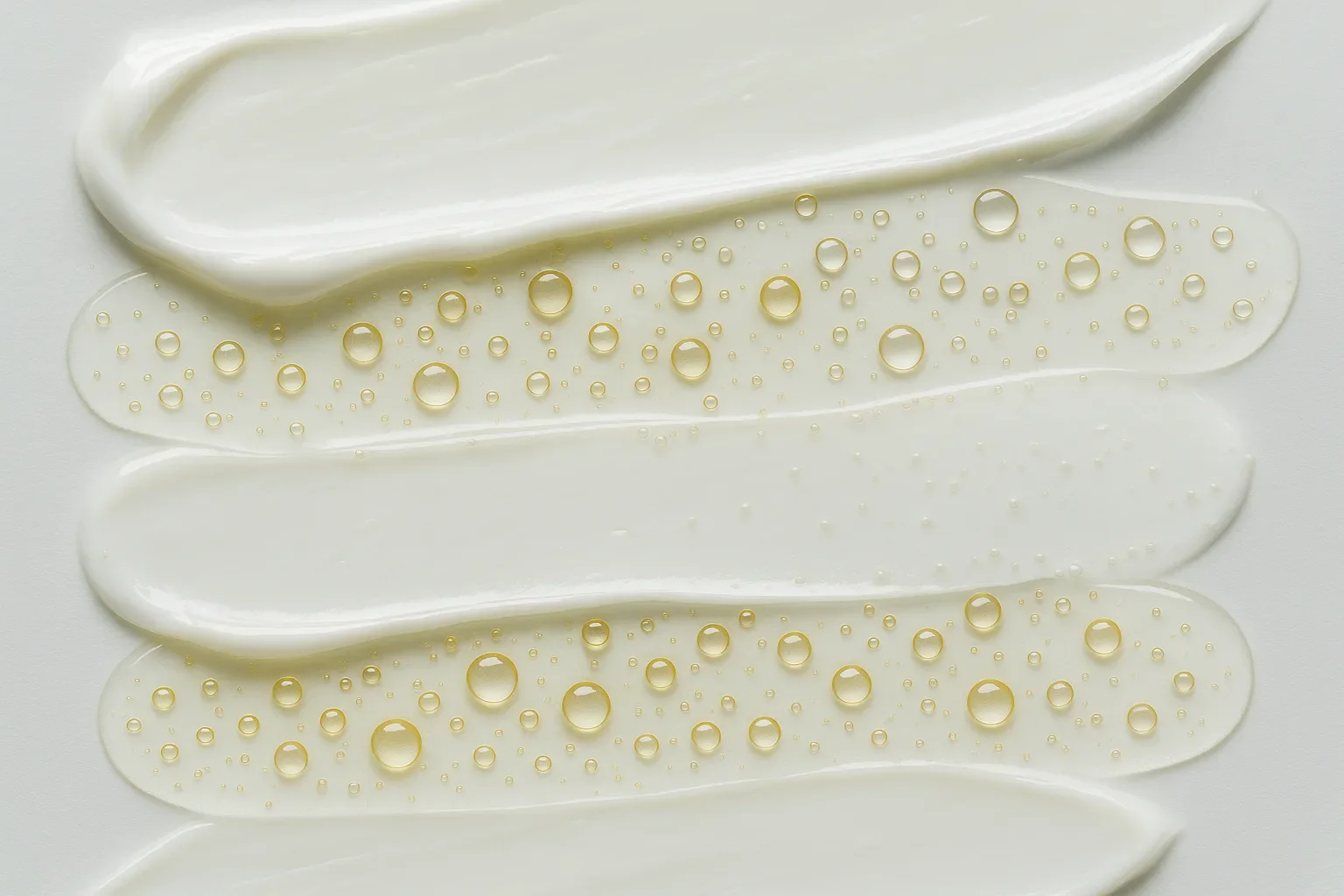
A full ingredient list is arranged in order of highest to lowest content, but for lower-content ingredients, the listed order can vary, making it difficult to determine amounts from order alone. For this reason, checking 'which sections are included together' is a more reliable standard than focusing on the position of a single ingredient. For the same reason, information that claims effects based on specific numbers or concentrations should be viewed with caution.
Priorities to consider by skin condition and timing
During seasonal transitions when dryness is pronounced, or periods with frequent heating and cooling, it helps to first check whether a barrier lipid section is present alongside the oil section. If tightness is felt before any sense of oiliness, it's also worth checking the proportion of the moisture-retention section. On the other hand, if you're starting to notice changes in skin texture or elasticity compared to before, it's more practical to first check whether a functional section targeting elasticity—beyond the oil and barrier sections—is included.
Steps for applying this to your routine
Step 1, open the full ingredient list of a cream containing shea butter and locate the position of the oil section. Step 2, check whether barrier lipid ingredients and moisture-retention ingredients are present around it. Step 3, check whether a separate functional section aimed at elasticity (approved functional ingredients, peptides) is included. Step 4, decide at which stage of your routine to use this cream—creams with higher oil content are generally used as the final finishing step in skincare.
The final step: which cream to finish with
By these standards, ARZTIN Regenerative Silt Cream is a formulation where the oil section—shea butter, squalane, and argan kernel oil—isn't the whole story. Within the same ingredient list, you can also find a barrier lipid section with ceramide NP, cholesterol, and palmitic acid, a moisture-retention section with panthenol, betaine, and trehalose, as well as adenosine—the basis for its status as an officially approved wrinkle-improvement functional cosmetic—and three types of peptides used in elasticity-care design. It can serve as a reference case for directly comparing what sections are arranged alongside the oil section when choosing a rich-type cream for the final step of your routine.
사용 전과 비교해 사용 직후 통계적으로 유의하게 개선됐습니다. 개선율(%)은 사용 전 대비 변화량의 비율이며(|사용 후−사용 전|÷사용 전×100), 개인차가 있을 수 있습니다.
출처 P&K 피부임상연구센타 인체적용시험 결과보고서 (PNK-24610-RD1R2, 2024)
사용 전과 비교해 사용 직후 통계적으로 유의하게 개선됐습니다. 개선율(%)은 사용 전 대비 변화량의 비율이며(|사용 후−사용 전|÷사용 전×100), 개인차가 있을 수 있습니다.
출처 P&K 피부임상연구센타 인체적용시험 결과보고서 (PNK-24610-RD1R2, 2024)
Frequently asked questions
- Is a cream with only shea butter okay?
- Shea butter alone can help by forming an oil film that reduces water evaporation. However, to address changes that build up over time, such as elasticity or fine lines, it's better to check whether barrier lipids or elasticity-care ingredients are also designed in.
- Can I judge the content amount just by the position of shea butter in the ingredient list?
- For low-content ingredients, the listing order can vary, so it's hard to judge exact content just by position. Rather than the order of a single ingredient, looking at the entire section included together is a more practical standard.
- Is a shea butter cream with ceramides always better?
- Having barrier lipid ingredients like ceramides together can help in terms of moisturizing, but effects vary by individual, and it's important to look at the overall formulation design together.
- When is it best to use shea butter cream, morning or evening?
- Rich-type creams with high oil content are generally used as the final step of a skincare routine, and the timing and amount should be adjusted according to skin condition.
- What should I do if trouble occurs after applying?
- If redness or irritation persists during use, stop using the product, and if symptoms continue for a long time, it is recommended to consult a dermatologist or other specialist.
Related products
 리제너레이티브 실트 크림Buy
Anti-wrinkle functional cosmetic · A rich cream that addresses both elasticity and barrier care
- 리제너레이티브 실트 크림Buy
Anti-wrinkle functional cosmetic · A rich cream that addresses both elasticity and barrier care
- 리제너레이티브 실트 크림Buy
Anti-wrinkle functional cosmetic · A rich cream that addresses both elasticity and barrier care
- 리제너레이티브 실트 크림Buy
Anti-wrinkle functional cosmetic · A rich cream that addresses both elasticity and barrier care
- 리제너레이티브 실트 크림Buy
Anti-wrinkle functional cosmetic · A rich cream that addresses both elasticity and barrier care