
Shea Butter Principle and Characteristics — The Role of Oil Ingredients in the Full Ingredient List
Shea butter is a plant-based fat that remains semi-solid at room temperature, forming an oil film on the skin's surface that helps prevent moisture from evaporating. In the full ingredient list, understanding the actual formulation intent requires looking not just at the listing order but also at which ingredient section it is placed alongside. In rich-type creams, the key point is where shea butter is positioned relative to barrier lipids and elasticity-care ingredients.
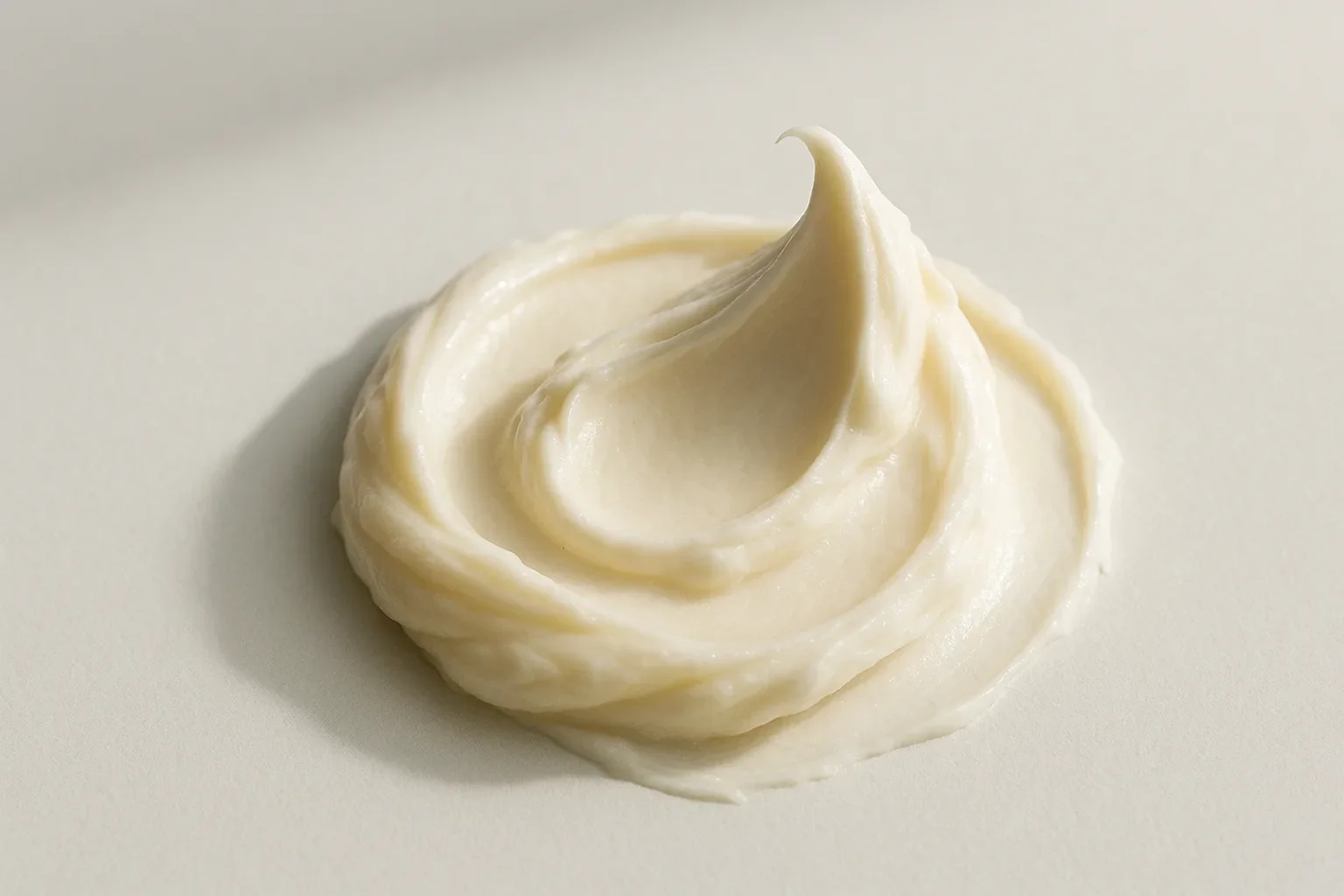
The name shea butter is familiar, but it is not widely known exactly what role this ingredient is designed to play within the full ingredient list. Shea butter is a plant-based fat obtained from the seeds of the shea tree, having a texture close to solid at room temperature and gradually melting and spreading at skin temperature.
Because of this physical property, shea butter is often included in rich-type creams used as a finishing step rather than in lighter lotions. However, rather than looking at shea butter alone, it is more useful to also read which ingredient section it is placed alongside in the full ingredient list in order to understand the actual formulation purpose of this ingredient.
By what principle does shea butter work?
Shea butter is not an ingredient that gets absorbed into the skin and produces something internally. Instead, it works by forming a thin oil film on the skin's surface, slowing the rate at which the moisture beneath it evaporates to the outside. This mode of action is often summarized as 'an oil that holds moisture in place so it doesn't evaporate.'
In the full ingredient list, shea butter is often placed in a similar section alongside other oil-based ingredients such as squalane, argan kernel oil, and olive oil. This is usually not a coincidence, but rather because multiple oil ingredients are combined by design to complement each other's texture and feel.
There's something to be careful of here. Ingredient lists are, in principle, ordered by concentration from highest to lowest, but for ingredients with low formulation ratios, the listing order may not exactly match their actual formulation weight. Rather than concluding that shea butter plays a minor role simply because it appears later in the list, it's more accurate to look at the whole section of ingredients placed together with it.
Why shea butter should be viewed differently depending on skin condition and season
Even the same shea butter can play a different perceived role depending on skin condition. During seasonal transitions when dryness intensifies, or in seasons with strong heating or air conditioning, the skin's surface oil film tends to thin out, so formulations containing oil ingredients like shea butter can be more helpful.
Conversely, during seasons or conditions when the skin's own oil is sufficient, it may be more appropriate to choose a lighter formulation over a rich cream containing shea butter. In other words, the need for shea butter changes with season and condition—using more is not always better.
As skin ages, both oil secretion and moisture-holding capacity tend to decline together. During this stage, formulations that combine ingredients supplementing the oil film with elasticity care may be more practical from a management standpoint.
Where should formulations containing shea butter be placed in a step-by-step routine?
Formulations containing high-viscosity, richly oily ingredients like shea butter are generally placed at the very last step of a skincare routine. If moisture-focused formulations like toner and essence are absorbed first, followed by an oil film layered on top, each formulation is more likely to fulfill its intended role.
In the morning, a light formulation alone may be enough on some days, but in the evening, it is commonly recommended to use a cream containing shea butter as the last step to supplement the moisture and oil lost throughout the day.
However, formulations with high oil content can feel heavy, so it's best to start with a small amount and adjust by spreading it evenly over the entire face. The amount used may vary depending on individual skin type and the day's condition.
Where shea butter is placed alongside other ingredients in the full ingredient list
To properly understand the role of shea butter, it helps to check whether this ingredient appears alone or is placed in the same section as barrier lipid ingredients or elasticity care ingredients. A formulation containing a large amount of oil ingredients alone should be read differently from one designed with barrier lipids, moisturizing ingredients, and elasticity care ingredients together.
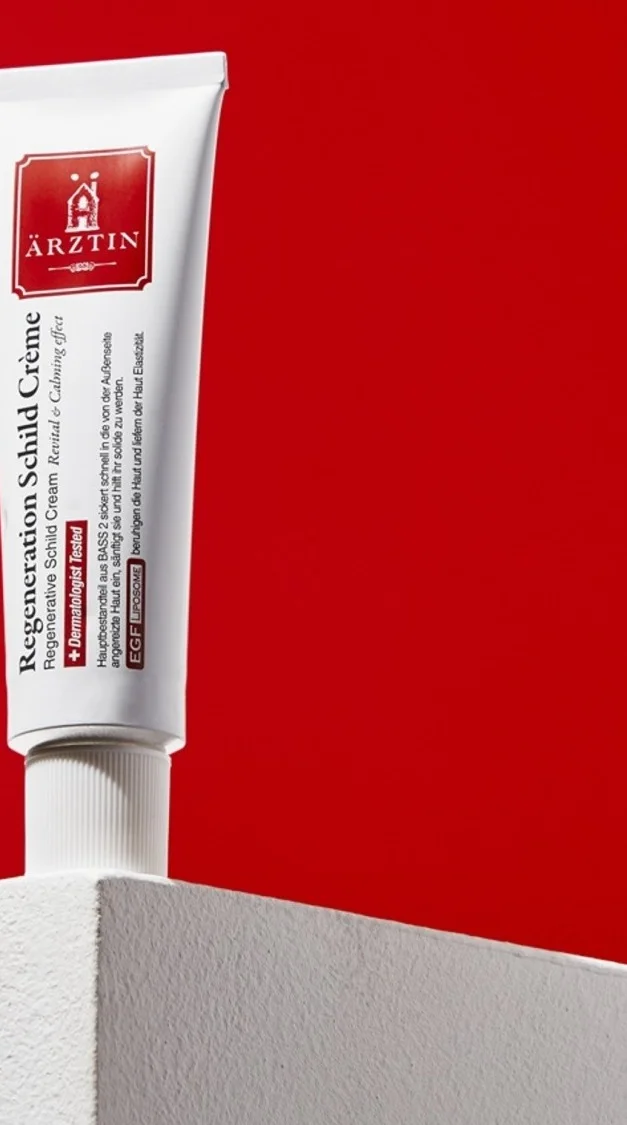
Looking at the full ingredient list of the ARZTIN Regenerative Silt Cream, shea butter is found in a section similar to squalane and argan kernel oil, and in the section before that, barrier lipid ingredients such as ceramide NP, cholesterol, and palmitic acid are listed together with adenosine and three types of peptides. This product is a functional cosmetic for wrinkle improvement (certified), and its officially notified functional ingredient is adenosine.
In other words, in this cream, shea butter takes on the role of forming an oil barrier, while the elasticity-care design is handled by a separate ingredient section — understanding this structure is the correct way to accurately read the full ingredient list. Making a habit of reading the full ingredient list divided into sections like this allows you to look at the overall design together, rather than judging a product based on oil content alone.
| Section | Representative Ingredients | Main Role |
|---|---|---|
| Oil Section | Shea Butter, Squalane, Argania Spinosa Kernel Oil | Forms an oil barrier to prevent moisture loss |
| Barrier Lipid Section | Ceramide NP, Cholesterol, Palmitic Acid | Belongs to the same lipid family that makes up the skin barrier |
| Elasticity Care Section | Adenosine, 3 Types of Peptides | Wrinkle-improvement functional ingredient approved by regulators, elasticity care design |
The final step — which cream should you finish with?
Oil ingredients like shea butter play a role in locking in moisture during the final step, but changes that accumulate over time, such as elasticity or fine lines, are difficult to address with oil alone. That's why, when choosing a finishing cream, it becomes a practical criterion to check what ingredients are designed alongside the oil section. ARZTIN Regenerative Cilt Cream includes an oil section of shea butter, squalane, and argania spinosa kernel oil, along with adenosine — a wrinkle-improvement functional ingredient approved by regulatory review — and 3 types of peptides, all designed within the same full ingredient list, making it a reference point when choosing a rich-type finishing cream.
Frequently asked questions
- If shea butter appears toward the end of the ingredient list, does that mean its content is low?
- In principle, ingredients are listed in order of concentration, but in sections with lower blending ratios, the listed order may not exactly match the actual proportion. Rather than judging solely by position, it helps to also look at which ingredient section it is grouped with.
- Can creams containing shea butter be used on oily skin as well?
- Since shea butter is an ingredient that forms an oil film, it may feel heavy on skin that already has sufficient oil. Depending on skin condition and season, one may consider adjusting the amount used or combining it with lighter formulations, and individual differences may apply.
- Do shea butter and ceramide serve the same role?
- Both are related to moisturizing, but their roles differ. Shea butter is an oil ingredient that forms a film on the surface, while ceramide is classified in the same category as lipids that make up the skin barrier. They are also typically listed in different sections of the full ingredient list.
- At what step should products containing shea butter be applied?
- Since it tends to have a higher viscosity and oiliness, it is generally used as the final step in a skincare routine. It is commonly recommended to first let water-based formulations such as toners and essences absorb, then finish with this type of product.
- What should I do if skin trouble or irritation persists for a long time?
- Since reactions to specific ingredients can vary by individual, if redness or irritation persists for a long time after use, it is recommended to stop using the product and consult a dermatologist or other specialist.
Related products
 리제너레이티브 실트 크림Buy
Anti-wrinkle functional cosmetic · A rich cream that addresses both elasticity and barrier care
- 리제너레이티브 실트 크림Buy
Anti-wrinkle functional cosmetic · A rich cream that addresses both elasticity and barrier care
- 리제너레이티브 실트 크림Buy
Anti-wrinkle functional cosmetic · A rich cream that addresses both elasticity and barrier care
- 리제너레이티브 실트 크림Buy
Anti-wrinkle functional cosmetic · A rich cream that addresses both elasticity and barrier care
- 리제너레이티브 실트 크림Buy
Anti-wrinkle functional cosmetic · A rich cream that addresses both elasticity and barrier care