
Tocopherol Application Order — Checking Usage Steps via the Full Ingredient List
Tocopherol often appears toward the end of the full ingredient list, typically after oil and moisturizing ingredients. This can be read as indicating a position closer to the 'finishing step' in a skincare routine as well. However, for low-concentration ingredients, listing order can vary depending on the formulation, so it's difficult to determine concentration from order alone.
The question "When should I apply tocopherol?" isn't really about how to use a single ingredient — the answer can be found by first checking where that ingredient appears in the full ingredient list.
If you're applying a single product on its own, there isn't much to worry about regarding order. This question becomes meaningful when layering multiple formulations like toner, ampoule, and cream in a routine, and you need to decide 'at which step should the tocopherol-containing formulation be placed.'
- 1TonerArranging the water-soluble base
- 2Ampoule/SerumConcentrated functional and conditioning care ingredients
- 3CreamOil and moisture finishing, including later-listed ingredients like tocopherol
What the order of ingredients in the full ingredient list tells us
The principle of a cosmetic's full ingredient list is to list ingredients in order from highest to lowest concentration. Base water-soluble ingredients like purified water and glycerin appear toward the front, oils and waxes appear in the middle, and fat-soluble auxiliary ingredients incorporated in small amounts, like tocopherol, generally appear toward the end.
However, there's a point to note here. Among ingredients with low overall formulation amounts, the listed order can shift due to minor formulation variations at the time of manufacturing, so being listed further back doesn't always guarantee a fixed ranking. In other words, the general principle that 'listed later = lower concentration range' holds true, but it's difficult to conclude definite content differences among ingredients that are all listed toward the end.
Position Varies by Formulation Type
Since tocopherol is a fat-soluble ingredient, it tends to appear more frequently—and in a relatively earlier position—in cream, ampoule, or oil formulations that contain some amount of oil, compared to water-based toners or essences.
This is why the listed position of tocopherol can differ depending on the formulation, even within the same brand's lineup. In a water-type toner, it may appear as a minor supporting ingredient toward the end, while in an oily cream, it may appear alongside oils and waxes. Therefore, 'where tocopherol ranks' only shows the concentration ranking within that single product, and it's difficult to use it as a basis for direct comparison with products of different formulations or brands.
| Formulation Type | Tendency of Position in Full Ingredient List | Point of Use in Routine |
|---|---|---|
| Water type (toner, essence) | Appears in small amounts as a supporting ingredient toward the end | Hydration step |
| Oil-containing ampoules/serums | Often appears near oil ingredients | After the hydration step, before cream |
| Rich cream | Often appears together with oils and waxes | Final finishing step of the routine |
Usage Order by Routine Step
When dividing the routine based on the position in the full ingredient list, it can broadly be split into the toner/essence step responsible for hydration, and the cream step that adds oil and moisturizing ingredients as a finishing touch.
If a product containing tocopherol has a high oil content like a cream and is positioned toward the end of the full ingredient list, it makes sense, in line with general usage, to use it last, after the hydration step has been completed. On the other hand, if it's included in small amounts in a water-type product, it can be used together during the earlier hydration step to be absorbed along with it.
Ultimately, the standard for determining order isn't the 'name of the ingredient tocopherol' but 'the texture of the formulation containing that ingredient and its position in the full ingredient list.' Developing the habit of looking at both together is more practically helpful for organizing a routine than focusing on a single ingredient alone.
How to Fill the Final Step from an Elasticity and Wrinkle Care Perspective
Once you develop the habit of checking tocopherol's position in the full ingredient list, you naturally move on to the next question: 'What ingredient is central to the final step of the routine—the cream responsible for oil and moisture?'
At this point, it's worth examining the full ingredient list of ARZTIN Silt Cream together. This cream is a rich-type formulation used in the final step, and toward the end of its full ingredient list, alongside supporting ingredients including tocopherol, you can find adenosine—which has undergone functional efficacy review for wrinkle improvement—three peptides for elasticity care (sh-Oligopeptide-1, rh-Oligopeptide-2, rh-Polypeptide-1), and barrier lipid ingredients such as Ceramide NP, cholesterol, and palmitic acid.
In other words, it's more accurate to understand that in this cream, tocopherol doesn't act alone but rather occupies a position that helps maintain texture and moisture retention in the final step, working alongside ingredients like squalane, shea butter, and argan kernel oil that stably hold onto oils. The perceived effect may vary depending on individual skin condition and usage environment, and if any adverse reaction is felt during use, it is recommended to discontinue use and consult a dermatologist or other specialist.
The Final Step — Which Cream Should You Finish With?
The habit of checking an ingredient's position on the full ingredient list doesn't end with simply determining the order of your routine. The next step is to distinguish 'whether the cream used in the final step aims only to maintain oils, or whether it also covers elasticity and wrinkle care.' As a rich-type finishing cream, ARZTIN Schild Cream places adenosine—which has received functional wrinkle-improvement certification—and three types of elasticity-care peptides at the center of its full ingredient list, alongside a supporting composition that includes tocopherol, making it worth referencing when checking your final step.
Frequently asked questions
- Should tocopherol only be applied at the end of a cream step?
- It depends on the formulation of the product containing tocopherol. For water-type products, it's generally used during the hydration step, while for creams with an oily texture, it's typically used as a finishing step. It's more accurate to check the position in the full ingredient list for each individual product.
- If it's listed near the end of the ingredient list, does that mean the concentration is very low?
- There is a general tendency for concentration ranges to decrease toward the end of the list, but the detailed order among low-concentration ingredients can vary depending on when they're incorporated into the formula, making it difficult to determine exact concentration differences from order alone.
- Can I layer products that both contain tocopherol?
- If the formulations differ, layering them is generally a normal routine approach. However, if you feel irritation or breakouts in a specific area, it's best to reduce or stop use and monitor the progress.
- Does the effect disappear if I don't follow the tocopherol application order?
- The order is a reference standard that can affect absorption feel or usage experience, and not following a set order doesn't mean the ingredient's role disappears. There may be individual differences.
- What should I do if skin trouble continues?
- If redness or irritation after using a specific product recurs or persists for a long time, it's recommended to consult a dermatologist or other specialist rather than switching products based on self-judgment.
Related products
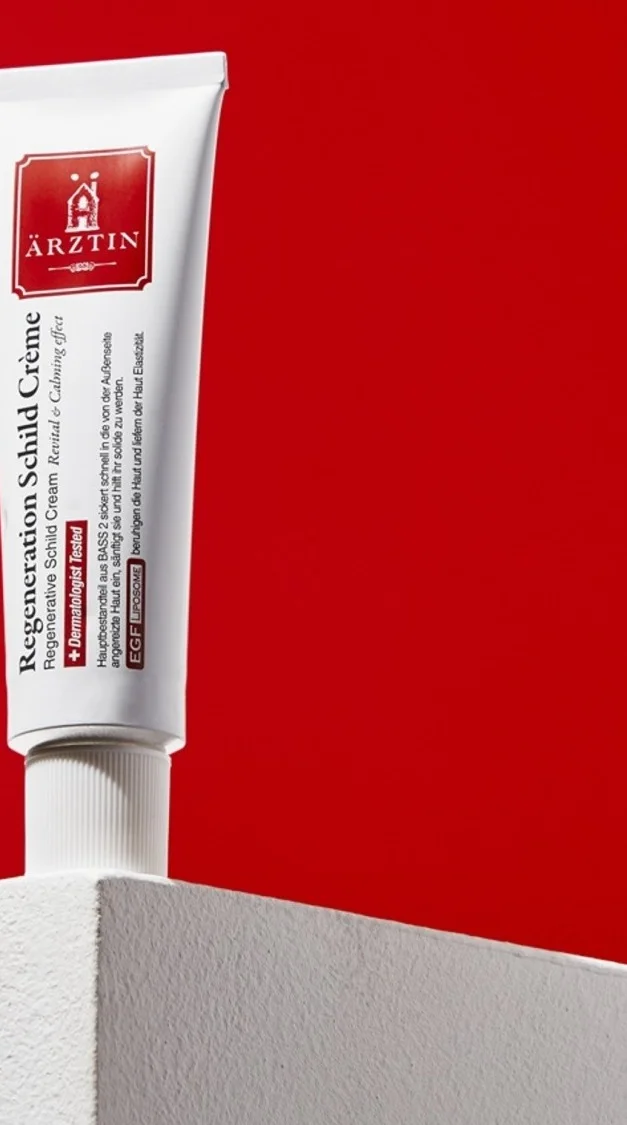 리제너레이티브 실트 크림Buy
Anti-wrinkle functional cosmetic · A rich cream that addresses both elasticity and barrier care
- 리제너레이티브 실트 크림Buy
Anti-wrinkle functional cosmetic · A rich cream that addresses both elasticity and barrier care
- 리제너레이티브 실트 크림Buy
Anti-wrinkle functional cosmetic · A rich cream that addresses both elasticity and barrier care
- 리제너레이티브 실트 크림Buy
Anti-wrinkle functional cosmetic · A rich cream that addresses both elasticity and barrier care
- 리제너레이티브 실트 크림Buy
Anti-wrinkle functional cosmetic · A rich cream that addresses both elasticity and barrier care