
Which Skin Types Suit Olive Oil? — Checking Suitability by Skin Type via the Full Ingredient List
Olive oil is an oil-based ingredient that forms a thin film on the skin's surface to slow moisture loss, which can be especially helpful for dry skin or skin prone to disrupted oil-water balance. However, for oily skin with heavy sebum production or skin that easily develops clogged pores, it's good to also check the texture and absorption design of the other ingredients formulated alongside it. Checking olive oil's position and accompanying ingredients on the full ingredient list can help gauge whether it suits your skin type.
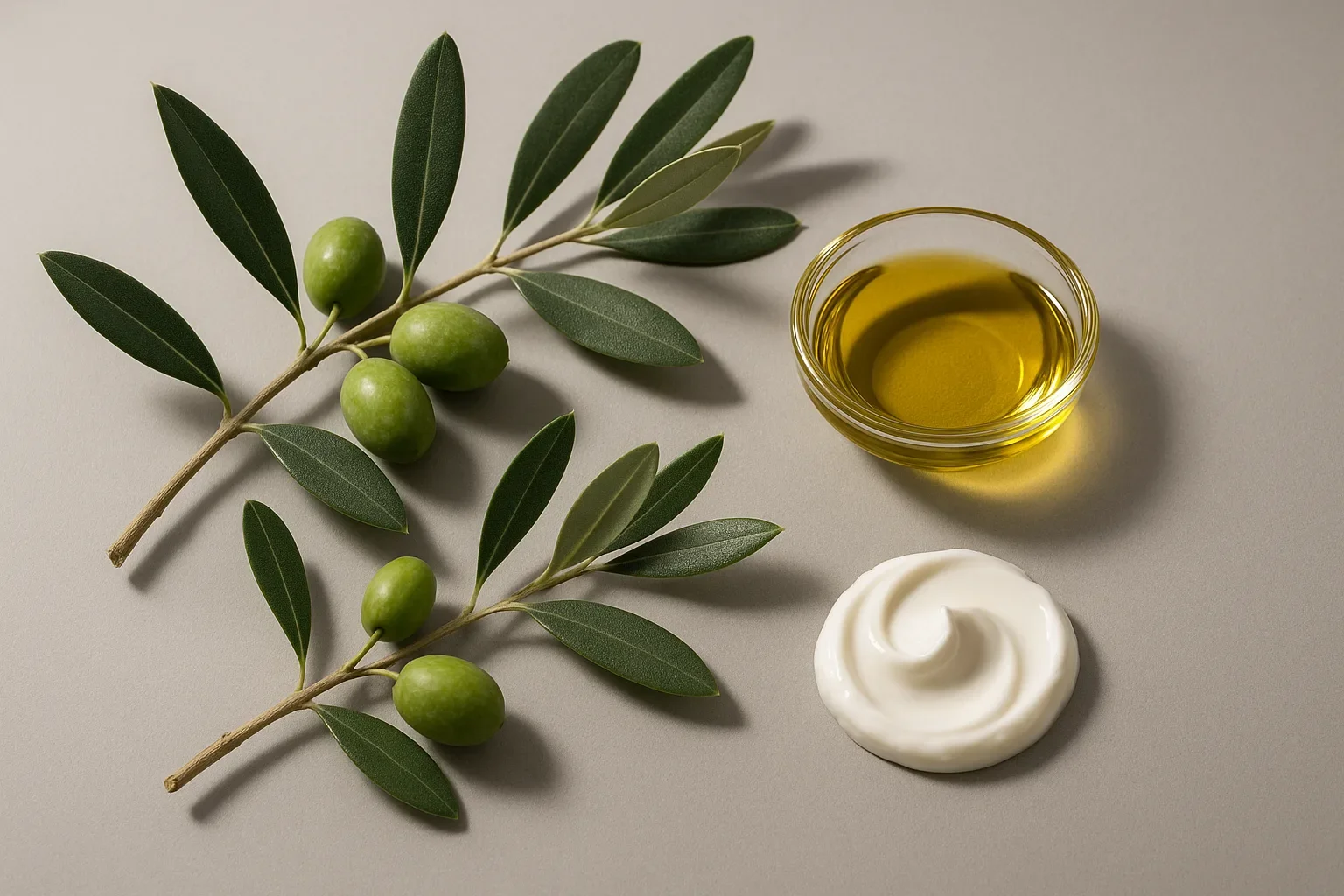
"Will a cream containing olive oil suit my skin?" To answer this question, you need to look not only at olive oil's own characteristics but also at which other ingredients the product formulates olive oil together with. Even the same olive oil can feel light or heavy depending on the full ingredient design.
This article summarizes which skin conditions and types olive oil, as an oil-based ingredient, tends to suit better, and what to check on the full ingredient list.
- 1TonerSupplies moisture to the skin
- 2Ampoule/SerumAbsorption of concentrated care ingredients
- 3Oil-based creamDelays moisture loss with ingredients like olive oil
How olive oil works on the skin
Olive oil is classified as one of the representative plant-based oil ingredients in cosmetics. It plays a role in forming a thin film on the skin's surface to slow down the rate of moisture evaporation, and this type of oil is commonly called an 'emollient'.
This action itself is not limited to a specific skin type, but the thickness of the oil film left on the skin and the feeling of absorption vary greatly depending on other ingredients blended together (lightweight silicone oils, waxes, thickeners, etc.). That's why, when discussing 'which skin type olive oil suits,' one should look at the overall formulation rather than olive oil alone.
Why it should be viewed differently by skin type and condition
For dry skin, or skin whose oil-water balance is easily disrupted by seasonal changes or heating/cooling, oils like olive oil may help slow moisture loss. In particular, if blended with barrier lipid ingredients such as ceramides or cholesterol, one can expect a structure where the oil forms a film on the outside while the barrier components organize the texture from within.
Conversely, oily skin with active sebum secretion or skin prone to frequent troubles may react relatively sensitively to oils in general. In this case, rather than avoiding olive oil altogether, it is more practical to check where olive oil appears in the order of the full ingredient list and how many other oils and waxes are blended together. The further back an ingredient appears in the listing, the lower its content is presumed to be, but since the ordering of low-content ingredients can vary by product, it is difficult to treat this as an absolute standard.
By age group, during periods when the skin thins and both oil and water retention capacity decline together, there are more cases where a light lotion alone does not resolve the feeling of tightness. During such periods, a richer formulation designed with both oil and elasticity-care ingredients together, used as a finishing step, may suit better.
3 things to check in the full ingredient list
First, the position of olive oil in the listing. If it appears after ingredients like purified water or glycerin that typically come first, it may have been blended in a relatively small proportion. However, this is only a reference standard, and it should be considered alongside the fact that the order of low-content ingredients can vary.
Second, the types of oils blended together. If oils with different absorption feels, such as squalane, shea butter, or argan kernel oil, are included together, the overall feel of use will differ from olive oil alone. It's good to check whether several heavy oils overlap, or whether they are balanced with lighter oils.
Third, what functions, besides oil, the accompanying ingredients are aimed at. Depending on whether the ingredients are intended for moisturizing and soothing, or designed for elasticity care, it can be determined whether the product is 'simply for moisturizing' or 'designed with elasticity also in mind.'
| Check item | Meaning | Points to consider |
|---|---|---|
| Listing position | If listed after purified water or glycerin, may indicate a relatively small proportion | The order of low-content ingredients can vary |
| Oils blended together | Balance between lightweight and heavy oils | If multiple oils overlap, the overall feel of use may become heavier |
| Accompanying functional ingredients | Whether aimed at moisturizing and soothing, or elasticity care | A standard for distinguishing the product's design direction |
Step-by-step usage routine
Products containing olive oil tend to have a somewhat oily texture, so they are generally placed at the last step of skincare. The order is to first fill in hydration with a toner or ampoule, then apply a cream containing oil-based ingredients on top to prevent moisture from evaporating.
For areas or seasons with severe dryness, you can adjust by applying a bit more as an extra layer, while for oily areas or in summer, applying a thin layer is another way to adjust. If troubles or abnormal reactions persist after use, it is safer to stop use and consult a dermatologist or other specialist.
If you also want to look into elasticity care
Once you've confirmed whether oil-based ingredients like olive oil suit your skin, the next point worth checking is 'whether ingredients aiming for elasticity are also designed together on top of the moisture this oil protects.' A formula that ends with just oil and moisturizing versus one that also includes ingredients aimed at elasticity care shows a difference just by looking at the full ingredient list.
ARZTIN Regenerative Silt Cream is a wrinkle-improvement functional cosmetic reviewed by the Ministry of Food and Drug Safety. According to its full ingredient list, it combines oil-based ingredients including olive oil along with adenosine, a notified functional ingredient for wrinkle improvement, and 3 types of peptides designed to target elasticity care. As a rich-type formulation meant to finish the last step, you can check directly from the full ingredient list whether it is designed so that elasticity care ingredients work together while the oil slows moisture loss.
In clinical trials, improvements were observed immediately after use in skin elasticity recovery, cheek elasticity, and jaw-area lifting indicators. These results were obtained from adult women aged 30 to 59, and individual results may vary.
Which cream should you finish with at the last step
Once you've confirmed whether olive oil suits your skin, the next point worth checking is 'whether ingredients aiming for elasticity are also designed together on top of the moisture this oil protects.'
사용 전과 비교해 사용 직후 통계적으로 유의하게 개선됐습니다. 개선율(%)은 사용 전 대비 변화량의 비율이며(|사용 후−사용 전|÷사용 전×100), 개인차가 있을 수 있습니다.
출처 P&K 피부임상연구센타 인체적용시험 결과보고서 (PNK-24610-RD1R2, 2024)
사용 전과 비교해 사용 직후 통계적으로 유의하게 개선됐습니다. 개선율(%)은 사용 전 대비 변화량의 비율이며(|사용 후−사용 전|÷사용 전×100), 개인차가 있을 수 있습니다.
출처 P&K 피부임상연구센타 인체적용시험 결과보고서 (PNK-24610-RD1R2, 2024)
사용 전과 비교해 사용 직후 통계적으로 유의하게 개선됐습니다. 개선율(%)은 사용 전 대비 변화량의 비율이며(|사용 후−사용 전|÷사용 전×100), 개인차가 있을 수 있습니다.
출처 P&K 피부임상연구센타 인체적용시험 결과보고서 (PNK-24610-RD1R2, 2024)
Frequently asked questions
- Is olive oil always unsuitable for oily skin?
- Not necessarily. However, oily skin can react sensitively to oil-based ingredients overall, so it's good to check the proportion of olive oil along with the amounts of other oils and waxes formulated together on the full ingredient list.
- If olive oil is listed near the front, does that always mean the product is heavy?
- It generally suggests a higher likelihood of higher content, but the listing order for low-content ingredients can vary by product, so it's hard to make an absolute judgment based on position alone. It's more accurate to also look at the actual sensation on skin along with the overall ingredient composition.
- I have dry skin but still feel tightness after using a product with olive oil. Why is that?
- For oil to hold in moisture, there first needs to be moisture present in the skin. It's good to check whether you're following the order of first supplying moisture with a toner or ampoule, then applying the oil-based formulation last.
- I broke out after using a cream containing olive oil. What should I do?
- The first step is to stop use immediately and monitor how your skin responds. If redness or itching persists, it's recommended to consult a dermatologist or other specialist rather than continuing use based on self-judgment.
- Can I expect elasticity-care effects just from seeing olive oil as an ingredient?
- Olive oil itself is an oil-based ingredient that slows moisture loss and is not an ingredient designed for elasticity care. If elasticity is also a concern, you should separately check whether ingredients aimed at elasticity care, such as adenosine or peptides, are formulated alongside it.
Related products
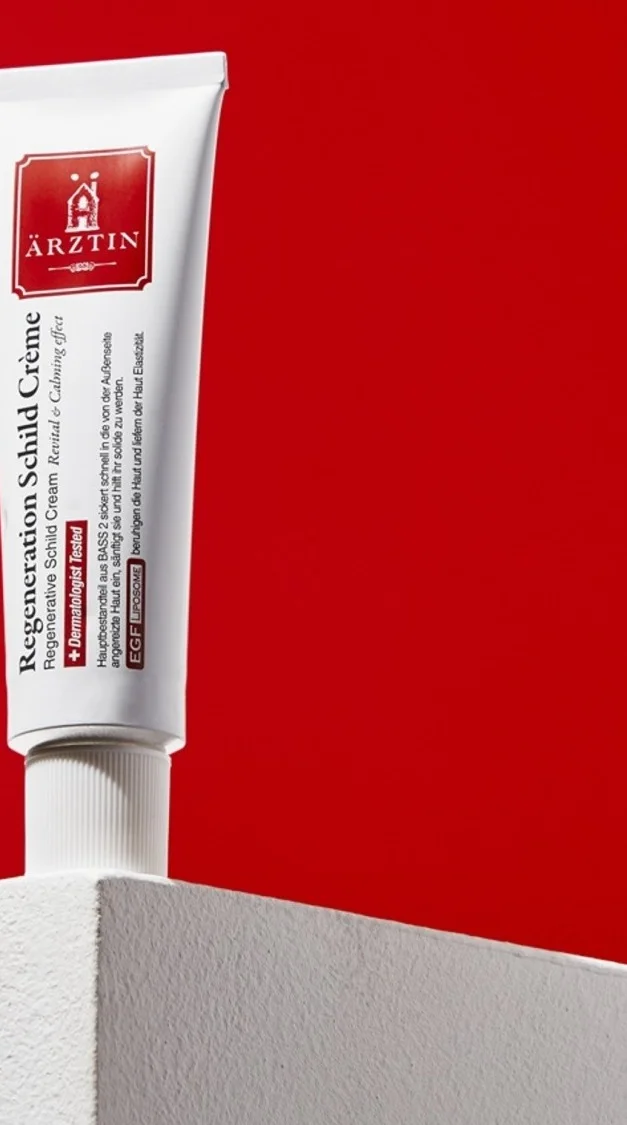 리제너레이티브 실트 크림Buy
Anti-wrinkle functional cosmetic · A rich cream that addresses both elasticity and barrier care
- 리제너레이티브 실트 크림Buy
Anti-wrinkle functional cosmetic · A rich cream that addresses both elasticity and barrier care
- 리제너레이티브 실트 크림Buy
Anti-wrinkle functional cosmetic · A rich cream that addresses both elasticity and barrier care
- 리제너레이티브 실트 크림Buy
Anti-wrinkle functional cosmetic · A rich cream that addresses both elasticity and barrier care
- 리제너레이티브 실트 크림Buy
Anti-wrinkle functional cosmetic · A rich cream that addresses both elasticity and barrier care