
Why fermented ingredients are used in cosmetics — how to read Bifida Ferment Lysate
Bifida Ferment Lysate is an ingredient obtained by refining metabolites from fermented microorganisms, and it's commonly found in cosmetic ingredient lists as a fermentation-derived ingredient for moisturizing/condition care purposes. Simply being a fermented ingredient doesn't guarantee any specific efficacy, and a more accurate approach is to look at what role it plays together with other ingredients within the overall design of the cream.
You may have come across names like 'OO Ferment Lysate' or 'OO Ferment Filtrate' while looking through a full ingredient list. Because of the image the word 'fermentation' evokes, it's easy to assume it's a good ingredient without further thought, but it's worth checking exactly what was fermented and what position it occupies within the cosmetic formulation.
To state the conclusion first, a fermented ingredient is not, in itself, a category that guarantees a special efficacy—it is a name that refers to 'the way the raw material was obtained.' Even with the same fermented ingredient, its actual role can only be gauged by looking at it together with the design of the other ingredients in the cream as a whole.
- 1Microbial CulturingFermenting yeast, lactic acid bacteria, etc. in a specific medium
- 2Formation of Fermentation BrothFormation of a culture broth containing metabolites
- 3Filtration and RefinementProcessed into a ferment filtrate or ferment lysate
- 4Formulation into Full IngredientsFormulated into creams and the like for hydration and skin-conditioning purposes
What exactly do fermented ingredients refer to?
In cosmetic raw materials, 'fermentation' refers to a method of obtaining a raw material through a process in which microorganisms (such as yeast or lactic acid bacteria) are cultured in a specific medium. During this process, various substances produced by the metabolic activity of the microorganisms remain in the culture broth, and these are filtered or refined for use as cosmetic raw materials.
The expressions attached after the name also differ slightly. A 'ferment filtrate' is obtained by filtering the fermentation broth, while a 'ferment lysate' refers to a fermentation product that has been further refined through a dissolution process. Both expressions are simply names that indicate 'this raw material has undergone a fermentation process' as a manufacturing method, and do not in themselves indicate a grade or strength of efficacy.
As the name suggests, Bifida Ferment Lysate is a lysate obtained by fermenting a strain of bifidus bacteria (Bifidobacterium). In cosmetics, it is generally treated as an ingredient that can help condition the skin and maintain moisture, and on the full ingredient list it is usually placed relatively early, often right after purified water.
| Notation | Meaning |
|---|---|
| Ferment Filtrate | A raw material obtained by filtering a fermentation liquid |
| Ferment Lysate | A raw material obtained by dissolving and refining the fermentation product again |
| Ferment Extract | A raw material obtained by extracting specific components from the fermentation product |
Why fermented ingredients are used in cosmetics
There are a few reasons why fermented raw materials are frequently used in cosmetics. First, during fermentation the molecular structure of the raw material is broken down into smaller pieces, which can change the texture or sense of absorption when applied to the skin. Second, the metabolic byproducts of microorganisms contain a mix of substances such as amino acids, organic acids, and polysaccharides that can be used for skin condition care, so a single raw material can be expected to offer several moisturizing and conditioning functions at once.
However, this characteristic does not mean that 'a fermented ingredient is unconditionally good' — it is more accurate to understand it as 'fermentation as a manufacturing method can sometimes be advantageous for designing raw materials suited to a particular purpose.' In practice, what role a fermented raw material actually plays within a product can only be judged by looking at the entire combination of the full ingredient list.
Bifida Ferment Lysate tends to be classified as an ingredient that can help with moisturizing and skin texture conditioning, but it is reasonable to view its actual role as being determined within the combination of moisturizing and barrier-care ingredients formulated together with it, such as ceramides, panthenol, and betaine.
How to check for fermented ingredients on the full ingredient list
The most reliable way to find fermented ingredients is to check whether expressions like 'Ferment Filtrate,' 'Ferment Lysate,' or 'Ferment Extract' are attached to the end of the name on the full ingredient list. The word preceding it (Bifida, Galactomyces, Lactobacillus, etc.) refers to the microorganism or culture medium used for fermentation, so you can also check which strain lineage was fermented to produce the raw material.
However, it is difficult to guess the content amount or the size of the effect from the name alone. Under cosmetics regulations, the full ingredient list is generally written in descending order of content, but ingredients below a certain proportion may have their order changed, so a fermented ingredient appearing near the front of the list does not necessarily mean it is the core ingredient of that product. Rather, it is a more practical approach to look at what other ingredients the fermented ingredient is formulated together with as a set, and whether that combination matches the skin concern you want to address (moisturizing, barrier care, elasticity management, etc.).
Why fermented ingredients alone aren't enough — combination with elasticity and wrinkle care
It is clear that fermented ingredients can help with moisturizing or conditioning the skin, but during periods when sagging elasticity or wrinkles are a concern, fermented ingredients alone are unlikely to cover the full scope of care needed. Since moisturizing and elasticity/wrinkle care approach the issue from different axes, when choosing a cream it is a more practical criterion to check whether both areas are designed together.
In other words, the next step in reading a full ingredient list isn't just stopping at confirming 'whether a fermented ingredient is included,' but looking at how that fermented ingredient is designed together in one product with moisturizing/barrier care ingredients and with ingredients that have received functional certification for wrinkle improvement.
The final step, which cream to finish with
Once you've formed the habit of checking the position of fermented ingredients in the full ingredient list, the next thing to look at is which ingredients the fermented ingredient forms a set with inside the cream. 에르쯔틴 리제너레이티브 실트 크림 is a rich-type cream that includes Bifida Ferment Lysate in its full ingredient list together with Centella asiatica-derived ingredients (asiaticoside, madecassic acid, asiatic acid) and barrier lipid-line ingredients such as ceramide NP, and further adds adenosine, which has received functional certification for wrinkle improvement, so that moisturizing/condition care and elasticity care can be considered together within a single formulation. Rather than choosing a product based on a single fermented ingredient alone, checking this kind of overall combination can be a more accurate way of reading the full ingredient list.
Frequently asked questions
- What exactly are fermented ingredients?
- These are raw materials obtained through a fermentation process in which microorganisms (such as yeast or lactic acid bacteria) are cultured. The metabolites produced during fermentation are filtered and refined to be used as cosmetic ingredients, and are given names such as 'ferment filtrate' or 'ferment lysate.' The word 'fermentation' itself does not indicate the strength of the efficacy.
- What role does Bifida Ferment Lysate play?
- This is a lysate obtained by fermenting a strain of Bifidobacterium, and in cosmetics it is generally treated as an ingredient that can help condition the skin and maintain hydration. However, its actual role is more accurately judged in combination with the other ingredients formulated alongside it.
- Are fermented ingredients safe?
- Fermentation is simply one of several manufacturing methods used to refine raw materials, and it is not in itself a factor that determines safety. As with any other cosmetic ingredient, reactions can vary depending on an individual's skin condition, so if abnormal reactions such as itching or redness occur during use, it is safe to stop use and consult a dermatologist or other specialist.
- How can I find fermented ingredients on the full ingredient list?
- You can check whether expressions such as 'ferment filtrate,' 'ferment lysate,' or 'ferment extract' appear at the end of an ingredient name. The word preceding it indicates the strain or medium used in fermentation, so you can also identify which type of fermented raw material it is. However, it is difficult to determine the amount contained based solely on the order in which it appears on the list.
Reviewed by 아비쥬의원 의료진. (September 4, 2026)
Related products
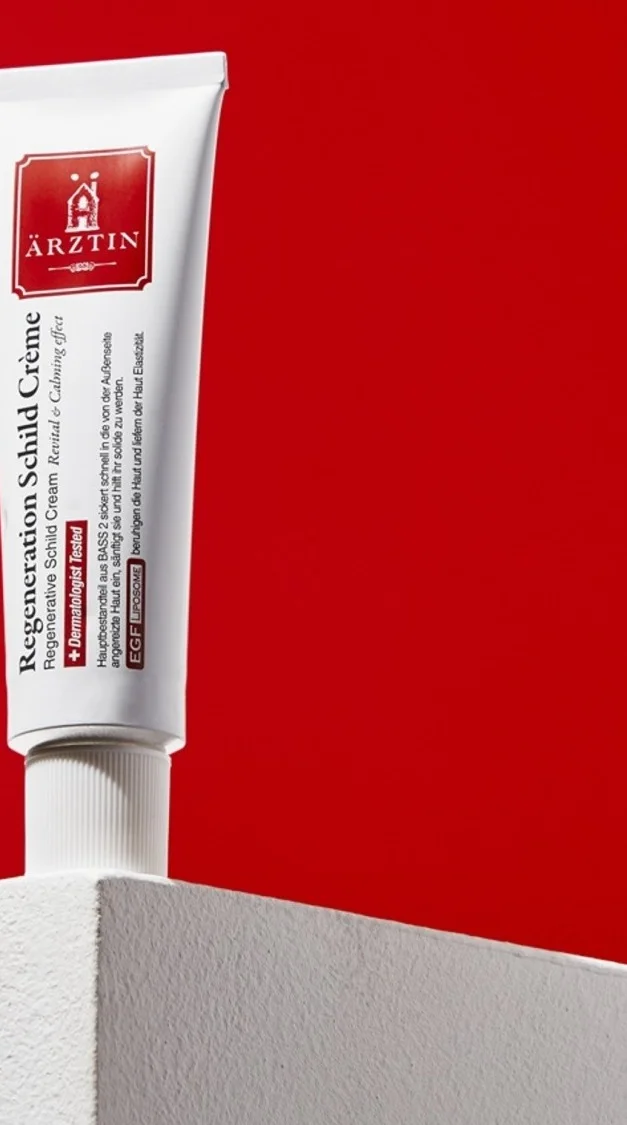 리제너레이티브 실트 크림Buy
주름 개선 기능성 화장품 · 탄력과 장벽을 함께 보는 리치 크림