
Criteria for Choosing Glycerin — Three Things to Check in the Full Ingredient List
Rather than where glycerin sits in the full ingredient list, what matters more for actual usage feel and skincare direction is which ingredients it's paired with. Checking ingredients that draw in moisture (glycerin, betaine, trehalose), oils that hold it in place (squalane, shea butter, etc.), and ingredients aimed at elasticity and wrinkle care together is the proper way to read a full ingredient list. Looking at whether these three layers are designed together in one product is a more practical selection criterion than focusing on glycerin alone.

When choosing cosmetics and opening the full ingredient list, glycerin appears near the front almost without exception. This makes it easy to assume that 'a product with more glycerin is a better product,' but it's difficult to accurately gauge content just from the order of the full ingredient list. While the basic principle is listing in order of decreasing total content, from the point where content starts decreasing, the listing order can vary depending on the manufacturer's formulation method, making it hard to use as an absolute standard.
So to use glycerin as a 'selection criterion,' you need a perspective that looks not at the position of a single ingredient, but at which role group that ingredient is组成 together with.
- 11. Check moisture ingredientsWhether glycerin, betaine, and trehalose are near the front
- 22. Check oil ingredientsWhether occlusive ingredients like squalane or shea butter are included
- 33. Check the barrier lipid setWhether ceramides, cholesterol, and fatty acids are present together
- 44. Check elasticity and wrinkle ingredientsWhether functional approved ingredients or peptides are included
Why is glycerin listed near the top in most products?
Glycerin is a humectant that draws moisture from its surroundings, and it is widely used across formulations regardless of type—toner, lotion, or cream. This is also why it appears so frequently right after water. However, the ability to draw in moisture alone does not mean that moisture stays on the skin for long. For hydration to be maintained, there also needs to be a role that holds onto the drawn-in moisture so it doesn't evaporate.
This holding role is played by oil-based ingredients and lipid-type ingredients that form the barrier. In other words, simply checking for glycerin alone on the ingredient list and stopping there gives very different information compared to reading through the roles of the ingredients that follow glycerin as well.
How to read the ingredient list by grouping roles
A practically useful way to evaluate the ingredient list is to divide ingredients into three functional groups.
First, there is the group of ingredients that draw in moisture. Glycerin, betaine, trehalose, and butylene glycol belong here, and they are usually found near the front of the ingredient list.
Second, there is the group of oil-based ingredients that prevent the drawn-in moisture from evaporating. Squalane, shea butter, argan kernel oil, and olive oil play this role.
Third, there is the group of ingredients belonging to the same lipid family that makes up the skin barrier. Ceramides, cholesterol, and fatty acids (such as palmitic acid) fall into this category, and when these three ingredients are present together in a certain ratio, it can be seen as a combination designed to form the lipids that make up the barrier structure.
Checking whether these three functional groups are evenly included in a single product is a more effective criterion for judging actual usage feel and skincare direction than focusing solely on the amount or position of glycerin.
| Functional group | Representative ingredients | Reason to check |
|---|---|---|
| Moisture-drawing ingredients | Glycerin, betaine, trehalose | The starting point of hydration, usually listed near the front |
| Oils that hold moisture in | Squalane, shea butter, argan kernel oil | Keeps drawn-in moisture from evaporating |
| Barrier lipid family | Ceramides, cholesterol, fatty acids | Same family of lipids that make up the skin barrier; check whether they form a complete set |
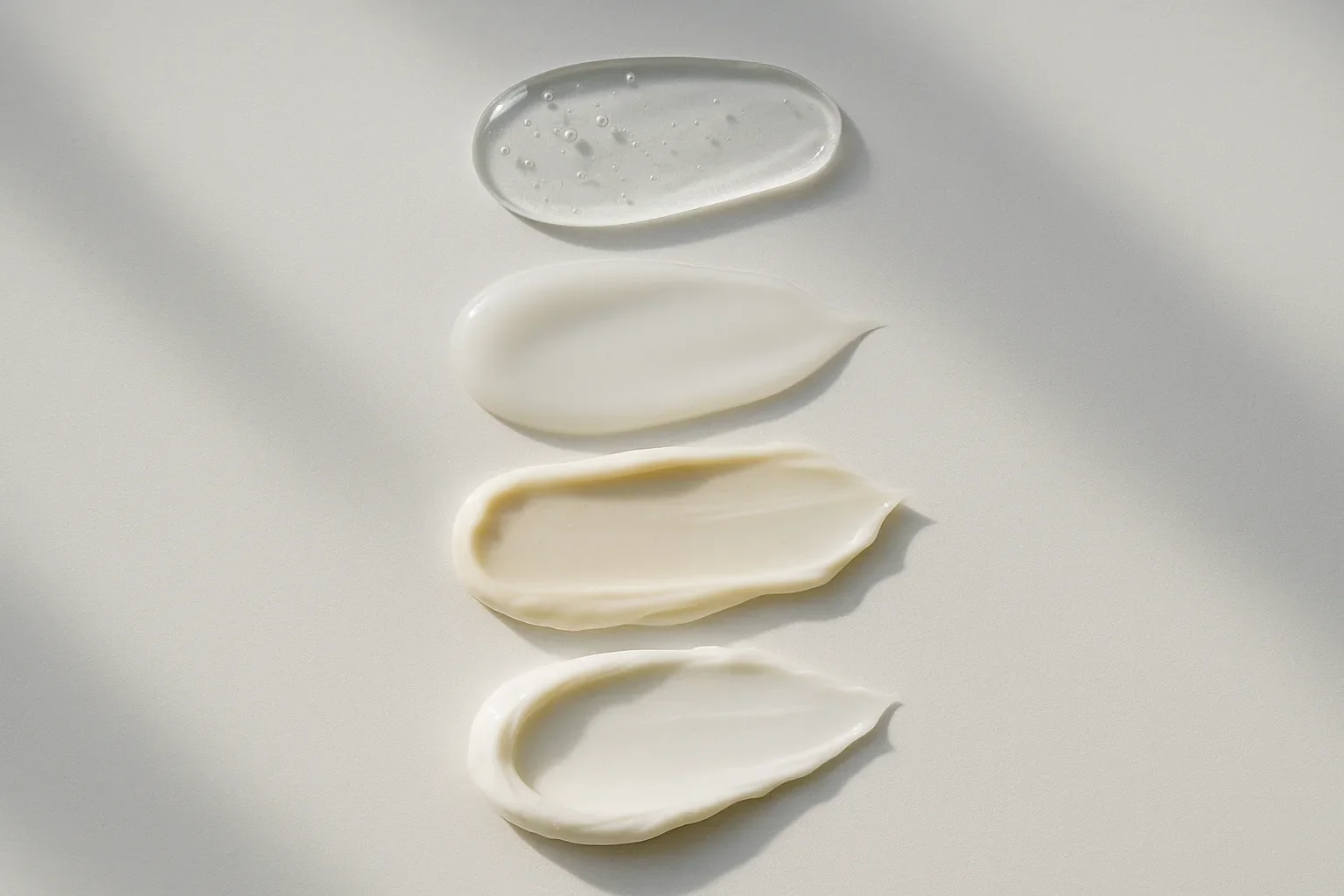
The focus shifts depending on skin condition and season
Even when reading the same ingredient list, the functional group to focus on changes depending on skin condition and season. In winter when dryness is strongly felt, or in heavily heated or air-conditioned environments, it may help to first check whether there is a sufficient proportion of oil and lipid ingredients that hold in moisture, rather than focusing only on moisture-drawing ingredients.
Conversely, during warmer weather when sebum production increases, a formulation centered on lightweight moisture-filling ingredients may be more suitable than heavy, occlusive oils.
If you've started to become concerned about both skin texture and elasticity as you age, there's one more category of ingredients to check for. This refers to ingredients specifically designed to support elasticity and wrinkle care. Since hydration alone doesn't address this concern, it's important to also check whether the full ingredient list includes components that serve this role.
The step-by-step order for checking the full ingredient list
When choosing a product, it's practical to scan the full ingredient list in the following order. First, check whether moisture-drawing ingredients (such as glycerin, betaine, trehalose, etc.) appear near the beginning. Next, look at the middle section to see whether oil-based ingredients are also present. Then check whether barrier lipid ingredients (ceramides, cholesterol, fatty acids) appear together as a set. Finally, if elasticity or wrinkles are a concern, checking whether functionally approved ingredients or peptides are included takes your selection criteria one step further.
Going through these four steps allows you to read a product's design intent in a much more multidimensional way than simply asking 'where does glycerin rank on the list.'
If you're choosing a full ingredient list designed with elasticity and wrinkle care in mind as well
The final step — which cream to finish with
Once you've developed the habit of reading the full ingredient list by ingredient category, the next step is to directly check whether a single product covers all four of these stages. The full ingredient list of ARZTIN Regenerative Silt Cream includes moisture ingredients such as glycerin, oil ingredients like squalane, shea butter, and argan kernel oil, and barrier lipid ingredients composed of ceramide NP, cholesterol, and palmitic acid, all arranged together. It also includes adenosine, a wrinkle-improvement functional ingredient officially approved by the Ministry of Food and Drug Safety, along with three peptides designed specifically for elasticity care (sh-oligopeptide-1, rh-oligopeptide-2, and rh-polypeptide-1). As this is a rich cream used in the final step of a routine, anyone who has been checking full ingredient lists by ingredient category will likely find it relatively easy to read the intent behind this formulation. Individual results may vary depending on skin condition, and if any adverse reaction occurs during use, discontinue use and consult a dermatologist or other specialist.
사용 전과 비교해 사용 직후 통계적으로 유의하게 개선됐습니다. 개선율(%)은 사용 전 대비 변화량의 비율이며(|사용 후−사용 전|÷사용 전×100), 개인차가 있을 수 있습니다.
출처 P&K 피부임상연구센타 인체적용시험 결과보고서 (PNK-24610-RD1R2, 2024)
사용 전과 비교해 사용 직후 통계적으로 유의하게 개선됐습니다. 개선율(%)은 사용 전 대비 변화량의 비율이며(|사용 후−사용 전|÷사용 전×100), 개인차가 있을 수 있습니다.
출처 P&K 피부임상연구센타 인체적용시험 결과보고서 (PNK-24610-RD1R2, 2024)
Frequently asked questions
- If glycerin appears further back in the full ingredient list, does that mean the product has weaker moisturizing power?
- It's hard to conclude that definitively. While the basic principle is to list ingredients in order of decreasing content, the order can vary by manufacturer in the lower-content range. Rather than focusing on the position of glycerin alone, it's more practical to check whether moisture, oil, and barrier lipid ingredients are composed together.
- Is a higher glycerin content always better?
- It's better to look at the combination with other ingredients rather than judging by content alone. Even if there are many moisture-drawing ingredients, if there aren't enough oil and lipid ingredients to hold that moisture in, you may actually feel dryness, so it helps to check the overall balance.
- Can dry skin types choose products based only on glycerin content?
- For dry skin, it's good to check not just moisture ingredients like glycerin but also whether oils and barrier lipid ingredients that hold that moisture in are included together. If there's a lot of moisture ingredient but not enough oil, a feeling of tightness may remain.
- If elasticity or wrinkles are a concern, what other ingredients should be checked in the full ingredient list?
- Beyond the three role groups for moisturizing, it's good to also check whether the list includes wrinkle-improvement functional ingredients approved by the Ministry of Food and Drug Safety, or peptide-type ingredients designed for elasticity care.
- Can you tell for certain if a product suits your skin just by looking at the full ingredient list?
- The full ingredient list is a useful reference for understanding product design, but actual usage feel and reactions vary greatly by individual. When trying a new product, it's safer to test a small amount first, and if you feel irritation or an abnormal reaction, stop use and consult a dermatologist or other specialist.
Related products
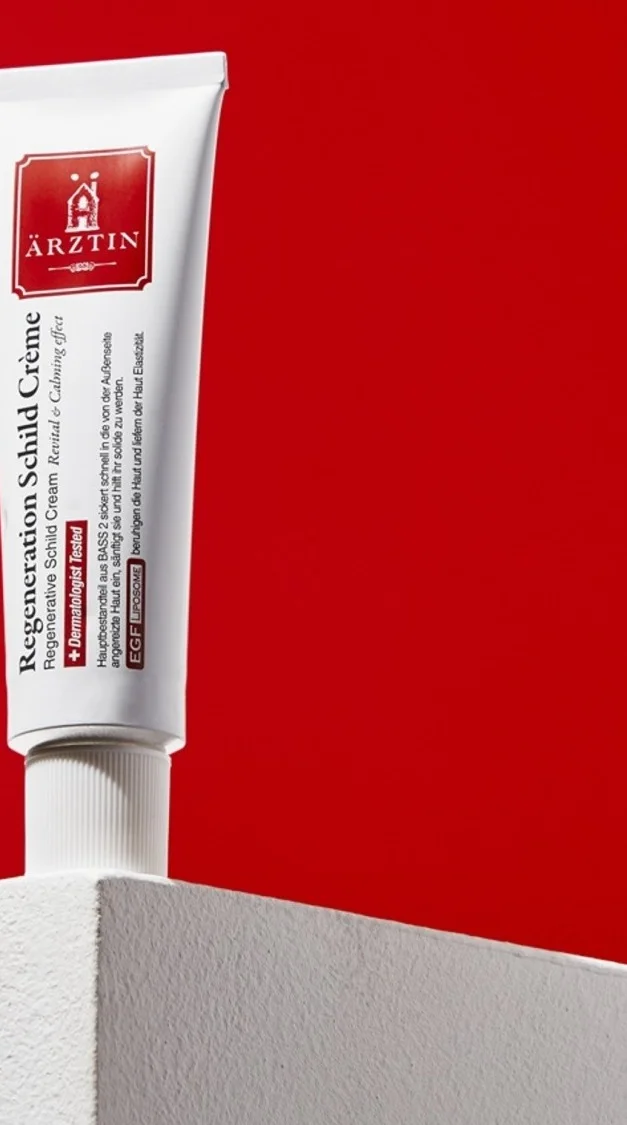 리제너레이티브 실트 크림Buy
Anti-wrinkle functional cosmetic · A rich cream that addresses both elasticity and barrier care
- 리제너레이티브 실트 크림Buy
Anti-wrinkle functional cosmetic · A rich cream that addresses both elasticity and barrier care
- 리제너레이티브 실트 크림Buy
Anti-wrinkle functional cosmetic · A rich cream that addresses both elasticity and barrier care
- 리제너레이티브 실트 크림Buy
Anti-wrinkle functional cosmetic · A rich cream that addresses both elasticity and barrier care
- 리제너레이티브 실트 크림Buy
Anti-wrinkle functional cosmetic · A rich cream that addresses both elasticity and barrier care