
Determining Your Skin Type — How to Tell Dry, Combination, and Oily Skin Apart
To determine your skin type, cleanse your face, apply nothing, and wait thirty minutes to an hour: if your whole face feels tight, you likely have dry skin; if only the T-zone gets shiny while the cheeks feel tight, that's combination skin; and if the entire face gets evenly shiny, that's closer to oily skin. However, even the same person can appear to have a different type depending on the season and condition, so repeated observation is more accurate than a single check.
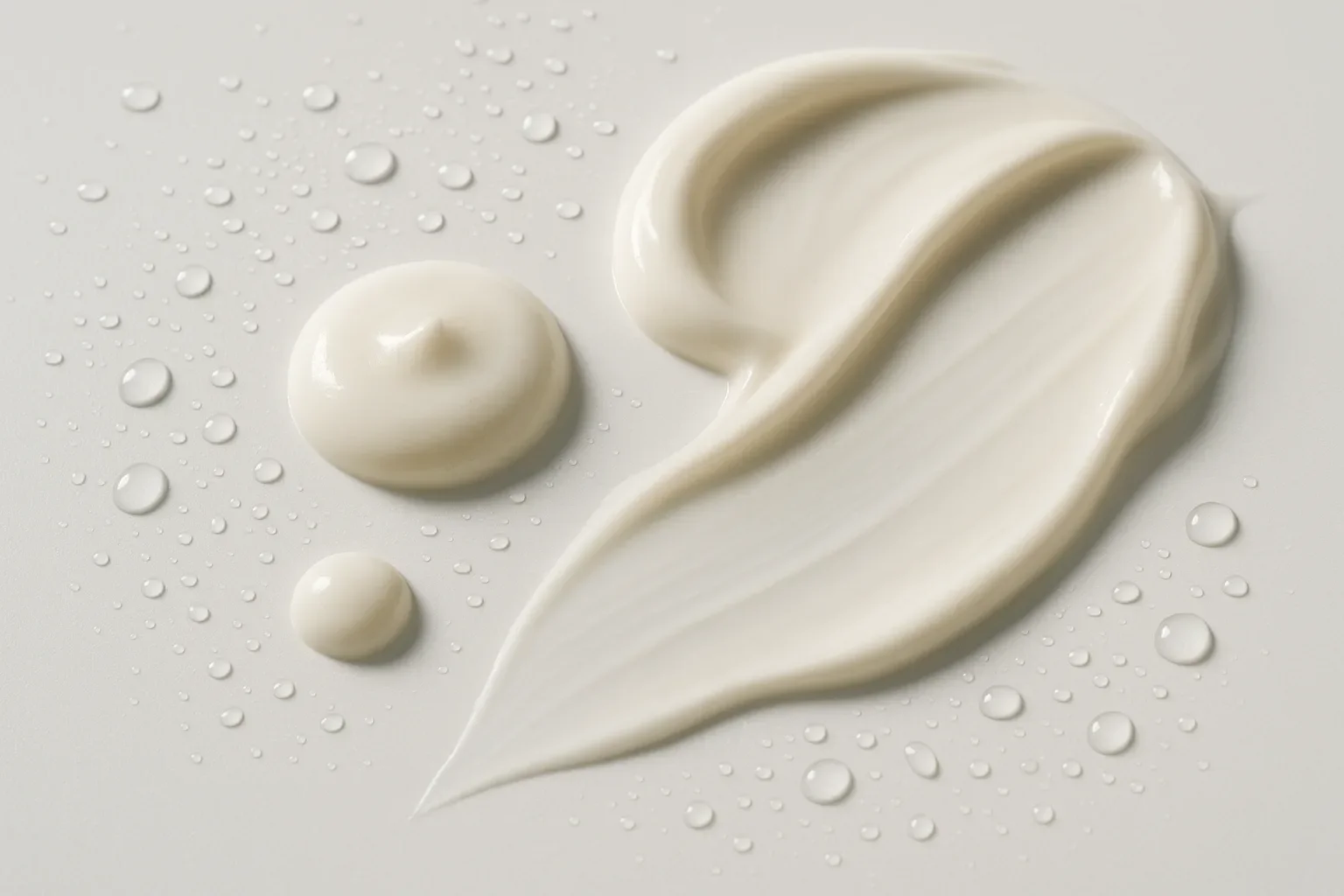
"I think I have dry skin, but only my nose is oily," "I'm clearly oily, but my cheeks flake" — when you ask about skin type, cases that don't fit neatly into one category are far more common. This is inevitable, because skin type isn't a single uniform quality across the whole face; it tends to appear differently by area and by season.
This article outlines, in order, simple methods you can try at home to determine your skin type, the reasons why different areas show different tendencies, and why your type may seem to change with the seasons. If there's a part of your skin type you may have been misunderstanding, we recommend checking again after reading this.
- 1CleansingCleanse gently and pat dry
- 2Wait with nothing appliedObserve for 30 minutes to 1 hour without applying anything
- 3Check by areaCompare tightness and oiliness between the T-zone and cheeks/eye area
- 4Identify tendencyCheck which tendency is closest: dry, combination, or oily
- 5Adjust formulaAdjust amount and texture used according to type
Why does skin type feel so different?
The two biggest factors that distinguish skin type are the activity level of the sebaceous glands and the stratum corneum's ability to hold onto moisture. Areas where the sebaceous glands are active tend to become oily easily, while areas that cannot hold moisture for long tend to feel tight and flake easily.
The issue is that these two conditions don't apply equally across the entire face. The T-zone, connecting the forehead, nose, and chin, naturally has a relatively higher density of sebaceous glands, while the cheeks and eye area tend to have fewer sebaceous glands and a thinner stratum corneum. So it's natural for completely different patterns to appear across different areas even within the same person's face.
When you add age, temperature and humidity, hormonal cycles, and even one's condition on a given day, it becomes more realistic to understand 'my skin type' not as a fixed answer but as something with a certain range.
A simple method to try at home
The most basic method is to leave your face bare, without applying any product, for about thirty minutes to an hour after cleansing. Observing the changes that appear on your face during this time lets you grasp a general tendency.
If your entire face feels evenly tight, flakes appear, or fine lines become visible in texture when you make expressions, this leans toward dry skin. If the T-zone feels oily while the cheeks and eye area feel tight, this leans toward combination skin. If not just the forehead, nose, and chin but also the cheeks feel evenly oily overall, this can be seen as leaning toward oily skin.
Rather than concluding from a single observation, checking again over several days—ideally at each change of season—helps you get closer to an accurate judgment of your actual condition.
Summary of characteristics by type and by period
Dry-leaning skin tends to feel tightness quickly right after cleansing, is prone to areas where white flakes lift, and often gives the sensation that makeup doesn't sit well. Combination-leaning skin is characterized by oiliness in the T-zone occurring at the same time as dryness in the cheeks and eye area, with one side sometimes becoming more pronounced depending on the season. Oily-leaning skin often has oil spread evenly across the entire face, with pores appearing relatively more prominent.
It's a fairly natural phenomenon for the same person to feel more oily, like oily or combination skin, in summer as oil increases, and to feel drier, like dry skin, in winter. During transitional seasons when indoor and outdoor temperature and humidity differ greatly, one's skin condition can even feel different between morning and evening within the same day.
Rather than the type changing entirely, it's more accurate to understand this as seasonal factors being added on top of one's underlying tendency, causing the day-to-day condition to be expressed differently—an understanding that is also more realistic when setting up a care plan.
Steps for adjusting your routine according to your type
Once you've identified your type, the next step is to review the order from cleansing through to the final step. For dry-leaning skin, prioritizing a low-irritation cleanser over a strong cleansing product—so as not to strip too much lipid from the stratum corneum—comes first, and finishing with a product containing oil-based ingredients in a later step to prevent moisture loss can be helpful.
For combination-leaning skin, rather than managing the T-zone and cheeks identically with one product, it may be worth considering adjusting the amount used by area—applying lightly to the T-zone while giving a bit more attention to the cheeks and eye area. For oily-leaning skin, rather than eliminating oil altogether, a practical approach is choosing a formulation that absorbs cleanly without leaving excessive shine.
Regardless of type, one thing to keep in mind for the final step is not to skip the process of sealing in moisture so it doesn't evaporate. No matter the type, if this finishing step is left out, the moisture applied earlier will quickly evaporate.
The final step: which cream to finish with
If the purpose of identifying your type ultimately comes down to deciding 'which formulation to apply last,' the next question becomes whether that cream stops at moisturizing or is also designed with elasticity care in mind. 에르쯔틴 리제너레이티브 실트 크림 is a rich-type formulation that can be adjusted by applying small amounts to areas or times when oiliness is needed, and since it also contains adenosine, a notified ingredient that has been reviewed as a functional cosmetic ingredient for wrinkle improvement, it can be an option that lets you consider moisture finishing and elasticity care together within a single step.
Frequently asked questions
- What is 'dehydrated oily skin'?
- Dehydrated oily skin refers to a state where the surface appears shiny with sebum, but the stratum corneum is actually lacking in moisture underneath. If you feel your skin has too much oil and rely only on products with strong cleansing power or products that exclude oil, the moisture deficiency can actually worsen, which may repeat a cycle of increasing sebum secretion. In such cases, rather than unconditionally reducing oil, it may help to focus on both hydration and oil-water balance together.
- Why does only the T-zone seem particularly oily?
- The T-zone, connecting the forehead, nose, and chin, naturally has a structure with a higher density of sebaceous glands than other areas. When temperature rises or other condition changes occur on top of this, sebum secretion can increase further, making the oily feeling stand out more noticeably. Rather than managing this area with the same product and amount as the cheeks or eye area, adjusting the amount used by area could be one approach.
- Can skin type change with the seasons?
- It's less that the type itself completely changes, and more that temperature and humidity changes layer on top of an underlying tendency, causing the condition to appear differently. It's common for skin to feel oily and seem like oily or combination type in summer, and to feel drier and seem like dry type in winter — adjusting the amount or texture of products used according to the season is a natural response to this.
- Are there criteria for choosing a cream based on type?
- For those with a dry tendency, it's generally recommended to prioritize a formula that contains enough oil components to prevent moisture evaporation, while for those with an oily tendency, a lightly absorbing formula is generally considered first. However, separate from skin type, the changes in elasticity that occur with aging progress commonly across all skin types, so in the final step, it may also help to consider a product that addresses elasticity care in addition to hydration purposes. If skin condition does not improve for a long time or abnormal reactions persist, it is recommended to consult a dermatologist or other specialist.
Reviewed by 아비쥬의원 의료진. (September 7, 2026)