
When Flaking Appears, What to Check Before Rubbing It Off
When skin flakes turn white and lift, the urge is to rub them off right away, but it's better to first look at why the flaking happened at this particular timing. In most cases, it's the result of the skin becoming dry so that the outer layer isn't shed properly and clumps up, so repeatedly rubbing it off physically can actually make the thinned area more sensitive. In conclusion, it's better to first read flaking as a 'sign of dryness' before treating it as something to be 'removed.'
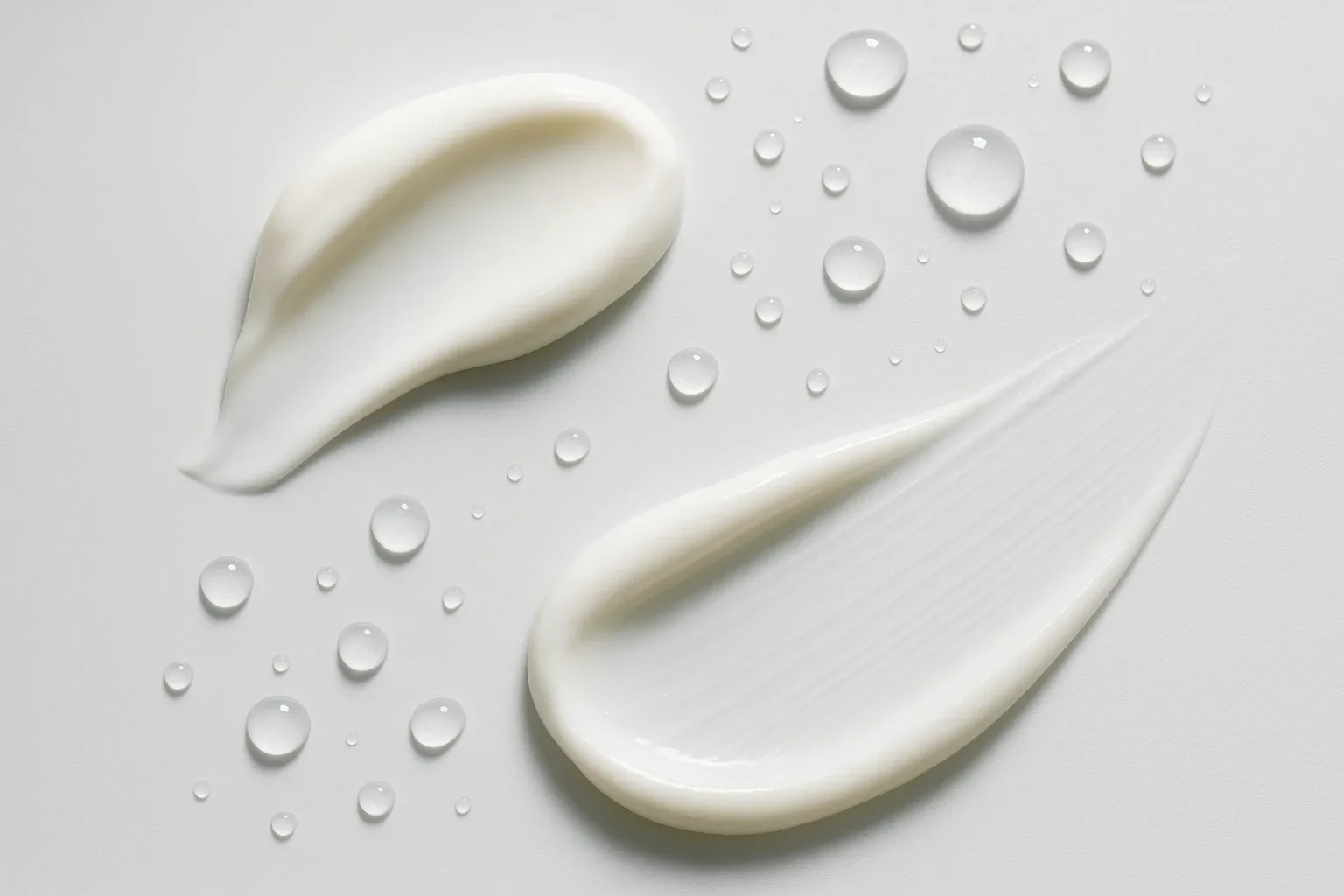
After washing your face, seeing white flakes rising on your cheeks or around your mouth makes your hand move first — gently rubbing with a nail, or reaching for a scrub product. But if you look closely at when the flaking appears, it often overlaps with a change of season, the start of indoor heating, or a stretch of days when your condition wasn't great. In other words, flaking is less a 'problem' that suddenly appeared and more a delayed signal the skin is sending.
- 1ObserveCheck the areas and timing where flaking recurs
- 2Fill in moistureReplenish hydration and oils in the order of toner, ampoule, cream
- 3Gentle tending if neededTend only to the already-raised areas without irritation
- 4Finishing moistureReplenish soothing and moisturizing ingredients on the tended area
Why does flaking suddenly become noticeable?
Dead skin cells on the skin's surface are normally made and shed in a regular cycle. When this process runs smoothly, flaking isn't noticeable and sheds naturally, but things change when the skin becomes dry. Dead skin cells lacking moisture don't separate well from each other and pile up in clumps — this is the 'raised flaking' we see with our eyes.
That's why periods when flaking worsens tend to overlap with periods when the skin becomes dry. When temperature and humidity drop, when you wash your face often, or when days without sufficient moisture replenishment continue, the stratum corneum's ability to retain moisture is disrupted, and as a result flaking becomes visibly noticeable on the surface. Focusing only on removing the flaking itself makes it easy to miss this underlying cause.
Flaking that should be viewed differently depending on the condition
Not all flaking is the same. Fine flaking that occurs on oily areas like the sides of the nose or forehead is often caused by a mix of oil and dead skin, while white flaking on areas prone to dryness, like the cheeks or around the mouth, is more related to lack of moisture. Both cases share a background of 'dryness,' but the order of approach can differ slightly.
The pattern also differs by season. During seasonal transitions or winter, flaking tends to lift thinly across the whole face, while after periods of heavy UV exposure, certain areas may become locally rough. Either way, the common thread is that the stratum corneum has lost its normal rhythm and is failing to hold onto moisture.
Flaking and Inner Dryness: Reconsidering the Order
Many people think 'I have flaking, so my skin is dry,' but in reality, the order is often closer to the reverse. Inner dryness progresses first, and flaking appears on the surface as a result. So if you only remove the flaking without addressing hydration, the pattern of flaking returning after a short while tends to repeat.
Understanding this order naturally changes the direction of care. Instead of viewing flaking only as something to eliminate, it can be taken as a signal to check the current hydration state of your skin. If flaking recurs often, it's more practical to first look back at your moisturizing routine over the past few days rather than focusing on the flaking itself.
A Step-by-Step Approach to Managing Flaking
Step one is observation. Watch for several days whether flaking repeats in a specific area, or whether it's related to a particular season or skin condition. Step two is filling in moisture first. Rather than trying to remove flaking beforehand, supply enough moisture and oil in the order of toner, ampoule, and cream to create conditions for the stratum corneum to sort itself out.
Step three is gently clearing away flaking only when necessary, using a mild method. Instead of rubbing with hands or scrubbing roughly, approach it by gently clearing only the parts that are already lifted, without irritation. Step four is finishing with moisture. The area where flaking has been cleared may become temporarily more sensitive, so it needs to be refilled with soothing and moisturizing ingredients.
Repeating these four steps will eventually lead to a point where flaking noticeably decreases, and even then, rather than stopping care completely, it helps reduce recurrence to continue by simply adjusting the intensity of the moisturizing routine.
If You Experience Recurring Flaking, Here's What to Check Next
There's no need to completely eliminate the habit of clearing away flaking, but making it a habit to first check your moisturizing routine before doing so often reduces the frequency of flaking itself. In particular, areas where flaking recurs tend to show rougher texture overall, so for these areas, it's more practical in the long run to follow up moisture with care that also addresses elasticity.
Once the flaking has settled, apart from the texture becoming smoother, the elasticity or expression lines in that area can sometimes stand out more. In such cases, rather than stopping at the moisturizing step, one option is to also consider a product aimed at elasticity care in the final step, such as a cream containing an ingredient that has undergone functional review for wrinkle improvement. However, the felt effect may vary depending on individual skin condition, and since the skin can become sensitive to irritation right after clearing away flaking, a patch test on a small area before use is recommended.
The final step — which cream should you finish with?
Once the flaking has settled, apart from the texture becoming smoother, the elasticity or expression lines in that area can sometimes stand out more. In such cases, rather than stopping at the moisturizing step, one option is to also consider a product aimed at elasticity care in the final step, such as a cream containing an ingredient that has undergone functional review for wrinkle improvement. However, the felt effect may vary depending on individual skin condition, and since the skin can become sensitive to irritation right after clearing away flaking, a patch test on a small area before use is recommended.
Frequently asked questions
- How often should I exfoliate?
- There's no fixed right answer, but rather than repeating the same routine every day, it helps reduce irritation to gently tend only to the areas where flaking is actually visible, and only when needed. The cycle can vary depending on skin condition and season, so it's practical to observe your own skin and adjust the frequency accordingly.
- Is dead skin really related to internal dryness?
- The point at which flaking becomes visible on the surface is usually after moisture inside the skin has already become insufficient. When dead skin cells lose moisture, they fail to shed on time and clump together, becoming noticeably raised — if you only tend to the flaking without addressing moisturizing, it tends to recur.
- Which is better, physical scrubs or ingredient-based care?
- It's hard to say one is always superior — it depends on skin condition and the degree of flaking. However, if the flaking area is already sensitive or shows redness, filling in moisture first to let it come off naturally, rather than rubbing, is often more advantageous for reducing irritation.
- Is it okay to apply cream while flaking is still present?
- Yes — in fact, filling in moisture without forcibly removing the flaking first can be helpful. However, if the cream feels like it's sitting on top of the flakes or clumping, you might try filling in a lighter moisturizing step first before finishing with the cream, rather than forcing more product on.
- If the flaking keeps recurring, should I see a doctor?
- If flaking continues to recur in a specific area even after changing your moisturizing routine, or if other symptoms such as redness or itching appear alongside it, it's recommended to consult a dermatologist or similar specialist to check the cause rather than relying on self-care.
Reviewed by 아비쥬의원 의료진. (September 3, 2026)